 The change was unmistakable. The day after repeal, the Daily Northwestern noted that the death of the dry law was celebrated here “in quiet fashion.” There had been an afternoon run on the taverns, but according to the paper most of the celebrants were “old timers” who came of age in the days before prohibition. The Northwestern reported that, “there were only a few locations in which a typical reunion could be held. Many of the famous local bars of yesteryear are gone, snuffed out by the coming prohibition. Some have remained, but they are not quite the same, even though bearing a familiar title. Improvements have been installed, and a new atmosphere created.”
  An especially dour aspect of the “new atmosphere” was the 3.2% beer, which was now the standard. Although the repeal of Prohibition eliminated the 3.2% alcohol limit that had been granted to beer eight months earlier as part of the Cullen-Harrison Act, the Oshkosh breweries made it known that they intended to continue manufacturing and selling the new, smaller beer in the period following repeal. Unless, of course, the public demanded otherwise. And that’s just what happened. The low-alcohol beer that had been so warmly received eight months earlier was just as quickly rejected. Within months, “real beer” was once again the norm.
  The Oshkosh Brewing Company took particular advantage of the desire for a stronger lager by selling beer into areas where breweries had yet to recover from the prohibition era. In early 1934, Oshkosh Brewing was shipping beer to Illinois, Minneapolis and as far west as California. Unable to get new labels made in time for shipment they used leftover stock from the pre-prohibition days.
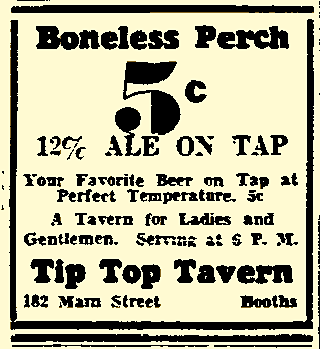
In Oshkosh the backlash against weak beer was immediate. In the months following repeal, higher-alcohol (typically around 5%) beer became something of a fad here. Peoples Brewing released a “High-Test” Holiday Brew for the 1933 Christmas season and throughout 1934 numerous advertisements appeared for taverns selling “High-Powered” beer. The biggest of them all was the 12% ale that the Tip-Top Tavern on Main Street offered on draught for a nickel a glass. Prohibition and the days of Near Beer were truly a thing of the past.
No comments:
Post a Comment