
Showing posts with label Beer Cans. Show all posts
Showing posts with label Beer Cans. Show all posts
Sunday, April 10, 2022
A Pricey Crowntainer
The Oshkosh Brewing Company rolled out its first beer in cans on June 15, 1949. Just in time for the summer. For the next year, OBC used the crowntainer-style can seen below. These were sold in 12-packs for $1.65 (almost $20 in today’s money). At an auction last October, one of these cans sold for $9,360.


Wednesday, February 17, 2021
Oshkosh Can Lines
In today's Oshkosh Herald I have an article about how our local breweries are increasingly favoring cans over bottles when it comes to packaging. I'll post the full article below for those who don't live in the Herald's delivery area.
That Oshkosh Brewing Company clip is taken from a longer, video tour of the brewery. You can view that video in its entirety here. Now, onto the Herald article...
In 1991, the Mid-Coast Brewing Company of Oshkosh released a new brand named Chief Oshkosh Red Lager in cans. That beer, brewed and packaged on contract at the Stevens Point Brewery, is considered by many to have been the first American craft beer offered in cans. Though the beer itself was highly regarded, the package was a hard sell. “The idea that great beer doesn't come in a can hurt me,” says Jeff Fulbright, president of Mid-Coast Brewing Company. Mid-Coast closed in 1995.
Those old misconceptions are finally giving way. "We initially heard from a couple of people who were disappointed when they saw we were going in this direction," says Jody Cleveland where at Bare Bones they no longer package any beer in glass bottles. "But that went away almost immediately. It's been all positive ever since." Drew Roth, the head brewer at Fox River Brewing, says the reaction among their customers has been much the same.
Roth still recalls his own aha moment. "Back when I first got into beer, one of the marks of a craft beer was that it always came in a bottle," he says. "But that's only because no craft breweries had canners. Once they started putting beer in cans, especially IPAs, it was eye-opening. It was way fresher tasting than anything I've ever had out of a bottle."
Roth estimates that Fox River currently puts about 20 percent of its total packaged product into cans despite the brewery not having a canner of its own. Fox River has been using the canning unit at Bare Bones along with mobile canning businesses that service craft breweries across the Midwest. Among Fox River's most recent canned offerings is BLU Bobber in tall, 19.2-ounce cans. "Ideally, I would put everything in cans," Roth says, "but the aluminum can shortage is making that harder to do."
Breweries began feeling that pinch last summer after there was a spike in demand for aluminum cans. In addition to craft brewers leaning into aluminum, there has been explosive growth in the sales of canned hard seltzer and sparkling water. But according to the Can Manufacturers Institute, the shortages should begin to ease this summer.
"I'm excited to see what happens coming into April," says Zach Clark at Fifth Ward. "We're going to be able to have our new releases here in the taproom and at the stores around the same time. We're only able to do that because of the flexibility we get from cans. The entire market has changed over the last couple of years and cans are a big part of that. People are always looking for the new thing. This is what people are looking for now."
But before we get to that, here's a look at just how different today's canning equipment is from that used by Oshkosh breweries in the 1950s. The video begins with footage of the Oshkosh Brewing Company's can line in 1956. That's followed by a recent clip of beer being canned at Bare Bones Brewery (NOTE: if the video does not appear in the space below you can access it here).
That Oshkosh Brewing Company clip is taken from a longer, video tour of the brewery. You can view that video in its entirety here. Now, onto the Herald article...
Breweries freshly embrace canning option
Oshkosh Herald, February 17, 2021
If you went to buy a six-pack of local beer a year ago, you would have come home with glass bottles nested in a cardboard carrier. Today that story would probably have a different ending. Though brewers in Oshkosh haven't entirely abandoned glass bottles, aluminum cans have become their packaging vessel of choice. The benefits of canned beer are many, but for brewers like Jody Cleveland of Bare Bones Brewery, it all comes down to quality. "Cans are so much better at preserving flavor and freshness," he says. "There's just no way around that."
In May of 2020, Bare Bones became the first Oshkosh brewery in almost 50 years to package beer on its own automated canning line. The canner had arrived in the nick of time. State restrictions following the COVID-19 outbreak had resulted in the closure of bars and taprooms which curtailed the on-premise sale of draft beer. "I think being able to can beer at that point saved us," says Cleveland, "Having that option with to-go sales helped us a ton, there's no doubt about that."
Fifth Ward Brewing took delivery of its canning line this past December. Since then the brewery has packaged a dozen different beers in cans. That would have been impossible to do in such a short time with a bottling line. "Printing six-pack holders for bottles is very expensive and it's a stupid amount that you have to buy to make it cost-effective," says Zach Clark co-owner of Fifth Ward. "With cans, all we have to do is design and print a new label. We can do that quickly. It allows us so much more flexibility. It gives us the ability to offer more variety and get beers into the retail market that we could only have sold on draft before."
Getting consumers to embrace canned beer hasn’t always been so easy. The Oshkosh Brewing Company was the first brewery here to can beer. When those cans were released in 1949, the reception was lukewarm at best. Some customers complained of a metallic flavor. The issue was soon resolved, but the prejudice lingered on.
In May of 2020, Bare Bones became the first Oshkosh brewery in almost 50 years to package beer on its own automated canning line. The canner had arrived in the nick of time. State restrictions following the COVID-19 outbreak had resulted in the closure of bars and taprooms which curtailed the on-premise sale of draft beer. "I think being able to can beer at that point saved us," says Cleveland, "Having that option with to-go sales helped us a ton, there's no doubt about that."
Fifth Ward Brewing took delivery of its canning line this past December. Since then the brewery has packaged a dozen different beers in cans. That would have been impossible to do in such a short time with a bottling line. "Printing six-pack holders for bottles is very expensive and it's a stupid amount that you have to buy to make it cost-effective," says Zach Clark co-owner of Fifth Ward. "With cans, all we have to do is design and print a new label. We can do that quickly. It allows us so much more flexibility. It gives us the ability to offer more variety and get beers into the retail market that we could only have sold on draft before."
Getting consumers to embrace canned beer hasn’t always been so easy. The Oshkosh Brewing Company was the first brewery here to can beer. When those cans were released in 1949, the reception was lukewarm at best. Some customers complained of a metallic flavor. The issue was soon resolved, but the prejudice lingered on.
 |
| Brewery owners Ian Wenger (left) and Zach Clark, canning beer at Fifth Ward. |
In 1991, the Mid-Coast Brewing Company of Oshkosh released a new brand named Chief Oshkosh Red Lager in cans. That beer, brewed and packaged on contract at the Stevens Point Brewery, is considered by many to have been the first American craft beer offered in cans. Though the beer itself was highly regarded, the package was a hard sell. “The idea that great beer doesn't come in a can hurt me,” says Jeff Fulbright, president of Mid-Coast Brewing Company. Mid-Coast closed in 1995.
Those old misconceptions are finally giving way. "We initially heard from a couple of people who were disappointed when they saw we were going in this direction," says Jody Cleveland where at Bare Bones they no longer package any beer in glass bottles. "But that went away almost immediately. It's been all positive ever since." Drew Roth, the head brewer at Fox River Brewing, says the reaction among their customers has been much the same.
Roth still recalls his own aha moment. "Back when I first got into beer, one of the marks of a craft beer was that it always came in a bottle," he says. "But that's only because no craft breweries had canners. Once they started putting beer in cans, especially IPAs, it was eye-opening. It was way fresher tasting than anything I've ever had out of a bottle."
Roth estimates that Fox River currently puts about 20 percent of its total packaged product into cans despite the brewery not having a canner of its own. Fox River has been using the canning unit at Bare Bones along with mobile canning businesses that service craft breweries across the Midwest. Among Fox River's most recent canned offerings is BLU Bobber in tall, 19.2-ounce cans. "Ideally, I would put everything in cans," Roth says, "but the aluminum can shortage is making that harder to do."
Breweries began feeling that pinch last summer after there was a spike in demand for aluminum cans. In addition to craft brewers leaning into aluminum, there has been explosive growth in the sales of canned hard seltzer and sparkling water. But according to the Can Manufacturers Institute, the shortages should begin to ease this summer.
"I'm excited to see what happens coming into April," says Zach Clark at Fifth Ward. "We're going to be able to have our new releases here in the taproom and at the stores around the same time. We're only able to do that because of the flexibility we get from cans. The entire market has changed over the last couple of years and cans are a big part of that. People are always looking for the new thing. This is what people are looking for now."
Tuesday, November 19, 2019
Oshkosh Lager Beer Cans, Then and Now
Here are a couple of cans of Oshkosh-brewed lagers separated by about 60 years.

The can on the left is from the late 1950s. The can on the right was filled at Bare Bones last Friday, November 15.
The 1950s Oshkosh Brewing Company can is made of heavy gauge steel with a flat top. You needed a church key to get any beer out of it. The label is printed on the metal. It weighs about three ounces. The Bare Bones can has a shrink-wrapped label and is made of aluminum. It weighs less than an ounce and has a stay-tab opening.

The version of the Chief Oshkosh can shown at the top was introduced in the spring of 1958. It was designed by Robert Sidney Dickens of Chicago. Dickens was a highly sought after package designer with clients such as Blatz, Hamms, Coca-Cola, and Quaker Oats. It was an expensive project for OBC. Dickens' charged $5,700; or about $50,000 in today's money.
The Bare Bones can was designed by Jody Cleveland, the head brewer at Bare Bones. Cleveland used the Dickens design as his model, updating it to give it a somewhat more contemporary feel.

The beer put inside those two cans is about as similar as the packaging would suggest. The recipe for Oshkosh Lager is based on the Chief Oshkosh Beer recipe from the 1950s. Cleveland made some slight adjustments to the recipe to make it more in line with current tastes.
Oshkosh Lager was introduced in February of this year. It was packaged in cans for the first time in May. That was a small run of hand-labeled cans filled on the brewery's countertop, crowler filler.

This time it was a much larger run of 27 cases packaged on a mobile canning unit. Canned six-packs from this run of Oshkosh Lager are now available at the Bare Bones Tap Room. Maybe next time, they'll box them like those 1950s sixers of Chief Oshkosh. But I wouldn't count on that.


The can on the left is from the late 1950s. The can on the right was filled at Bare Bones last Friday, November 15.
The 1950s Oshkosh Brewing Company can is made of heavy gauge steel with a flat top. You needed a church key to get any beer out of it. The label is printed on the metal. It weighs about three ounces. The Bare Bones can has a shrink-wrapped label and is made of aluminum. It weighs less than an ounce and has a stay-tab opening.

The version of the Chief Oshkosh can shown at the top was introduced in the spring of 1958. It was designed by Robert Sidney Dickens of Chicago. Dickens was a highly sought after package designer with clients such as Blatz, Hamms, Coca-Cola, and Quaker Oats. It was an expensive project for OBC. Dickens' charged $5,700; or about $50,000 in today's money.
 |
| Robert Sidney Dickens |
The Bare Bones can was designed by Jody Cleveland, the head brewer at Bare Bones. Cleveland used the Dickens design as his model, updating it to give it a somewhat more contemporary feel.

The beer put inside those two cans is about as similar as the packaging would suggest. The recipe for Oshkosh Lager is based on the Chief Oshkosh Beer recipe from the 1950s. Cleveland made some slight adjustments to the recipe to make it more in line with current tastes.
Oshkosh Lager was introduced in February of this year. It was packaged in cans for the first time in May. That was a small run of hand-labeled cans filled on the brewery's countertop, crowler filler.

This time it was a much larger run of 27 cases packaged on a mobile canning unit. Canned six-packs from this run of Oshkosh Lager are now available at the Bare Bones Tap Room. Maybe next time, they'll box them like those 1950s sixers of Chief Oshkosh. But I wouldn't count on that.


Tuesday, September 3, 2019
When Canned Beer Came to Oshkosh
Off we go to 1935 when canned beer first arrived in Oshkosh. And what was the first canned beer sold here? That would be this one, Pabst Export...

Pabst was the second American brewery to can its beer. The first was Krueger Brewing of Newark, which released its cream ale in cans in January 1935. In August 1935, Pabst began canning its Export Beer, and in early September 1935, those cans began rolling into Oshkosh.
These were flat-top cans without a tabbed opening. To get at the beer you had to use this new thing called a churchkey. If you bought the beer, they'd give you a churchkey to go with it. The instructions were printed on the side of the can.


Cans of Pabst Export were distributed in Oshkosh by Kuebler Distributing from its warehouse on the north side of Parkway just east of Main (the building is gone). Pabst advertised the new package heavily here. The ads touted the benefits of the "Keglined TapaCan” lined with a polymer coating to keep the beer tasting like beer and not like tin.
A case of canned Pabst Export sold for $2.75 when it was first introduced in Oshkosh. At the time, it was the most expensive beer sold here. Budweiser was also being sold in Oshkosh then for $2.75. In today's money that would be about $40. Meanwhile, a case of bottles of Chief Oshkosh or Peoples or Rahr's sold for a measly $1.75.
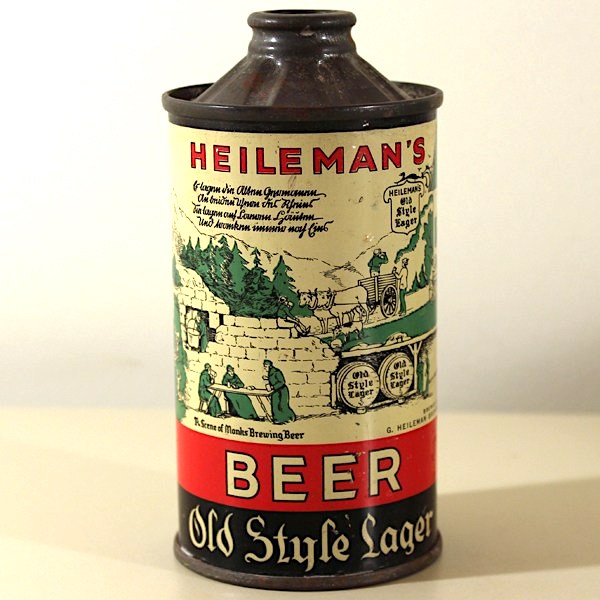
A few months after the Pabst cans appeared, G. Heilemann Brewing of La Crosse began selling cans of Old Style beer in Oshkosh. They arrived in time for the 1935 holiday season. It was the first cone-top style can sold here. Old Style was distributed here by Lee Beverage of Oshkosh, which is still going strong.

Next came Schlitz, hitting Oshkosh with its cone-top cans in March 1936. The Schlitz cone tops were also brought in by Kuebler Distributing. This was an odd one. Schlitz promoted it as a kind of health-food... "Stay on the "sunny side" by drinking SCHLITZ SUNSHINE VITAMIN D BEER. It brings you Vitamin D... developed directly by the sun's rays!"

The cans kept on coming. The local breweries were in no hurry to join in. The Oshkosh Brewing Company became the first brewery here to can its beer. OBC introduced crowntainers of Chief Oshkosh in 1949. But by that time, the novelty of canned beer had faded. It was just another can of beer. Not anymore. The website Breweriana.com puts the value of this can at $2,800. And to think, you could have bought a six-pack of them in 1949 for less than a dollar.
 Like to know more? Here's An Illustrated History of Oshkosh Beer Cans.

Pabst was the second American brewery to can its beer. The first was Krueger Brewing of Newark, which released its cream ale in cans in January 1935. In August 1935, Pabst began canning its Export Beer, and in early September 1935, those cans began rolling into Oshkosh.
 |
| Oshkosh Daily Northwestern, September 9, 1935. |


Cans of Pabst Export were distributed in Oshkosh by Kuebler Distributing from its warehouse on the north side of Parkway just east of Main (the building is gone). Pabst advertised the new package heavily here. The ads touted the benefits of the "Keglined TapaCan” lined with a polymer coating to keep the beer tasting like beer and not like tin.
 |
| Oshkosh Daily Northwestern, September 24, 1935. |
A case of canned Pabst Export sold for $2.75 when it was first introduced in Oshkosh. At the time, it was the most expensive beer sold here. Budweiser was also being sold in Oshkosh then for $2.75. In today's money that would be about $40. Meanwhile, a case of bottles of Chief Oshkosh or Peoples or Rahr's sold for a measly $1.75.
A few months after the Pabst cans appeared, G. Heilemann Brewing of La Crosse began selling cans of Old Style beer in Oshkosh. They arrived in time for the 1935 holiday season. It was the first cone-top style can sold here. Old Style was distributed here by Lee Beverage of Oshkosh, which is still going strong.
 |
| Oshkosh Daily Northwestern, December 18, 1935. |
Next came Schlitz, hitting Oshkosh with its cone-top cans in March 1936. The Schlitz cone tops were also brought in by Kuebler Distributing. This was an odd one. Schlitz promoted it as a kind of health-food... "Stay on the "sunny side" by drinking SCHLITZ SUNSHINE VITAMIN D BEER. It brings you Vitamin D... developed directly by the sun's rays!"
 |
| Oshkosh Daily Northwestern, May 27, 1936. |

The cans kept on coming. The local breweries were in no hurry to join in. The Oshkosh Brewing Company became the first brewery here to can its beer. OBC introduced crowntainers of Chief Oshkosh in 1949. But by that time, the novelty of canned beer had faded. It was just another can of beer. Not anymore. The website Breweriana.com puts the value of this can at $2,800. And to think, you could have bought a six-pack of them in 1949 for less than a dollar.
Thursday, October 26, 2017
Bare Bones Cookies and Milk Stout and More
Last Wednesday, RJ Nordlund was at Festival Foods in Oshkosh pushing a cart with just two things in it: a salad and a couple hundred pounds of chocolate chip cookies. The salad was his lunch. The cookies were for his brew kettle.
Nordlund is brewmaster at Bare Bones Brewery in Oshkosh. The beer he’s making with Festival's cookies is named Cookies and Milk Stout. It’s the brewery’s holiday seasonal offering. Nordlund brewed it for the first time last year.
This year’s version has Bare Bones partnering with Festival Foods. The beer will be packaged in 12-ounce cans in mid-November and sold at Festival’s stores across Wisconsin. The last time an Oshkosh-brewed beer was distributed this widely was 45 years ago before the closing of Peoples Brewing.

This is a beer with a lot going on. The malt bill is extensive. It includes aromatic, honey, caramel, chocolate, and victory malts along with flaked oats. On top of that comes lactose, molasses, bakers chocolate, and chocolate chip cookies. Lots of cookies.
Nordlund used 200 pounds of Festival’s chocolate chip cookies in the 30 barrels of Cookies and Milk Stout he brewed last week. All those cookies go straight into the mash. Bag after bag of them. Here’s the first addition...
Cookies and Milk Stout should start hitting store shelves in the week running up to Thanksgiving. Just in time for the holidays.
Sun Powered
This week, Bare Bones is installing solar panels at its facility. Owner Dan Dringoli says he expects to have his new power grid up and running within a few weeks. "The system will generate all the power we need for the brewery and taproom," Dringoli says. Bare Bones will become Winnebago County’s first solar-powered brewery.
Best Budz
Mid-November will see the release of another Bare Bones beer in cans. Best Buds is a hop-saturated American Pale Ale hopped with Mosaic and nothing but Mosaic. Have a look at the label. If you can get past the double entendres you’ll notice a new symbol at the lower right-hand corner.

That's the Independent Craft Brewer Seal. Best Buds and Cookies and Milk Stout will be the first Oshkosh beers to carry it on their labels. More on the meaning of that here.
Brewing... Coffee
Bare Bones is getting into another kind of brewing. Coffee. They've purchased a roaster and have begun roasting and packaging El Salvador grown coffee beans at the brewery. At the moment, they're offering a medium roast sold in 1-pound bags. You can pick that up in the taproom.
Of course, some of those roasted beans will have to make their way into beer. Nordlund says he wants to put a different twist on it. He's thinking of making a coffee, blonde ale. More to come.
Bitchin' Bonfire Bone-Nanza 2017
Finally, tomorrow night (Friday, October 27), Bare Bones will host its annual Bitchin' Bonfire Bone-Nanza. That begins at 7 pm. They'll have BBQ, live music, and a pack of barrel-aged beers available only that night. You'll find all the info here.
Nordlund is brewmaster at Bare Bones Brewery in Oshkosh. The beer he’s making with Festival's cookies is named Cookies and Milk Stout. It’s the brewery’s holiday seasonal offering. Nordlund brewed it for the first time last year.
This year’s version has Bare Bones partnering with Festival Foods. The beer will be packaged in 12-ounce cans in mid-November and sold at Festival’s stores across Wisconsin. The last time an Oshkosh-brewed beer was distributed this widely was 45 years ago before the closing of Peoples Brewing.

This is a beer with a lot going on. The malt bill is extensive. It includes aromatic, honey, caramel, chocolate, and victory malts along with flaked oats. On top of that comes lactose, molasses, bakers chocolate, and chocolate chip cookies. Lots of cookies.
Nordlund used 200 pounds of Festival’s chocolate chip cookies in the 30 barrels of Cookies and Milk Stout he brewed last week. All those cookies go straight into the mash. Bag after bag of them. Here’s the first addition...
Cookies and Milk Stout should start hitting store shelves in the week running up to Thanksgiving. Just in time for the holidays.
Sun Powered
This week, Bare Bones is installing solar panels at its facility. Owner Dan Dringoli says he expects to have his new power grid up and running within a few weeks. "The system will generate all the power we need for the brewery and taproom," Dringoli says. Bare Bones will become Winnebago County’s first solar-powered brewery.
Best Budz
Mid-November will see the release of another Bare Bones beer in cans. Best Buds is a hop-saturated American Pale Ale hopped with Mosaic and nothing but Mosaic. Have a look at the label. If you can get past the double entendres you’ll notice a new symbol at the lower right-hand corner.

That's the Independent Craft Brewer Seal. Best Buds and Cookies and Milk Stout will be the first Oshkosh beers to carry it on their labels. More on the meaning of that here.
Brewing... Coffee
Bare Bones is getting into another kind of brewing. Coffee. They've purchased a roaster and have begun roasting and packaging El Salvador grown coffee beans at the brewery. At the moment, they're offering a medium roast sold in 1-pound bags. You can pick that up in the taproom.
Of course, some of those roasted beans will have to make their way into beer. Nordlund says he wants to put a different twist on it. He's thinking of making a coffee, blonde ale. More to come.
Bitchin' Bonfire Bone-Nanza 2017
Finally, tomorrow night (Friday, October 27), Bare Bones will host its annual Bitchin' Bonfire Bone-Nanza. That begins at 7 pm. They'll have BBQ, live music, and a pack of barrel-aged beers available only that night. You'll find all the info here.
Monday, February 13, 2017
An Illustrated History of Oshkosh Beer Cans
Last week Bare Bones Brewery packaged two batches of beer in cans. It was the first time in 45 years that a brewery canned its beer here in Oshkosh. With that in mind, I think now would be a good time to take a look back at the history of canning beer in Oshkosh...
Early Chief Oshkosh Cans
The story begins in 1949 when the Oshkosh Brewing Company began packaging beer in aluminum Crowntainer cans. This was the first time an Oshkosh brewery sold its beer in cans.
A year later, OBC scrapped that can in favor of the more commonplace Cone-Top style can.

There was one main benefit to these funnel-shaped cans: they could be filled on a bottling line. It meant the brewery didn't have to shell out for an expensive, dedicated canning line. The downside was that these were difficult to work with and bulkier than flat-top cans. Cone tops didn't go over well in Oshkosh. Only about 5% of OBC's beer ever found its way into these cans.
The Flat Tops ‘50s
In 1955, OBC scrapped the cone top. The brewery purchased a canning line and began packaging beer in flat-top cans. Aside from the missing cone, the new can looked much like its predecessor.

Here’s a stream of those cans going through the OBC canning line in 1956.
Shortly after the new canning line was installed, OBC changed its can’s design. Below is the Chief Oshkosh can as it appeared from 1958 until 1961.

Peoples Brewing Company joined the game late. The earliest Peoples can I've come across is from 1959. But when Peoples found the design it liked, the brewery stuck with it. The Peoples can remained essentially the same until 1972 when the brewery closed.

Here's an ad from 1963 when you still needed a churchkey to open a can of Peoples Beer.


The 1960s
At OBC, they continued fiddling with things. In 1961, the design of the Chief Oshkosh can was changed again. David Uihlein, the brewery's new owner and president, wanted the can to reflect his idyllic notion of Oshkosh. Here's what he came up with...

There would be minor changes, but the can's basic look remained the same until OBC closed in 1971. That same year, Peoples Brewing bought the Chief Oshkosh brand and continued to produce the beer until 1972. The brewer changed, the can didn’t.
Here are a couple 1960s cans most people wouldn't associate with Oshkosh. In 1966, The Oshkosh Brewing Company purchased the brands of the defunct Rahr Green Bay Brewing Company. Oshkosh had also been home to a Rahr Brewing Company, though the two businesses were not affiliated. Rahr Oshkosh closed in 1956 having never canned its beer. Nevertheless, confusion reigned when people began seeing cans of Rahr beer with an Oshkosh imprint.


Canvention
From 1972 until 1991, the only cans you were likely to see with Oshkosh on the label were in the possession of collectors. There was, however, this oddball from 1980.

That can was a one-off made by the Walter Brewing Company of Eau Claire. It was to commemorate the Fox Valley Beer Can Collector's 1st Canvention held at the Acee Deucee Tavern in October 1980. The main image is a mash-up of the Peoples, Chief Oshkosh, and Adler Brau of Appleton labels.
Chief Oshkosh Red Lager
Here’s the most historically significant can associated with an Oshkosh brewery. The first American craft beer packaged in a can was Chief Oshkosh Red Lager. The beer was produced and packaged at Stevens Point Brewery for the Mid-Coast Brewing Company of Oshkosh. At the time, nobody involved realized they were blazing a trail many would follow.

Jeff Fulbright, president of Mid-Coast Brewing Company, made a point of extolling the virtues of cans. His 1991 message became the mantra craft brewers were reciting some 15 years later when canned craft beer came into vogue. Here's an ad from 1991. The discourse on canned beer was years ahead of its time.

Bare Bones
And that brings us around to what happened last week. On February 7, 2017, Bare Bones Brewery canned Double Dog Dazed IPA and became the first commercial brewery to can its beer in Oshkosh since 1972.
That's a milestone in itself, but there are other aspects that make this unique. It's the first time an Oshkosh brewery has canned a beer in 16-ounce cans. It's the first time an IPA was canned in Oshkosh. It's the first time a double-digit ABV beer has been canned in Oshkosh. The brewer, RJ Nordlund, designed the label and the canning was done on a mobile unit owned by Midwest Mobile Canning.
If the guys from the Oshkosh Brewing Company of 1949 could have sat in when this was being canned they'd have been shaking their heads wondering what the hell was going on. They never saw a beer or a can like this one.

After Double Dog Dazed was packaged, they canned a second beer at Bare Bones. Sander Vitreus Pils is something the OBC folks would have immediately recognized. It's a pale, light-bodied lager. The beer was made for the Oshkosh Southwest Rotarians Battle on Bago fishing tournament and celebration taking place February 24 and 25 in Menomonee Park.

The Ruby Owl Crowler
There's an outlier I can't fail to mention. Last year Ruby Owl Tap Room installed a crowler machine that allows the gastropub to package draught beer in 32-ounce cans. The first can of beer filled at the Ruby went out the door on July 26, 2016. This is not the same as the canning operation of a brewery, but it is characteristic of our time. And a good time it is.

Early Chief Oshkosh Cans
The story begins in 1949 when the Oshkosh Brewing Company began packaging beer in aluminum Crowntainer cans. This was the first time an Oshkosh brewery sold its beer in cans.

A year later, OBC scrapped that can in favor of the more commonplace Cone-Top style can.

There was one main benefit to these funnel-shaped cans: they could be filled on a bottling line. It meant the brewery didn't have to shell out for an expensive, dedicated canning line. The downside was that these were difficult to work with and bulkier than flat-top cans. Cone tops didn't go over well in Oshkosh. Only about 5% of OBC's beer ever found its way into these cans.
The Flat Tops ‘50s
In 1955, OBC scrapped the cone top. The brewery purchased a canning line and began packaging beer in flat-top cans. Aside from the missing cone, the new can looked much like its predecessor.

Here’s a stream of those cans going through the OBC canning line in 1956.
Shortly after the new canning line was installed, OBC changed its can’s design. Below is the Chief Oshkosh can as it appeared from 1958 until 1961.

Peoples Brewing Company joined the game late. The earliest Peoples can I've come across is from 1959. But when Peoples found the design it liked, the brewery stuck with it. The Peoples can remained essentially the same until 1972 when the brewery closed.

Here's an ad from 1963 when you still needed a churchkey to open a can of Peoples Beer.


The 1960s
At OBC, they continued fiddling with things. In 1961, the design of the Chief Oshkosh can was changed again. David Uihlein, the brewery's new owner and president, wanted the can to reflect his idyllic notion of Oshkosh. Here's what he came up with...

There would be minor changes, but the can's basic look remained the same until OBC closed in 1971. That same year, Peoples Brewing bought the Chief Oshkosh brand and continued to produce the beer until 1972. The brewer changed, the can didn’t.
Here are a couple 1960s cans most people wouldn't associate with Oshkosh. In 1966, The Oshkosh Brewing Company purchased the brands of the defunct Rahr Green Bay Brewing Company. Oshkosh had also been home to a Rahr Brewing Company, though the two businesses were not affiliated. Rahr Oshkosh closed in 1956 having never canned its beer. Nevertheless, confusion reigned when people began seeing cans of Rahr beer with an Oshkosh imprint.


Canvention
From 1972 until 1991, the only cans you were likely to see with Oshkosh on the label were in the possession of collectors. There was, however, this oddball from 1980.

That can was a one-off made by the Walter Brewing Company of Eau Claire. It was to commemorate the Fox Valley Beer Can Collector's 1st Canvention held at the Acee Deucee Tavern in October 1980. The main image is a mash-up of the Peoples, Chief Oshkosh, and Adler Brau of Appleton labels.
Chief Oshkosh Red Lager
Here’s the most historically significant can associated with an Oshkosh brewery. The first American craft beer packaged in a can was Chief Oshkosh Red Lager. The beer was produced and packaged at Stevens Point Brewery for the Mid-Coast Brewing Company of Oshkosh. At the time, nobody involved realized they were blazing a trail many would follow.

Jeff Fulbright, president of Mid-Coast Brewing Company, made a point of extolling the virtues of cans. His 1991 message became the mantra craft brewers were reciting some 15 years later when canned craft beer came into vogue. Here's an ad from 1991. The discourse on canned beer was years ahead of its time.

Bare Bones
And that brings us around to what happened last week. On February 7, 2017, Bare Bones Brewery canned Double Dog Dazed IPA and became the first commercial brewery to can its beer in Oshkosh since 1972.
That's a milestone in itself, but there are other aspects that make this unique. It's the first time an Oshkosh brewery has canned a beer in 16-ounce cans. It's the first time an IPA was canned in Oshkosh. It's the first time a double-digit ABV beer has been canned in Oshkosh. The brewer, RJ Nordlund, designed the label and the canning was done on a mobile unit owned by Midwest Mobile Canning.
If the guys from the Oshkosh Brewing Company of 1949 could have sat in when this was being canned they'd have been shaking their heads wondering what the hell was going on. They never saw a beer or a can like this one.

After Double Dog Dazed was packaged, they canned a second beer at Bare Bones. Sander Vitreus Pils is something the OBC folks would have immediately recognized. It's a pale, light-bodied lager. The beer was made for the Oshkosh Southwest Rotarians Battle on Bago fishing tournament and celebration taking place February 24 and 25 in Menomonee Park.

The Ruby Owl Crowler
There's an outlier I can't fail to mention. Last year Ruby Owl Tap Room installed a crowler machine that allows the gastropub to package draught beer in 32-ounce cans. The first can of beer filled at the Ruby went out the door on July 26, 2016. This is not the same as the canning operation of a brewery, but it is characteristic of our time. And a good time it is.

Subscribe to:
Posts (Atom)


