Showing posts with label Oshkosh Herald Articles. Show all posts

Sunday, November 3, 2024

Beyond Beer and Back

These are strange times for small breweries. A generational shift in drinking habits has led to beer consumption levels hitting a 25-year low. For craft brewers, the downward trend has been evident since 2019. The three Oshkosh breweries – Bare Bones, Fifth Ward, and Fox River – were more resilient. But that’s no longer the case. Through the first seven months of 2024, overall beer production in Oshkosh is down almost eight percent. It’s the first non-COVID-related production dip in more than a decade.

The gloomy outlook has brewers searching for novel ways to retain consumer interest. At Fox River Brewing Company, the approach has been to introduce a line of beverages that have little to do with what the brewery has long been known for. In the parlance of marketers, Fox River has gone “Beyond Beer.” Or as Fox River Brewmaster Drew Roth puts it “Beverages that aren't beer in any way, shape, or form.”
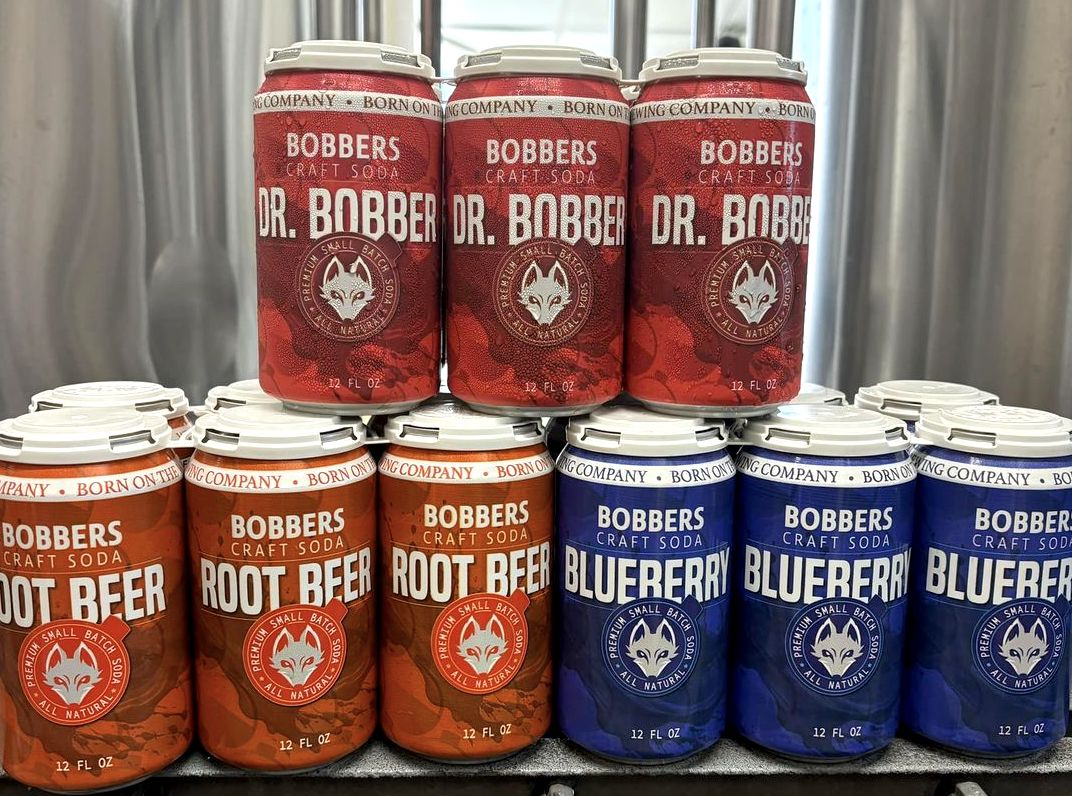

This year, Fox River has introduced a range of new products that have nothing to do with barley malt and hops. The brewery has released a line of craft sodas, hard tea, hard lemonade, and continued its line of hard seltzers. “The decision was made late last year to try these periphery beverages out and see if any of them made sense for us,” says Roth. “We were looking at the trends. It made sense to at least take a look at it.”

Oddly enough, the strategy may have actually helped beer sales. Fox River’s Oshkosh facility is the only brewery in Oshkosh that has seen its beer production increase this year; by a modest three percent. Roth will take that as a win for now. “It’s a cyclical thing,” he says. “These trends come and go. It’s like the thing with ready to drink cocktails. They pop up every five or ten years and become trendy, and then cycle back out. I mean, craft beer has been around long enough now that people don’t see it as something new anymore, which is fine.”

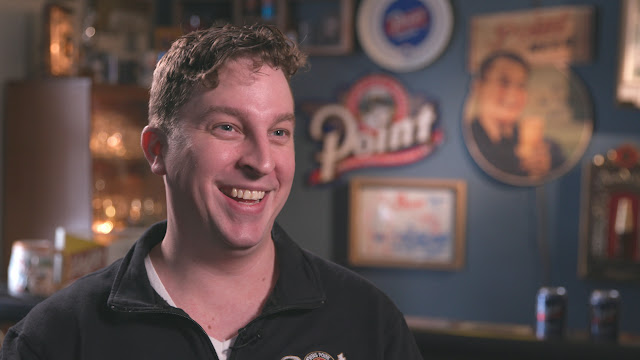
Fox River Brewmaster Drew Roth.

If craft beer has crossed over from the fashionable to the familiar, then Fox River is one of the better Wisconsin examples of how that looks on the ground. Next year, the brewery will celebrate its 30th Anniversary. Of the 21 breweries that have operated in Oshkosh since 1849, Fox River is now fourth in terms of longevity. The only breweries here that have survived longer were the venerable Rahr Brewing (91 years), Oshkosh Brewing Company (77 years), and Peoples Brewing (59 years).

This month, Fox River is releasing two beers connected to that legacy. The first is 175 Bock, a lager made in recognition of this year’s 175th anniversary of the beginning of commercial brewing in Oshkosh. The beer, which will be available on draft and in a special commemorative can, pays tribute to the Bock beers that were wildly popular in Oshkosh for over a century.


 “This is an older style of American lager,” Roth says. “It’s based on a pre-Prohibition type of beer. We used American malts and a little corn, like they did in those older recipes. We also used locally-grown hops from Hidden Valley Hops Farm in Winchester.” The blend includes hops cultured from rootstock dating back to the 1840s discovered at the site of one of Winnebago County’s first hop farms in Allenville. “I’m looking forward to getting this packaged,” Roth says, “the flavors are really nice.”

And then there’s a beer with a mouthful of a name: Gambrinus was a Real SOB. The beer came onto Roth’s radar when he judged at a homebrew competition held by the Society of Oshkosh Brewers. “It was by far the best beer in the competition,” Roth says. “It’s a dark lager, a style of beer we like brewing this time of year.” The competition beer was made by Society of Oshkosh Brewers’ member Scott Westpfahl. The recipe is from the late 1800s when the Gambrinus Brewery on Harney Avenue used it to make its Kulmbacher Bier. Roth scaled up that same recipe for his “Gambrinus” beer. “We like working with the SOBs,” Roth says. “They represent a really passionate chunk of the craft beer consumer in this city.”


Fox River Lead Brewer Patrick McHugh (left) and Scott Westpfahl of the Society of Oshkosh Brewers on the brew deck at Fox River making "Gambrinus."

The contrasting strains of traditional and trendy make for a complex juggling act for Roth, who is into his sixth year as brewmaster at Fox River. He oversees brewing operations at the Fox River brew houses in Oshkosh and Appleton and directs a crew of six other brewers. “It’s been a challenging year for sure, but I‘m more settled in than anything else, so we’ve been able to handle it,” Roth says. “That said, I’m hoping this coming year will be a little less hectic. We’re streamlining things and getting more targeted. But there’s always going to be something new to contend with. It’s just the nature of the business.”


Email me at OshkoshBeer@gmail.com to receive an email notification when I publish a new post. Your email address will never be shared or sold.

Wednesday, June 19, 2024

Can Can and the Return of the Embedded Bar

Can Can, a boutique and bar at 584 N. Main Street, will have its official ribbon-cutting on Wednesday, June 19 at 11 am. The ceremony introduces the beginning of something Oshkosh hasn’t seen in over a century: a shop wrapped around a bar selling beer for on-premise consumption. Kate Voss, the owner of Can Can, is tapping into a way of doing business that was once commonplace here.

Kate Voss at Can Can. Photo by Michael Cooney.

Voss hit upon the idea of combining a boutique with a bar a few years ago after visiting a shop in Denver based on a similar premise. “I was like, what? This is my heaven,” Voss says. “Who doesn't want to have a drink while they shop? I got super inspired by this place.”

But when Can Can opened in February, the bar at the back of the boutique was bone dry. “It turned out to be really tricky getting the license we needed for the bar,” Voss says. “The city had a little bit of an issue. They didn’t know what to make of the idea. They didn’t know how to deal with it. We were kind of in this pickle.”

The confusion over licensing was, perhaps, predictable. Oshkosh city government hadn't dealt with someone like Kate Voss since the early 1900s. But in that earlier era, city officials had plenty of experience with business owners who combined their bars with diverging lines of trade. The practice was established before the name Oshkosh even appeared on a map.

When George Johnston opened his tavern in the 1830s on land that is now part of Riverside Cemetery, he coupled his hospitality trade with a ferry carrying travelers across the Fox River. At Philip Wright’s “Groceries and Provisions” store on Main Street in the 1840s, a cask of beer was kept on tap for shoppers seeking refreshment. Throughout the late 1800s and early 1900s, Oshkosh was home to scores of grocery stores with embedded saloons. At the same time, Fred Zielke's bar on South Main Street doubled as a men’s clothing store. And what is now Bob's Trails End once operated as a barbershop/tavern.

By the time Prohibition arrived in 1920, Oshkosh’s combination bars were nearly extinct. They were officially extinguished in the 1930s by a stack of new laws regulating alcohol sales in the post-Prohibition era. Kate Voss wasn't setting out to revive the tradition when she opened Can Can. It was just a natural extension of her way of doing things.

Kate Voss with her newly minted beer license, May 25, 2024.

The bar at Can Can isn’t the first thing you notice when you enter the shop. What’s most prominent is the overriding aesthetic of the place. The mix of art, handmade gifts, and novelty items imbues the space with a distinctly vintage character. The retro aspect seems to color almost everything Voss is engaged in.

Outside of Can Can, Voss is an award-winning vocalist. She performs regularly with her husband, guitarist Jason Goessl, in the duo Sundae + Mr. Goessl; and with her band Kate Voss & The Hot Sauce. Both acts lean heavily into vintage jazz and pop styles. “The music is really at the core of all of this,” Voss says. “I'm very into things from the 1920s all the way to the 1960s. You know, the 70s and 80s, that’s a little too modern for me. I always feel like maybe I wasn’t born in the right decade.”

Kate Voss and Jason Goessl.

Which makes her arrival at 584 N. Main Street especially fitting. The building Voss leases for Can Can has a history that anticipated her vision for the shop. It was built about 1897 and became a saloon soon after. The tin ceiling shining above Can Can was once bathed in cigar smoke drifting up from a bar run by Richard Pommerening in the early 1900s. Pommerening and his wife, Josephine, lived in the rooms above. Their saloon, known as The Owl, was the anchor of the Pommerening’s business, but Josephine, who was also a performing musician, ran a series of side ventures in the building. At various times she taught piano, conducted an art school, and made and sold women’s hats there.

All those distant coincidences were news to Voss until after she had Can Can up and running. “You know, from the start there’s been this weird synchronicity going on here,” she says. “It's so funny how it just all worked out this way.”

A Deeper Dive on 584 North Main
The building at 584 N. Main Street was constructed sometime around 1897. The first tenants were the Roewekamp brothers, Carl and Henry. They ran a wholesale grocery business there for a couple of years. In 1900, they moved out and over to Washington Avenue where they went into the wholesale liquor and saloon supply business. The Roewekamps eventually built one of the largest wholesale liquor outlets in Northeast Wisconsin.

A Roewekamp brothers whiskey bottle from the early 1900s.

After the Roewekamps left, a psychic named Mrs. Dr. Nichols moved in for a short stay. The advertisement below mentions her address, “278 Main street, near Polk Street.” That address changed to 584 N. Main after a renumbering ordinance went into effect in 1958. The former Polk Street is now E. Parkway Avenue.

July 6, 1900; Oshkosh Daily Northwestern.

The first saloon at 584 N. Main opened in the summer of 1901. It was put there by Henry Zinn. Before launching his bar, Zinn lived and worked in the building one door north at what is now 586 N. Main. That property had been home to the Fourth Ward Bakery operated by Zinn’s father since the 1870s.

Zinn's Fourth Ward Bakery in 1902. A sliver of The Owl Sample Room can be seen at the extreme right edge of the photo.

Henry Zinn called his saloon The Owl. That name would remain attached to the bar for the next 20 years. The Owl was perched at the north end of what was often referred to as the Nickel Side of the street. It was composed of a thick congregation of saloons spanning the east side of Main from the Fox River to Parkway Avenue. The bars offered mugs of lager beer at a nickel a pop. The strip was also the source for much of the mayhem Oshkosh came to be known for in the late 1800s and early 1900s.

Henry Zinn left Oshkosh in 1909 and headed for the Upper Peninsula of Michigan to open a pool hall. The Owl was taken over by a Southside bartender named Richard Pommerening. He and his wife Jospehine moved into the apartment above The Owl.

During his tenure there, Richard had a couple of partners helping run The Owl. The ad below is from 1910 when John Scheuer was working with him. Scheuer was regionally famous as a motorcyclist who raced, and regularly crashed, Indian Motorcycles.

Richard Pommerening was said to possess a fine singing voice. But that was about the only good thing said about him. His wife Josephine, as I’ve outlined above in the Can Can portion of this story, had a lot of interests and among them was an aspiration to rid herself of her husband.

Josephine filed for divorce from Richard on at least three occasions. In one of her petitions she said that Richard was a habitual drunkard, “a man of ungovernable temper, of an abusive and violent disposition, profane and vulgar.” It gets worse. She said Richard had repeatedly assaulted her and during one of his eruptions choked her and put a loaded revolver to her head promising to kill her.

Richard said that Josephine was insane and needed to be institutionalized. He claimed she was involved with a woman of “bad repute” who Josephine sometimes lived with on Division Street. The couple split up several times, but always reconciled. Luckily, they never had children.

In 1920, The Owl went dry with the start of Prohibition. Unlike most other Oshkosh saloon keepers, Richard didn’t immediately convert his place into a speakeasy. Instead he closed The Owl and the couple moved to a rented house on Merritt. Richard took a job at the Giant Grip horseshoe factory on Osceola Street.

But he immediately returned to slinging drinks when Prohibition ended in 1933. Richard became a bartender at the President Bar at 430 N. Main Street. Today that place is known as Bar 430.

Happy New Year from Richard “Dick” Pommerening. Hans and Fritz Merten were the owners of the tavern. Oshkosh Daily Northwestern, December 20, 1944.

In 1939, Richard and Josephine bought a home near the corner of Jefferson and Merritt. They remained in Oshkosh until 1946, when they relocated to Los Angeles, hoping the mild climate would improve Richard’s failing health. But California proved fatal to both of them. Josephine died on December 14, 1949. She was 69. Richard Died ten days later on Christmas Eve. He was 71.

Until Kate Voss and Can Can came along, the building at 584 N. Main Street hadn’t housed a bar since the Pommerenings left in 1920. In the intervening years it’s been home to shops selling truck parts, paint, radios, bikes… The image below is from the mid 1940s when it was a tire store.


The old place looks much better now.


Tuesday, January 30, 2024

A Beer By Any Other Name

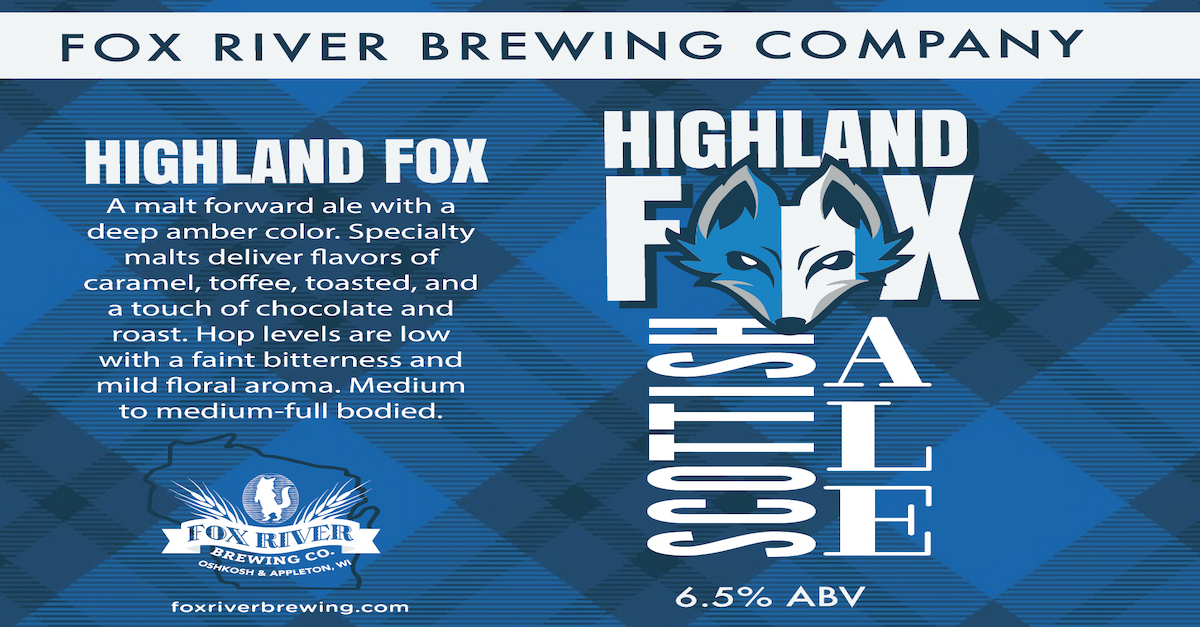
The longest-lived craft beer made in Oshkosh has a fluid identity. It’s a Scottish Ale from Fox River Brewing Company, and it was first served to the public at Fratello's Italian Cafe on Friday, December 15, 1995. On that day, it was called Caber Tossing. In 2014, Caber Tossing became Marble Eye. This February, the name will change again, this time to Highland Fox Scottish Ale.


Drew Roth is the head brewer at Fox River. He knows what’s coming next. “It’s kind of a running joke around the brewery. People will insist that Caber Tossing and Marble Eye were completely different beers with different recipes,” he says. “I can pull out recipe sheets and show them that they’re the same beers. It doesn’t matter. They just tell me I’m wrong.”

Drew Roth

Roth has 29 years of brewing logs backing up his claim. The recipe he is using for Highland Fox adheres, in every important respect, to the recipe that former Fox River head Brewer Al Bundee entered into the logbook for the first batch of Caber Tossing on November 25, 1995. “It’s a different name, but the recipe is not changing in the slightest,” he says.

In the trend-riddled world of craft beer, that kind of longevity is practically unheard of. But then, this beer was an outlier from the start. When Caber Tossing was introduced it became the strongest year-round beer ever produced in Oshkosh. At 6.5% ABV, with its deep amber color and caramelized malt flavor, Fox River’s Scottish Ale was altogether different from the mild, pale lagers that had been dominant here for a century.


Beer connoisseur and brewer Mark Stanek was among the early adopters. He became acquainted with Caber Tossing after moving to Oshkosh from Madison in 1997. “That beer was outstanding,” Stanek says. “It was malty in flavor and aromatics. It was one of the great beers from that time frame and was really well respected.”

In 2001, Caber Tossing took the gold medal in the Scottish-style ale category at the Great American Beer Festival. By 2006, it was the best-selling beer in Fox River’s portfolio. Caber Tossing-cum-Marble Eye held that position until 2014 when BLU Bobber became a year-round beer and the brewery’s runaway bestseller. Ten years later, Marble Eye, soon to be Highland Fox, still holds its own.

“It just continues to be that beer that consistently sells,” Roth says. “We have discussions every year about what beers are going to get pulled to make room for new things, but Marble Eye has never been up for discussion. It just keeps going, and we’re going to keep brewing it.”

That’s a rare declaration to attach to an amber beer these days. Nationwide, the popularity of darker-hued brews has fallen significantly. The decline is illustrated by the recently diminished Fat Tire Amber Ale. Ten years ago, Fat Tire was among the most popular of all craft beers. But deflating sales led to Fat Tire's reformulation last year. Gone is the amber. Fat Tire now wobbles along, drained of its color.

“Wisconsin is kind of a weird market in that way,” Roth says. “A lot of people here still want those darker beers. It might be our climate, or some of the traditions around here, I’m not really sure. Marble Eye is often our second or third best seller on draft even in the summertime.”

It's a beer that has been bucking trends for so long that it has entered the pantheon of Oshkosh classics such as Chief Oshkosh, Peoples Beer, and Rahr’s Elk’s Head. At 29-years old, what is about to become Highland Fox is the youngster of that bunch. Yet it remains an old friend to those who discovered their love of flavorful beer through Caber Tossing. “I know I’m going to hear about it, but I like the new name,” Roth says. “Highland Fox embraces our identity and what the beer is about. We're getting back to our roots on that.”

A slightly different version of this story appears in today's Oshkosh Herald.

Wednesday, December 14, 2022

Upping the Ante on the Downtown Beer Scene

A slightly different version of this story appears in today's Oshkosh Herald.

Adam Carlson likes what he's seeing downtown. “For years, there was so much attention given to what was happening west of 41, but now you’re seeing the focus come back to downtown. And you have business owners who want to support that. There are resources being focused down here. People are beginning to realize that there's a lot of untapped potential in downtown Oshkosh.”

Carlson is among those tapping in. Along with his father, John Carlson, and his aunt Julie Wolk, Adam Carlson owns and operates Gardina's Kitchen & Bar at 448 N. Main, and The Ruby Owl Tap Room at 421 N. Main. In November the Carlson group, which does business as Carlson's Fine Foods, purchased two additional downtown establishments: The Varsity Club, a pub and pool hall; and Fletch's Local Tap House. Both are in the 500 block of N. Main Street.


The acquisitions have led to an unusual consolidation that last occurred in the 1940s, when the Oshkosh Brewing Company owned six downtown taverns. The brewery's influence extended to the approximately 24 draft lines serving beer in those establishments. That figure is dwarfed by what Adam Carlson now has under his control.

"We have 92 draft lines between the four places," Carlson says. "It's a lot of beer on tap, which is great. What I want is a well-curated selection that has diverse tastes and price points. It's easy to fall into the trap of letting a beer distributor guide you. We've tried to stay away from that. We want to keep the customer in mind, not the distributor."

Adam Carlson

Having that sort of buying power is something Carlson has been anticipating. "We've been looking to expand like this on and off for the last couple of years," he says. "We looked at a fair number of places, but they just weren't the right fit. When the opportunity with Jeremy came along it had everything we were looking for."

Jeremy West owned and operated the Varsity Club and Fletch's before selling both businesses to the Carlson family. "It just started as a conversation and it was immediately apparent that we were so aligned," Carlson says. "I can't sing his praises highly enough. Truly, I can see why there was such a great outpouring when he announced that he was selling, because he's done such a fabulous job and had a great vision."

The Varsity Club billiards parlor.

Carlson intends to honor that vision. "We're not making any changes to either the Varsity Club or Fletch's. Jeremy and his staff have done a phenomenal job building those businesses to where they are today. We're coming in looking to continue that level of service. And Jeremy is going to stay on to help with the pool side of things. He wants to continue doing that. He's a big name in the pool industry in Northeastern Wisconsin. He's done so much for pool in this area."

Carlson believes the commitment to downtown will pay off in the years to come. "I think we have four distinct businesses now and the key is that they're all on Main Street," he says. "If I'm looking at the long view of things and the plans for the Sawdust District and South Main Street, if they can bring that vision to fruition, then I think that will be significant for the success that downtown as a whole can enjoy. Oshkosh's downtown is a fairly small area. Expanding that to South Main Street helps everybody's cause for sure. Especially for our industry, downtown is a great place to be."

Tuesday, February 22, 2022

John Harry and the Ongoing Story of Peoples Beer

America was home to more than 400 breweries in 1950. By 1980, three-quarters of them had closed. Those that went under were soon forgotten by almost everyone, save for breweriana collectors and local history enthusiasts. Recently, though, there’s been a stir of national interest in one of those lost breweries. That brewery was located in Oshkosh.

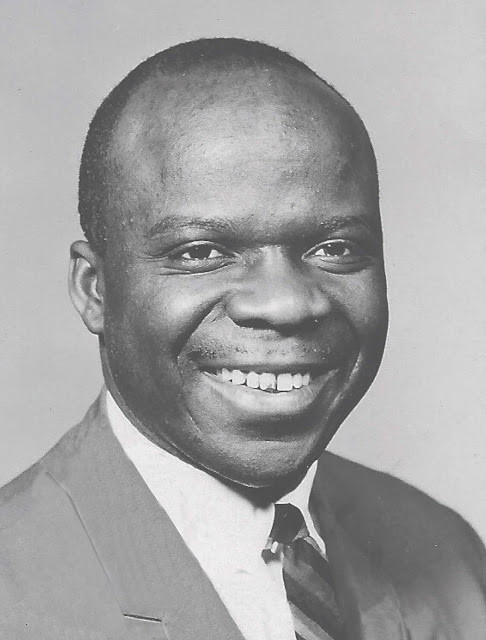
Peoples Brewing Company had been producing beer on South Main Street for 59 years when it closed in 1972. The closure had been preceded by two, tumultuous years that began with the sale of the brewery to a Milwaukee-based group led by Theodore Mack. With that, Peoples became the first black-owned brewery in Wisconsin.

Theodore Mack

It’s those two years that have ignited interest in a brewery few outside of Wisconsin had heard of until recently. John Harry is one of the people responsible for raising that awareness. On Thursday, February 24, the Oshkosh Public Museum will host Harry via Zoom for a public discussion titled “Peoples Beer: The Story of Wisconsin's First African American Owned Brewery.”

John Harry

Harry was recently named Executive Director of the Portage County Historical Society, but before taking that job he had immersed himself in the 1970s incarnation of Peoples Brewing when Theodore Mack was its president. Harry had come upon that story while preparing for a transition of his own. "I was a radio DJ for 10 years and decided I was going to change careers," he says. "I've always loved history and I was at a point in my life where I was like, let's just go for it."

He moved to Milwaukee where last year he earned a master's degree in public history at the University of Wisconsin-Milwaukee. There, he focused on black capitalism as it pertained to the Theodore Mack era at Peoples. "Nobody was writing about it on an academic sphere," Harry says. "I found my niche there as a historian."

Harry began gathering oral histories from people who had been connected to the brewery in the early 1970s. Though Theodore Mack had passed away in 2019, Harry traveled to Georgia to interview his widow, Pearl, who had been the corporate secretary at Peoples. “It was one of those things where you ask yourself, is this really going to happen?” he says. “I sat down and had about a half hour conversation with her. You're talking to this woman who was married to Ted Mack; nobody knows this guy better. It was really intense.”

In July of 2020, Harry shared much of what he had gathered in a piece for the Good Beer Hunting website titled “Beer for the People — How Wisconsin’s First Black-Owned Brewery Took on the Entire Beer Industry.” The article placed what had occurred at Peoples in the 1970s within the context of minority entrepreneurship and documented Theodore Mack's struggle for success and ultimate failure in Oshkosh.

The timing was fortuitous. Against the backdrop of 2020's Black Lives Matter protests, the lack of diversity in American craft beer was being called out in a more forceful manner. For those concerned, Harry's article provided a historical frame of reference that had been missing. Peoples Brewing, which had closed almost 50 years earlier, was suddenly receiving more widespread attention than it had during its peak years in the 1950s.

Shortly after Harry's article appeared, a brewery in Sacramento, California announced that it was claiming the legacy of Peoples Brewing for its own. With the blessing of Theodore Mack's son Ted Mack II, Oak Park Brewing co-opted the Peoples Beer brand and began releasing their product under a label lifted directly from the defunct Oshkosh brewery. 


Harry published a follow-up article for Good Beer Hunting that addressed some of the more troubling aspects of the Oak Park situation.

"Anytime you give more exposure to an untold story about an underserved population, I think that that's a good thing," Harry says. "I think it's interesting, though, that there's no inclusion of the community of Oshkosh. As a question of ownership or memory of something like Peoples Beer, the people who remember it best are going to be in Oshkosh. The community didn't have their chance to weigh in. It became less a beer of the community and more a beer of black history. I think you have to tell that part of the story, but you can't also ignore the 60 years of history that led up to that."

It's a story that continues to unfold and one that Harry will explore fully in his talk for the Oshkosh Public Museum on Thursday, February 24. To attend, go to oshkoshmuseum.org and click the Programs/Events tab at the top of the page (here is a direct link to the event page). 

This article also appears in the February 23 edition of the Oshkosh Herald.

Wednesday, November 24, 2021

Oshkosh's Lager-Beer Revival

Oshkosh began as a lager-beer town. Our first breweries were established in 1849 by German-born brewers who filled their barrels with the cool-fermenting lager beers they had learned to brew in their homeland. Those beers were embraced here. Lager styles of beer would remain predominant in Oshkosh until the end of the 20th century. Then craft beer came along. And that meant ale.

With the launch of Fox River Brewing in 1995, ale brewing supplanted Oshkosh's history as a center for lager-beer production. The difference between the two families of beer comes down to yeast, time, and flavor.

Ale is fermented with yeast that prefers warm temperatures; usually around 66º Fahrenheit. Ale is a quick brew often going from kettle to glass in 14 days or less. The process tends to produce a beer with a fruitier flavor profile. Lager, on the other hand, is made with yeast that thrives in a cooler environment; about 50º Fahrenheit. After fermentation, a lager is typically matured for a month or more at temperatures close to freezing. It leads to a beer with a “cleaner” taste allowing the more subtle aspects of the ingredients to shine through.

Lagers have earned a reputation for being more difficult to brew. That's one of the reasons it tends to be ignored by craft breweries. But that's beginning to change. According to Nielsen, a market research firm, the production of craft lagers grew by more than 9% last year, making it among the fastest-growing segments of the beer market. The primary contributors in Oshkosh to that increase have been Bare Bones Brewery and Fox River Brewing.

This month, the two breweries will underscore the trend with the release of a collaboration beer named The Fox and the Hound, a golden-hued, hop-forward lager that will be available at the taprooms of both breweries. For Drew Roth, head brewer at Fox River, and Jody Cleveland, head brewer at Bare Bones, the beer presents an opportunity to demonstrate how compelling a good lager can be.


"I think there's an expectation that lager is just one thing," says Cleveland. "A lot of customers think of it as something that's always light and not very flavorful. It's nice to show that this type of beer can be more than that."

Roth says that at Fox River, that realization is already taking place. "Our customer base is one that still very much gravitates towards darker beers and they tend to understand that a beer like our Oktoberfest is a lager," he says. "So, there's already some knowledge among our customers that lager doesn't necessarily have to be fizzy, yellow beer."

Drew Roth (on the left in dark shirt) and Jody Cleveland brewing The Fox and the Hound.

Cleveland and Roth took a decidedly craft-beer approach when they developed the recipe for The Fox and the Hound. It's an all-malt beer brewed with American malts and Grungeist hops, a proprietary hop grown in Germany. A post-fermentation "dry-hop" addition was used to highlight the notes of peach and passion fruit that Grungiest brings. It's a technique not usually associated with lager-beer brewing.

"We've learned that we really like to dry hop our lagers," Roth says "A little bit of dry hop goes a long way in this sort of beer and it really does amp it up a notch." The approach may be somewhat novel, but it's indicative of the evolution of lager brewing here. Both Roth and Cleveland began their careers brewing ales. That background informs their approach to making lager beers.

"I did not even like lager beer for a long time," says Roth. "I went into craft beer as an IPA hop head. At the time it was really hard to find good lagers. It wasn't until I was in Eau Claire and had Lazy Monk's beer that I started thinking, alright this is pretty good. After that, I went back to homebrewing for a while and immediately started brewing lagers."

Cleveland followed a similar path. "When I started homebrewing, all I wanted to brew was brown ale," he says. "But gradually I started doing lagers and then ended up brewing it quite a bit, mostly historic styles and beers that had been brewed in Oshkosh before craft came along. Now, it's my favorite type of beer, so I would prefer to brew that."

At Bare Bones, Cleveland makes the only year-round lager produced in Oshkosh. The brewery's Oshkosh Lager is an homage to the sort of lagers that were widely produced in Oshkosh for most of the 20th century. "The fact that these beers are selling well helps me justify brewing more of it," Cleveland says.

Roth shares that view. "I mean you have to brew what sells," he says, "and right now the lager beers are selling, so we're going to continue making them. I personally like them a lot, so I'm not disappointed about brewing more of them."

Wednesday, November 10, 2021

Those Barrels at Fifth Ward

Fifth Ward Brewing Company will celebrate its fourth anniversary on Saturday, November 13 at the brewery's South Main Street taproom. The annual event has grown into a showcase for Fifth Ward's barrel-aging program. This year will bring that into focus with the brewery releasing five barrel-aged beers over the anniversary weekend. They are among the most complex beers ever produced by an Oshkosh brewery.

"We got into barrel aging three years ago," says Zach Clark, who co-owns Fifth Ward with Ian Wenger, where they share the brewing duties. "We're at a point now where it's coming together in a really good way."

Zach Clark of Fifth Ward during a tour at the brewery.

In the world of craft beer, three years is an eternity. But there's no way to rush this sort of thing. The concept sounds simple. A finished beer is racked into a used spirits barrel where it matures and takes on qualities of the barrel and the liquor that had resided there. The actual execution, though, is much more involved.

It all starts with a recipe, or in this case several recipes. "It's never just brewing one batch of beer, putting it into a barrel, then coming back 12 months later and saying here's a barrel-aged beer," Wenger says. "We'll brew three or four completely different recipes, each with a specific quality in mind. One might be dryer and another sweeter. Another might be stronger with more bitterness."

"It's about trying to get the right balance," Clark chimes in. "We're always keeping in mind what we want the finished product to be. In the end, when we get to the blending, we have to have those different flavors to work with to get what we're looking for."


The recipes may be the least of it, though. These are process-driven beers. And it's a process unique to itself. The deviations begin upstream with the wort - the sugary liquid coaxed out of a mash of malted barley and water. For most beer, the wort is boiled for 60 to 90 minutes.

"With these beers, we'll go with a 13 or 14-hour boil," Clark says. "We're trying to thicken the wort, so we boil it down until it’s reduced to the volume we want."

"And you really need that super-long boil to caramelize some of those sugars," Wenger adds. "You need that for color, too. We want that dark-brown, cappuccino-like foam."

Fermenting a wort so thick with malt sugar is no less of a challenge. "With that kind of viscosity you need to pump in a lot of oxygen so the yeast can survive and stay healthy," Clark says. "Otherwise it will just quit on you. We literally have to pump oxygen into the tank during the fermentation to keep it going."

At the end of fermentation, the beers are dark behemoths that can be as strong as 14-percent alcohol by volume. Into the wooden barrels it goes. Over the past year, Clark and Wenger have been working with approximately 40 oak barrels. Their first use was in the production of spirits such as bourbon, rye whiskey, or tequila. About a third of those filled this year at Fifth Ward have been holding bourbon for the past 10 years. Each barrel is topped up with 53 gallons of beer. Then the waiting begins.

The back half of the brewery is the barrel cellar. Stacked four high, the barrels rest in an environment where the Wisconsin weather will add another layer of complexity. "In the summer the barrels up on top will get to be over 85 degrees," Wenger says. "And in winter it will get much colder back there than it does in the front of the building. They go through quite a range of temperatures."

Time is another influence. A full year of aging isn't unusual. "The youngest we've ever pulled was at five months, but that's not ideal," Clark says. "That's not enough time to create the flavors we're looking for."

At the end of September, the barrels employed for this year's batch of beers were brought out of the cellar for a tasting to determine the blends that will create the final beers. It's a heady art, akin to a painter mixing colors to create a specific hue. "We want to hit that right balance using the different qualities coming out of the individual barrels," Clark says.

Wenger pulling samples from the barrels.

"They're all components at that point," Wenger says. "You're looking for the best flavor and you have to build it out of those separate parts."

The extensive process produces a remarkably rich and nuanced beer. Big Willy Style – a blended, barrel-aged barley wine that will be released at the anniversary celebration – has booming notes of bourbon, vanilla, burnt sugar, oak, and raisin. At 16-percent alcohol by volume, it's stronger than most wines and has a depth of flavor that seems inexhaustible.

Until recently, that’s not the sort of beer you'd expect to find in a can. But this year, for the first time, Fifth Ward will release these beers in 16-ounce cans. "It's really what our customers are expecting now," says Wenger.

Both Clark and Wenger are intent on growing their barrel-aging program. "We could probably get this up to 200 barrels," says Clark. "But right now we just don't have the tank capacity to fill that many. We're working on that. This is still just the beginning."

Wednesday, September 29, 2021

Adam Carlson, Ruby Owl, and a Decade of Craft Beer in Oshkosh

For a decade now, Adam Carlson has been putting his stamp on the Oshkosh beer scene. You've known his influence if you've ever purchased beer at Gardina's Kitchen & Bar or The Ruby Owl Tap Room; each located on North Main Street in Oshkosh. In addition to being part owner and manager of Ruby Owl, Carlson curates the beer line-up for both venues. The taplists at these places tend to stand apart from what you'll find in other taprooms in town. That's because Carlson is not your typical, Oshkosh beer purveyor.

Adam Carlson

Carlson came to beer from the wine world. His drinks career began in 2010 as bar manager for what was then called Gardina's Wine Bar & Cafe. There, his nascent interest in craft beer got the better of him. It led to Gardina's installing a draft-beer system that Carlson filled with an ever-rotating cast of hard-to-obtain specialty ales. “The focus from day one was to be all craft all the time,” Carlson says. The success of the endeavor led to the opening of the beer-centric Ruby Owl in 2016.

Since then, Ruby Owl has become the benchmark bar for craft beer in Oshkosh. When Ruby Owl was launched five years ago, craft beer here was still something of a niche product. It went mainstream in the interim. And with that has come a new type of consumer.

"The snobby seriousness attached to the early days of craft beer has fallen," Carlson says. "We see a lot of people now that just want to enjoy a beverage and if that beverage happens to be beer, well that's great. But they're not involved in the minutia or the provenance. They just want something that's going to taste really good, something that might even transcend beer."

Which has led to Carlson pouring beers of a sort that would have been unimaginable a decade ago. "There's now a lot of overlap with things like hard seltzer and cocktails," he says. "The distributors will come to us with beers that are so packed full of fruit purees, and milk sugars, and those sorts of adjuncts that they barely qualify as beer. That's not to denigrate those things, but if you're a beer purist, that's not going to appeal to you."

The point, he says, is to draw from a larger pool of consumers. "The breweries are marketing these beers to compete in other categories. In a way, that's brilliant. We see where it's engaging a segment of the market that in years past would not have been at all interested in traditional beer."

"I can see a similar arc with wine, where it was a trend started by vinophiles and it picked up steam and hit the mainstream and you had an explosion of mass-marketed wine. It's not traditionally acceptable to do to wine what is being done to beer, but similarly to beer, these are wines made to attract that mainstream consumer who just wants something fruity and fun to drink."

Carlson isn't judgmental about the direction the market has taken. "To point these things out is not an indictment of anything," he says. "It's not that a brewery is wrong for making something like a marshmallow pina colada sour. It's just the cycle of things." The current cycle may not end anytime soon, but Carlson is noticing that some consumers appear to have grown weary of it.

"We're seeing more people coming in looking for lagers and for some bitterness in their IPAs," he says. “We’re also seeing more people who want less alcohol. Eventually you come to the realization that it's as much about the people you're with as the beer, and that you'd rather have two or three 4.5 percent beers instead of one super-high alcohol beer. There's a growing demand for well-made beer that doesn't have anything to hide. It's reverting back to something that's clean and crisp and refreshing."

That's a segment that Carlson likes to encourage. "A lot of what I put on tap is driven by what I want to drink," he says. "There are a number of breweries I'm loyal to that make consistently good beer. Breweries like Lakefront, New Glarus, Lazy Monk. I find myself coming back to their beers. They may not be flashy, but everything is always well made and their prices are fair. Those aren't the breweries that are going to set us apart, but I always like to have them in the mix."

All of which hasn't made Carlson's job any easier. Curating a tap list that can satisfy such diverse expectations has grown increasingly challenging. "When I started, the options were so limited," he says. "But now there are so many vendors, distributors, and salespeople out there vying for your draft lines, and vying for your time, that it's become dizzying. Everything is moving at such a hyper-speed that it's kind of crazy. It's never been like this before."

A slightly different version of this story appears in today's Oshkosh Herald.

Wednesday, July 21, 2021

Unearthing Our Buried History

It's probably the last place you would go in search of treasure. After all, the pit of an outhouse is not usually where a thing of value gets deposited. But Bob Bergman and Matt Hostak will tell you otherwise. They’ve recovered scores of valuable and historic items from the sites of old Oshkosh privies. Some of the underground chambers they’ve explored have held their secrets for more than 100 years.

Bob Bergman (in the hole) and Matt Hostak during a recent dig on the east side of Oshkosh.

Before the 1890s, most people in Oshkosh did their "business" in outhouses adjacent to their homes. Those privies were phased out as the Oshkosh sewer system developed in the 1890s.

An 1887 photo showing privies behind homes on Otter Street.
Photo courtesy of Matt Hostak.

By the turn of the century, many of the outhouses had taken on a new role. "Basically, what they had was this continually dropping garbage pit," Hostak says. "Often, they were used that way for 50 years or more. So as you dig down, you see a pretty clear downward aging of artifacts."

A sampling of the Oshkosh beer bottles dug from privies (click image to enlarge).

Bergman and Hostak are members of the Winnebago County Historical and Archaeological Society and they've been doing this kind of exploration in the Oshkosh area for decades. "If you're not interested in history, this is not the kind of thing you would do," Bergman says. "The history that goes along with it is just amazing."

It's their study of Oshkosh history that leads them to the point where they put shovels into the ground. "I've collected a comprehensive archive of Oshkosh maps beginning with pre-Civil War era maps," Hostak says. "We begin by consulting those maps and establishing the historic use of a property, including detailed information about any structures that were on it. Some of these historic maps actually show the location of the outhouse structure."

Detail from 1890 fire-insurance map of Oshkosh showing privy locations.

Often, their research takes them to either the east side of Oshkosh or to the south side of the city along the Fox River. "The closer to the river and the closer to Main Street are usually the best," says Hostak. "Those are the areas where this community grew out from."

Next, they survey the property in question. "The privies were kind of hidden from the view of the street," Bergman says. "Normally they would be behind the residence. A favorite spot was in the corner at the rear of the lot. We'll look for depressions or low spots in the ground. Often you'll see lilac bushes near where the outhouse would have been. That's usually a dead giveaway."

Then comes the ticklish part: explaining to a property owner that an outhouse once stood in their yard and asking for permission to dig it up. "Let's just say it's not something a shy person would be very good at," Bergman says. "You get all kinds of different reactions. Usually, though, after you explain your interest in history and exactly what you're looking to do they get really intrigued and interested in what you're doing."

Part of that explanation includes the assurance that the property won't be damaged. "Nothing is mechanically done, it's all done with hand tools," Bergman says. "And we don't dig randomly. We check for utilities and we use a probe that does no damage to find the exact location of the privy. When we're done, the hole is filled and the turf is put back in place. We like to say that it looks better when we leave than when we arrived."

Bergman and Hostak prepping the dig site.

"Most owners are responsive," Hostak says. "What often happens is that once we begin digging on one property, the adjacent property owners very frequently become interested, and then they offer us the opportunity to dig on theirs. It kind of just snowballs in that respect."

Their average excavation is four feet in diameter and approximately five feet deep. Contrary to expectations, there's nothing especially onerous about the process. The biological contents of the pit have long since been broken down and converted to odorless soil. As Hostak says, "There's nothing 'icky' about it."

It's a methodical undertaking. They descend layer by layer, reading the soil as they go and taking care not to damage anything that may be hidden below. "We'll find the most delicate items," Hostak says. "We've found light bulbs from the 1800s that were still intact." During one dig Bergman, who collects antique bottles, uncovered the oldest bottle in his extensive collection – an 1869 bottle from Oshkosh soda water producers Hickey and Holcomb.

Bergman holds his 1869 Hickey and Holcomb bottle.

The most commonly found item, says Bergman, are medicine bottles that held elixirs prepared by local pharmacists. "It was like they were all drug addicts back then," he says. "You find a multitude from every pharmacist that was on Main Street." The mix of items often ranges widely. "Pistols, false teeth, syringes, breast pumps, eyeglasses; you just never know," Bergman says. "I once found a Morgan silver dollar."

Bergman with a host of bottles and flasks recovered during a dig on School Ave.

Their discoveries are a tangible representation of Oshkosh life as it was in an earlier era. "We almost always find things," Hostak says. "The remnants of anything used in a household will come up." Items of particular value are often divided among the diggers and property owners, but much of what they unearth is given away.

"I love finding the old stuff, but I can always find someone for whom it's more important or has more meaning, so it usually goes home with them," Hostak says. "We have donated many items to museums, historical societies, and other interested individuals. It's not at all just about us going home with stuff."

Bergman and Hostak are currently seeking sites for future digs. Interested property owners can contact either Bob Bergman at (920) 235-2871 or Matt Hostak at (920) 252-5844.

A slightly different version of this article appears in today's Oshkosh Herald.

Wednesday, March 31, 2021

Inoculator 24.8

The strongest beer ever produced by an Oshkosh brewery is about to be "unleashed." Bare Bones Brewery's Inoculator clocks in at a walloping 24.8% ABV. There's no formal record-keeping for this sort of thing, but Inoculator may very well be the strongest beer ever produced by a Wisconsin brewery.

Erin Bloch of Bare Bones with a five-ounce pour of Inoculator.

The idea came from Dan Dringoli, who launched Bare Bones with his wife Patti Dringoli in 2015. His thoughts began to drift in the direction of strong beer last year while his stepson Jared Sovey was working on the launch of Tight Barrel Distillery in Menasha. "Spirits have always intrigued me," Dringoli says. "I began thinking about how strong can you make a beer and I wondered why no one in Wisconsin was trying to make a super high-gravity beer. So, I challenged Jody to create 'the strongest beer' in Wisconsin. He did not let me down."

The Jody in question is Jody Cleveland, head brewer at Bare Bones. Dringoli had steered him into the unknown. Cleveland had never brewed a beer stronger than 12% ABV. After a couple of weeks of research, he began brewing.

The first step began eight months ago with Cleveland making wort: the sweet liquid that gets fermented into beer. The process went on for days and consumed 132 pounds of malted barley and 10 pounds of locally sourced maple syrup. Normally that would be enough raw material to produce about 310 gallons of beer. This time, it resulted in just 10-gallons of exceedingly strong beer. "We're hoping the demand will justify the cost of making it," Dringoli said.

Brewers, unlike spirits makers, are not permitted to use distillation to concentrate the alcoholic content of their product. So Cleveland had to produce a wort so rich in sugar that it would have the potential to create an extreme level of alcohol solely through fermentation. He used a method known as reiterated mashing. It's a technique that has been employed in recent years at both Fifth Ward Brewing and Fox River Brewing in Oshkosh to produce stronger than usual beers. Cleveland took it to another level.

He began by mashing three successive grists of malted barley. When the sugary wort came flowing out of the first mash, he replenished his mash tun with fresh malt and ran the wort back into it to create and collect more fermentable sugars. Now Cleveland had a wort rich enough to make a beer in the neighborhood of 16% ABV. That wasn't enough. So he went at it again with another fresh batch of malt. After boiling the wort for four hours he finally had the high-gravity liquid he was shooting for. "That wort was so thick," Cleveland said. "I mean it was just viscus, almost like syrup."

But there was a problem. Each time the wort passed through the tun, the new bed of malt would soak up a substantial portion of it. The long boil further reduced the volume. At the end of Cleveland's first 17-hour brew day, he had the sugar-rich liquid he wanted, but there was just so little of it. So he came back to work the next morning and repeated the process. Then he did it again the following morning. After more than 50 hours of brewing spread across three days, Cleveland finally had what he needed.

The wort was fermented with a special ale yeast able to survive in a high-alcohol environment. Most beer yeast goes dormant when it encounters alcohol levels around 10% ABV. This yeast kept grinding. The fermentation lasted weeks, and when it was nearly finished Cleveland split the batch in two. Half the beer was conditioned on oak chips stripped from the interior of a whiskey barrel. The other half was conditioned on oak cut from the inside of a cognac barrel. The finished beer was then blended back together and packaged in kegs.

Inoculator is dark bronze in color. It's thick, rich, and boozy with a smokey/sweet character that's surprisingly mellow for something just shy of 50 proof. "The flavor is pretty close to what I was expecting," Cleveland said. "But I'm a little surprised by how smooth it turned out. It’s certainly strong, and you feel it, but it’s pretty smooth."

Inoculator will be released at the Bare Bones taproom at noon on Friday, April 2, as part of the brewery's Unleashed Series of experimental beers. Because of its strength and limited quantity, it will be served in five-ounce pours with a limit of one per customer.

A slightly different version of this article appears in today's Oshkosh Herald.

Wednesday, February 17, 2021

Oshkosh Can Lines

In today's Oshkosh Herald I have an article about how our local breweries are increasingly favoring cans over bottles when it comes to packaging. I'll post the full article below for those who don't live in the Herald's delivery area.

But before we get to that, here's a look at just how different today's canning equipment is from that used by Oshkosh breweries in the 1950s. The video begins with footage of the Oshkosh Brewing Company's can line in 1956. That's followed by a recent clip of beer being canned at Bare Bones Brewery (NOTE: if the video does not appear in the space below you can access it here).


That Oshkosh Brewing Company clip is taken from a longer, video tour of the brewery. You can view that video in its entirety here. Now, onto the Herald article...

Breweries freshly embrace canning option
Oshkosh Herald, February 17, 2021
If you went to buy a six-pack of local beer a year ago, you would have come home with glass bottles nested in a cardboard carrier. Today that story would probably have a different ending. Though brewers in Oshkosh haven't entirely abandoned glass bottles, aluminum cans have become their packaging vessel of choice. The benefits of canned beer are many, but for brewers like Jody Cleveland of Bare Bones Brewery, it all comes down to quality. "Cans are so much better at preserving flavor and freshness," he says. "There's just no way around that."

In May of 2020, Bare Bones became the first Oshkosh brewery in almost 50 years to package beer on its own automated canning line. The canner had arrived in the nick of time. State restrictions following the COVID-19 outbreak had resulted in the closure of bars and taprooms which curtailed the on-premise sale of draft beer. "I think being able to can beer at that point saved us," says Cleveland, "Having that option with to-go sales helped us a ton, there's no doubt about that."

Fifth Ward Brewing took delivery of its canning line this past December. Since then the brewery has packaged a dozen different beers in cans. That would have been impossible to do in such a short time with a bottling line. "Printing six-pack holders for bottles is very expensive and it's a stupid amount that you have to buy to make it cost-effective," says Zach Clark co-owner of Fifth Ward. "With cans, all we have to do is design and print a new label. We can do that quickly. It allows us so much more flexibility. It gives us the ability to offer more variety and get beers into the retail market that we could only have sold on draft before."

Getting consumers to embrace canned beer hasn’t always been so easy. The Oshkosh Brewing Company was the first brewery here to can beer. When those cans were released in 1949, the reception was lukewarm at best. Some customers complained of a metallic flavor. The issue was soon resolved, but the prejudice lingered on.

Brewery owners Ian Wenger (left) and Zach Clark, canning beer at Fifth Ward.

In 1991, the Mid-Coast Brewing Company of Oshkosh released a new brand named Chief Oshkosh Red Lager in cans. That beer, brewed and packaged on contract at the Stevens Point Brewery, is considered by many to have been the first American craft beer offered in cans. Though the beer itself was highly regarded, the package was a hard sell. “The idea that great beer doesn't come in a can hurt me,” says Jeff Fulbright, president of Mid-Coast Brewing Company. Mid-Coast closed in 1995.

Those old misconceptions are finally giving way. "We initially heard from a couple of people who were disappointed when they saw we were going in this direction," says Jody Cleveland where at Bare Bones they no longer package any beer in glass bottles. "But that went away almost immediately. It's been all positive ever since." Drew Roth, the head brewer at Fox River Brewing, says the reaction among their customers has been much the same.

Roth still recalls his own aha moment. "Back when I first got into beer, one of the marks of a craft beer was that it always came in a bottle," he says. "But that's only because no craft breweries had canners. Once they started putting beer in cans, especially IPAs, it was eye-opening. It was way fresher tasting than anything I've ever had out of a bottle."

Roth estimates that Fox River currently puts about 20 percent of its total packaged product into cans despite the brewery not having a canner of its own. Fox River has been using the canning unit at Bare Bones along with mobile canning businesses that service craft breweries across the Midwest. Among Fox River's most recent canned offerings is BLU Bobber in tall, 19.2-ounce cans. "Ideally, I would put everything in cans," Roth says, "but the aluminum can shortage is making that harder to do."

Breweries began feeling that pinch last summer after there was a spike in demand for aluminum cans. In addition to craft brewers leaning into aluminum, there has been explosive growth in the sales of canned hard seltzer and sparkling water. But according to the Can Manufacturers Institute, the shortages should begin to ease this summer.

"I'm excited to see what happens coming into April," says Zach Clark at Fifth Ward. "We're going to be able to have our new releases here in the taproom and at the stores around the same time. We're only able to do that because of the flexibility we get from cans. The entire market has changed over the last couple of years and cans are a big part of that. People are always looking for the new thing. This is what people are looking for now."

Wednesday, November 25, 2020

Oshkosh's Holiday Beer Revival

A slightly different version of this article appears in today's Oshkosh Herald.

On the Tuesday before Thanksgiving in 1998, Steve Lonsway went into the Oshkosh brewhouse of Fox River Brewing Company and did something no professional brewer had done here in 27 years. He made a special beer for the holiday season. The Vanilla Cream Ale he brewed that morning was pouring in time for Christmas. Lonsway, who had been named the brewmaster at Fox River earlier that year, didn’t realize it but he had just taken the first step in reviving a lost tradition that had long been honored here.


Holiday beer in Oshkosh dates back to at least 1913 when Peoples Brewing released a special beer in anticipation of Christmas. The Oshkosh Brewing Company would later follow suit with its Chief Oshkosh Holiday Brew. The seasonal specialities were somewhat stronger than the year-round beers but were offered at the regular price. It was a brewery's way of saying “thank you” to its customers. The highly anticipated beers usually appeared just before Thanksgiving and were often sold out by the first of the year.


Wilhelm Kohlhoff, who was a brewer at Peoples Brewing for much of the 1950s and 1960s, said that Peoples Holiday Beer was a couple of shades darker and slightly stronger than the brewery's flagship brand. “We used a special malt; it was darker, it was a brown color malt, and then what you used was brown sugar, 600 pounds of sugar in the kettle and that makes the beer a different color, too."


The use of unique ingredients to distinguish these beers is still something Oshkosh brewers rely upon. The current iteration of Fox River's Vixen's Vanilla Cream Ale is a deep-golden, strong ale brewed with additions of Ceylon cinnamon, Madagascar vanilla bean, and California orange peel. At 5.9% ABV, the beer is creamy/sweet yet surprisingly drinkable. It's currently available on draft at the Fox River taproom in Oshkosh and in bottles at the brewery and area stores.

At Bare Bones Brewery in Oshkosh, they've brewed their annual holiday beer with ingredients those early Oshkosh brewers would never have dreamt of using. When the brewery's Cookies and Milk Stout was brewed for the first time in anticipation of the 2016 holiday season, the grist included more than 100 pounds of chocolate chip cookies. The milk in the title is a nod to the milk sugar that gets added to the kettle. This year's edition includes honey malt, flaked oats, chocolate, cinnamon, and vanilla to round out the cookie experience delivered by this chewy, 6.3% ABV ale. Cookies and Milk Stout is available in cans at Festival Foods and in cans and on draft in the Bare Bones taproom.


At Fifth Ward Brewing in Oshkosh, they'll release their first holiday-themed beer this year. It will arrive in time for Thanksgiving. "We thought we'd do something a little different and have a pie sour available for Thanksgiving time," says Zach Clark of Fifth Ward. They're calling it Key Lime Pie Frootenanny. Ian Wenger of Fifth Ward describes it as a pastry inspired kettle-soured beer made with lactose, key lime purée, vanilla bean, and graham cracker. "Pumpkin beers are great but there are a lot of great breweries that already make them," Wenger says. "We want to bring the Key Lime Pie to Thanksgiving dinner, instead of the classic pumpkin pie." The beer will be available exclusively at the Fifth Ward taproom.

Key Lime Pie Frootenanny.

When Peoples Brewing closed in 1972 it appeared as though the days of locally brewed holiday beer had come to an end in Oshkosh. But now, almost 50 years later, the tradition is as vibrant as it has ever been. Happy Holidays!