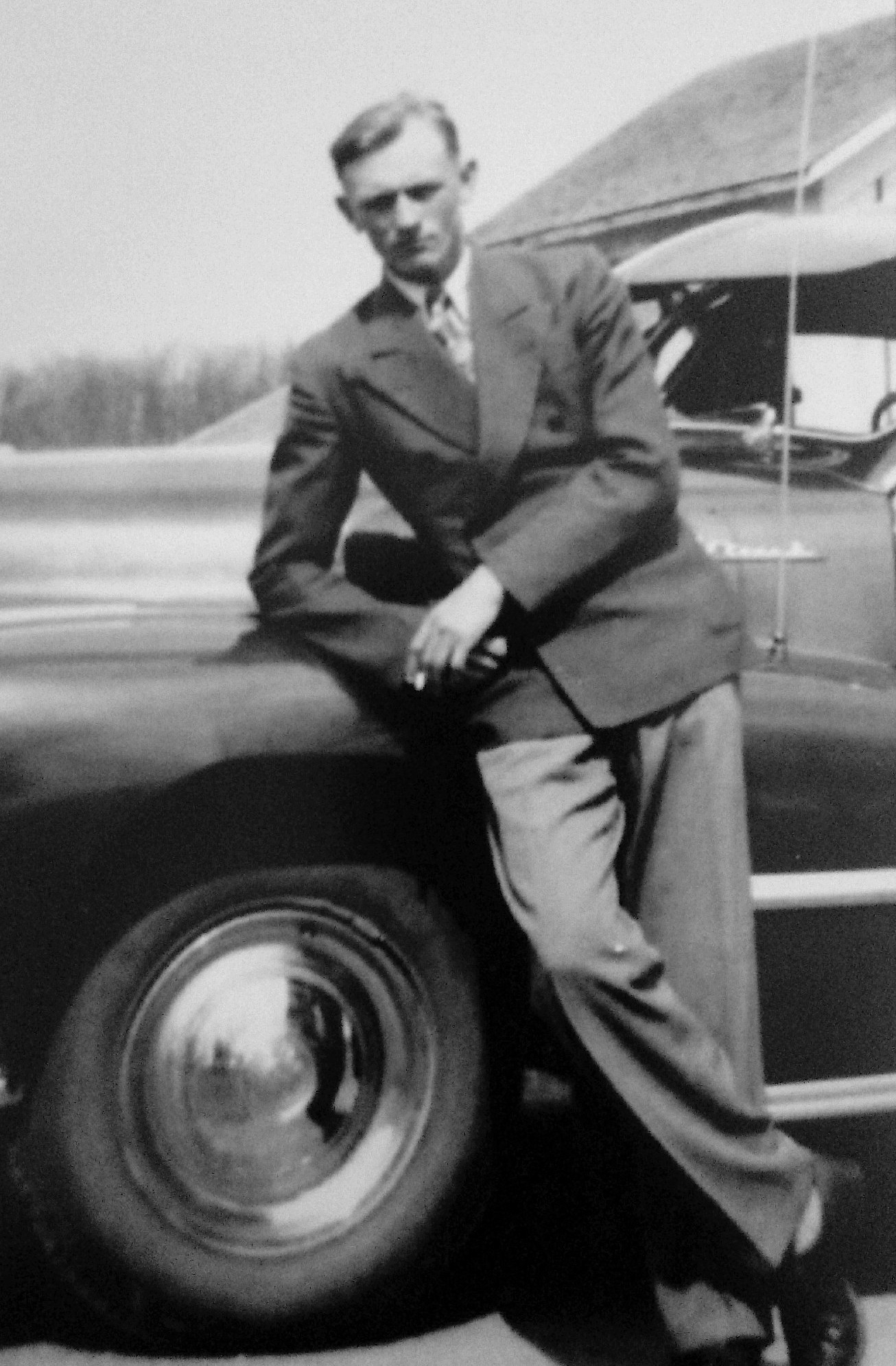
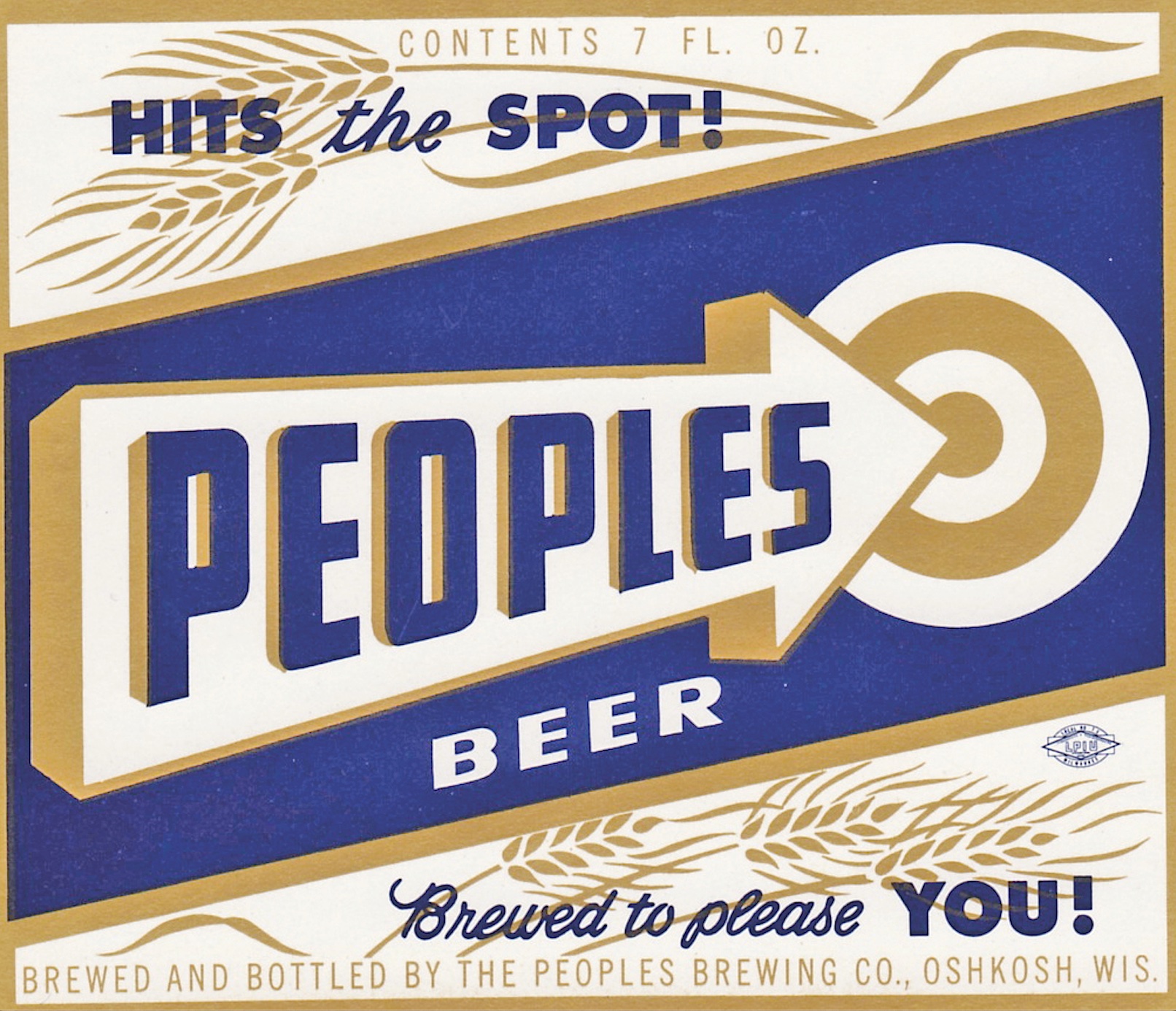
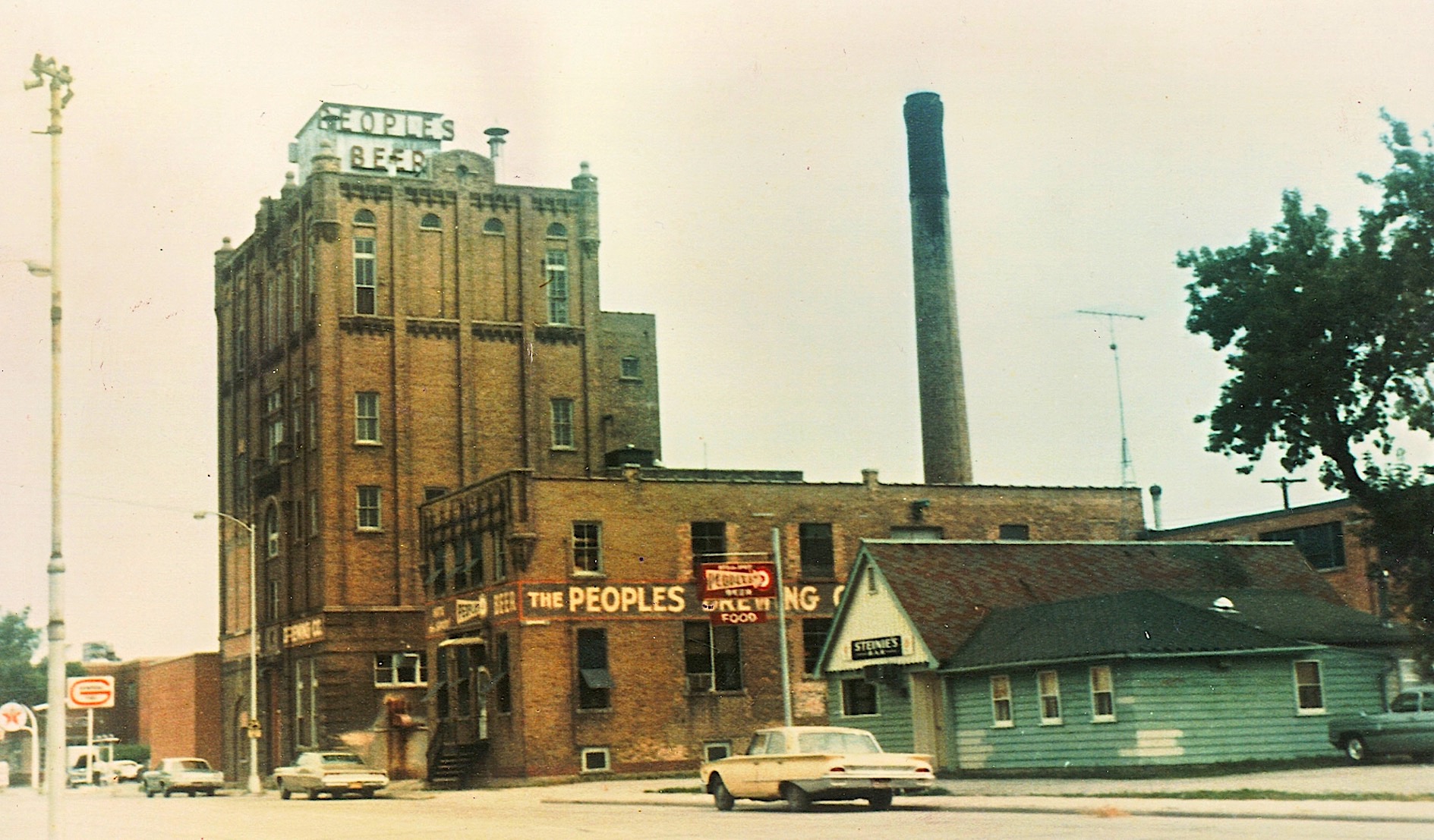
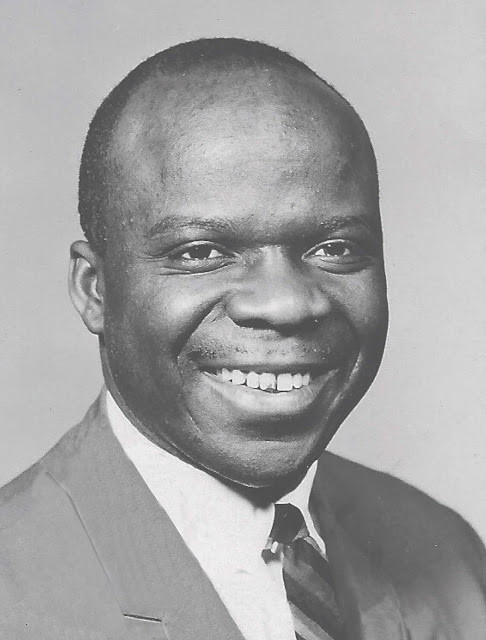
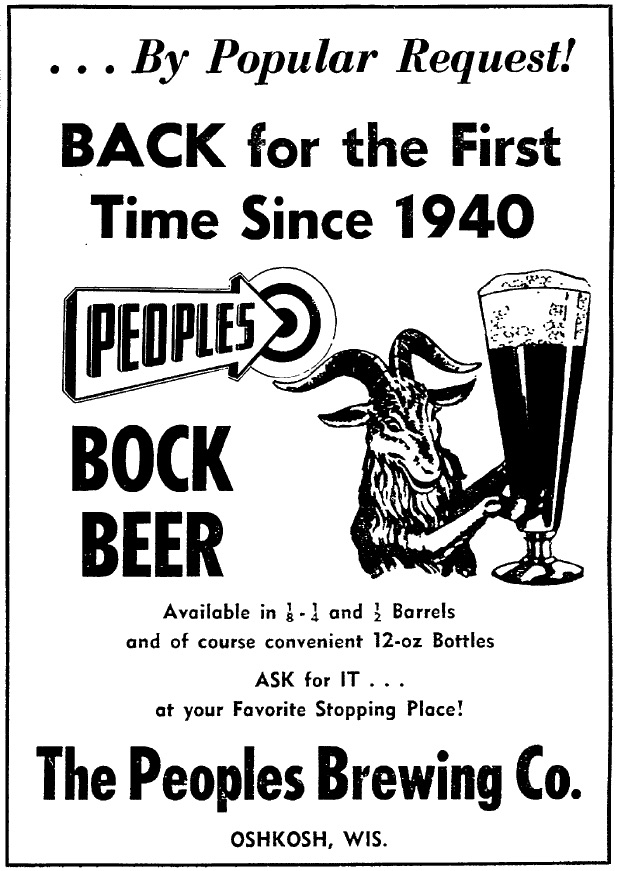
The Oshkosh Brewing Company closed in 1971. The brewery quickly sold its brands – including Chief Oshkosh – to its neighbor across the street, Peoples Brewing Company. These two display ads were issued by Peoples shortly after the sale.
If you’d like to read more about Chief Oshkosh Beer going to Peoples follow this link.
Showing posts with label Peoples Brewing Company. Show all posts
Sunday, March 16, 2025
Wednesday, March 15, 2023
Wilhelm Kohlhoff and the return of Peoples Bock
In the last year of his life, Wilhelm Kohlhoff shared a beer recipe that was so familiar to him that he could recite it from memory more than 50 years after he last brewed it. Kohlhoff was once a lead brewer at Peoples Brewing Company in Oshkosh. The beer he recalled was Peoples Bock; a malty, amber lager that Kohlhoff brewed annually for more than a dozen years. On March 18, Bare Bones Brewery in Oshkosh will pay tribute to Kohlhoff with a new release of Peoples Bock made from the recipe he provided.
| Wilhelm Kohlhoff |
Kohlhoff’s life was as extraordinary as his memory. He was born in 1927 in the north of Germany near the Baltic Sea. As a young man, he apprenticed as a cabinet maker, but his plan for the future was shattered by World War II.
"We lost our part of Germany," Kohlhoff said in an interview I conducted with him in 2018. "They gave it to Poland and we had to get out of the country. We lost everything. A couple million people had to leave Pomerania. A lot of them died."
![]() |
| Young Kohlhoff in Pommeren. |
At 17, Kohlhoff was conscripted into the German Army six months before the end of the war. Five months later, he suffered a shrapnel wound to his back. Kohlhoff recovered from the injury, but his life was transformed. “The war ended and everybody went their own way,” he said. “I didn't know anybody. I had no home, I had no parents, I had no relatives. I was lost."
He wandered to Bavaria in the south of Germany where Kohlhoff found work at a brewery in the town of Stettfeld. "There was a brewery in a little tavern,” Kohlhoff said. “I went in to get something to eat. It was hard to get food at that time. There was a boss there, the owner. He said, 'Where are you going?' I told him I didn't know. I told him I was looking for a job. I needed to get at least room and board so I could sleep and eat. He said, 'I got a brewery in the back. I need a helper.' So I stayed with him and learned to brew beer."
Kohlhoff rebuilt his life. He married in 1948 and started a family. In 1952, the Kohlhoffs migrated to America as part of a program for the resettlement of people displaced by the war. A year later, they came to Oshkosh, and Wilhelm began working as a brewer at Peoples Brewing.
![]() |
| Kohlhoff in Oshkosh. |
The relative calm of brewery life was restorative. The friendships he made were affirming. During one of our interviews, Kohlhoff leafed through pictures I had collected of his former coworkers. Though five decades had passed, he recalled each of their names. As Kohlhoff told stories about them, he fell into using their nicknames. "They all had funny names," he said. "They called me Bill. Nobody ever called me Wilhelm."
In 1966, Kohlhoff retired from brewing to take a job at the Buckstaff Company in Oshkosh. "They paid me a quarter an hour more and they gave me 48 hours a week with time and a half," he said. "I was married with four kids, so that helped. And I got back to my carpenter training. I'm a cabinet maker from the start. I learned it from my dad."
Kohlhoff reconnected with the brewing community in Oshkosh in 2019, more than 50 years after he left the brewhouse at Peoples. With the help of family and friends, he met several Oshkosh homebrewers and professional brewers who had become aware of the German brewmaster in their midst.
![]() |
| Kohlhoff with his daughter Margaret. |
Margaret Meyer was instrumental in bringing her father to the attention of a younger generation of brewers. “My dad was a pretty humble person and I think he was overwhelmed to even think that anyone still cared about this stuff,” she said. “That was such a unique opportunity for him. I just think he never expected the attention or the interest or even to talk to other brewers again. I know he thoroughly enjoyed the whole experience. It meant a lot to him.”
The appreciation was mutual. Kohlhoff connected his younger counterparts to a period of the brewing culture here that was lost when Peoples closed in 1972. He was the last of the German-born brewers to make beer in Oshkosh. “I hope he felt like a rock star,” said Jody Cleveland, head brewer at Bare Bones. “He was to us. Getting to meet him was great.”
![]() |
| Kohlhoff with Bare Bones brewer Jody Cleveland. |
A plan was afoot to get Kohlhoff back into the brewhouse to take part in brewing one of the recipes he remembered using at Peoples. That became unattainable when Kohlhoff passed in May 2019. The bock beer recently made at Bare Bones was produced using the process and materials Kohlhoff specified. All that was missing was Wilhelm.
Peoples Bock will be released on draft and in cans at noon on Saturday, March 18 in the taproom at Bare Bones Brewery.
A slightly different version of this article appears in today's Oshkosh Herald.
Labels:
Heritage Series,
Peoples Brewing Company
Location:
Oshkosh, WI, USA
Sunday, September 4, 2022
The Nearly Lost Labels of Peoples Brewing
Sneaking into Oshkosh's abandoned breweries became a hobby for some kids in the early 1970s (you can read about that here). Many of them were collectors of beer cans and other brewery memorabilia. The thrill of going into the untended breweries was heightened by the possibility of coming out with something worth saving. Those kids walked away with bottles, cans, beer labels, signs, log books... Anything bearing a trademark was fair game.
The scavenging led to the recovery of countless pieces of Oshkosh breweriana that otherwise would have been lost. The haul included some incredibly obscure items. This for example:
The Hunt for a New Label
Peoples Brewing Company was aiming to update its image in 1958. The brewery had been using the same label for Peoples Beer since 1952. But the atomic age had given way to the space age. The old label was looking dated.
That label was replaced by one that would become an iconic Wisconsin beer label. We’ll see that in a moment. First, let's have a look at a few of the labels that didn't make the cut.
The images below are scans of prototypes that were in the running to become the new label for Peoples Beer. These were rescued by one of those young brewery raiders. They were discovered in the deserted office at Peoples Brewing in 1973. Peoples had closed the previous year.
The eventual winner was more dynamic than any of the other labels on the table for consideration. By mid-November of 1958, the new label for Peoples Beer was in circulation. More than 60 years later, it still looks like the right choice.
The scavenging led to the recovery of countless pieces of Oshkosh breweriana that otherwise would have been lost. The haul included some incredibly obscure items. This for example:
![]() |
| A prototype beer label, 1958. |
The Hunt for a New Label
Peoples Brewing Company was aiming to update its image in 1958. The brewery had been using the same label for Peoples Beer since 1952. But the atomic age had given way to the space age. The old label was looking dated.
![]() |
| The Peoples label from 1952 until 1958. |
That label was replaced by one that would become an iconic Wisconsin beer label. We’ll see that in a moment. First, let's have a look at a few of the labels that didn't make the cut.
The images below are scans of prototypes that were in the running to become the new label for Peoples Beer. These were rescued by one of those young brewery raiders. They were discovered in the deserted office at Peoples Brewing in 1973. Peoples had closed the previous year.
No correspondence or other information accompanied the artwork. They were tucked into a cardboard folio stamped by Norway Gravure and dated September 9, 1958. The Norway, Michigan printer was then one of the largest suppliers of American beer labels. Norway Gravure made labels for Blatz, Budweiser, Miller, Pabst, and Schlitz, among many others.
One of the rescued prototypes appears to have been in strong contention for final selection.
The label below was fully realized and pasted onto an artboard with an accompanying bottle-neck label. This is about as rare as a beer label gets.
The eventual winner was more dynamic than any of the other labels on the table for consideration. By mid-November of 1958, the new label for Peoples Beer was in circulation. More than 60 years later, it still looks like the right choice.
Location:
Oshkosh, WI, USA
Sunday, June 26, 2022
Grant Peterson and the End of Peoples Brewing
Grant Peterson and I had been talking for more than an hour about Peoples Brewing Company before we got to the photographs I had brought along. The first picture was almost 60 years old. It showed the old brewery when it towered over the 1500 block of South Main street. Peterson examined the photo for a moment. “That's beautiful," he said. It went without saying that he wasn't merely commenting on the architecture.
Grant Peterson invested three years of his life in that brewery. His memories of those days, some 50 years gone, remain strikingly fresh. Peterson was 25 years old when he began working at Peoples. He was there when the brewery closed. He was there tying up the loose ends after everyone else had left.
"I started in January of 1970," Peterson says. "I was working at the Universal Foundry and my shift was from nine at night until five in the morning. It was awful. All we did was shovel sand. So I went around looking. I put my name in all over. Then one day I got a call from the brewery."
Peterson was interviewed by Harold "Ziggy" Ziegenhagen, the 53-year-old president of Peoples who had been with the brewery since the early 1940s. Ziegenhagen hired Peterson as a delivery driver. "I was just lucky I guess. I don't know why they picked me."
No more night shifts. Now his work day began at 7 a.m. when Peterson would back his delivery truck up to a dock on the north side of the brewery to load it with kegs of beer. "There was a great old guy that worked there, Johnny Fuller. Everybody loved Johnny. He'd roll those barrels out on a rubber mat and you'd load them in. Then you'd go around to the other dock on the other side of the brewery and load the cases of bottled beer."
Peterson would hit the road with a truck full of Peoples Beer. His winding routes included taverns, beer depots, and grocery stores within 50 miles or so of Oshkosh. "Some of the routes you wouldn't believe," Peterson says. "You had to memorize these county roads. There were taverns way out where you didn't know there was anything there."
Much of his time was spent in Oshkosh. Some of the taverns Peterson serviced had been in business when the brewery opened in 1913. They had been selling Peoples Beer ever since. "All the Oshkosh taverns took Peoples. Most places would take six to eight half-barrels and within a few days they'd sell them."
Maneuvering 175-pound kegs full of beer into a basement cooler at an older tavern was never easy. "We had steel kegs, everybody else had those lighter aluminum kegs by then. Trying to get them into some of those places was terrible. I'd go to Utecht's (413 Ohio) on Mondays, and there and at Charlie's Glass Bar (now Ratch & Debs Pizza at 720 Merritt), they had basement ceilings that were like four and a half feet high so you had to carry those damned kegs around all bent over."
Beer depots were easier. "I'll tell you the best two beer depots were Ray's over on New York, that was incredible, and Beverage Mart on Main Street. They both sold a lot of Peoples. But then Jordy's (W. 9th Avenue) was a good seller also. Then I'd get to the Sacred Heart Church and they'd want 80 cases of beer because they had that dartball league in the basement. That church was my biggest seller." Peterson shakes his head and laughs about it.
He was working at the very end of a 120-year period when Oshkosh-brewed beer was predominant wherever beer was sold in the city. Part of that culture was the tradition of the delivery driver buying a round for the bar when he brought in a fresh batch of beer. "You got so much money a week to buy drinks, but I didn't do it all that often. If there were only two or three guys in there, then you did it. But if the bar was packed you'd end up spending your own money. And it was always like you had to drink with them. I've always been a beer drinker and I was a Peoples drinker, but I didn't like drinking when I was on the job."
The chance to relax came when Peterson returned to the brewery. "Behind the office, there was a big room and they had this cooler and you'd open the door and there'd be about 50 cases of cold Peoples Beer in there. You could sit there all night and drink if you wanted to. Another thing, when they canned beer they'd weigh the cases at the end and if it was down more than three or four ounces they'd put that aside and we could buy those. You'd get eight 6-packs of beer for three bucks. Even if it was down an ounce, you'd never notice that."
Peterson says there wasn't all that much beer drinking inside the brewery. The novelty of having beer on the job had long since worn off for workers who had been with Peoples for decades. "A lot of them were old guys that were working there since the 40s," he says. "Most of them were married and at the end of the day they'd just go home."
Those brewery veterans had been on hand when Peoples was at its peak in the 1950s and early 1960s. The high point was followed by a period of aggressive consolidation in the brewing industry driven by large, nationally distributing breweries such as Pabst and Schlitz. Smaller breweries, like those in Oshkosh, were being driven out. Peoples Brewing was caught in the receding tide.
"One of the old-timers told me that in 1960 they went to Berlin (in Green Lake County) twice a week with two guys on the truck each time because every single tavern there had Peoples on tap. It was a big seller there casewise and everything. But by the time I got there, I had Berlin, I went once every two weeks and I would sell like 20 or 35 cases of beer. There was not one tap account left. It was all bottled beer and hardly any to the taverns. They had like three beer depots and that's where we sold all the Peoples. But not much, not like years ago when every time they went they sold 100 cases."
The slump worsened after the brewery was sold in April of 1970 to a group of black entrepreneurs from Milwaukee led by Theodore Mack. The announcement of the sale was followed by rumors that Ted Mack and company intended to fire all of the white workers at Peoples. There was, in fact, no such plan. But the misinformation spread quickly and led to numerous tavern owners in and around Oshkosh refusing to sell Peoples Beer. Mack moved to Oshkosh and quickly put the rumors to rest. Peterson says that sales at his accounts returned to normal, with one notable exception.
"I'll tell you one though, one was the holy land, Mt. Calvary (in Fond du Lac County). When Mack bought the brewery those people down there never sold another case of Peoples. It was awful. And they were supposed to be religious."
The turmoil surrounding the brewery seemed to have little impact on those working within it. "I thought Ted Mack was a great guy. I always got along with him perfectly. Everybody did, I think. When they were bottling he'd sometimes walk around singing old work songs or spirituals or something. He had a great voice. The only people I've ever heard talk shit about him were people who didn't really know him."
But the arrival of Mack hastened the end of the brewery. The purchase had been facilitated by loans from the Small Business Administration. To service the debt, Peoples Brewing needed to sell more beer than it ever had. Mack's plan to achieve that was to greatly expand distribution, focusing on urban areas. The strategy failed. By the close of 1971, Peoples was in deep financial trouble.
"At the very end they started having problems with the machinery, especially the bottle capper. If you got one little piece of air in the bottle and it sat for a week the beer would go bad. Quite a few places would call up and complain. I don't know if that was ever fixed, because they didn't have any money left. That was the problem. They didn't have any money to fix anything."
The curtain fell in November of 1972. "We knew something was going on. We didn't talk about it much. Probably everybody above us knew something before we did. One day they came around and said it's closing. I don't remember too much about that. I remember after that a bunch of tavern owners coming around trying to get as much Peoples Beer as they could before there wasn't any left. It was a good, reasonable beer. They didn't know what else to go to."
His job didn't end there. Peterson continued to drive his old routes, retrieving as much of the brewery's inventory as possible. "The brewery was already closed. Nobody was there. I still wore a Peoples Beer uniform and drove a Peoples truck. I went all over picking up empties and half-barrels and everything. They wanted it all back, they were going to have a federal auction. At the end of the day, I'd go back to the brewery to unload everything. See, I had a whole truckload of empties."
The checks were still being signed by Ted Mack. "He had like an office, it was in the basement of his house. They had papers spread all over the basement. I guess they were getting everything ready to give to the feds. I don't know how that worked. I always cashed the checks. They never bounced."
His work for Peoples extended into 1973. When it was over, Peterson took a job with a beer distributor in Van Dyne delivering Hamm’s and Miller. "But then they were bought out by a big outfit. I liked working with smaller groups. So I quit and luckily I got on with the city. How I got on with the city is that I put Pearl Mack's name as a reference."
Pearl Mack, the wife of Ted Mack, had also worked at Peoples. "Pearl was one of the nicest people you'll ever meet in your life. She was working on the first floor at City Hall then and when the guy saw that I had her as a reference he went right down and talked to her and came back up and hired me on the spot." Peterson remained with the city for more than 30 years, retiring from the Public Works Department.
His interest in the brewery he worked for has never waned. Peterson still collects memorabilia related to Peoples Brewing. "I've always liked antique stores, but I didn't begin collecting things until later, after Peoples closed."
Grant Peterson and I met on a Tuesday afternoon in June to talk about all of these things. It was near dark by the time we got to the last of the photographs. The picture was from 1974. It was taken from the south end of the brewery property looking north toward the dock where he used to fill his truck with cases of bottled beer before heading out each morning on his route. “Here it is at the end,” I said. Peterson looked at the photo without saying anything.
I said, "This was taken just before the brewery was demolished." He said he couldn't remember anything about that. After a moment, he points to a detail in the photo where an old sign for Peoples Beer had been discarded alongside a loading dock. "Look at that," he says with the exuberance returning to his voice. "Boy, I wish I had that. Those were gorgeous."
Grant Peterson invested three years of his life in that brewery. His memories of those days, some 50 years gone, remain strikingly fresh. Peterson was 25 years old when he began working at Peoples. He was there when the brewery closed. He was there tying up the loose ends after everyone else had left.
![]() |
| Grant Peterson |
"I started in January of 1970," Peterson says. "I was working at the Universal Foundry and my shift was from nine at night until five in the morning. It was awful. All we did was shovel sand. So I went around looking. I put my name in all over. Then one day I got a call from the brewery."
Peterson was interviewed by Harold "Ziggy" Ziegenhagen, the 53-year-old president of Peoples who had been with the brewery since the early 1940s. Ziegenhagen hired Peterson as a delivery driver. "I was just lucky I guess. I don't know why they picked me."
No more night shifts. Now his work day began at 7 a.m. when Peterson would back his delivery truck up to a dock on the north side of the brewery to load it with kegs of beer. "There was a great old guy that worked there, Johnny Fuller. Everybody loved Johnny. He'd roll those barrels out on a rubber mat and you'd load them in. Then you'd go around to the other dock on the other side of the brewery and load the cases of bottled beer."
Peterson would hit the road with a truck full of Peoples Beer. His winding routes included taverns, beer depots, and grocery stores within 50 miles or so of Oshkosh. "Some of the routes you wouldn't believe," Peterson says. "You had to memorize these county roads. There were taverns way out where you didn't know there was anything there."
Much of his time was spent in Oshkosh. Some of the taverns Peterson serviced had been in business when the brewery opened in 1913. They had been selling Peoples Beer ever since. "All the Oshkosh taverns took Peoples. Most places would take six to eight half-barrels and within a few days they'd sell them."
Maneuvering 175-pound kegs full of beer into a basement cooler at an older tavern was never easy. "We had steel kegs, everybody else had those lighter aluminum kegs by then. Trying to get them into some of those places was terrible. I'd go to Utecht's (413 Ohio) on Mondays, and there and at Charlie's Glass Bar (now Ratch & Debs Pizza at 720 Merritt), they had basement ceilings that were like four and a half feet high so you had to carry those damned kegs around all bent over."
Beer depots were easier. "I'll tell you the best two beer depots were Ray's over on New York, that was incredible, and Beverage Mart on Main Street. They both sold a lot of Peoples. But then Jordy's (W. 9th Avenue) was a good seller also. Then I'd get to the Sacred Heart Church and they'd want 80 cases of beer because they had that dartball league in the basement. That church was my biggest seller." Peterson shakes his head and laughs about it.
He was working at the very end of a 120-year period when Oshkosh-brewed beer was predominant wherever beer was sold in the city. Part of that culture was the tradition of the delivery driver buying a round for the bar when he brought in a fresh batch of beer. "You got so much money a week to buy drinks, but I didn't do it all that often. If there were only two or three guys in there, then you did it. But if the bar was packed you'd end up spending your own money. And it was always like you had to drink with them. I've always been a beer drinker and I was a Peoples drinker, but I didn't like drinking when I was on the job."
The chance to relax came when Peterson returned to the brewery. "Behind the office, there was a big room and they had this cooler and you'd open the door and there'd be about 50 cases of cold Peoples Beer in there. You could sit there all night and drink if you wanted to. Another thing, when they canned beer they'd weigh the cases at the end and if it was down more than three or four ounces they'd put that aside and we could buy those. You'd get eight 6-packs of beer for three bucks. Even if it was down an ounce, you'd never notice that."
Peterson says there wasn't all that much beer drinking inside the brewery. The novelty of having beer on the job had long since worn off for workers who had been with Peoples for decades. "A lot of them were old guys that were working there since the 40s," he says. "Most of them were married and at the end of the day they'd just go home."
Those brewery veterans had been on hand when Peoples was at its peak in the 1950s and early 1960s. The high point was followed by a period of aggressive consolidation in the brewing industry driven by large, nationally distributing breweries such as Pabst and Schlitz. Smaller breweries, like those in Oshkosh, were being driven out. Peoples Brewing was caught in the receding tide.
"One of the old-timers told me that in 1960 they went to Berlin (in Green Lake County) twice a week with two guys on the truck each time because every single tavern there had Peoples on tap. It was a big seller there casewise and everything. But by the time I got there, I had Berlin, I went once every two weeks and I would sell like 20 or 35 cases of beer. There was not one tap account left. It was all bottled beer and hardly any to the taverns. They had like three beer depots and that's where we sold all the Peoples. But not much, not like years ago when every time they went they sold 100 cases."
The slump worsened after the brewery was sold in April of 1970 to a group of black entrepreneurs from Milwaukee led by Theodore Mack. The announcement of the sale was followed by rumors that Ted Mack and company intended to fire all of the white workers at Peoples. There was, in fact, no such plan. But the misinformation spread quickly and led to numerous tavern owners in and around Oshkosh refusing to sell Peoples Beer. Mack moved to Oshkosh and quickly put the rumors to rest. Peterson says that sales at his accounts returned to normal, with one notable exception.
"I'll tell you one though, one was the holy land, Mt. Calvary (in Fond du Lac County). When Mack bought the brewery those people down there never sold another case of Peoples. It was awful. And they were supposed to be religious."
The turmoil surrounding the brewery seemed to have little impact on those working within it. "I thought Ted Mack was a great guy. I always got along with him perfectly. Everybody did, I think. When they were bottling he'd sometimes walk around singing old work songs or spirituals or something. He had a great voice. The only people I've ever heard talk shit about him were people who didn't really know him."
![]() |
| Theodore Mack |
But the arrival of Mack hastened the end of the brewery. The purchase had been facilitated by loans from the Small Business Administration. To service the debt, Peoples Brewing needed to sell more beer than it ever had. Mack's plan to achieve that was to greatly expand distribution, focusing on urban areas. The strategy failed. By the close of 1971, Peoples was in deep financial trouble.
"At the very end they started having problems with the machinery, especially the bottle capper. If you got one little piece of air in the bottle and it sat for a week the beer would go bad. Quite a few places would call up and complain. I don't know if that was ever fixed, because they didn't have any money left. That was the problem. They didn't have any money to fix anything."
The curtain fell in November of 1972. "We knew something was going on. We didn't talk about it much. Probably everybody above us knew something before we did. One day they came around and said it's closing. I don't remember too much about that. I remember after that a bunch of tavern owners coming around trying to get as much Peoples Beer as they could before there wasn't any left. It was a good, reasonable beer. They didn't know what else to go to."
His job didn't end there. Peterson continued to drive his old routes, retrieving as much of the brewery's inventory as possible. "The brewery was already closed. Nobody was there. I still wore a Peoples Beer uniform and drove a Peoples truck. I went all over picking up empties and half-barrels and everything. They wanted it all back, they were going to have a federal auction. At the end of the day, I'd go back to the brewery to unload everything. See, I had a whole truckload of empties."
The checks were still being signed by Ted Mack. "He had like an office, it was in the basement of his house. They had papers spread all over the basement. I guess they were getting everything ready to give to the feds. I don't know how that worked. I always cashed the checks. They never bounced."
His work for Peoples extended into 1973. When it was over, Peterson took a job with a beer distributor in Van Dyne delivering Hamm’s and Miller. "But then they were bought out by a big outfit. I liked working with smaller groups. So I quit and luckily I got on with the city. How I got on with the city is that I put Pearl Mack's name as a reference."
Pearl Mack, the wife of Ted Mack, had also worked at Peoples. "Pearl was one of the nicest people you'll ever meet in your life. She was working on the first floor at City Hall then and when the guy saw that I had her as a reference he went right down and talked to her and came back up and hired me on the spot." Peterson remained with the city for more than 30 years, retiring from the Public Works Department.
His interest in the brewery he worked for has never waned. Peterson still collects memorabilia related to Peoples Brewing. "I've always liked antique stores, but I didn't begin collecting things until later, after Peoples closed."
Grant Peterson and I met on a Tuesday afternoon in June to talk about all of these things. It was near dark by the time we got to the last of the photographs. The picture was from 1974. It was taken from the south end of the brewery property looking north toward the dock where he used to fill his truck with cases of bottled beer before heading out each morning on his route. “Here it is at the end,” I said. Peterson looked at the photo without saying anything.
I said, "This was taken just before the brewery was demolished." He said he couldn't remember anything about that. After a moment, he points to a detail in the photo where an old sign for Peoples Beer had been discarded alongside a loading dock. "Look at that," he says with the exuberance returning to his voice. "Boy, I wish I had that. Those were gorgeous."
Tuesday, February 22, 2022
John Harry and the Ongoing Story of Peoples Beer
America was home to more than 400 breweries in 1950. By 1980, three-quarters of them had closed. Those that went under were soon forgotten by almost everyone, save for breweriana collectors and local history enthusiasts. Recently, though, there’s been a stir of national interest in one of those lost breweries. That brewery was located in Oshkosh.
Peoples Brewing Company had been producing beer on South Main Street for 59 years when it closed in 1972. The closure had been preceded by two, tumultuous years that began with the sale of the brewery to a Milwaukee-based group led by Theodore Mack. With that, Peoples became the first black-owned brewery in Wisconsin.
It’s those two years that have ignited interest in a brewery few outside of Wisconsin had heard of until recently. John Harry is one of the people responsible for raising that awareness. On Thursday, February 24, the Oshkosh Public Museum will host Harry via Zoom for a public discussion titled “Peoples Beer: The Story of Wisconsin's First African American Owned Brewery.”
Harry was recently named Executive Director of the Portage County Historical Society, but before taking that job he had immersed himself in the 1970s incarnation of Peoples Brewing when Theodore Mack was its president. Harry had come upon that story while preparing for a transition of his own. "I was a radio DJ for 10 years and decided I was going to change careers," he says. "I've always loved history and I was at a point in my life where I was like, let's just go for it."
He moved to Milwaukee where last year he earned a master's degree in public history at the University of Wisconsin-Milwaukee. There, he focused on black capitalism as it pertained to the Theodore Mack era at Peoples. "Nobody was writing about it on an academic sphere," Harry says. "I found my niche there as a historian."
Harry began gathering oral histories from people who had been connected to the brewery in the early 1970s. Though Theodore Mack had passed away in 2019, Harry traveled to Georgia to interview his widow, Pearl, who had been the corporate secretary at Peoples. “It was one of those things where you ask yourself, is this really going to happen?” he says. “I sat down and had about a half hour conversation with her. You're talking to this woman who was married to Ted Mack; nobody knows this guy better. It was really intense.”
In July of 2020, Harry shared much of what he had gathered in a piece for the Good Beer Hunting website titled “Beer for the People — How Wisconsin’s First Black-Owned Brewery Took on the Entire Beer Industry.” The article placed what had occurred at Peoples in the 1970s within the context of minority entrepreneurship and documented Theodore Mack's struggle for success and ultimate failure in Oshkosh.
The timing was fortuitous. Against the backdrop of 2020's Black Lives Matter protests, the lack of diversity in American craft beer was being called out in a more forceful manner. For those concerned, Harry's article provided a historical frame of reference that had been missing. Peoples Brewing, which had closed almost 50 years earlier, was suddenly receiving more widespread attention than it had during its peak years in the 1950s.
Shortly after Harry's article appeared, a brewery in Sacramento, California announced that it was claiming the legacy of Peoples Brewing for its own. With the blessing of Theodore Mack's son Ted Mack II, Oak Park Brewing co-opted the Peoples Beer brand and began releasing their product under a label lifted directly from the defunct Oshkosh brewery.
"Anytime you give more exposure to an untold story about an underserved population, I think that that's a good thing," Harry says. "I think it's interesting, though, that there's no inclusion of the community of Oshkosh. As a question of ownership or memory of something like Peoples Beer, the people who remember it best are going to be in Oshkosh. The community didn't have their chance to weigh in. It became less a beer of the community and more a beer of black history. I think you have to tell that part of the story, but you can't also ignore the 60 years of history that led up to that."
Peoples Brewing Company had been producing beer on South Main Street for 59 years when it closed in 1972. The closure had been preceded by two, tumultuous years that began with the sale of the brewery to a Milwaukee-based group led by Theodore Mack. With that, Peoples became the first black-owned brewery in Wisconsin.
| Theodore Mack |
It’s those two years that have ignited interest in a brewery few outside of Wisconsin had heard of until recently. John Harry is one of the people responsible for raising that awareness. On Thursday, February 24, the Oshkosh Public Museum will host Harry via Zoom for a public discussion titled “Peoples Beer: The Story of Wisconsin's First African American Owned Brewery.”
| John Harry |
Harry was recently named Executive Director of the Portage County Historical Society, but before taking that job he had immersed himself in the 1970s incarnation of Peoples Brewing when Theodore Mack was its president. Harry had come upon that story while preparing for a transition of his own. "I was a radio DJ for 10 years and decided I was going to change careers," he says. "I've always loved history and I was at a point in my life where I was like, let's just go for it."
He moved to Milwaukee where last year he earned a master's degree in public history at the University of Wisconsin-Milwaukee. There, he focused on black capitalism as it pertained to the Theodore Mack era at Peoples. "Nobody was writing about it on an academic sphere," Harry says. "I found my niche there as a historian."
Harry began gathering oral histories from people who had been connected to the brewery in the early 1970s. Though Theodore Mack had passed away in 2019, Harry traveled to Georgia to interview his widow, Pearl, who had been the corporate secretary at Peoples. “It was one of those things where you ask yourself, is this really going to happen?” he says. “I sat down and had about a half hour conversation with her. You're talking to this woman who was married to Ted Mack; nobody knows this guy better. It was really intense.”
In July of 2020, Harry shared much of what he had gathered in a piece for the Good Beer Hunting website titled “Beer for the People — How Wisconsin’s First Black-Owned Brewery Took on the Entire Beer Industry.” The article placed what had occurred at Peoples in the 1970s within the context of minority entrepreneurship and documented Theodore Mack's struggle for success and ultimate failure in Oshkosh.
The timing was fortuitous. Against the backdrop of 2020's Black Lives Matter protests, the lack of diversity in American craft beer was being called out in a more forceful manner. For those concerned, Harry's article provided a historical frame of reference that had been missing. Peoples Brewing, which had closed almost 50 years earlier, was suddenly receiving more widespread attention than it had during its peak years in the 1950s.
Shortly after Harry's article appeared, a brewery in Sacramento, California announced that it was claiming the legacy of Peoples Brewing for its own. With the blessing of Theodore Mack's son Ted Mack II, Oak Park Brewing co-opted the Peoples Beer brand and began releasing their product under a label lifted directly from the defunct Oshkosh brewery.
Harry published a follow-up article for Good Beer Hunting that addressed some of the more troubling aspects of the Oak Park situation.
"Anytime you give more exposure to an untold story about an underserved population, I think that that's a good thing," Harry says. "I think it's interesting, though, that there's no inclusion of the community of Oshkosh. As a question of ownership or memory of something like Peoples Beer, the people who remember it best are going to be in Oshkosh. The community didn't have their chance to weigh in. It became less a beer of the community and more a beer of black history. I think you have to tell that part of the story, but you can't also ignore the 60 years of history that led up to that."
It's a story that continues to unfold and one that Harry will explore fully in his talk for the Oshkosh Public Museum on Thursday, February 24. To attend, go to oshkoshmuseum.org and click the Programs/Events tab at the top of the page (here is a direct link to the event page).
This article also appears in the February 23 edition of the Oshkosh Herald.
Location:
Oshkosh, WI, USA
Sunday, January 10, 2021
The Story of Peoples Bock and How to Brew Your Own
We're a couple of months out from what used to be the traditional season for bock beer in Oshkosh. So now would be a good time to start brewing a bock of your own. I've got just the recipe for you.
Peoples Bock was first brewed in Oshkosh in 1913 for the 1914 bock-beer season. When Prohibition arrived in 1920, Peoples Bock went on hiatus but it came back again when 3.2% ABW beer was legalized in 1933.
Full repeal of Prohibition arrived in December of 1933. The following year, Peoples returned to brewing its full-strength Bock. The post-prohibition Peoples Bock was discontinued for a period beginning in 1941. However, the brewery brought it back again in 1959 and continued brewing it until 1970. The brewery closed in 1972.
My late friend Wilhelm Kohlhoff brewed Peoples Bock every year from 1959 onward. I first met Wilhelm in September of 2018. He was 91 years old then and still had the ability to recite from memory the recipes he had brewed at Peoples more than 50 years earlier. He loved talking about beer. And we did plenty of that as we went through the old notes that he had kept from his days working at the brewery. Wilhelm passed in May of 2019.
I was thinking of Wilhelm the other day and decided now would be a good time to share one of the recipes he gave me. This is the 1960s recipe for Peoples Bock.
Peoples Bock
Pre-Boil Gravity: 1.047
Post-Boil Gravity: 1.058
Final Gravity: 1.016
Apparent Attenuation: 67%
ABV: 5.5 - 6%
IBUs: 22
SRM: 11-12
Fermentables
44% American 6-Row or 2-Row Pale Malt
22% American Munich Malt (6-10º Lovibond)
8% Caramel Munich Malt (60º Lovibond)
14% Flaked Corn
12% Brown Sugar
Hops
60 Minutes Before End of Boil: American Cluster for 11 IBUs
45 Minutes Before End of Boil: German Hallertau for 6 IBUs
30 Minutes Before End of Boil: German Hallertau for 3 IBUs
15 Minutes Before End of Boil: German Hallertau for 2 IBUs
Yeast & Fermentation
Use a clean fermenting lager strain such as SafLager W-34/70.
Pitch at 50ºf and let rise to 53ºf (see the notes below if you don’t have the ability to maintain these temperatures).
Process and Recipe Notes
Peoples Bock was made using a cereal mash coupled with a step mash. It’s a fairly complicated process that I’ve documented here. Don’t let that put you off. This beer can be made with a simple infusion mash at 152ºf.
In the recipe here I’ve replaced the corn grits used at Peoples with flaked corn. If you're willing to go through the pain of a cereal mash, then corn grits is the way to go. If not, flaked corn works just fine.
At Peoples, they followed a standard, cold fermentation for their lagers – fermenting at about 50ºf for 14 days before cold crashing the beer to near freezing. The bock beer was typically aged for two months; sometimes longer if they could afford to tie up their tanks. Again, don't let that stop you from brewing this. I mentioned SafLager W-34/70 in the recipe because that yeast performs well into the mid-60ºf territory. That's the yeast to go for, if you don't have the ability to ferment at those colder temperatures.
Peoples Bock was first brewed in Oshkosh in 1913 for the 1914 bock-beer season. When Prohibition arrived in 1920, Peoples Bock went on hiatus but it came back again when 3.2% ABW beer was legalized in 1933.
![]() |
| The low-alcohol Peoples Bock of 1933. |
Full repeal of Prohibition arrived in December of 1933. The following year, Peoples returned to brewing its full-strength Bock. The post-prohibition Peoples Bock was discontinued for a period beginning in 1941. However, the brewery brought it back again in 1959 and continued brewing it until 1970. The brewery closed in 1972.
![]() |
| Oshkosh Daily Northwestern; February 20, 1959. |
My late friend Wilhelm Kohlhoff brewed Peoples Bock every year from 1959 onward. I first met Wilhelm in September of 2018. He was 91 years old then and still had the ability to recite from memory the recipes he had brewed at Peoples more than 50 years earlier. He loved talking about beer. And we did plenty of that as we went through the old notes that he had kept from his days working at the brewery. Wilhelm passed in May of 2019.
I was thinking of Wilhelm the other day and decided now would be a good time to share one of the recipes he gave me. This is the 1960s recipe for Peoples Bock.
Peoples Bock
Pre-Boil Gravity: 1.047
Post-Boil Gravity: 1.058
Final Gravity: 1.016
Apparent Attenuation: 67%
ABV: 5.5 - 6%
IBUs: 22
SRM: 11-12
Fermentables
44% American 6-Row or 2-Row Pale Malt
22% American Munich Malt (6-10º Lovibond)
8% Caramel Munich Malt (60º Lovibond)
14% Flaked Corn
12% Brown Sugar
Hops
60 Minutes Before End of Boil: American Cluster for 11 IBUs
45 Minutes Before End of Boil: German Hallertau for 6 IBUs
30 Minutes Before End of Boil: German Hallertau for 3 IBUs
15 Minutes Before End of Boil: German Hallertau for 2 IBUs
Yeast & Fermentation
Use a clean fermenting lager strain such as SafLager W-34/70.
Pitch at 50ºf and let rise to 53ºf (see the notes below if you don’t have the ability to maintain these temperatures).
![]() |
| A recently opened bottle of Peoples Bock that was brewed in the late 1960s. |
Process and Recipe Notes
Peoples Bock was made using a cereal mash coupled with a step mash. It’s a fairly complicated process that I’ve documented here. Don’t let that put you off. This beer can be made with a simple infusion mash at 152ºf.
In the recipe here I’ve replaced the corn grits used at Peoples with flaked corn. If you're willing to go through the pain of a cereal mash, then corn grits is the way to go. If not, flaked corn works just fine.
At Peoples, they followed a standard, cold fermentation for their lagers – fermenting at about 50ºf for 14 days before cold crashing the beer to near freezing. The bock beer was typically aged for two months; sometimes longer if they could afford to tie up their tanks. Again, don't let that stop you from brewing this. I mentioned SafLager W-34/70 in the recipe because that yeast performs well into the mid-60ºf territory. That's the yeast to go for, if you don't have the ability to ferment at those colder temperatures.
I’ve brewed this recipe a couple of times now. I prefer my bocks a little bit darker, so for my most recent batch I tweaked the original recipe by adding 1% black malt to the grist to boost the color. The flavor contribution of the black malt at this percentage is negligible. The beer turned out wonderfully.
Location:
Oshkosh, WI, USA
Monday, November 9, 2020
Asterweiss, the Bottled Beer de Luxe
Here's another long, lost Oshkosh beer that no living person has tasted. It's Asterweiss from the Peoples Brewing Company of Oshkosh...
Peoples Brewing opened in June 1913 with two beers in its portfolio. First, there was Standard, the brewery's unpasteurized budget lager. It was packaged in brown, pint bottles and wooden kegs. Standard was what you'd get if you put a nickel on the bar and ordered a schooner of Peoples in one of the 25 or so Oshkosh saloons that served it in the summer of 1913. There were folks here who drank Standard by the gallon. In fact, Peoples encouraged that sort of consumption. The initial advertising for Standard noted that it was "a beer that you can indulge in quite freely without sensing any distasteful after effects." Bring out the funnel.
This was a classic, American-style pilsner. Asterweiss was brewed with artesian water and Bohemian hops. The grain bill was made up of Wisconsin-grown barley malt and it almost certainly had some corn in it. About 95% of American Pilsners made during this period did. At 4.5% ABV, it was a fully-aged lager with a light, golden color. Peoples described its appearance as "Clear, sparkling, bright."
Asterweiss was packaged in clear bottles that were pasteurized at the end of the bottling line. Each bottle was then individually wrapped in tissue paper. The brewery called it “The Bottled Beer de Luxe.” The presentation was meant to be an indication of its quality.
The fancy trapping didn't come cheap. At $1.40 for a case of 12-ounce bottles, Asterweiss was among the most expensive beers sold in Oshkosh. In today’s money that $1.40 would be worth about $37.30; or about $9.25 a six-pack. That's a little more than we pay for most craft beer six-packs sold here today.
In 1916, Peoples copyrighted the Asterweiss brand.
And shortly after that, things went bad. With the First World War weighing on the minds of many Americans, some people began looking askance at American breweries using Germanic branding for their beer. Weiss is the German word for white. Peoples bowed to the pressure. Asterweiss became Asterwite.
It got worse. In 1920 Prohibition came and Asterwite stopped being a beer altogether. But the brand didn't die. Peoples went on flogging Asterwite as a non-alcoholic, near beer. The once-mighty Asterweiss beer had been neutered, reduced to a mere "Beverage."
The Asterweiss brand finally died sometime around 1926, during the absolute depths of Prohibition. And it was left for dead when real beer returned in 1933. Lovely Asterweiss was consigned to the dustbin of brewing history. Now, only the collectors remember. These days, an Asterweiss tray like the one below can go for as high as $700.Notes
I mentioned that Asterweiss almost certainly had some corn in its grist. A lot of people really have the wrong idea about the use of corn in American beer. I explored that in this post.
A Peoples’ beer named Aristo became the companion to Asterweiss in the brewery's portfolio. There's more on Aristo here.
Peoples Brewing opened in June 1913 with two beers in its portfolio. First, there was Standard, the brewery's unpasteurized budget lager. It was packaged in brown, pint bottles and wooden kegs. Standard was what you'd get if you put a nickel on the bar and ordered a schooner of Peoples in one of the 25 or so Oshkosh saloons that served it in the summer of 1913. There were folks here who drank Standard by the gallon. In fact, Peoples encouraged that sort of consumption. The initial advertising for Standard noted that it was "a beer that you can indulge in quite freely without sensing any distasteful after effects." Bring out the funnel.
And then there was Asterweiss. This was not a beer to be guzzled. Here we have the high-toned stuff.
This was a classic, American-style pilsner. Asterweiss was brewed with artesian water and Bohemian hops. The grain bill was made up of Wisconsin-grown barley malt and it almost certainly had some corn in it. About 95% of American Pilsners made during this period did. At 4.5% ABV, it was a fully-aged lager with a light, golden color. Peoples described its appearance as "Clear, sparkling, bright."
Asterweiss was packaged in clear bottles that were pasteurized at the end of the bottling line. Each bottle was then individually wrapped in tissue paper. The brewery called it “The Bottled Beer de Luxe.” The presentation was meant to be an indication of its quality.
![]() |
| Oshkosh Daily Northwestern; April 29, 1916. |
The fancy trapping didn't come cheap. At $1.40 for a case of 12-ounce bottles, Asterweiss was among the most expensive beers sold in Oshkosh. In today’s money that $1.40 would be worth about $37.30; or about $9.25 a six-pack. That's a little more than we pay for most craft beer six-packs sold here today.
In 1916, Peoples copyrighted the Asterweiss brand.
And shortly after that, things went bad. With the First World War weighing on the minds of many Americans, some people began looking askance at American breweries using Germanic branding for their beer. Weiss is the German word for white. Peoples bowed to the pressure. Asterweiss became Asterwite.
It got worse. In 1920 Prohibition came and Asterwite stopped being a beer altogether. But the brand didn't die. Peoples went on flogging Asterwite as a non-alcoholic, near beer. The once-mighty Asterweiss beer had been neutered, reduced to a mere "Beverage."
![]() |
| Prohibition-era Asterwite containing less than 1/2 of 1% Alcohol by Volume. |
The Asterweiss brand finally died sometime around 1926, during the absolute depths of Prohibition. And it was left for dead when real beer returned in 1933. Lovely Asterweiss was consigned to the dustbin of brewing history. Now, only the collectors remember. These days, an Asterweiss tray like the one below can go for as high as $700.Notes
I mentioned that Asterweiss almost certainly had some corn in its grist. A lot of people really have the wrong idea about the use of corn in American beer. I explored that in this post.
A Peoples’ beer named Aristo became the companion to Asterweiss in the brewery's portfolio. There's more on Aristo here.
Location:
Oshkosh, WI, USA
Monday, February 17, 2020
Back in Bock
This week in 1959, Peoples Brewing reintroduced a beer that the brewery hadn't made in 19 years. It was the return of Peoples Bock Beer.
Peoples’ 1959 Bock Beer arrived 45 years to the day after the brewery had released its very first bock on February 20, 1914. That was an important beer for Peoples. The brewery had opened just eight months earlier. It was a direct outgrowth of the German immigrant community in Oshkosh. Bock was the first beer from Peoples that spoke explicitly to the heritage of those folks. The list of Oshkosh saloon keepers who put it on tap was full of names with a distinctly Germanic ring.
Most of that 1914 bock was served on draft in saloons. But Peoples also offered the beer in pint-sized bottles. You could get a dozen of them for 80 cents. That would be about $20.70 in today's money. The next year, Peoples came out with 12-ounce bottles of its bock for 90 cents a case. Here's the label used on those 12-ounce bottles.
The bock beer season in Oshkosh usually ran from late February until mid-April. It was a celebrated event. A sign that spring was on its way. Each of the city's three breweries would bring out their own version of bock beer.
When Prohibition came in 1920 all of that was put on hold. For the next dozen years, folks in Oshkosh had to go looking for robins to remind them that someday spring would come.
Beer became legal again on April 7, 1933; eight months before the full repeal of Prohibition. The beer produced during the interim period could contain no more than 3.2% alcohol by weight, which is 4% alcohol by volume. The bock-beer season had nearly passed, But Peoples released one anyway. It was more of a symbolic gesture than anything else. At a mere 4% ABV, Peoples’ 1933 Bock lacked the kick that veteran drinkers of bock beer were accustomed to. Perhaps that's why the goat was left off the label.
Peoples 1934 bock was back to the brewery's standard: dark and strong, rich and malty. The goat was back, too.
"Every Winter Peoples Brewing Co. brews and ages a superb Bock Beer," began the 1940 announcement. It would be another 19 years before they could say that again. After the 1940 release, Peoples stopped making its bock beer. The brewery never explained why.
The drought ended on February 20, 1959 when Peoples trotted the old goat back out.
In the 1950s and '60s, Wilhelm Kohlhoff was one of two principal brewers at Peoples. He recalled making Peoples Bock after its reintroduction. "We added all the special malt; it was darker, it was a brown color malt, and then what you used was brown sugar, 600 pounds of sugar in the kettle and that makes the beer a different color, too." Kohlhoff said.
That's a lot of sugar for a 100-barrel batch of beer. The use of sugars in American beers of this period isn't unknown, but I haven't come across another example of its use in bock beers during that time.
Peoples Bock never regained its former popularity. The last mention I've found of the beer is from 1963. Bock beers in general had fallen out of fashion. What had been an anticipated sign of spring was now a specialty brew indulged in by the older crowd. Like the people who drank it, bock beer faded away.
Unfortunately, bock hasn’t undergone a revival like some other styles have in the new era of smaller breweries. But the old goat still kicks. Within the next few weeks, Bare Bones, Fifth Ward, and HighHolder will all release a bock beer. It will be the first time in 80 years that three Oshkosh breweries will have a bock pouring in the run-up to spring. No need to look for robins this year.
Peoples’ 1959 Bock Beer arrived 45 years to the day after the brewery had released its very first bock on February 20, 1914. That was an important beer for Peoples. The brewery had opened just eight months earlier. It was a direct outgrowth of the German immigrant community in Oshkosh. Bock was the first beer from Peoples that spoke explicitly to the heritage of those folks. The list of Oshkosh saloon keepers who put it on tap was full of names with a distinctly Germanic ring.
Most of that 1914 bock was served on draft in saloons. But Peoples also offered the beer in pint-sized bottles. You could get a dozen of them for 80 cents. That would be about $20.70 in today's money. The next year, Peoples came out with 12-ounce bottles of its bock for 90 cents a case. Here's the label used on those 12-ounce bottles.
The bock beer season in Oshkosh usually ran from late February until mid-April. It was a celebrated event. A sign that spring was on its way. Each of the city's three breweries would bring out their own version of bock beer.
When Prohibition came in 1920 all of that was put on hold. For the next dozen years, folks in Oshkosh had to go looking for robins to remind them that someday spring would come.
Beer became legal again on April 7, 1933; eight months before the full repeal of Prohibition. The beer produced during the interim period could contain no more than 3.2% alcohol by weight, which is 4% alcohol by volume. The bock-beer season had nearly passed, But Peoples released one anyway. It was more of a symbolic gesture than anything else. At a mere 4% ABV, Peoples’ 1933 Bock lacked the kick that veteran drinkers of bock beer were accustomed to. Perhaps that's why the goat was left off the label.
![]() |
| Image courtesy of Bob Bergman. |
Peoples 1934 bock was back to the brewery's standard: dark and strong, rich and malty. The goat was back, too.
"Every Winter Peoples Brewing Co. brews and ages a superb Bock Beer," began the 1940 announcement. It would be another 19 years before they could say that again. After the 1940 release, Peoples stopped making its bock beer. The brewery never explained why.
The drought ended on February 20, 1959 when Peoples trotted the old goat back out.
In the 1950s and '60s, Wilhelm Kohlhoff was one of two principal brewers at Peoples. He recalled making Peoples Bock after its reintroduction. "We added all the special malt; it was darker, it was a brown color malt, and then what you used was brown sugar, 600 pounds of sugar in the kettle and that makes the beer a different color, too." Kohlhoff said.
That's a lot of sugar for a 100-barrel batch of beer. The use of sugars in American beers of this period isn't unknown, but I haven't come across another example of its use in bock beers during that time.
Peoples Bock never regained its former popularity. The last mention I've found of the beer is from 1963. Bock beers in general had fallen out of fashion. What had been an anticipated sign of spring was now a specialty brew indulged in by the older crowd. Like the people who drank it, bock beer faded away.
Unfortunately, bock hasn’t undergone a revival like some other styles have in the new era of smaller breweries. But the old goat still kicks. Within the next few weeks, Bare Bones, Fifth Ward, and HighHolder will all release a bock beer. It will be the first time in 80 years that three Oshkosh breweries will have a bock pouring in the run-up to spring. No need to look for robins this year.
Subscribe to:
Posts (Atom)