Showing posts with label Glatz Brewery. Show all posts

Tuesday, November 1, 2022

An Inflated Union Brewery

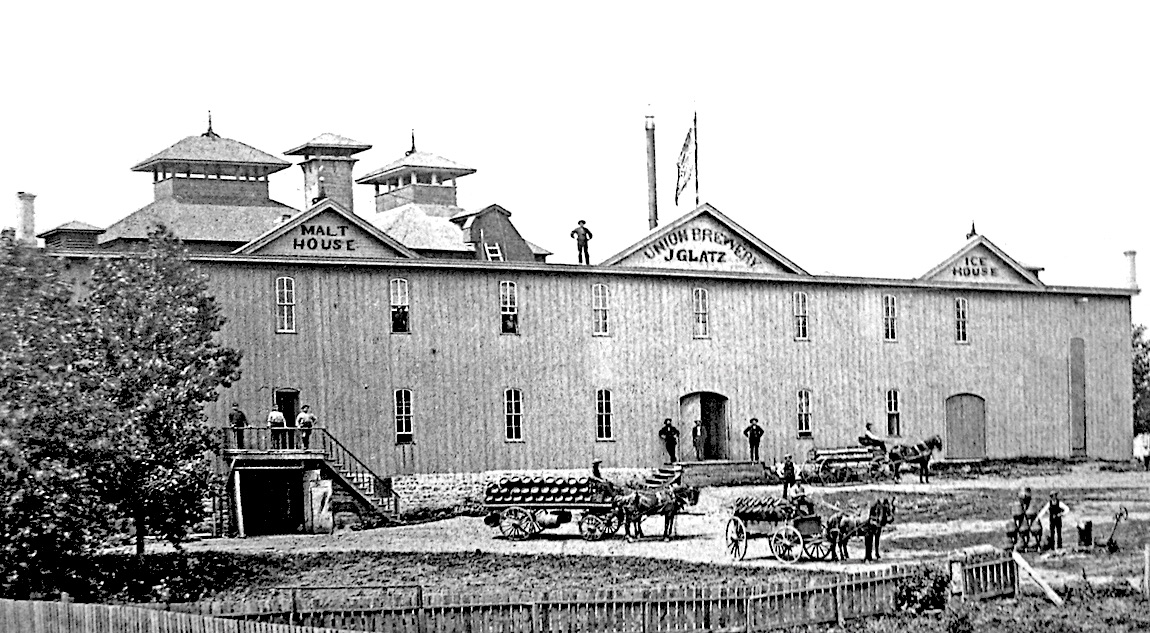
Here’s another exaggerated illustration of an Oshkosh brewery. This 1891 drawing of the Union Brewery inflated the reality of what actually stood down there at the end of Doty Street.


Here's the real thing.


Monday, June 26, 2017

150 Years Ago at Glatz Park...

The sign at the entrance to Glatz Park reads, “On this site in 1869 John Glatz and Christian Elser established a brewery.” True enough. But the story begins earlier. There was a brewery there before Glatz or Elser ever set eyes on that land. It was built by a German immigrant named Franz Wahle.

On September 23, 1867, Franz Wahle took possession of what is now Glatz Park. It was the northern most portion of a 48-acre farm. Wahle built the first brewery there.

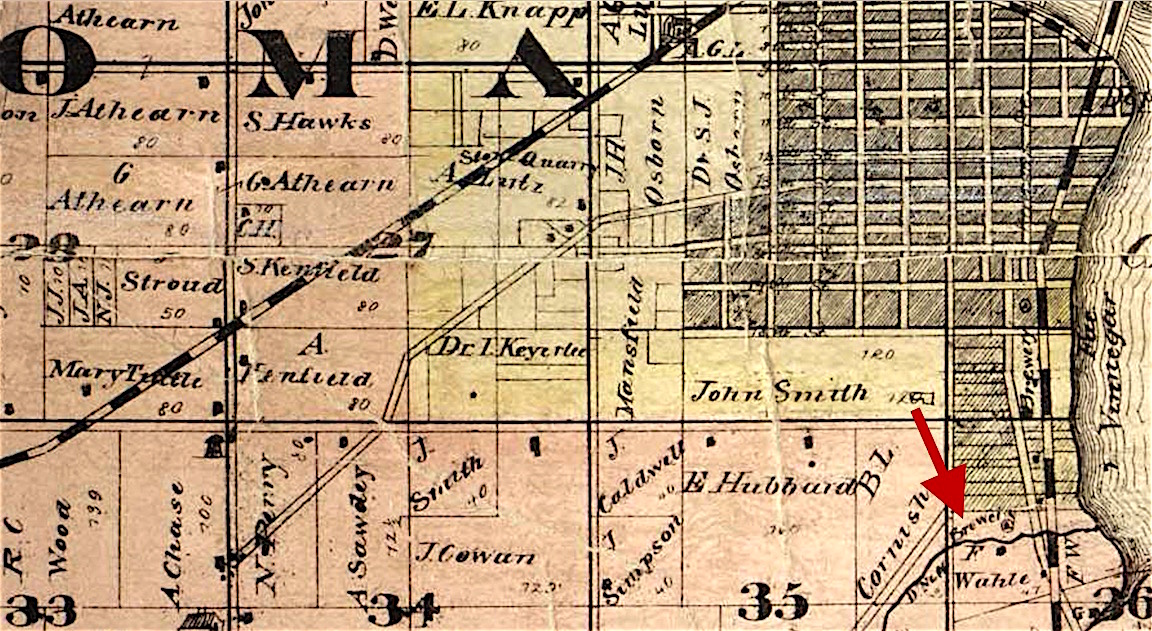
1873 map showing the location of the brewery and Wahle's farm.
Wahle was born in the northern German town Niedermarsberg in 1826. He moved to America in 1854. Before coming to Oshkosh, he had spent the previous 10 years running what is now the Stevens Point Brewery. In 1867, Wahle sold that brewery to Andrew and Jacob Lutz and went to Oshkosh.

There isn't a picture known to exist of the brewery Wahle built on the Glatz Park site. But there is a picture of his brewery in Stevens Point. Wahle was said to have also built that brewery. The brewery he built in Oshkosh would likely have looked quite similar.

Wahle's former brewery in Stevens Point.
There were five breweries operating in Oshkosh when Wahle arrived here. Among them, Wahle's operation would be unique. His was Oshkosh's only true farm brewery. An early inventory from the farm shows it produced corn, potatoes, apples, grapes and hay. Wahle also kept livestock including hogs, cows, horses and sheep. Less is known about what he was producing in his brewery.

Wahle appears to have done no advertising for his brewery in Oshkosh. That's surprising considering how frequently he advertised his Stevens Point brewery. There he was producing both ales and lagers. Wahle probably did likewise here.
Wausau Central, January 17, 1861.
Wahle's low Oshkosh profile makes for frustrating research. Mention of his Oshkosh brewery is scant. Even his obituary says almost nothing about his extensive brewing career. Today, the omission seems especially glaring.

Wahle's time as a brewer ended here in 1869 when he leased his brewery to John Glatz and Christian Elser. The brewery Wahle built was destroyed by fire in 1871. The following year, Glatz and Elser purchased the property from Wahle and rebuilt the brewery.

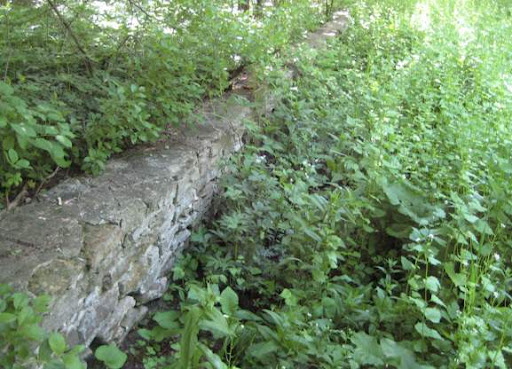
Under Glatz and Elser, it came to be known as the Union Brewery. John Glatz bought out Elser in 1879. Glatz merged his brewery with two others in Oshkosh to form the Oshkosh Brewing Company in 1894. All that remains of the old Glatz Brewery is the stone wall in Glatz Park.


Franz Wahle sold his farm in April 1882. He died five months later. Wahle was 56 years old. The brewer who was instrumental in launching what is now one of America's oldest breweries is buried in Riverside Cemetery.


Monday, November 7, 2016

Pieces of a Brewery

I want to expand on something I mentioned in last Monday’s post that involved this picture.


That’s a lithograph produced for the Oshkosh Brewing Company at the turn of the century. But as I said last week, the brewery looked nothing like this. This print shows an amalgamation of OBC’s three separate brewing facilities. Each was located in a different part of town.

Let’s break this down. First, here’s the piece of the picture that represents the OBC facility located at what is now 1235-1239 Harney Ave. Prior to the formation of OBC in 1893, this was Lorenz Kuenzl’s Gambrinus Brewery.


It’s difficult to see, but the sign on the building with the flag flying over it says “Bottling Dept.” At this point OBC was bottling its beer here. That building had been used as an ice house when the Gambrinus Brewery was in operation.

As you’ll see, the artist took a few liberties with the subject. Here’s the real thing.


Now we head to the south side of town. They used to have a pet name for it: Brooklyn. I wish that were still an Oshkosh colloquialism. Anyway, at the end of Doty Street, in what is now the 2400 block, stood one of OBC's two brewhouses. This was formerly John Glatz and Son’s Union Brewery.


And here’s what that piece of OBC actually looked like.


Just up the road from the old Glatz Brewery was OBC’s other brewhouse. This was once known as Horn and Schwalm’s Brooklyn Brewery. Here’s the part of the lithograph showing that brewery. It was located in what is now the 1600 block of Doty Street.


Notice that it has “Established 1865” on the gable atop the malt house. That’s one of the few times OBC got its starting date right. That’s the date when Leonhardt Schwalm launched the Brooklyn Brewery, the oldest of the three breweries that merged to form OBC.

Here’s what the old Brooklyn Brewery really looked like.


Part of that brewery still stands. It’s the only piece of this picture that remains. This is what it looks like today.


The color lithograph wasn’t the first stab OBC took at painting itself larger than life. Here’s a drawing of the brewery from 1898. This one is even more delusional.


OBC certainly wasn’t unique in doing this sort of thing. At a time when photography was less common, brewery images were most often rendered by hand. And more often than not the artists aggrandized their subject. Here’s another example. This is a late-1800s drawing of the Glatz Brewery. The artist added a third floor to it.


And here’s an 1891 ad with a drawing of the Brooklyn Brewery. Again, an extra floor was added.


One last photo. Unfortunately, I don’t know when this was taken. I’m guessing it was shot somewhere around 1905-1910. This the former Glatz Brewery after it had been rebranded as the Oshkosh Brewing Company. These days it’s the home of Glatz Park. They don’t build ‘em like this anymore…


Monday, August 1, 2016

Pieces of the Past at Glatz Park

In 1894, Glatz’s Union Brewery merged with two other Oshkosh breweries to form the Oshkosh Brewing Company (OBC). After the merger, much of OBC’s beer was brewed at what had been the Glatz Brewery. That arrangement held until 1911, when OBC built its new brewery on the east side of Doty Street just south of 16th Avenue.

Three years after the new brewery had gone up, the old Glatz brewery was taken down. But there are pieces of it that linger. The next time you visit Glatz Park, look for the low, stone wall that runs parallel with Doty Street. It was constructed in either 1867 or 1872 (a note on that below). The stone wall at Glatz Park is the oldest piece of brewery standing in Oshkosh.


That remaining portion was part of the brewery’s stone foundation. But it was just a small part of the edifice. This was a large structure, approximately 160 feet long and 60 feet wide. The piece that remains was at the back (west) side of the brewery near its southernmost end. Let’s get a sense of where it fit within the rest of the brewery.

First, here’s a picture of the John Glatz Union Brewery, circa 1886. This is the front of the brewery. It’s what you would have seen if you were looking west while standing at the southern end of Doty Street.


Here’s something to take notice of that we’ll come back to later... Look to the left side of the photo showing the southern end of the brewery. You’ll see an opening leading under the building. That was an access point to one of the brewery’s beer cellars. It looks like the wagons loaded with kegs have just emerged from there.

Next is a detail of a Sanborn Fire Insurance Map published in 1903. I’ve added a green highlight over the approximate location of the foundation wall that remains in Glatz Park.


That remaining piece is about 58 feet long. Nearly 100 feet of that wall was still intact when Glatz Park opened on July 4, 1976.


If you visit Glatz Park, take a look on the east side of the wall. You’ll find plenty of evidence of the beer cellar that was at the southern end of the brewery. What’s left is rubble, but it wasn’t all that long ago you could prowl the caverns where Glatz lagered his beer. These caverns were once the main attraction at Glatz Park. Let’s take a virtual tour.

Entering the park from Doty Street, you’d get your first look into the cellar. For the picture below the camera was aimed north. Beyond the fence, you can see the stone arch above the entrance to Cavern 1.


There were two main caverns under this end of the brewery. Both were approximately 15 feet wide, 25 feet long and 12 feet high at the peaks of their arched entryways.

In the picture below, we’re looking down at the two caverns. Cavern 1, which we saw in the picture above, is to the right (east). Cavern 2 is to the left of Cavern 1.


Here’s a walkway that ran along the south end of the two caverns. Straight ahead we see a smaller arched doorway that led out towards the front of the brewery. The wall on the right was the southernmost foundation of the brewery.


Now a look inside those two caverns. Here’s the inside of Cavern 1 looking north.


And here’s the inside of Cavern 2, also looking north.


It kills me that these have been lost. I’ve heard stories that stone from the caverns was taken to the Paine for use in the formal garden that was there. I haven’t been able to confirm that.

One last thing: I’d love to hear from people who remember exploring Glatz Park when the beer cellar was still accessible. I’ve been going by old maps and pictures to draw my conclusions. That’s better than nothing, but the potential for error is high. If you know more, or can correct mistaken interpretations I’ve made, please leave a comment or contact me at oshkoshbeer@gmail.com. And if you haven’t visited Glatz Park yet, don’t wait too long. As the past attests, what’s left may not last.

Thanks to Steve and Janet Wissink for sharing their memories and pictures of Glatz Park.

Note on dates: The first brewery at what is now Glatz Park was built in 1867. That brewery burned in 1871. The brewery was rebuilt in 1872. It’s not known if the portion of the foundation still standing was part of the original, 1867 brewery.

Monday, May 16, 2016

Fire at the Union Brewery!

There were a few things Oshkosh was known for in the latter half of the 19th Century: Lumber mills. Mayhem. Saloons. Mass destruction by conflagration... Like other businesses that went up here, breweries had a habit of burning down. I haven’t posted much about Oshkosh’s brewery fires. Time to address that. We’ll start on the south side where brewers John Glatz and Christian Elser burned down a brewery that wasn’t even theirs to burn...

Burning the Union Brewery
In 1867 German-born brewmaster Franz Wahle moved to Oshkosh from Stevens Point, where he’d had a hand in establishing what is now known as Stevens Point Brewery. Upon leaving Point, Wahle purchased a 52-acre farm and its stock on the southern border of Oshkosh in what was then the Algoma Township. Here’s a map from 1873, showing the location of the Wahle farm with the brewery at the northern edge of the property. The red arrow points the way.


Two years after arriving here, Wahle leased his brewery to a couple of German-born brewers who had most recently been plying their trade in Milwaukee. John Glatz and Christian Elser took over Wahle’s brewery in September 1869. They re-named it Glatz and Elser’s Union Brewery. All was well until the Friday night of December 15, 1871.


Destruction of a Brewery
About ten o'clock on Friday evening the Union Brewery owned by Franz Wahle and leased by Glatz & Elser took fire and then burned to the ground. The steamers were promptly on the ground, but for lack of water were unable to do much.
- Oshkosh Weekly Northwestern, December 21, 1871

What an especially bad time to burn your brewery. Here’s why: Glatz and Elser produced cool-fermenting lager beer. For such brewers, a productive winter was crucial. The slow, cool fermentation lager beer requires meant that the peak of their brewing activity occurred during the cold months. It was also the time of year when they harvested tons of natural ice from Lake Winnebago for cooling their elaborate system of caves where they conditioned their beer. The Friday-night fire crippled the Union Brewery for the coming year.

For Glatz and Elser, getting things back in order wasn’t easy. The brewery they had just destroyed was not insured. They had also lost their entire stock of beer. A little over half of that loss was covered by insurance.

The two were left in dire financial straits. These were not rich men. Combined, Glatz and Elser had fewer assets than any other brewers in Oshkosh. Yet, they managed to rebound.

Less than a month after the fire, Glatz and Elser used their insurance money to help finance their purchase of the northernmost four acres of the Wahle property. The brewery had been valued at $6,000 (about $120,000 in today’s money). Glatz and Elser paid Wahle about $110,000 in today’s money. But what they bought was now vacant land.

A quick digression: I love the ornate lettering on the deeds that were recorded back then. Here’s the top portion of the deed transferring the property from the Wahles to Glatz and Elser.


Glatz and Elser took a series of loans to finance the rebuilding of the Union Brewery. It all worked out. By the end of the 1870s, the Union Brewery was producing more beer than any other brewery in Winnebago County. Here’s the brewery they built in the aftermath of the fire.

The Union Brewery is long gone, but you can still walk the grounds where it once stood. A part of that property is now Glatz Nature Park. It’s open to the public and you can see remains there of the brewery’s stone foundation. You ought to go visit.


Friday, May 28, 2010

The Last of Glatz's Brewery

Glatz Nature Preserve
This would be the perfect weekend to tromp into the woods and explore the ruins of a long gone Oshkosh brewery. And if you follow Doty Street to its southern conclusion you can do just that. The 1.75 acres of woods and wildplants that make up the Glatz Nature Preserve are home to the last remnants of Glatz and Elser’s Union Brewery.

The park is unmarked, but it’s easy to find. Follow Doty past Ardy & Ed's to the very end of the street and look for the two rustic fences framing the entrance to the park. It may look like private land, but it isn’t. Take the path into the woods and in a few moments you’ll be standing on the very spot where, in 1869, Glatz and Elser began brewing their “Good As Milwaukee Beer.” Along the eastern edge of the property, crouched among the wildflowers, you can still see parts of the original stone foundation from the caverns the brewery used to cool and age their beer.

This remnant of Glatz and Elser’s Brewery is the oldest surviving brewing structure in Oshkosh. It was nearly lost, though. In 1974, when the area was being targeted for industrial growth, the Smith School PTA petitioned to preserve what was left of the brewery. The Oshkosh Common Council became involved and in 1975 the city purchased the land from Warren Basler with a promise from the Winnebago Conservation Club to raise $7,000 for restoration of the property. After months of volunteer work, a dedication ceremony was held and on July 4, 1976 Glatz Park was christened. At the dedication ceremony Common Council member Beatrice Techmiller said, “Glatz Park will be a place to experience nature and learn something about history at the same time." The part about experiencing nature came through, but you’ll have a hard time learning much about history there. What the park sorely lacks is a marker that tells the story of the brewery and its place in the daily life of the City of Oshkosh in the late 1800s.

So how would John Glatz feel about the city owning his land? The Union  Brewery was constructed approximately 500 feet beyond the city limits, which enabled Glatz to avoid paying taxes to the city of Oshkosh. And in 1889, when Oshkosh officials sought to extend the boundary of the Third Ward and bring his brewery into the fold, Glatz fought them off. Though he was selling nearly all of his beer in Oshkosh, Glatz had no intention of sharing his spoils with the city that had helped to make him wealthy. In 1895 he even sued Oshkosh to get back a $200 fee he’d paid for purchasing an Oshkosh liquor license. He argued that because his beer had been made outside the city limits, Oshkosh had no claim on him. Now the City of Oshkosh owns his property lock, stock and barrel. We’re lucky that’s so. But would John Glatz appreciate the irony of it? Maybe. Maybe not.