Showing posts with label Fox River Brewing. Show all posts

Friday, November 29, 2024

A Bock, 33 Breweries, and 175 Years of Beer from Oshkosh

Here’s one last beer in celebration of this year’s 175th anniversary of brewing in Oshkosh.


175 Bock is being released today (Nov. 29) in a commemorative can and on draft at Fox River Brewing in Oshkosh. The beer is a call-back to the first half of the last century when seasonal Bock beers were the highlight of the beer drinking year. Drew Roth, brewmaster at Fox River, created the recipe using those early Bocks as his template. This is an absolutely excellent beer, and it's a limited release, so grab it while you can.

And with that in mind, I thought now would be a good time to take a quick look back on the incredible brewing history of this city. More than 33 breweries have made beer in Oshkosh since Jacob Konrad launched the first brewery here in 1849.

The Legal Breweries
We’ll start with the 21 legal breweries. The map below shows the location of each of them. I’d recommend viewing this in the full-screen version. Click on the beer mug to see the dates of operation for each brewery.


The Wildcats
In addition to the legal breweries, there have been at least a dozen wildcat breweries in Oshkosh that operated illegally during Prohibition. Again, I recommend viewing this map in the full-screen version here. Same deal, click on the beer mug to find out more about each brewery.


All of the Breweries
Here’s a rundown of the 21 legal breweries. If you’d like a deeper dive, check out the Oshkosh Beer Timeline. There you can find links to the history of each brewery and more.

1. The Lake Brewery, 1849–68
East side of Lake Street, approximately one hundred yards south of Ceape Avenue
  1. 1849–53: Jacob Konrad
  2. 1853–62: Anton Andrea
  3. 1862–65: Leonhardt Schwalm
  4. 1865–68: Gottlieb Ecke
2. Joseph Schussler’s Oshkosh Brewery, 1849–52
South side of Bay Shore Drive, midway between Bowen and Frankfort Streets

3. Loescher’s (First) Oshkosh Brewery, 1852–78
1253–83 Bay Shore Drive
  1. 1852–53: George and Frederick Loescher
  2. 1853–78: George Loescher
4. Fischer, Weist and Kaehler, 1856–1858
Southwest corner of High and New York Avenues
  1. 1856–57: Tobias Fischer and August Weist
  2. 1857–58: Tobias Fischer and Christian Kaehler
5. Busch Brewery/Fifth Ward Brewery, 1858–1880
Southeast corner of Algoma Boulevard and Vine Avenue
  1. 1858: Tobias Fischer and Christian Kaehler, Busch Brewery
  2. 1858–80: Christian Kaehler’s Fifth Ward Brewery
6. Rudolph Otten Brewery, 1865
Oxford Avenue.

7. Rahr Brewing Company, 1865–1956
North side of Rahr Avenue near the Lake Winnebago shoreline
  1. 1865–83: Charles and August Rahr
  2. 1883–97: Charles Rahr’s City Brewery
  3. 1897–1917: Charles Rahr Jr./Rahr Brewing Company
  4. 1917–56: Rahr Brewing Company of Oshkosh
8. Horn and Schwalm’s Brooklyn Brewery, 1866–94
1630–70 Doty Street

9. Franz Wahle/Glatz Union Brewery, 1867–94
End of Doty Street (Glatz Park)
  1. 1867–69: Franz Wahle
  2. 1869–79: John Glatz and Christian Elser Union Brewery
  3. 1879–88: John Glatz Union Brewery
  4. 1888–94 John Glatz and Son (William Glatz)
10. The Gambrinus Brewery, 1868–94
1239–47 Harney Avenue
  1. 1868–71: Gottlieb Ecke
  2. 1871–75: Charlotte Ecke
  3. 1875–94: Lorenz Kuenzl’s Gambrinus Brewery
11. Leonard Schiffmann’s White Beer Brewery, 1870s
1864 Doty Street

12. Leonard Arnold Brewery, approximately 1875–78
Southeast corner of Sixteenth Avenue and South Main Street

13. Frederick Voelkel Brewery, late 1870s
Northwest corner of Doty Street and West Seventeenth Avenue

14. Loescher’s (Second) Oshkosh Brewery, 1880–89
Northeast corner of Frankfort Street and Bay Shore Drive
  1. 1880–84: George Loescher
  2. 1884–89: William Loescher
15. Oshkosh Brewing Company, 1894–1971
1642 Doty Street

16. Peoples Brewing Company, 1913–72
1512 South Main Street

17. Mid-Coast Brewing Company, 1991–95
Offices at 35 Wisconsin Street (beer produced in Stevens Point)

18. Fox River Brewing Company, established 1995
1501 Arboretum Drive

19. Bare Bones Brewery, established 2015
4362 County Highway S

20. Fifth Ward Brewing Company, established 2017
1009 South Main Street

21. HighHolder Brewing Company, 2018-2021
2211 Oregon Street

Here’s a rundown of the 12 known wildcats


1. Mathias Sitter

1255 Harney Ave.
Raided on August 24, 1927.

2. Theodore Fisher
601 S. Main St.
Raided on August 24, 1927.

3. Safford Family Home
1627 Kentucky St.
Raided February 14, 1930.

4. Mary Kollross
1325 Oregon St.
Raided on February 14, 1930.

5. Fowler House Hotel
Southeast corner of High and Division streets.
Raided on February 22, 1930.

6. Joseph Widzinski
Near the corner of Wisconsin and Pearl streets.
Raided in the summer of 1930.

7. Henry Noe
Farm brewery near the intersection Highway 41 and State Road 76.
Raided on March 21, 1931.

8. Molitor & Heinzl
W. 20th Ave. near State Hwy 44.
Raided August 1931.

9. Molly Molitor
826 W 6th Ave.
Brewery never raided. Location confirmed by Leroy Youngwirth, son of Oshkosh bootlegger Butch Youngwirth.

10. Airport Tavern
809 W 20th Ave.
Never Raided. Approximate location of a tavern operated by Butch Youngwirth's outfit. The large brewery at this site was confirmed by Butch's son Leroy Youngwirth and former bootlegger Ed "Slim" Suda.

11 Adolph Spanbauer
642 W 9th Ave.
Never Raided. Brewery located in a speakeasy. Location confirmed by former bootlegger Ed "Slim" Suda.

12. Iowa Street Brewery
Near Iowa St & W 6th Ave.
Little is known of this brewery. Appears to have been run by the Butch Youngwirth outfit. Location confirmed by Leroy Youngwirth and Ed "Slim" Suda. They described the brewery as being near the corner of 6th and Iowa.

Prost, to 175 years!
I want to send a huge thanks to the brewers at Bare Bones, Fifth Ward, and Fox River. Early this year, I reached out to them and suggested that we have some sort of city-wide collaboration to honor the 175th year of brewing here. Without hesitation, they agreed. Each brewery produced a bock beer (nothing could be more appropriate) to mark the anniversary. Here’s to another 175 years of Oshkosh-brewed beer!

Fifth Ward’s 175 Bock, released April 4, 2024.

Bare Bones’ 175 Oshkosh Helles Bock, released June 1, 2024.

Fox River’s 175 Bock, released November 29, 2024.

Email me at OshkoshBeer@gmail.com to receive an email notification when I publish a new post. Your email address will never be shared or sold.


Sunday, November 3, 2024

Beyond Beer and Back

These are strange times for small breweries. A generational shift in drinking habits has led to beer consumption levels hitting a 25-year low. For craft brewers, the downward trend has been evident since 2019. The three Oshkosh breweries – Bare Bones, Fifth Ward, and Fox River – were more resilient. But that’s no longer the case. Through the first seven months of 2024, overall beer production in Oshkosh is down almost eight percent. It’s the first non-COVID-related production dip in more than a decade.

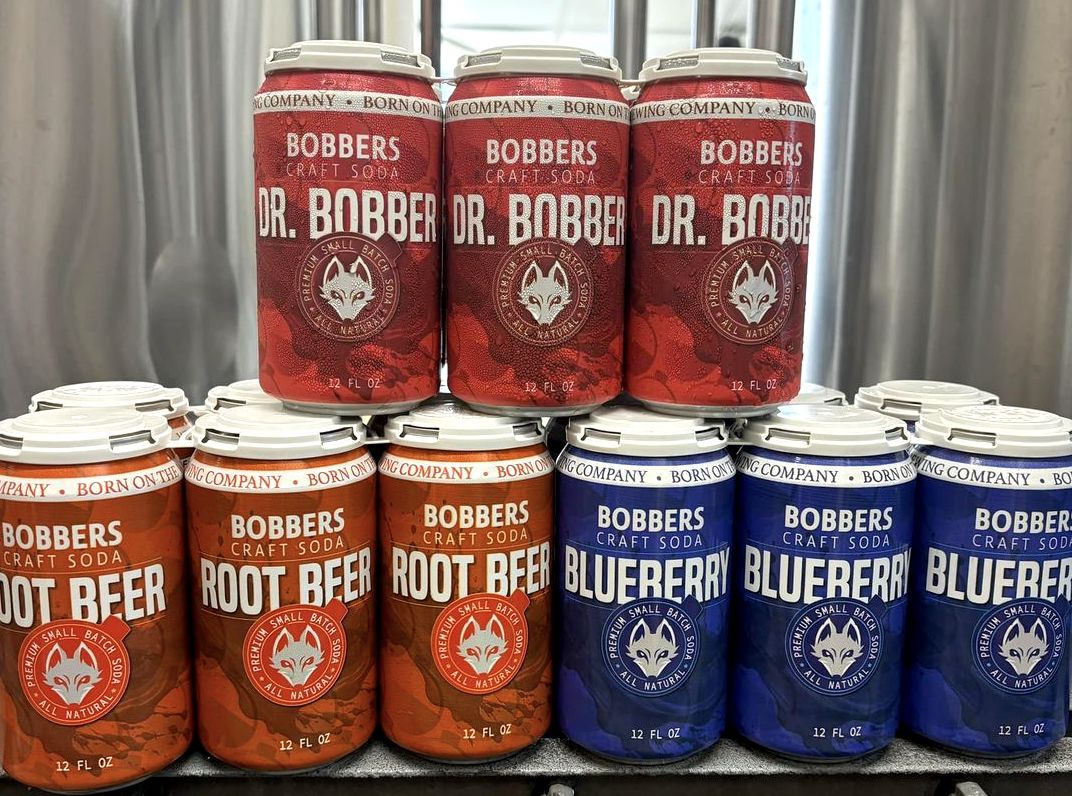
The gloomy outlook has brewers searching for novel ways to retain consumer interest. At Fox River Brewing Company, the approach has been to introduce a line of beverages that have little to do with what the brewery has long been known for. In the parlance of marketers, Fox River has gone “Beyond Beer.” Or as Fox River Brewmaster Drew Roth puts it “Beverages that aren't beer in any way, shape, or form.”


This year, Fox River has introduced a range of new products that have nothing to do with barley malt and hops. The brewery has released a line of craft sodas, hard tea, hard lemonade, and continued its line of hard seltzers. “The decision was made late last year to try these periphery beverages out and see if any of them made sense for us,” says Roth. “We were looking at the trends. It made sense to at least take a look at it.”

Oddly enough, the strategy may have actually helped beer sales. Fox River’s Oshkosh facility is the only brewery in Oshkosh that has seen its beer production increase this year; by a modest three percent. Roth will take that as a win for now. “It’s a cyclical thing,” he says. “These trends come and go. It’s like the thing with ready to drink cocktails. They pop up every five or ten years and become trendy, and then cycle back out. I mean, craft beer has been around long enough now that people don’t see it as something new anymore, which is fine.”

Fox River Brewmaster Drew Roth.

If craft beer has crossed over from the fashionable to the familiar, then Fox River is one of the better Wisconsin examples of how that looks on the ground. Next year, the brewery will celebrate its 30th Anniversary. Of the 21 breweries that have operated in Oshkosh since 1849, Fox River is now fourth in terms of longevity. The only breweries here that have survived longer were the venerable Rahr Brewing (91 years), Oshkosh Brewing Company (77 years), and Peoples Brewing (59 years).

This month, Fox River is releasing two beers connected to that legacy. The first is 175 Bock, a lager made in recognition of this year’s 175th anniversary of the beginning of commercial brewing in Oshkosh. The beer, which will be available on draft and in a special commemorative can, pays tribute to the Bock beers that were wildly popular in Oshkosh for over a century.


 “This is an older style of American lager,” Roth says. “It’s based on a pre-Prohibition type of beer. We used American malts and a little corn, like they did in those older recipes. We also used locally-grown hops from Hidden Valley Hops Farm in Winchester.” The blend includes hops cultured from rootstock dating back to the 1840s discovered at the site of one of Winnebago County’s first hop farms in Allenville. “I’m looking forward to getting this packaged,” Roth says, “the flavors are really nice.”

And then there’s a beer with a mouthful of a name: Gambrinus was a Real SOB. The beer came onto Roth’s radar when he judged at a homebrew competition held by the Society of Oshkosh Brewers. “It was by far the best beer in the competition,” Roth says. “It’s a dark lager, a style of beer we like brewing this time of year.” The competition beer was made by Society of Oshkosh Brewers’ member Scott Westpfahl. The recipe is from the late 1800s when the Gambrinus Brewery on Harney Avenue used it to make its Kulmbacher Bier. Roth scaled up that same recipe for his “Gambrinus” beer. “We like working with the SOBs,” Roth says. “They represent a really passionate chunk of the craft beer consumer in this city.”


Fox River Lead Brewer Patrick McHugh (left) and Scott Westpfahl of the Society of Oshkosh Brewers on the brew deck at Fox River making "Gambrinus."

The contrasting strains of traditional and trendy make for a complex juggling act for Roth, who is into his sixth year as brewmaster at Fox River. He oversees brewing operations at the Fox River brew houses in Oshkosh and Appleton and directs a crew of six other brewers. “It’s been a challenging year for sure, but I‘m more settled in than anything else, so we’ve been able to handle it,” Roth says. “That said, I’m hoping this coming year will be a little less hectic. We’re streamlining things and getting more targeted. But there’s always going to be something new to contend with. It’s just the nature of the business.”


Email me at OshkoshBeer@gmail.com to receive an email notification when I publish a new post. Your email address will never be shared or sold.

Tuesday, January 30, 2024

A Beer By Any Other Name

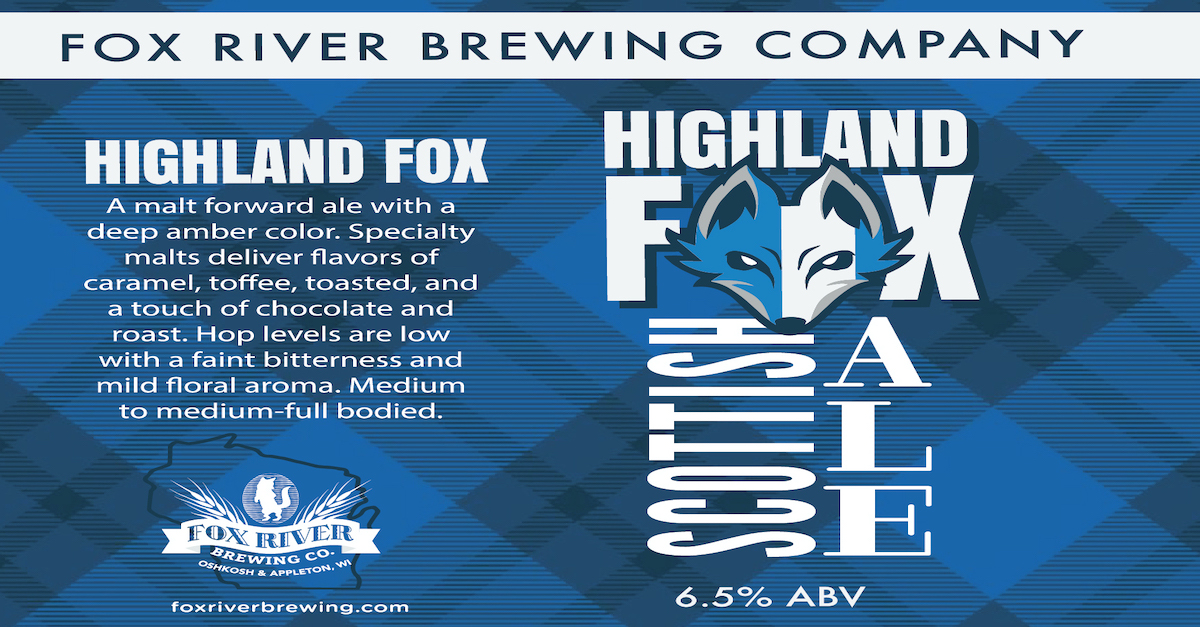
The longest-lived craft beer made in Oshkosh has a fluid identity. It’s a Scottish Ale from Fox River Brewing Company, and it was first served to the public at Fratello's Italian Cafe on Friday, December 15, 1995. On that day, it was called Caber Tossing. In 2014, Caber Tossing became Marble Eye. This February, the name will change again, this time to Highland Fox Scottish Ale.


Drew Roth is the head brewer at Fox River. He knows what’s coming next. “It’s kind of a running joke around the brewery. People will insist that Caber Tossing and Marble Eye were completely different beers with different recipes,” he says. “I can pull out recipe sheets and show them that they’re the same beers. It doesn’t matter. They just tell me I’m wrong.”

Drew Roth

Roth has 29 years of brewing logs backing up his claim. The recipe he is using for Highland Fox adheres, in every important respect, to the recipe that former Fox River head Brewer Al Bundee entered into the logbook for the first batch of Caber Tossing on November 25, 1995. “It’s a different name, but the recipe is not changing in the slightest,” he says.

In the trend-riddled world of craft beer, that kind of longevity is practically unheard of. But then, this beer was an outlier from the start. When Caber Tossing was introduced it became the strongest year-round beer ever produced in Oshkosh. At 6.5% ABV, with its deep amber color and caramelized malt flavor, Fox River’s Scottish Ale was altogether different from the mild, pale lagers that had been dominant here for a century.


Beer connoisseur and brewer Mark Stanek was among the early adopters. He became acquainted with Caber Tossing after moving to Oshkosh from Madison in 1997. “That beer was outstanding,” Stanek says. “It was malty in flavor and aromatics. It was one of the great beers from that time frame and was really well respected.”

In 2001, Caber Tossing took the gold medal in the Scottish-style ale category at the Great American Beer Festival. By 2006, it was the best-selling beer in Fox River’s portfolio. Caber Tossing-cum-Marble Eye held that position until 2014 when BLU Bobber became a year-round beer and the brewery’s runaway bestseller. Ten years later, Marble Eye, soon to be Highland Fox, still holds its own.

“It just continues to be that beer that consistently sells,” Roth says. “We have discussions every year about what beers are going to get pulled to make room for new things, but Marble Eye has never been up for discussion. It just keeps going, and we’re going to keep brewing it.”

That’s a rare declaration to attach to an amber beer these days. Nationwide, the popularity of darker-hued brews has fallen significantly. The decline is illustrated by the recently diminished Fat Tire Amber Ale. Ten years ago, Fat Tire was among the most popular of all craft beers. But deflating sales led to Fat Tire's reformulation last year. Gone is the amber. Fat Tire now wobbles along, drained of its color.

“Wisconsin is kind of a weird market in that way,” Roth says. “A lot of people here still want those darker beers. It might be our climate, or some of the traditions around here, I’m not really sure. Marble Eye is often our second or third best seller on draft even in the summertime.”

It's a beer that has been bucking trends for so long that it has entered the pantheon of Oshkosh classics such as Chief Oshkosh, Peoples Beer, and Rahr’s Elk’s Head. At 29-years old, what is about to become Highland Fox is the youngster of that bunch. Yet it remains an old friend to those who discovered their love of flavorful beer through Caber Tossing. “I know I’m going to hear about it, but I like the new name,” Roth says. “Highland Fox embraces our identity and what the beer is about. We're getting back to our roots on that.”

A slightly different version of this story appears in today's Oshkosh Herald.

Wednesday, November 24, 2021

Oshkosh's Lager-Beer Revival

Oshkosh began as a lager-beer town. Our first breweries were established in 1849 by German-born brewers who filled their barrels with the cool-fermenting lager beers they had learned to brew in their homeland. Those beers were embraced here. Lager styles of beer would remain predominant in Oshkosh until the end of the 20th century. Then craft beer came along. And that meant ale.

With the launch of Fox River Brewing in 1995, ale brewing supplanted Oshkosh's history as a center for lager-beer production. The difference between the two families of beer comes down to yeast, time, and flavor.

Ale is fermented with yeast that prefers warm temperatures; usually around 66º Fahrenheit. Ale is a quick brew often going from kettle to glass in 14 days or less. The process tends to produce a beer with a fruitier flavor profile. Lager, on the other hand, is made with yeast that thrives in a cooler environment; about 50º Fahrenheit. After fermentation, a lager is typically matured for a month or more at temperatures close to freezing. It leads to a beer with a “cleaner” taste allowing the more subtle aspects of the ingredients to shine through.

Lagers have earned a reputation for being more difficult to brew. That's one of the reasons it tends to be ignored by craft breweries. But that's beginning to change. According to Nielsen, a market research firm, the production of craft lagers grew by more than 9% last year, making it among the fastest-growing segments of the beer market. The primary contributors in Oshkosh to that increase have been Bare Bones Brewery and Fox River Brewing.

This month, the two breweries will underscore the trend with the release of a collaboration beer named The Fox and the Hound, a golden-hued, hop-forward lager that will be available at the taprooms of both breweries. For Drew Roth, head brewer at Fox River, and Jody Cleveland, head brewer at Bare Bones, the beer presents an opportunity to demonstrate how compelling a good lager can be.


"I think there's an expectation that lager is just one thing," says Cleveland. "A lot of customers think of it as something that's always light and not very flavorful. It's nice to show that this type of beer can be more than that."

Roth says that at Fox River, that realization is already taking place. "Our customer base is one that still very much gravitates towards darker beers and they tend to understand that a beer like our Oktoberfest is a lager," he says. "So, there's already some knowledge among our customers that lager doesn't necessarily have to be fizzy, yellow beer."

Drew Roth (on the left in dark shirt) and Jody Cleveland brewing The Fox and the Hound.

Cleveland and Roth took a decidedly craft-beer approach when they developed the recipe for The Fox and the Hound. It's an all-malt beer brewed with American malts and Grungeist hops, a proprietary hop grown in Germany. A post-fermentation "dry-hop" addition was used to highlight the notes of peach and passion fruit that Grungiest brings. It's a technique not usually associated with lager-beer brewing.

"We've learned that we really like to dry hop our lagers," Roth says "A little bit of dry hop goes a long way in this sort of beer and it really does amp it up a notch." The approach may be somewhat novel, but it's indicative of the evolution of lager brewing here. Both Roth and Cleveland began their careers brewing ales. That background informs their approach to making lager beers.

"I did not even like lager beer for a long time," says Roth. "I went into craft beer as an IPA hop head. At the time it was really hard to find good lagers. It wasn't until I was in Eau Claire and had Lazy Monk's beer that I started thinking, alright this is pretty good. After that, I went back to homebrewing for a while and immediately started brewing lagers."

Cleveland followed a similar path. "When I started homebrewing, all I wanted to brew was brown ale," he says. "But gradually I started doing lagers and then ended up brewing it quite a bit, mostly historic styles and beers that had been brewed in Oshkosh before craft came along. Now, it's my favorite type of beer, so I would prefer to brew that."

At Bare Bones, Cleveland makes the only year-round lager produced in Oshkosh. The brewery's Oshkosh Lager is an homage to the sort of lagers that were widely produced in Oshkosh for most of the 20th century. "The fact that these beers are selling well helps me justify brewing more of it," Cleveland says.

Roth shares that view. "I mean you have to brew what sells," he says, "and right now the lager beers are selling, so we're going to continue making them. I personally like them a lot, so I'm not disappointed about brewing more of them."

Thursday, September 30, 2021

Big Ed's Hop Yard Honey Bock

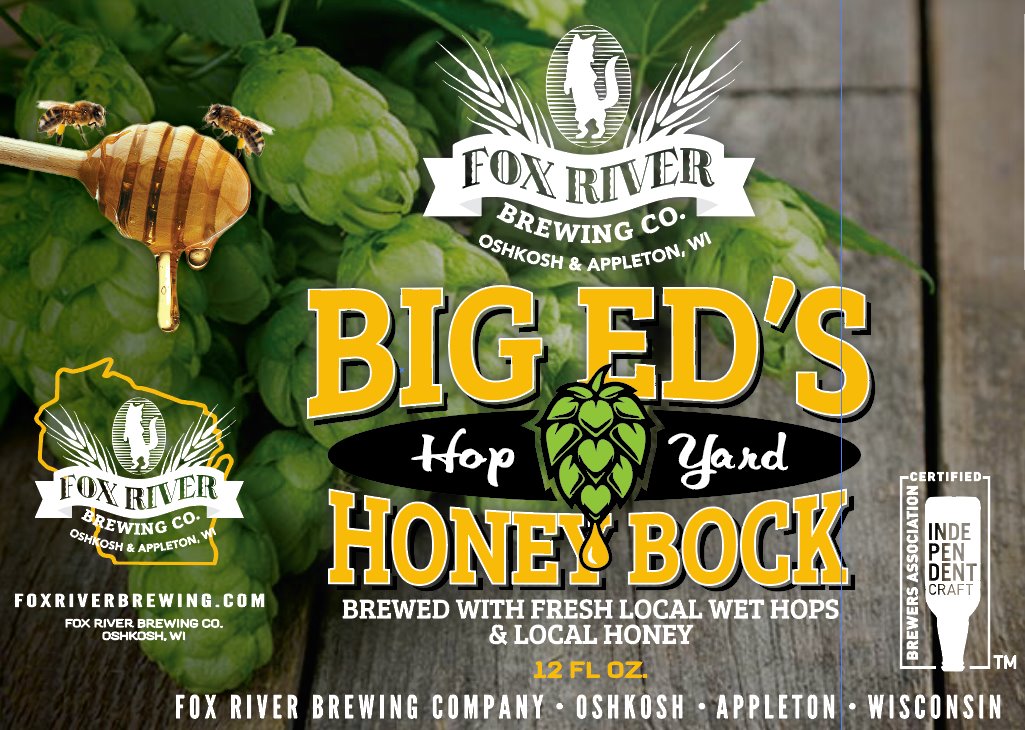
Last Thursday, Fox River Brewing released its 2021 version of Big Ed's Hopyard Ale. Big Ed’s is a wet hop beer using fresh hops that go directly from the hop bine to the brew kettle without being dried or processed. The hops used in Big Ed’s come from Steve Sobojinski’s hop yard in the Town of Nekimi.

Picking hops for the 2021 Big Ed's.

This year marks the sixth year that Fox River has produced Big Ed’s. When the beer was introduced in 2016, it became the first commercial beer made in Oshkosh in more than 130 years to use locally sourced hops. This year, Fox River was able to gather 41 pounds of hops from Sobojinski’s yard.

Big Ed’s changes from year to year. As Sobojinski’s hop yard has matured, the flavor coming out of the field has grown deeper, more complex. Over the last couple of years, those hops have settled into a nice groove. The flavor is bright and slightly lemony with a piney undertow.

The base beer has also changed. Big Ed’s began life as a pale ale. But since 2019, when Drew Roth took over as head brewer at Fox River, the beer has gone through different iterations. Last year, Big Ed’s was a Cascadian Dark Ale. This year, it’s an American Bock made with an addition of honey from Talbot's Apiary in Ripon.

The 2021 version of Big Ed's.

“We seem to get a consistent character from the wet hops,” says Roth. “We have been trying things out (with the base beer) to find what we like. By changing it up we keep it interesting.”

Roth may have finally found the sweet spot with this year’s version of Big Ed’s. “It is by far the best batch of Big Ed’s we have done,” he says. “It’s a damn tasty lager.”

Big Ed’s in on tap now at Fox River in Oshkosh and Appleton. It will also soon be available in bottles.


Sunday, April 25, 2021

Paine’s Lumberyard Pilsner

Long before the Fox River Brewing Company was there, the sawmill for the Paine Lumber Company held that spot on the river near the Oshkosh/Congress Avenue bridge.


Fox River Brewing opened on that parcel in 1995.

Fox River Brewing, circa 1996.

The first beer made there was named Paine’s Lumberyard Pilsner. It was brewed on Saturday, November 18, 1995. It was also the first beer made by a commercial brewery in Oshkosh in 23 years.


The brewers who made that beer were Al Bunde and Rob LoBreglio. Bunde would be the head brewer at Fox River for the next two years. LoBreglio, who had co-founded Great Dane Pub & Brewing Company in Madison, was there as a consultant.

Paine’s Lumberyard Pilsner was a part of Fox River’s core line-up until 2003. It has appeared as a seasonal offering many times since. The recipe has gone through a number of permutations; changing with every Fox River brewer putting their own slant on it.

Here's the original recipe. This first batch of Paine’s Lumberyard Pilsner went on tap at Fox River on Friday, December 15, 1995.


Paine’s Lumberyard Pilsner

Original Gravity: 1.048
Final Gravity: 1.009
ABV: 5.1
IBUs: 20-25
SRM: 5.22

Malt
93% Briess Brewers Malt 2-row
3.5% Briess Caramel Malt - 40L
3.5% Briess Carapils

Mash: 40 minutes at 157
Sparge: 95 minutes with temp rising to 171 during the sparge
Water: Untreated, City of Oshkosh municipal water.

Boil Time: 90 minutes

Hops
Czech Saaz: 90 minute boil for 12 IBUs
Czech Saaz: 10 minute boil for 6 IBUs
Czech Saaz: whirlpool addition for 4 IBUs

Yeast
Wyeast 2278 Czech Pils

Ferment at 50f for 17 days
Lower Temperature to 35 and rest for 7 days
Transfer to serving vessel.

For a deeper dive on the history of Fox River Brewing...
A full history of the brewery can be found here.
And a full history of the brewery’s beer production can be found here.

Tuesday, December 15, 2020

A Beer History of Oshkosh’s Fox River Brewing Company

The foundation for craft beer in Oshkosh was built by the Fox River Brewing Company. For many people in this city, this brewery provided their first encounter with non-industrial beer. Over the past 25 years, no other Oshkosh brewery or tavern has broadened the beer culture here to the extent that Fox River has. It could be argued that this is the most important Oshkosh brewery of the past 100 years.

Fox River Brewing Company Oshkosh, circa 1997.

Oshkosh has been home to 20 licensed breweries since 1849. Fox River holds the distinction of having produced more types of beer than any other brewery in the city's history. There are 154 beer styles recognized by the Brewers Association, an industry trade group. Over the years, breweries here have produced 96 of the categorized styles. Of that group, 71 of them - or 74% - were first brewed in Oshkosh by Fox River.

Well, what of it?

It's this: hidden within that exceptional burst of new beer is a story about beer drinkers in Oshkosh. It tells how they've evolved over the past quarter-century while maintaining some of the same biases that beer drinkers here first embraced in the 1800s. As we’ll see, the beer culture that continues to develop in Oshkosh is unique to this place.

A brewhouse transfer sheet from July 2003 showing beer leaving fermentation tanks for packaging.

For the past four months, I've been allowed access to the complete set of brewing logs and production reports for Fox River's Oshkosh brewery. These records form an unexpurgated diary of the brewery. Among other things, they report the materials and processes used to make every barrel of beer that Fox River Oshkosh has produced since 1995. The production logs show clearly which beers drinkers in Oshkosh embraced and those which they did not.

As I collected the information within these logs, sets of distinct patterns began to emerge. Conveniently, they cycle in five-year increments. The story begins at 11:25 AM on the Saturday of November 18, 1995, when Al Bunde began brewing Fox River’s first beer. For beer drinkers in Oshkosh, things would never be quite the same.


What follows pertains only to Fox River's Oshkosh brewery. Fox River opened a second location, in Appleton, Wisconsin, in 1997. The production counts and beers made at that brewery are not included in this survey.

The Hard Core: 1995-1999
Total Brewery Production for the Period: 3,796 Barrels.

The top five selling beers: their percentage of the total production.
1) Winnebago Wheat: 17%
2) Fox Tail Amber Ale: 16%
3) Golden Ale: 14.4%
4) Caber Tossing Scottish Ale: 13.8%
5) Paine's Lumberyard Pilsner: 11%

The first beer made at Fox River was an American interpretation of a Czech-style Pilsner. It was a beer that bore a distinct similarity to the last beer that had been produced by a commercial brewery in Oshkosh. That was also an American interpretation of a Czech-style Pilsner. It had been made at Peoples Brewing just before it closed in 1972.

Fox River brewmaster Al Bunde didn't know anything about any of that. He wasn't trying to pay homage to the city's brewing history. He was hedging his bets. He was going to give Oshkosh drinkers something that at least looked familiar. Something that might entice them into the deeper end of the beer pool.

At Fox River, they soon learned that Oshkosh drinkers weren't coming to the brewpub to drink the sort of beers that looked like those poured at their corner taverns. They were arriving to try something different. The first breakout beer at Fox River was nothing like those pale lagers that had dominated the city's beer scene for so long.

Winnebago Wheat was a German-style hefeweizen. It was gold in color, hazy, and it smelled like cloves and bananas. The taste was sweet and bready. Looking back, it's not surprising that this most conspicuously German of beers would be the one that attracted so much early attention. Oshkosh's food and drink culture were marked by the German heritage of many of its residents. The expression of that influence could be seen in local taverns and restaurants. Winnebago Wheat fit comfortably into that setting. It remained the best selling beer at Fox River until 2000.

Fox Tail Amber Ale came in a close second every one of those years. This, too, was a sweetish beer, but with a bronze glow that immediately set it apart. There may have been some signaling going on here. In 1996, a glass of Winnebago Wheat or Fox Tail Amber on the table or bar was an easy-to-read indicator of beer-drinking sophistication. A symbol anyone could see from across the room. The best-selling beer in Oshkosh at this time was the ubiquitous Miller Lite. These beers looked nothing like that.

The symbolic aspect of Fox River's beer extended beyond the brewpub. By mid-1996, Fox River was distributing its beer to about 20 bars and restaurants in the Oshkosh area. Having the "home-brewed" beer pouring side-by-side with well-known craft brands helped to raise the brewery's stature. The effect was enhanced at places like Oblio's and the Lizard Lounge where Oshkosh's more dedicated craft-beer drinkers tended to congregate.

Throughout this period, the beers that sold the best for Fox River shared a common theme. They were malt-forward and gently hopped. Drinkers in Oshkosh had shown themselves to be partial to that sort of flavor profile more than 100 years earlier and their preference had been thoroughly documented in a marketing survey commissioned by the Oshkosh Brewing Company in 1957. At Fox River, they came to that realization one beer at a time.

The average hopping rate of Fox River's top three selling beers during this period was less than half a pound of hops per barrel. That was identical to the approach brewers in Oshkosh had been taking since at least the turn of the century. Fox River's more heavily hopped beers, such as Paine's Lumberyard Pilsner, with well over 1.6 pounds of hops per barrel, never made it into the upper tier of the brewery's sales charts. The first IPA brewed in Oshkosh (in August of 1996), delivered a bold bitterness from its more than two pounds of hops per-barrel hopping rate. It would be two years after that one finally came off the tap line before Fox River bothered making another IPA.

It wasn't that the brewers at Fox River had signed off on a pre-ordained approach. They were simply figuring out what worked. Early on in that process, most batches of beer they made broke new ground. In its first full year of operation, Fox River produced 20 different styles of beer. The previous 16 Oshkosh breweries – with a combined history that spanned more than 120 years – had just barely made half as many different types of beer.

Despite all the variety, drinkers in Oshkosh tended to stick to a subset of beers that came to form the brewery's core brands. In addition to the beers listed above, that line-up at various times included an oatmeal stout, a porter, and later a honey-wheat beer. The core beers accounted for 88% of the brewery's production through this period. But the one-offs and seasonals were having an impact. They were helping to re-shape the palates of Oshkosh beer drinkers and laying the groundwork for the change that was to come.
1990s tap handles from Fox River Brewing.
Electric Streetcar Oatmeal Stout was later re-named Trolly Car Stout.


Buzzed: 2000-2004
Total Brewery Production for the Period: 3,891 Barrels.


The top five selling beers: their percentage of the total production.
1) Buzzin’ Honey Ale: 19%
2) Caber Tossing Scottish Ale: 14%
3) Fox Light Lager: 12.4%
4) Winnebago Wheat: 11.7%
5) Fox Tail Amber: 10%

Beginning in the latter half of the 1800s, American beer became an increasingly homogenized and commodified product made on an industrial scale. Along with that, the imprint of individual brewmasters faded. Brand consistency became the important thing. By the 1960s, few of the people who drank Chief Oshkosh Beer, for example, could have named the individual responsible for its production. In the year 2000, it's safe to say that most of Fox River’s regular customers could have told you that Steve Lonsway was the person brewing the beer they drank.

Lonsway had replaced Al Bunde as the Fox River brewmaster in 1997. Lonsway was replaced, in turn, by Brian Allen in 2002. The beers tended to change with the brewers. Bunde's Winnebago Wheat was not exactly the same as Lonsway's. And Allen's Winnebago Wheat was not quite like that of either of the others. Less discerning drinkers may not have noticed the difference. But as sales showed, the changes had consequences.

The best selling beer of this period, Buzzin’ Honey Ale, was an American-style wheat ale made with, of course, honey. It was first brewed by Bunde in February of 1996. In 1998, Lonsway revamped the recipe, adding 5% caramel malt to the grist which deepened the color and accentuated the beer's sweetness. Buzzin’ Honey was an immediate hit when it went on tap in the early summer of 1998. It became a core beer and remained in the Fox River line-up for the next 16 years.

The success of Buzzin’ Honey Ale may have been bittersweet for Lonsway, a self-described hop head. But his love of hoppy beer was not shared by Fox River drinkers. They continued to seek beers with a malt-driven, sweeter profile. From 2000 through 2004, Fox River produced just four IPAs. This at a time when IPA was on its way to becoming the hottest trend in craft beer. Not in Oshkosh. Here, old preferences still held sway.

There was no more obvious representation of that than Fox Light, which began its life as a bland, 4% ABV, lager brewed with flaked corn. It had replaced the light-bodied Golden Ale in 2000. This was lighter yet, a beer made to appease the dinner crowd who were coming to the brewpub because they liked the food, but had little interest in more flavorful beers. The beer geeks may have grumbled, but the punters drank it up. Fox Light grew in popularity, year after year.

The use of adjuncts such as flaked corn was not new at Fox River, but this period saw their use increase substantially. In 1995 Bunde had claimed he brewed beer according to the Reinheitsgebott, the German-purity law that prohibits the use of any ingredient other than water, malt, hops, and yeast. Bunde wasn't telling the truth then, but now there wasn't even the pretense.

Adjuncts had been part of brewing in Oshkosh since at least the 1870s, but what Fox River was doing was different. The brewery was using adjuncts to create flavors that had never been present in any previously brewed Oshkosh beers. In the early 2000s, both Lonsway and Allen leaned into the practice, using things like raisins, vanilla, lemon juice, cherries, raspberries, pumpkin, and spices of all sorts.

Most of these beers were diversions; one-offs brewed to maintain the interests of aficionados in an endless quest to drink something they'd never had before. One of those beers, first brewed by Brian Allen in April of 2004, was named BLÜ. It came and went that spring with little notice. It would turn out to be a sleeping giant.


Tossing Back Cabers: 2005-2009
Total Brewery Production for the Period: 3,838 barrels.


The top five selling beers: their percentage of the total production.
1) Caber Tossing Scottish Ale: 19%
2) Buzzin’ Honey Ale: 16%
3) Fox Light Lager: 12%
4) Winnebago Wheat: 11.9%
5) Fox Tail Pale Ale: 7%

On October 27, 2005, Brian Allen began an afternoon of brewing that would stretch well into the evening. He was making a barleywine to celebrate Fox Rivers's upcoming 10th Anniversary. At 10.5% ABV, it would become the strongest beer that had been made up to that point in Oshkosh. Fox River had been working its way up to something like this for some time now.

In the mid-2000s, the brewery began to rely more and more heavily on seasonals and one-off beers to sustain the interest of craft beer drinkers. With the increase in specialty beers came a boost of alcohol. Part of what could make a beer "special" was its strength. Imperial stouts, hefty Maibocks, and strong Belgian ales were beers that Fox River patrons were coming to expect at various points in the year.

Whereas beers north of 6.5% ABV had once been rare at the brewpub, it was now becoming increasingly rare to not find a beer that strong on the list. And as Oshkosh drinkers become acclimated to the stronger beers, their thirst for them grew. With that came more calls for Caber Tossing Scottish Ale.

The first batch of Caber Tossing had been brewed in November of 1995 as a 5.8% ABV Scotch Wee Heavy. It was the strongest beer in the Fox River year-round line-up and it sold fairly well from the start. The beer had been awarded a silver medal at the Great American Beer Festival in 2000 and won a gold medal there in 2001. Both awards had helped to boost sales.

When the alcohol content began to climb, though, people began taking serious notice. By 2006, some batches of Caber were coming in as strong as 6.5% ABV and the beer was selling like never before. Its day had come. A beer that had been lurking in Fox River's portfolio for a decade was now the brewery's best-seller.

Other old standbys fared less well. Fox Tail Amber Ale bit the dust in 2005 and was replaced with Fox Tail Pale Ale that same year. While Fox Light – remade into a Kolsch in 2005 – proved to be the doom of Paine's Lumberyard Pilsner, which was benched in 2003. All the while, people continued tossing back Caber Tossing. From 2007 through 2013, Caber was the brewpub’s runaway bestseller.

To Every Season: 2010-2014
Total Brewery Production for the Period: 3,066 barrels.


The top five selling beers: their percentage of the total production.
1) Caber Tossing Scottish Ale: 18%
2) BLÜ 16%
3) Winnebago Wheat: 13%
4) Buzzin’ Honey Ale: 11%
5) Fox Light 8%

By 2010, fifteen years since the brewery's launch, Fox River had fallen into a steady groove. Each year saw five-to-six core beers that remained on tap throughout the year. They were supported by one-offs and seasonal specialties released every couple of weeks or so. But the steady groove was grinding a rut.

The brand loyalty the brewery had established was being undone by the change taking place among beer drinkers in Oshkosh. It used to be they would come to Fox River with the idea of having a few pints of the beer they liked best. Maybe that was Caber Tossing or Winnebago Wheat. But now they weren't doing that as much. Now, they were coming with the idea that they wanted to try whatever the new thing happened to be. And if there was nothing new on tap, they weren't bothering to come at all.

For the first time, Fox River's production slumped. Beer sales fell by 20% during this period. There were at least a couple of reasons for this. First, the brewery had almost entirely ceased distributing its beer, which diminished the brewery's presence and the attention of locals to it. The only place you were likely to see Fox River handles was at the brewpub. Second, interest in craft beer was surging in Oshkosh and there were now other players competing in the space that Fox River had owned for the previous 15 years.

New restaurants such as Becket's, Dublin's Irish Pub, and Gardina's had opened that paired large selections of craft beer on draft with a full dining menu. And these places always offered something that Fox River often didn't: IPA.

By 2012, IPA was the fastest-growing style of beer in America. It accounted for more than 15% of all craft beer sales. But you would have never suspected that if all your beer-drinking was done at Fox River. In 2010, Fox River didn't brew an IPA in Oshkosh. In 2011 and 2012, the brewery made just one IPA each year. They just didn't sell well enough to bother with. Not even slightly bitter pale ales did well. The only pale ale that had made its way into Fox River's core line-up, Fox Tail Pale Ale, was snuffed in 2012.

Meanwhile, Fox River continued catering to the more traditional Oshkosh beer drinker. The folks who preferred a maltier, less bitter beer. But that received preference was being rejected by scores of local beer drinkers. There were now significant numbers of Oshkosh drinkers who wanted a beer with profuse hop flavor and aroma. They were a new breed and they weren't going to Fox River to drink beer.

There was a bright spot, however. The growth of one-offs and seasonal specialties at Fox River continued to increase. Those beers now accounted for 34% of the brewery's output. One of the seasonals, a blueberry infused beer named BLÜ, grew so quickly that it began to propel the entire brewery forward.

Although it didn't become a year-round beer until 2013, BLÜ already accounted for 16% of the brewery's production during this period. It was another one of those "sweet" beers that Oshkosh beer drinkers had long favored. BLÜ, re-named BLÜ Bobber in 2014, was about to take Fox River to heights that had once seemed totally out of reach.


Peak BLÜ: 2015-2019
Total Brewery Production for the Period: 5,625 barrels.

The top five selling beers: their percentage of the total production.
1) BLÜ Bobber: 46%
2) Caber Tossing/Marble Eye Scottish Ale: 9%
3) 2 Dams Blonde Ale: 7%
4) Red Bobber: 6.8%
5) Reel It In IPA: 3%

The early 2010s had been an awkward time for Fox River. But there were seeds planted there that would grow into abundance. In 2015, the 20-year-old brewery was entering into what would become its most successful period. It started with the brewmaster. When Kevin Bown took over for Brian Allen in 2009, he had inherited an approach that had worked well but was on the verge of being played out. Early on, Bowen had run the brewhouse in much the same way his mentor had. But he seemed to realize that wasn't going to work much longer.

"I’ve really been working to hone my skills and nail the styles and flavors I’m setting out to achieve," he said in 2012. "For me, it’s always a progression." The work Bowen was putting in began paying off. In 2013 production began to tick upward. That continued in 2014. You could taste the difference in beers that were now selling that had sold so poorly before. In particular, there were the IPAs.

In August of 2013, Fox River released a new IPA named Optic. It was 8.2% ABV and brewed in the modern way with plenty of hops added after the boil and in the fermenter. Bowen described it as having a "super stinky hop aroma." This was not the sort of beer Fox River was known for. But in a couple of weeks, the serving tanks had been drained. After that, came one IPA after another. At the end of the summer of 2014 Fox River co-owner Jay Supple remarked to his surprise, "We were bringing IPAs out and they'd be gone in six days. It was crazy."

Fox River had entered a new era. By the end of 2015, the change was solidified. In 2016, Fox River introduced Reel It In, a session IPA that became the first year-round IPA produced by an Oshkosh brewery. The transformation wasn't just about IPA. It was also about the broadening of the Oshkosh palate in a substantive way. Fox River began putting out dark beers – bold-flavored stouts and porters – at a pace the brewery hadn't been able to before. "For years we tried to sell those sorts of beers, but they just wouldn't move," Supple said. Now they moved.

But nothing moved like BLÜ. A decade after the first 10 barrels of BLÜ had been brewed it emerged as one of those rare beers that changes everything for a brewery. Now a year-round beer, Fox River produced 339 barrels of BLÜ at the Oshkosh brewery in 2015. In 2016 that increased to 518 barrels. By 2018 it was up to 686 barrels; a full 57% of the brewery's total output. BLÜ continued growing and so quickly that it outgrew Fox River's capacity, resulting in some of its production being outsourced to Green Bay's Hinterland Brewing.

All of the change was wrapped in new packaging. Fox River re-entered distribution in 2014 and revamped its core line-up around the "Bago Brew" brand. The rebranding resulted in the loss of longtime core beers Winnebago Wheat and Fox Light; both of which became seasonals. The new line-up included a light, blonde ale named 2 Dams. The only core-beer holdover was Caber Tossing Scottish Ale. But even that was given a new name. The beer was the same but now it was called Marble Eye Scottish Ale. It's the only beer that has poured without stop throughout Fox River's entire 25-year history.


2020
This year, of course, has been like no other in Fox River's history. The COVID-19 pandemic struck at a time when the brewery was at its absolute peak. Though things have slowed, Fox River continues to innovate. Andrew Roth, who became brewmaster in August of 2019, introduced a barrel-aged sour program in September of this year. It's the first program of its type in Oshkosh.

At the end of 2020, Fox River remains Oshkosh's most successful brewery in terms of sales and overall production. The 1,200 barrels of beer the brewery produced in Oshkosh in 2019 was yet another record in an ongoing string of record years. Because of the current predicament, that string will come to an end this year.

Fox River ranks eighth in terms of longevity among all the breweries that have operated in Oshkosh. It will begin moving up that list in the next couple of years. But no matter what comes next, Fox River's pivotal role in the history of brewing in Oshkosh has already been secured.

The Oshkosh brewhouse at Fox River Brewing.

The Fox River Brew Logs
About five years ago I was in the Oshkosh brewhouse at Fox River talking with Kevin Bowen when I spotted a set of binders on a shelf. Each binder had a year written on the spine. I pulled one down and there was every recipe, all the process notes; basically, everything that went into the making of each beer made that year.

From that moment on, I wanted to write a blog post like this one. I contacted Jay Supple this past summer asking if I could borrow all of those binders. He sent one of his notoriously rapid responses: No Problem! Both Jay and his brother John Supple have been incredibly generous in allowing me such complete access to so much internal information. I appreciate their trust greatly.

Thanks also to Drew Roth who arranged to get these logs into my hands. Drew is one of the few people I've discussed this project with who didn't think my intense interest in them was strange. That probably says as much about him as it does about me.

By September, I had the binders here at my house where I began attempting to get my head around everything they contain. I can't say I've been entirely successful. The logs contain thousands of pages of documents filled with amazing amounts of detail. I am grateful to all of the Fox River brewers over the years who have been so diligent in capturing the essence of their work.

The brewery's log books.

Sunday, November 15, 2020

Dick's Bedford Porter

The relationship between homebrewers and pro-brewers in Oshkosh runs DEEP. For example... Dick's Bedford Porter is brewed from a recipe by Dick Waltenberry of the Society of Oshkosh Brewers. Dick won the club's annual homebrew competition back in July with this beer, so Fox River Brewing brewed it on their big system in Oshkosh in early October. It's available now in bottles at Fox River and will soon be pouring there on tap as well.


Dick Waltenberry at the Fox River Kettle on October 2, 2020.


Wednesday, November 4, 2020

Fox River's Barrel-Aged Sour Program

A slightly different version of this article appears in the November 4 edition of the Oshkosh Herald.

A sour beer can be a tough sell. For the casual beer drinker, the mere idea of sour beer can be off-putting. But that's a rather recent bias. Prior to the 19th century and the rise of industrial lager brewing, tart and sour flavors in beer were not only common, they were sought after and appreciated. Drew Roth isn't thinking he's going to undo a couple of centuries worth of received ideas about flavor. He's just trying to offer an alternative for those interested in exploring the breadth of what a traditional beer can be.

Roth is the brewmaster at Fox River Brewing and earlier this year he launched what is now the most extensive barrel-aged, sour-beer program Oshkosh has seen. To date, Fox River has released three beers in its "Foxxine" series of small-batch sours. Roth had been hoping to work something like this into the Fox River line-up since becoming the brewmaster there last year. He spotted an opportunity after the COVID-19 pandemic struck.

Drew Roth of Fox River Brewing.

"We hit the shutdown period and had this fully fermented batch of beer in the tank that we didn't think we were going to need," Roth says. "And we had these empty wine and bourbon barrels sitting idle that had outlived their use for non-sours. So the thought was, we've got these barrels, and I've got these sour cultures I know work, so instead of just dumping the beer, let's put it in the barrels. Worst-case scenario, we dump out the barrels."

The beer that went into those 59-gallon, oak barrels just happened to be ideal for Roth's purpose. "The original batch was the base beer for our Red Bobber," he says. "There's a sizable amount of wheat in there, which those mixed cultures love, and the hops are low enough not to inhibit the growth of the culture."

Roth has been working up his various sour cultures since his homebrewing days. They're a mix of wild yeast and bacteria that have the ability to re-ferment beer that has already undergone primary fermentation. The "bugs", as brewers sometimes call them, tend to work slowly and perform best in warmer temperatures. "We kicked the barrels out to a secondary storage facility where we filled them and inoculated them with the sour culture," Roth says. "They sat out there in a non-temperature controlled environment. During the summer I'm sure it was up to 90 degrees in there. That beer soured very quickly."

Some four months after the barrels had been filled, Foxxine #1 was released on September 17. It was the first mixed-culture beer Fox River had ever produced. Roth had made the most of the bad situation the pandemic had handed him. A beer on the verge of being flushed had been re-made into a tart, dry ale with notes of pineapple, vanilla, and oak similar to those found in barrel-aged Chardonnay.

That degree of flavor complexity is what differentiates Fox River's barrel-aged from the more commonly found and quickly produced "kettle sours" many craft brewers now offer. The latter beers tend to lean heavily on fruit juices, sugars, and other flavorings to quell the blunt acidity "quick souring" produces. Or as Roth says, "By adding anything to it to make it not sour anymore." Roth isn't opposed to using fruit in his sours, but he'd rather employ it as an accent rather than making it the main feature. For Foxxine #2, he used black currant to highlight the jammy, dark-fruit flavors produced from a separate sour culture working in tandem with the barrel aging.

"I don't foresee these super fruity, super sweet sours lasting too much longer," Roth says. "It just seems like every year or two we rediscover a beer that has already existed." He's hopeful that the barrel-aged sours he's making will get to see their time come again. In the meantime, Roth continues to build-up his barrelage. "I have eight barrels going right now,” he says. “The ninth one will be added soon and that's about as far I want to carry it for now."

"The goal is to keep bringing them out. I want to get to the point where we have a barrel-aged sour on at all times. It's going to be an ongoing project. I want to concentrate on the flavors we develop from the mixed cultures and the barrels and eventually get into blending beers from the different barrels to achieve specific flavor profiles. I love making them. As long as people keep drinking them I'll keep making them."

A Deeper Dive
The section above was written with the Oshkosh Herald's readers in mind. In those articles, I generally try to avoid going off the deep end into pure geekdom. But not here. When I interviewed Drew for this piece we went into the weeds about the mixed cultures he's using. Here are a few snippets from that conversation.  

At the moment, he's working with three separate mixed cultures. He also has a fourth culture that he's currently working up and hopes to introduce into the program in the not-too-distant future.

For Foxxine 1 he used what he's calling his American Sour Culture. This culture is a blend of lactic bacteria, pediococcus bacteria, and Brettanomyces yeast. Drew says it imparts "A citrusy, lactic tang from the lactic and pedio, with a hint of fruity funk from the Brett on the back end. The brett character in it is really subdued, a little more on the fruit than the funk." I had this beer on a couple of different occasions and each time I got a lot of pineapple out of it.

His second culture was used in Foxxine 2. He calls it his lambic culture. This one began from a small batch culture from The Yeast Bay. "It's got a ridiculous blend of different bacteria and yeast," he says. "It's one they don't do for commercial brewers. I propped it up as part of my homebrewed sour program originally." To me, this one came across as more citrusy; with some stone fruit, which lined up nicely with the black currant he used in the beer.

"The third culture is one that I refer to as our Flanders culture," Drew says. "We've got that one going now. I'll eventually transition that into brown, Oud Bruin style beers. With that one, you get more of an acetic character and then a different funk out of the brett."

Finally, there's a fourth culture that he's still developing. "I've got that one going at home," he says. "It was a wild yeast propagation from fermenting wine naturally, so the yeast and bacteria originate from red grapes. I added that into fresh-pressed apple juice this fall, so it will also have the cultures from the apple juice. For that one, I have a red wine barrel that we did a stout in. We'll see what happens."

That unpredictability is part of what makes these beers exciting. You never know exactly what you're going to get until you get it.

Thursday, October 22, 2020

Big Ed's 2020

When the first batch of Big Ed's Hop Yard Ale was brewed in 2016 it marked the first time in more than 130 years that an Oshkosh brewery made beer from locally grown hops. This year's version is black and outstanding. The unprocessed, freshly picked hops shine through. It's pouring now at Fox River. And for the first time, Big Ed's will also be available in bottles.


The hops for this year's batch of Big Ed's were picked on September 11 at Steve Sobojinski's hop yard in the Town of Nekimi. They netted 50 pounds of hops. The beer was brewed later that day at Fox River's Oshkosh brewery using the raw hops. This was the only fresh-hop beer made this year by an Oshkosh brewery.

The September 11 hop harvest.


Here's Fox River brewmaster Drew Roth with his take on the beer: "This year's batch is a Cascadian Dark ale that utilized cold steeped roast malt and midnight wheat giving the base beer a smooth, lightly chocolaty note that the green characters of the wet hops layer over nicely. Overall I think this is the best version of Big Ed's we have done so far."

Here's a look under the hood.

Malt Bill
2row (base malt)
Briess Roast Malt - Midnight Wheat
Victory Carapils

Bittering Hops
Magnum

Late addition fresh hops from Town of Nekimi harvest
Columbus - Cascade - Sterling
Centennial - Cluster

13.4° P Original Gravity
2.6° P Terminal Gravity
27.5° Lovibond
5.9 ABV
7.5 IBUs before wet hops

More on the Big Ed's back story can be found HERE, HERE, and HERE.

Thursday, February 13, 2020

Red Bread Redemption

This one just went on tap this afternoon at Fox River Brewing in Oshkosh...


It's called Red Bread Redemption and it may be the lowest-alcohol beer from an Oshkosh brewery since the end of Prohibition. It’s 3.8% ABV but drinks bigger with good malt flavor and fruit-like esters. Just the thing when you’re in the mood for a couple of mid-day beers.

Here's the run down from Fox River brewmaster Andrew Roth....

"An easy drinking Session Ale.
The malt varieties create a sweet malty backbone, while producing a beautiful deep amber color. Sterling hops were added to help make the beer balanced, but we made sure not to steal the show from the Vienna base Malt. Expect a Pleasant flavor that resembles fresh baked bread. The bready malt character and low IBUs make for a crisp beer that easily glides on your palate with every sip."

10.8° P Original Gravity
3.7° P Terminal Gravity
13.3° Lovibond
3.8% ABV
17.1 IBUs

Tuesday, December 3, 2019

Jeff Eaton’s Cocoa Pebbles Brown Ale

Jeff Eaton has a beer that he makes with, as he puts it, "A very healthy dose of Cocoa Pebbles added to the mash." Earlier this year, Eaton entered that beer in the Society of Oshkosh Brewers' annual club competition. The winner would get to brew a commercial-sized batch of their beer on the 11-barrel system at Fox River Brewing in Oshkosh. Guess who won?

Jeff Eaton

Eaton's Cocoa Pebbles Brown Ale will go on tap at Fox River in Oshkosh this Thursday, December 5.

"It's basically an English Brown Ale with Cocoa Pebbles," Eaton says. "I used Marris Otter for the base malt and Fuggle hops for a mild bittering. It's fermented with Nottingham ale yeast to give it the British feel. Andrew (at Fox River) went with Cocoa Puffs for their version, but other than that we used all the same ingredients that were in the beer that won the SOB competition. You could smell cocoa inside and out all the way across the parking lot."

A mash tun loaded with Cocoa Puffs.

Cocoa Pebbles Brown Ale is the first of two of Eaton's beers being released by area breweries. Eaton, who also helps out on the brewing side of things at Lion's Tail in Neenah, will have a beer going on draft there in early 2020. That beer will be brewed at Lion’s Tail in mid-December from Eaton's Czech-style pilsner recipe that includes an addition of honey.

And then there's that's pizza beer he makes. Don't laugh, it almost wound up in the Fox River brewhouse. "In the SOB competition, my pizza beer came in third, believe it or not," Eaton says. Maybe we'll get to try that one next year.

Tuesday, November 26, 2019

Barrel-Aged Black Friday in Oshkosh

A quick note about the Black Friday beer releases coming from Fifth Ward and Fox River this week.


At Fifth Ward they'll be tapping Oreo Job, a barrel-aged imperial stout conditioned on Oreo Cookies. That one clocks in at a hefty 11.5% ABV. Oreo Job is the latest issue from the barrel-aging program Fifth Ward began releasing beers from earlier this month.

And then there's going to be this at Fox River...


Black Fox began as a blend of Marble Eye Scottish Ale and Trolley Car Stout that was then aged for a year in rye whiskey barrels from Wollersheim Winery and Distillery of Prairie du Sac, Wisconsin. Look for the barrel-aged character of this one to pop. Black Fox will be available in 22-ounce, wax-dipped bombers and on draft when Fox River opens at 11 a.m. on Friday.