Showing posts with label Peoples Beer. Show all posts

Sunday, September 4, 2022

The Nearly Lost Labels of Peoples Brewing

Sneaking into Oshkosh's abandoned breweries became a hobby for some kids in the early 1970s (you can read about that here). Many of them were collectors of beer cans and other brewery memorabilia. The thrill of going into the untended breweries was heightened by the possibility of coming out with something worth saving. Those kids walked away with bottles, cans, beer labels, signs, log books... Anything bearing a trademark was fair game.

The scavenging led to the recovery of countless pieces of Oshkosh breweriana that otherwise would have been lost. The haul included some incredibly obscure items. This for example:

A prototype beer label, 1958.

The Hunt for a New Label
Peoples Brewing Company was aiming to update its image in 1958. The brewery had been using the same label for Peoples Beer since 1952. But the atomic age had given way to the space age. The old label was looking dated.

The Peoples label from 1952 until 1958.

That label was replaced by one that would become an iconic Wisconsin beer label. We’ll see that in a moment. First, let's have a look at a few of the labels that didn't make the cut.

The images below are scans of prototypes that were in the running to become the new label for Peoples Beer. These were rescued by one of those young brewery raiders. They were discovered in the deserted office at Peoples Brewing in 1973. Peoples had closed the previous year.


No correspondence or other information accompanied the artwork. They were tucked into a cardboard folio stamped by Norway Gravure and dated September 9, 1958. The Norway, Michigan printer was then one of the largest suppliers of American beer labels. Norway Gravure made labels for Blatz, Budweiser, Miller, Pabst, and Schlitz, among many others.


One of the rescued prototypes appears to have been in strong contention for final selection.
The label below was fully realized and pasted onto an artboard with an accompanying bottle-neck label. This is about as rare as a beer label gets.


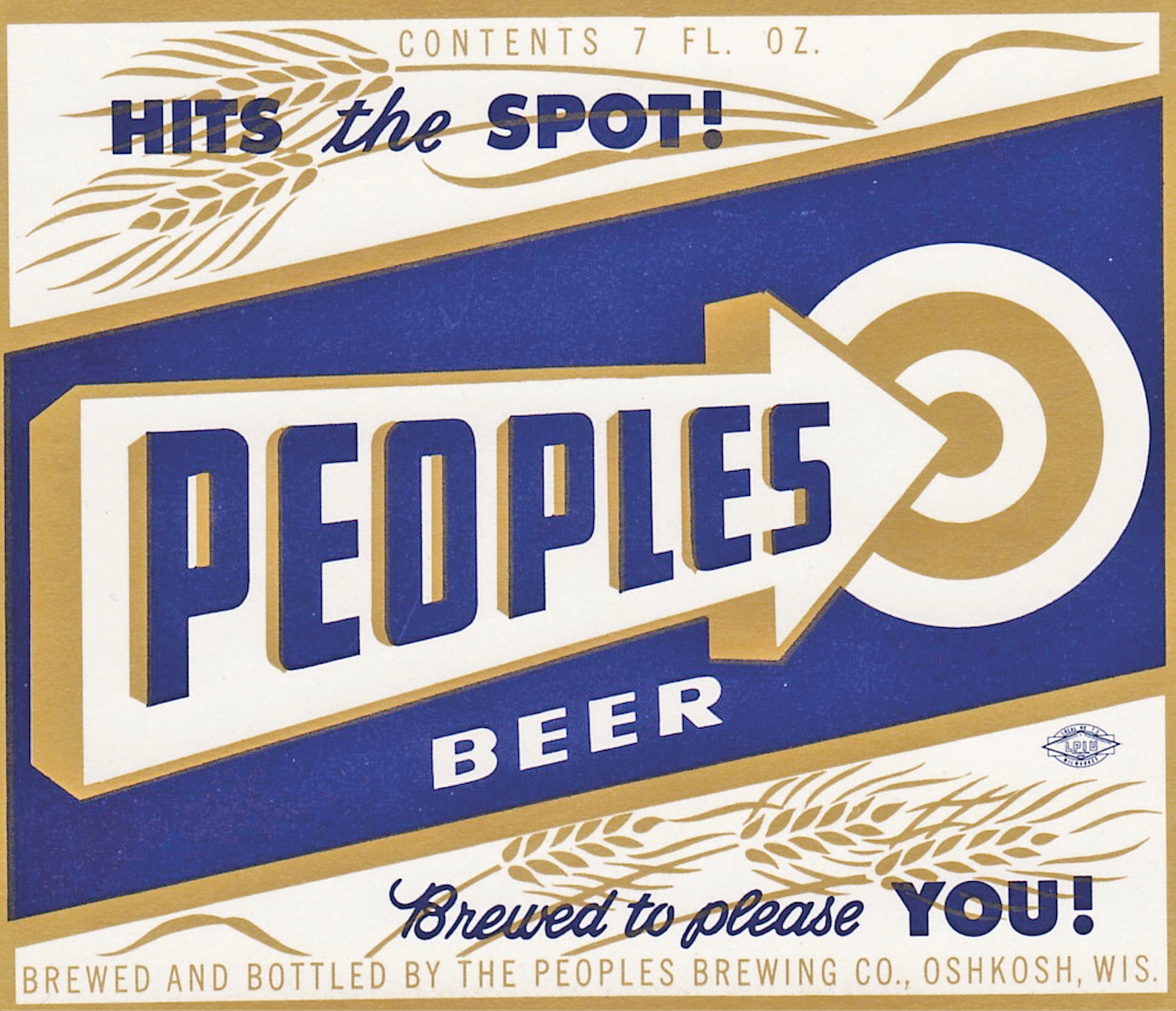
The eventual winner was more dynamic than any of the other labels on the table for consideration. By mid-November of 1958, the new label for Peoples Beer was in circulation. More than 60 years later, it still looks like the right choice.

The 1958 design, here used for a 7-ounce bottle.

Tuesday, February 22, 2022

John Harry and the Ongoing Story of Peoples Beer

America was home to more than 400 breweries in 1950. By 1980, three-quarters of them had closed. Those that went under were soon forgotten by almost everyone, save for breweriana collectors and local history enthusiasts. Recently, though, there’s been a stir of national interest in one of those lost breweries. That brewery was located in Oshkosh.

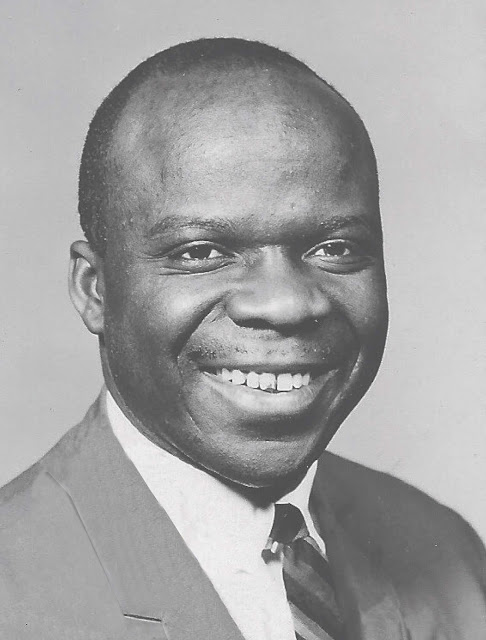
Peoples Brewing Company had been producing beer on South Main Street for 59 years when it closed in 1972. The closure had been preceded by two, tumultuous years that began with the sale of the brewery to a Milwaukee-based group led by Theodore Mack. With that, Peoples became the first black-owned brewery in Wisconsin.

Theodore Mack

It’s those two years that have ignited interest in a brewery few outside of Wisconsin had heard of until recently. John Harry is one of the people responsible for raising that awareness. On Thursday, February 24, the Oshkosh Public Museum will host Harry via Zoom for a public discussion titled “Peoples Beer: The Story of Wisconsin's First African American Owned Brewery.”

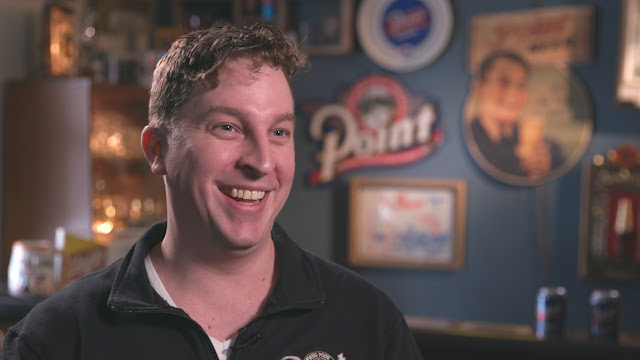
John Harry

Harry was recently named Executive Director of the Portage County Historical Society, but before taking that job he had immersed himself in the 1970s incarnation of Peoples Brewing when Theodore Mack was its president. Harry had come upon that story while preparing for a transition of his own. "I was a radio DJ for 10 years and decided I was going to change careers," he says. "I've always loved history and I was at a point in my life where I was like, let's just go for it."

He moved to Milwaukee where last year he earned a master's degree in public history at the University of Wisconsin-Milwaukee. There, he focused on black capitalism as it pertained to the Theodore Mack era at Peoples. "Nobody was writing about it on an academic sphere," Harry says. "I found my niche there as a historian."

Harry began gathering oral histories from people who had been connected to the brewery in the early 1970s. Though Theodore Mack had passed away in 2019, Harry traveled to Georgia to interview his widow, Pearl, who had been the corporate secretary at Peoples. “It was one of those things where you ask yourself, is this really going to happen?” he says. “I sat down and had about a half hour conversation with her. You're talking to this woman who was married to Ted Mack; nobody knows this guy better. It was really intense.”

In July of 2020, Harry shared much of what he had gathered in a piece for the Good Beer Hunting website titled “Beer for the People — How Wisconsin’s First Black-Owned Brewery Took on the Entire Beer Industry.” The article placed what had occurred at Peoples in the 1970s within the context of minority entrepreneurship and documented Theodore Mack's struggle for success and ultimate failure in Oshkosh.

The timing was fortuitous. Against the backdrop of 2020's Black Lives Matter protests, the lack of diversity in American craft beer was being called out in a more forceful manner. For those concerned, Harry's article provided a historical frame of reference that had been missing. Peoples Brewing, which had closed almost 50 years earlier, was suddenly receiving more widespread attention than it had during its peak years in the 1950s.

Shortly after Harry's article appeared, a brewery in Sacramento, California announced that it was claiming the legacy of Peoples Brewing for its own. With the blessing of Theodore Mack's son Ted Mack II, Oak Park Brewing co-opted the Peoples Beer brand and began releasing their product under a label lifted directly from the defunct Oshkosh brewery. 


Harry published a follow-up article for Good Beer Hunting that addressed some of the more troubling aspects of the Oak Park situation.

"Anytime you give more exposure to an untold story about an underserved population, I think that that's a good thing," Harry says. "I think it's interesting, though, that there's no inclusion of the community of Oshkosh. As a question of ownership or memory of something like Peoples Beer, the people who remember it best are going to be in Oshkosh. The community didn't have their chance to weigh in. It became less a beer of the community and more a beer of black history. I think you have to tell that part of the story, but you can't also ignore the 60 years of history that led up to that."

It's a story that continues to unfold and one that Harry will explore fully in his talk for the Oshkosh Public Museum on Thursday, February 24. To attend, go to oshkoshmuseum.org and click the Programs/Events tab at the top of the page (here is a direct link to the event page). 

This article also appears in the February 23 edition of the Oshkosh Herald.

Sunday, January 10, 2021

The Story of Peoples Bock and How to Brew Your Own

We're a couple of months out from what used to be the traditional season for bock beer in Oshkosh. So now would be a good time to start brewing a bock of your own. I've got just the recipe for you.


Peoples Bock was first brewed in Oshkosh in 1913 for the 1914 bock-beer season. When Prohibition arrived in 1920, Peoples Bock went on hiatus but it came back again when 3.2% ABW beer was legalized in 1933.

The low-alcohol Peoples Bock of 1933.

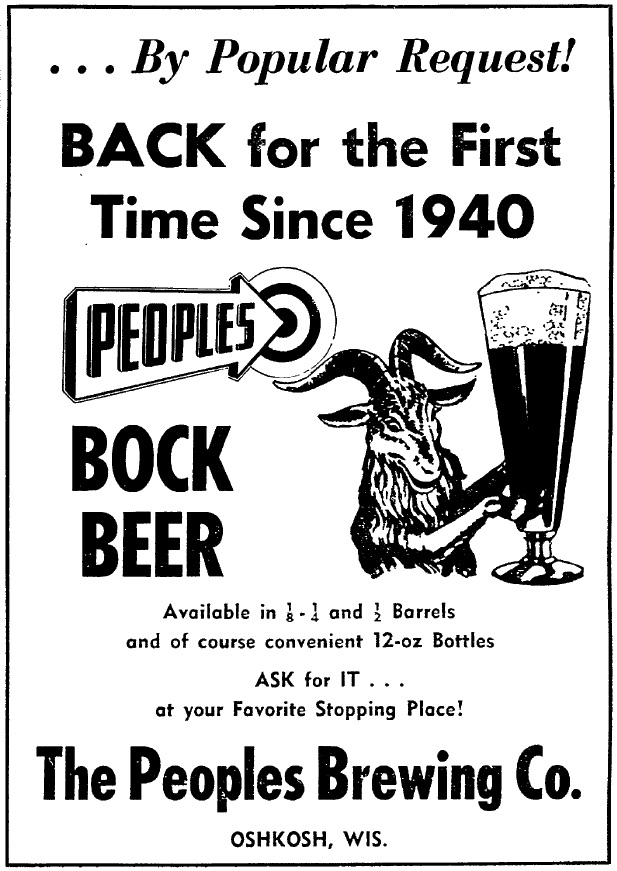
Full repeal of Prohibition arrived in December of 1933. The following year, Peoples returned to brewing its full-strength Bock. The post-prohibition Peoples Bock was discontinued for a period beginning in 1941. However, the brewery brought it back again in 1959 and continued brewing it until 1970. The brewery closed in 1972.

Oshkosh Daily Northwestern; February 20, 1959.

My late friend Wilhelm Kohlhoff brewed Peoples Bock every year from 1959 onward. I first met Wilhelm in September of 2018. He was 91 years old then and still had the ability to recite from memory the recipes he had brewed at Peoples more than 50 years earlier. He loved talking about beer. And we did plenty of that as we went through the old notes that he had kept from his days working at the brewery. Wilhelm passed in May of 2019.

I was thinking of Wilhelm the other day and decided now would be a good time to share one of the recipes he gave me. This is the 1960s recipe for Peoples Bock.

Peoples Bock
Pre-Boil Gravity: 1.047
Post-Boil Gravity: 1.058
Final Gravity: 1.016
Apparent Attenuation: 67%
ABV: 5.5 - 6%
IBUs: 22
SRM: 11-12

Fermentables
44% American 6-Row or 2-Row Pale Malt
22% American Munich Malt (6-10º Lovibond)
8% Caramel Munich Malt (60º Lovibond)
14% Flaked Corn
12% Brown Sugar

Hops
60 Minutes Before End of Boil: American Cluster for 11 IBUs
45 Minutes Before End of Boil: German Hallertau for 6 IBUs
30 Minutes Before End of Boil: German Hallertau for 3 IBUs
15 Minutes Before End of Boil: German Hallertau for 2 IBUs

Yeast & Fermentation
Use a clean fermenting lager strain such as SafLager W-34/70.
Pitch at 50ºf and let rise to 53ºf (see the notes below if you don’t have the ability to maintain these temperatures).

A recently opened bottle of Peoples Bock that was brewed in the late 1960s.

Process and Recipe Notes
Peoples Bock was made using a cereal mash coupled with a step mash. It’s a fairly complicated process that I’ve documented here. Don’t let that put you off. This beer can be made with a simple infusion mash at 152ºf.

In the recipe here I’ve replaced the corn grits used at Peoples with flaked corn. If you're willing to go through the pain of a cereal mash, then corn grits is the way to go. If not, flaked corn works just fine.

At Peoples, they followed a standard, cold fermentation for their lagers – fermenting at about 50ºf for 14 days before cold crashing the beer to near freezing. The bock beer was typically aged for two months; sometimes longer if they could afford to tie up their tanks. Again, don't let that stop you from brewing this. I mentioned SafLager W-34/70 in the recipe because that yeast performs well into the mid-60ºf territory. That's the yeast to go for, if you don't have the ability to ferment at those colder temperatures.

I’ve brewed this recipe a couple of times now. I prefer my bocks a little bit darker, so for my most recent batch I tweaked the original recipe by adding 1% black malt to the grist to boost the color. The flavor contribution of the black malt at this percentage is negligible. The beer turned out wonderfully.


I like to think Wilhelm would approve. Prost, my friend!

Monday, November 9, 2020

Asterweiss, the Bottled Beer de Luxe

Here's another long, lost Oshkosh beer that no living person has tasted. It's Asterweiss from the Peoples Brewing Company of Oshkosh...


Peoples Brewing opened in June 1913 with two beers in its portfolio. First, there was Standard, the brewery's unpasteurized budget lager. It was packaged in brown, pint bottles and wooden kegs. Standard was what you'd get if you put a nickel on the bar and ordered a schooner of Peoples in one of the 25 or so Oshkosh saloons that served it in the summer of 1913. There were folks here who drank Standard by the gallon. In fact, Peoples encouraged that sort of consumption. The initial advertising for Standard noted that it was "a beer that you can indulge in quite freely without sensing any distasteful after effects." Bring out the funnel.


And then there was Asterweiss. This was not a beer to be guzzled. Here we have the high-toned stuff.


This was a classic, American-style pilsner. Asterweiss was brewed with artesian water and Bohemian hops. The grain bill was made up of Wisconsin-grown barley malt and it almost certainly had some corn in it. About 95% of American Pilsners made during this period did. At 4.5% ABV, it was a fully-aged lager with a light, golden color. Peoples described its appearance as "Clear, sparkling, bright."

Asterweiss was packaged in clear bottles that were pasteurized at the end of the bottling line. Each bottle was then individually wrapped in tissue paper. The brewery called it “The Bottled Beer de Luxe.” The presentation was meant to be an indication of its quality.

Oshkosh Daily Northwestern; April 29, 1916.

The fancy trapping didn't come cheap. At $1.40 for a case of 12-ounce bottles, Asterweiss was among the most expensive beers sold in Oshkosh. In today’s money that $1.40 would be worth about $37.30; or about $9.25 a six-pack. That's a little more than we pay for most craft beer six-packs sold here today.

In 1916, Peoples copyrighted the Asterweiss brand.


And shortly after that, things went bad. With the First World War weighing on the minds of many Americans, some people began looking askance at American breweries using Germanic branding for their beer. Weiss is the German word for white. Peoples bowed to the pressure. Asterweiss became Asterwite.


It got worse. In 1920 Prohibition came and Asterwite stopped being a beer altogether. But the brand didn't die. Peoples went on flogging Asterwite as a non-alcoholic, near beer. The once-mighty Asterweiss beer had been neutered, reduced to a mere "Beverage."

Prohibition-era Asterwite containing less than 1/2 of 1% Alcohol by Volume.

The Asterweiss brand finally died sometime around 1926, during the absolute depths of Prohibition. And it was left for dead when real beer returned in 1933. Lovely Asterweiss was consigned to the dustbin of brewing history. Now, only the collectors remember. These days, an Asterweiss tray like the one below can go for as high as $700.
Notes
I mentioned that Asterweiss almost certainly had some corn in its grist. A lot of people really have the wrong idea about the use of corn in American beer. I explored that in this post.

A Peoples’ beer named Aristo became the companion to Asterweiss in the brewery's portfolio. There's more on Aristo here.

Monday, September 9, 2019

The Strange Case of Peoples Beer in Nigeria

Theodore Mack had a line he often repeated for reporters. "When the going gets rough, I send me."

Theodore Mack

In 1972, the going for Mack got very rough. Since becoming president of Peoples Brewing in 1970 he had discovered just how brutal the beer business could be. In early 1972, Mack's brewery was faltering. Bills were going unpaid and the brewery’s board of directors was demanding answers. That fall, the downward thrust turned fatal. Peoples Brewing stopped making beer during the third week of October 1972. And that's when things got weird.

On November 2, Peoples Brewing sued the federal government claiming the brewery had been blocked from securing contracts to supply beer to the military. The lawsuit was an act of desperation. Peoples had already defaulted on loans backed by the Small Business Administration. The federal government was threatening to seize the brewery.

While that was playing out, Mack announced that he was considering moving Peoples to Alabama. On Friday, December 1, Mack led Alabama state legislator Fred D. Gray on a tour of his moribund brewery in Oshkosh. The two of them were childhood friends. After the tour, they drove to Milwaukee and held a news conference. Mack told reporters he would visit Alabama within the next 10 days. He said, "I don't run around the country unless I mean business."

The obstacles to this adventure would have been monumental. Considering the position he was in, it’s extremely unlikely that Mack would be able to raise the money or credit needed to move the brewery's operations to Alabama. Then there’s the fact that commercial brewing in Alabama wasn't even legal in 1972. Back in Oshkosh, Mack tempered his bluster. The Daily Northwestern reported on December 4 that Mack now "disclaimed" the stories about moving the brewery to Alabama.

Then came the plans for Africa. On January 8, 1973, Mack left for Nigeria. Four days later, he arrived in Ogbomosho, a city in southwest Nigeria. There, Mack met with a group of potential investors and pitched his idea for building a brewery in the city. In a letter signed by Mack dated January 16, 1973, he affirmed that the Nigerians, “Were very interested in the People’s Brewery Company being established in Ogbomosho.” The plan was to build a 200,000 barrel brewery at a proposed cost of $8 million. “It is believed by both parties that extreme haste is of the utmost essence in this matter,” Mack concluded.

Such high hopes. They may have been farfetched, but the idea itself was sound. The Nigerian beer market was booming and on the verge of another upsurge of growth. Mack’s plan might have worked.

Beer in Nigeria, 1970s.

What a drag it must have been for him to come back to the hopeless mess still waiting in Oshkosh. A couple of weeks after returning from Nigeria, Mack sent out a letter on Peoples Brewing Company stationary. The letter opened with...

Dear Stockholder:
There will be a stockholders meeting Tuesday, February 20, 1973, at 10:00 a.m., at Jabber’s Bar, 1518 South Main Street, Oshkosh. Jabber’s is adjacent to the brewery.


The shuttered brewery and the neighboring Jabbers Bar. The Pabst sign in front of Jabber's replaced a sign for Peoples Beer that had hung there when the brewery was open.
The meeting had to be held at the bar next door because there were no lights in the brewery. The power had been cut off. Mack went on in the letter to tell of the latest woes including the news that the Marshall & Ilsley Bank had informed him that “The Peoples Brewing Company has reverted back to the federal government.” It was a roundabout way of telling the shareholders that their money was lost. On a brighter note, Mack mentioned his recent trip to Nigeria. But he was not currently “in a position to reveal what transpired there.”

Fifteen months later there were wrecking balls knocking down the brewery on South Main in Oshkosh. The plan for the brewery in Nigeria came to nothing. The Peoples Brewing Company was dead. Mack quit the beer business. He remained in Oshkosh and went to work selling insurance for New York Life.


Monday, July 29, 2019

When Tuff Brewed Peoples

His full name was George Alton Boeder. Nobody called him that. They called him Tuffy. Or just Tuff.

George "Tuff" Boeder.

Tuff Boeder was born in Oshkosh on January 15, 1914. He was second-generation American. His grandfather Friedrich Böder had come to the U.S. in 1880 from Pommern, which was then a province of Germany. Tuff lived all his life in Oshkosh. He grew up in a modest home on the east side of town, at what is now 1003 School Avenue. His boyhood home still stands.

1003 School Avenue. Oshkosh, Wisconsin.

His father, Paul Boeder, was already working in the beer business when Tuff was born. Paul had started as a bookkeeper at the Schlitz distribution house on Division Street in Oshkosh in 1911. At that time, Schlitz was trying to claw its way back to prominence in the Oshkosh market. The brewery had struggled here for much of the previous decade thanks, in large part, to the rising fortunes of the Oshkosh Brewing Company.

Oshkosh Daily Northwestern; November 29, 1912

That campaign had little success here. Schlitz finally gave up on Oshkosh and closed its branch here in 1918. Paul Boeder found a new job on the southside keeping the books for Peoples Brewing. He was there when Prohibition hit in 1920. The brewery quit making beer and started selling soda, fruit juice, near beer, malt tonics…


Prohibition ended in 1933. Peoples Brewing immediately went back to making real beer. Paul Boeder got Tuff a job there in 1936. Tuff married Ruth Pratsch that same year. He was 22 then. He’d come of age during the Great Depression when work in Oshkosh was hard to find. This was his first real job. He started out at Peoples putting labels on bottles.

“A lot was done by hand back then,” Tuff said. “We had to label each bottle separately. If we did 30 barrels a day that was a lot.”


Tuff moved up the ranks. In the early 1940s he began working as a route driver delivering Würtzer Beer and Old Derby Ale to local taverns and beer depots. He made $34 a week. Most of his stops were in and around town. Peoples had little need for wider distribution. The brewery was already growing at a good clip. Between 1943 and 1953 sales increased by 200 percent. “The taverns in Oshkosh wouldn’t buy that Milwaukee beer as long as Oshkosh had its own breweries,” Tuff said.


About 1951, Tuff moved back into the brewery. He went to work in the bottling department. Now he was making almost $55 for a 40-hour week. The days of hand labeling bottles were over. It had been automated. On a good day, that line could put out 50,000 bottles of beer.


In 1953, Tuff moved over to the brewhouse and began working as a brewer. He and Wilhelm Kohlhoff became the two principal brewers at Peoples. Kohlhoff had just started at the brewery. He was from Pommern, Germany; like Tuff’s family. The two of them became fast friends.

Wilhelm Kohlhoff

The brewmaster then was Dale Schoenrock. He had been with Peoples since 1940. Schoenrock was all business when it came to making beer.

"I’d get to work at three in the morning and start heating up the mash tub," Tuff said. "The temperature was critical. If the brewmaster said 56.5 degrees Celsius, he didn’t mean 56 or 57."

Dale Schoenrock

In 1956, Tuff was named Assistant Brewmaster. The work wasn't much different, but the pay was better. By 1957, he was making $73.40 a week. Tuff and Kohlhoff worked in shifts, turning out two or three batches of beer a day. The brewery was producing over 30,000 barrels of lager beer a year at this point.

"We used gravity to move the beer," Tuff said. "There were four floors. When it hit bottom it was done." At least Tuff's part was done. From there it went to the beer cellars for fermentation. "The brew would ferment for eight or nine days," he said. "It’s really going strong on day two. As it ferments, it gives off carbon dioxide gas and we’d collect and store this gas in huge tanks. Later on, this gas goes back into the beer (to carbonate it)."


Peoples had its own powerhouse and Tuff always worried that the massive steam generator would give out while he was brewing. It happened more than once. He had to "baby" those batches to completion. "If you lost your steam you could lose a brew," Tuff said. “That’s $5,000 down the drain. I never ruined a brew as long as I worked there."

Tuff told an incredible story that I can't verify. He said there was a period (presumably in the 1950s) when the Stroh Brewery of Detroit was making beer at Peoples. "They were having all kinds of trouble with their equipment, so we brewed it for them," Tuff said. "There were semis here, one right after the other picking up the beer. They gave us a recipe so we could match the flavor, but it wasn’t THE recipe. That’s always a secret."

There has to be more to this. When Tuff was brewing at Peoples, the Stroh Brewery was selling far more beer than Peoples was capable of making. By 1957 Stroh's annual output was 2.7 million barrels. The capacity of the Peoples brewery was well under 100,000 barrels annually. That said, the Stroh Brewery was shut down for 45-days by a strike in 1958. Perhaps Tuff’s recollections are in some way connected to that event. That’s just speculation, though.


Tuff worked in the brewhouse until the very end, 1972, when Peoples went bankrupt and closed. Theodore Mack was running Peoples then. Mack had come from Milwaukee where he had worked at Pabst. Tuff said that Mack offered to help him get a job at Pabst after Peoples shut down. Tuff didn’t want it. He didn’t want to move to Milwaukee. “I was getting too old,” he said. “Too close to retirement.”

Tuff had 36 years in at Peoples when the brewery failed. He wasn’t happy about it ending the way it did. “Ted Mack didn’t buy Peoples,” Tuff said. “Pabst did.” You can understand his disappointment, but there is no truth to that statement.

After he lost his job at Peoples, Tuff worked for a couple of years as a woodworker at Quality Builders. After he retired, he did a lot of fishing on the Fox River. He used hand-tied streamer flies and had a regular spot he liked that was near his home on School Avenue.

George “Tuff” Boeder passed away in that home on June 16, 1983. He was 69 years old.

––––––––––––––––––
A note on the quotes: They were sourced from an article published in the April 17,1980 Advance-Titan; the UW-Oshkosh student newspaper. The piece, ostensibly about Oshkosh brewing history, is riddled with factual errors. The article’s value is derived from the quotations it contains of former Oshkosh brewery workers. My aim here was to frame the Boeder quotes within a more fitting context. 

Tuesday, July 9, 2019

Peoples Beer at the Oshkosh Public Library

Wednesday, July 17, I’ll be talking Oshkosh beer history at the Oshkosh Public Library. The talk will focus on Peoples Brewing Company of Oshkosh and the incredible story of Wilhelm Kohlhoff, the last of the German-born brewers to make beer there.

Wilhelm Kohlhoff

It won’t be all talk. We’ll also have a keg of beer made by Jody Cleveland, head brewer at Bare Bones Brewery. Jody made this beer from the original recipe supplied by Kohlhoff. This is as close as you’re ever likely to get to the Peoples Beer that flowed in Oshkosh during the 1950s and 1960s.

The talk begins at 6 p.m. and will take place under the dome in the library. Free samples of beer will be available immediately following the talk. Hope to see you there!

Sunday, March 24, 2019

Untangling the History of Ted Mack and Peoples Brewing

Theodore Mack, Sr. of Fairburn, Georgia passed away on February 4, 2019. He was 88 years old. Ted Mack lived in Oshkosh from 1970 until 1982. For two of those years, he was president of Peoples Brewing Company. During that time, it was widely publicized that Mack was the first black man to head an American brewery. But like so much of what's been said and written about Mack's association with Peoples, that statement wasn't quite right.

Theodore Mack, Sr.

In April 1970, Mack led a group of Milwaukee investors in the purchase of Peoples Brewing. In October 1969,  six months before Mack and his group announced their plan to purchase Peoples, a group of black entrepreneurs acquired the Sunshine Brewing Company of Reading, Pennsylvania. The news from Reading attracted little fanfare and Sunshine Brewing closed a year later. Its place in history as the first black-owned brewery in the U.S. was almost immediately forgotten.

That distinction was only recently restored by brewery historian Douglas Hoverson after he unearthed a profile of Sunshine Brewing in the November 1970 issue of Brewers Digest. It was part of a feature titled Blacks and Breweries. Ted Mack was also profiled in the piece.

But in April 1970, nobody cared about any of that. It was reported in dozens of newspapers across the U.S. that Peoples Brewing would be the first American brewery to be owned by blacks. That error had already been preceded by another; one that would leave an indelible mark and prove much more damaging.

On the evening of April 14, 1970, the stockholders of Peoples Brewing voted to sell the brewery. Earlier that day, the Milwaukee Sentinal ran a story suggesting that, if the sale went through, white employees of the brewery would be replaced by blacks. Later that day, Mack assured Peoples shareholders that nothing of the sort would happen. The sale was overwhelmingly approved. But by morning, the Sentinal story had already morphed into an ugly set of rumors that the white employees of Peoples would be promptly fired and replaced with blacks from Milwaukee, and that the brewery's name and beer would be changed.

The reaction was as predictable as it was harsh. A host of taverns in Oshkosh immediately stopped selling Peoples Beer. In some cases, the animosity directed towards Mack was full-throated. James Mather, who would later become Oshkosh's Mayor, recalled being in a Main Street restaurant the morning the Sentinal article came out and hearing a "well-dressed gentleman" say, "Well, we better beef up, the niggers are coming to town."

That was just the beginning of it. And unfortunately, for both Mack and Oshkosh, it's the part of the story that has, more recently, come to dominate the narrative of Mack's tenure at Peoples Brewing. It's not an accurate portrayal. To say that what happened in April 1970 was defining of Mack's experience in Oshkosh is as misleading as the rumors that triggered the initial mess.

Peoples Brewing closed in 1972. In the three decades that followed, there was little interest shown in the brewery's history. That began to change in February 2008 with a cover story written by Jim Lundstrom for SCENE, a now-defunct monthly newspaper. It was the first substantial piece published on Peoples and Mack in over 20 years. Lundstrom's article was part of a Black History Month feature and presented the April 1970 incident as an exemplar of race relations in Wisconsin. It’s an excellent, well-researched piece, but it left some readers with the impression that racism played a central role in the downfall of Peoples.

Lundstrom’s article was ripe for conjecture and has incited its share of it. UW Oshkosh Professor Tony Palmeri gave the article his "Required Reading" award adding that, “The piece pulls no punches and delves into the ugly racism existing in the Fox Valley circa 1970-72.” In the August 2012 edition of the SCENE, UW Oshkosh Associate Professor Paul Van Auken used the failure of the brewery to suggest that "certain groups of people have not met the local definition of acceptable."  And in the 2012 book Bottoms Up: A Toast to Wisconsin's Historic Bars and Breweries, author Jim Draeger, citing Lundstrum, writes that the demise of Peoples was due, in part, to the “continuing bigotry among white drinkers.”

I love Draeger’s book, but that line is rubbish. White bigotry had nothing to do with the failure of Peoples Brewing.

Let’s pick-up where we left Mack back in April of 1970.

The week after the sale had been agreed upon, Mack returned to Oshkosh to try to quell the rumors. On April 27, he held a press conference at the Oshkosh Chamber of Commerce. With City Council President Byron Murken seated next to him, Mack began setting the story straight.

"I've said from the beginning that we're going to continue to produce Peoples beer under that label and that the brewery will, without question, continue with the current 21 white employees," Mack said. "The name is going to stay the same, the beer is going to stay the same, and the personnel is going to stay. I can't understand why all these lies are coming out. Myself and Oshkosh are going to be very much on the spot. If sales are down it would be a blot on all of us... If some think if they don't drink the beer that Ted Mack and his group are going to turn tail, the answer is "No, sir." I grew up in Alabama where they threw rocks at me and called me nigger... I don't scare easily... I will not run, no sir. I want to be happy here making beer."

Mack would spend much of the next two weeks meeting with local groups including the Tavern League, which included some of the people who had stopped selling Peoples Beer. His efforts were undeniably effective. Sales rebounded and Mack began encouraging local investors to buy the stock he would soon issue to help raise additional monies needed to complete the purchase of the brewery. The response was greater than he had hoped for.

On October 10, 1970, a ribbon-cutting ceremony was held at the brewery to commemorate the change in ownership. Speaking before a crowd of approximately 2,000, Mack expressed his thanks for the outpouring of support. “In these days of confrontation, you make a pretty picture standing there, black, white and brown,” he said. "All the stockbrokers said it wasn't possible to sell this stock... Five weeks after the sale started, you made it possible to buy this brewery."

Mack preparing to speak at the October 10, 1970 ribbon-cutting ceremony.

On January 5, 1971, Mack purchased a home at 1225 Devonshire Drive in Oshkosh where he and his family would live for the next 12 years. He had already become something of a local celebrity. Mack said he received more offers for speaking engagements than he could possibly accept. He was embraced by workers at the brewery. A letter written by Florian Kotloski and published in the Daily Northwestern lays the praise on thick. "My boss, Mr. Ted Mack... Look how well he's used his name to his advantage. Since he's been at the People's Brewery he's accomplished more than the previous regime here had done in all their business years."

There's no question that Mack was doing well in Oshkosh. If he had done as well in places like Milwaukee, Peoples Brewing might still be open today. His plan was to dramatically increase sales of Peoples Beer by creating new markets for the brewery in urban areas. He would use his backstory to attract customers interested in supporting a black-owned business. The plan required building up an expensive infrastructure of advertising and distribution to make headway in places like Milwaukee, Chicago, Memphis. It was a risky venture.


Mack lacked the budget needed to get his message across in places where Peoples Beer was a complete unknown. The new markets he was relying upon knew nothing of the new beer on the shelf, much less the man behind it. A year after Mack had come to Oshkosh, Peoples Brewing was in free fall. Bills were going unpaid and Mack's partners in the business were accusing him of fiscal negligence. The one bright spot was the continued support Mack received locally. It seemed to even surprise him.

“It just doesn’t make sense the way the markets are polarizing and where our sales are getting a good reception,” Mack said. “I’ve been studying human behavior all my life, but since I have been in the brewery business I have found out I don’t know a damned thing about it.”

But the local trade was nowhere near lucrative enough to support the debt Mack had incurred in purchasing the brewery. Production of Peoples Beer was halted in the last week of September 1972. On November 3, 1972, the employees of Peoples Brewing were permanently laid off. The beer in the lagering tanks was dumped.

“It hurt me deeply," Mack would later say. "It looked so beautiful when we came here, although the system tried to mess us up. They told me I couldn’t move to Oshkosh. They told you I was going to replace whites with blacks. We worked like the devil trying to put this together and it made us feel good when we came here to sell stock and white people came through the door all day to buy stock."

Mack remained in Oshkosh until 1982. After the brewery closed, he worked as an insurance agent for New York Life. In 1978, he began working in Milwaukee as director of Crispus Attucks, Inc. His wife,  Pearlie, worked as a cashier for the City of Oshkosh Department of Administration. Their four children attended Oshkosh schools.

After it was over, Mack didn't often speak publicly about what had happened at Peoples. But in 1978, while being interviewed about Woody Hayes, his former football coach at Ohio State, Mack touched on how being part of that team had helped him deal with the hardships he faced in Oshkosh.

"The lessons I learned helped me when the brewery closed," Mack told Myles Strasser of the Northwestern. "When I was flying high as president of Peoples Brewery and speaking everywhere and being very successful, it was like playing for a winning program. When I lost everything, I was able to handle that; it didn't destroy me... My only regret is that I don't have time to work for Oshkosh because my job is in Milwaukee now... Oshkosh is a nice quiet town. I've had no problems here."

Sunday, March 17, 2019

When Wilhelm Kohlhoff Brewed Peoples Beer

Wilhelm Kohlhoff worked as a brewer at Peoples Brewing Company in Oshkosh from 1953 until 1968. This wasn't his first brewing job. Kohlhoff had come to Oshkosh from Germany where he worked at a small brewery in Stettfeld, Bavaria (more on Kohlhoff's background can be found here). The brewery in Stettfeld was nothing like what he encountered at Peoples. "Oh yeah, that was all different," Kohlhoff says shaking his head. "All different."

When Kohlhoff arrived in Oshkosh, Peoples was at its peak. The brewery's production had climbed to 35,000 barrels of beer annually. Kohlhoff became one of 41 full-time employees at Peoples. He was assigned to the brewhouse where his job was to see Peoples Beer through the first phase of production culminating in the delivery of wort to the beer cellars for fermentation.

Wilhelm Kohlhoff in the 1950s

Kohlhoff is now 91 years old. He still recalls details of the brewing process he followed at Peoples. He also still has the original, handwritten notes he made when he first went to work in the brewhouse. They form a step-by-step, minute-by-minute outline of his brew day. The notes are written in a mix of German and English and give temperatures in degrees Réaumur, a unit of measure favored by many brewers of the period.


The brewing process at Peoples was defined by the brewery itself. Built in 1913, it was a prototypical,  four-story, lager brewery with a detached bottling house. This was a gravity- or tower-style brewery. Gravity was a prime mover of solids and liquids through the system. Kohlhoff worked his way, from top to bottom, thousands of times. "Yeah, I know the whole building through and through," he says looking at a picture of the brewery that was demolished in 1974.

Peoples Brewing Company after it had closed in 1972.

Most of the raw materials that went into Peoples Beer were stored at or near the top of the brewery. They flowed down through the brewhouse being transformed along the way into wort, the sweet liquid that is fermented into beer.

The substrate was water that came from a 530-foot artesian well drilled at the brewery in 1949. "Before that, they had a well that was 300-feet deep and that was not perfect or not soft enough," Kohlhoff says. "Then they drilled another 200-feet deeper and then that water was perfect."

The water was pumped from the well up into a massive holding tank housed in a cupola above the brewhouse. From there, it was drained – as needed – into the hot-liquor tank on the fourth floor. There it would be heated prior to the start of brewing.

The cupola atop the brewery where the main water reservoir was housed. 

The recipe for Peoples Beer was classically simple. A 100-barrel batch required...
  • 3,200 pounds malted barley (73% of Grist)
  • 1,200 pounds corn grits (27% of Grist)
  • 50-65 pounds of American and German hops (0.5 to 0.625 pounds of hops per barrel)

Malted, six-row barley came from the Fleischmann Malting plant in Red Wing, Minnesota. It was sent to Oshkosh by train. A rail spur ran between the brewhouse and bottling house. The malt would go from the rail car into an elevator on the south side of the brewhouse and then up to the malt hopper on the fourth floor. The map below is from 1956 and shows the location of the rail spur that served the brewery.


The yellow highlights a rail car making a delivery to the brewery.
In the 1950s, nearly all American beer was made from a grist that included some form of either corn or rice.  At Peoples, they used corn grits and the American double-mash method, mashing the grits with 300 pounds of malt in 15 barrels of water. The malt was necessary to provide enzymes needed to convert the corn's starches into fermentable sugars. This cereal mash was performed in a steam-heated cooker fitted with rakes stirring the grist together as it slowly came to a boil. With that set in motion, Kohlhoff would head downstairs to the second floor where the primary mash tun resided.

Diagram of a typical cereal cooker.

The main mash began with an infusion of 2,900 pounds of malt in 30 barrels of hot water. The mash would settle in at 104ºF and rest at that temperature for 15 minutes. The mash tun was also fitted with a steam jacket and stirring rakes. After the rest, Kohlhoff would start the rakes and gradually raise the temperature to 140ºF for another 20-25 minutes. During this time, he would begin recirculating the wort through the mash to help draw out fermentable sugars and create a more uniform environment within the porridge-like mass of water and malt.


A mash tun similar to that used at Peoples.

About 90 minutes into the main mash, Kohlhoff would drop the now boiling contents of the cereal cooker into the main mash bringing its temperature up to 155ºF. He'd then allow the mash to rest for approximately 20 minutes before adding additional hot water and starting the lautering process. This separated the wort from the bed of spent grain and grits, which would later be taken by farmers in the area for use as livestock feed. The wort was run off through a grant, a smaller vessel that helped buffer the flow of liquid into the boil kettle.

The copper boil kettle was perched between the first and second floors of the brewhouse. It was steam-heated and had a 130-barrel capacity. Kohlhoff would add hops to the kettle as the wort was flowing into it and coming to boil. This technique, known as first-wort hopping, was a fairly common practice in American breweries before Prohibition, but much less utilized in the 1950s. Some brewers believed it helped to create a more complex hop-flavor and a less biting bitterness.


A small dose of salt (NaCl) was added to the kettle along with the first addition of hops. The salt was to help blunt bitterness while enhancing mouthfeel and the sensation of sweetness in the finished beer. They did the same thing across town at Rahr Brewing. Both breweries leaned towards the mellower, malty side with their beers. Despite that malt-driven flavor profile, hops were still a major consideration at Peoples.

When Kohlhoff speaks of hops he does so in terms of place of origin instead of breed. "We used German hops and American hops," Kohlhoff says. "Seventy percent of it was German."  That probably means Peoples was brewed with German Hallertau and American Cluster. In the 1950s, these were the most commonly derived hops from their respective countries. They were whole-flower hops stored in bales in a second-floor cold room directly behind the brewhouse.

Kohlhoff vaguely recalls that American hops were used for the first-wort addition. He doesn't remember the exact amount. He estimates it would have been about 15-20 pounds. After the wort had been boiling for an hour, a similar sized load of German hops was added. That was followed by two, smaller additions of German hops. Kohlhoff's thumbnail sketch of the hop schedule for the 105-minute boil comes out like so...
  • American Hops (~15 pounds) – First-Wort Addition.
  • German Hops (~15 pounds) –  Boiled for 45 minutes.
  • German Hops (~10 pounds) –  Boiled for 30 minutes.
  • German Hops (~10 pounds) –  Boiled for 15 minutes.

At the end of the boil, the wort was drained from the kettle and through a hop jack, a straining device to remove spent hops from the wort.

The flow of wort through the brewhouse from the cooker to the hop jack.

From the hop jack, the wort was pumped up to a collection tank on the fourth floor. From there it drained to the heat exchanger for cooling. Kohlhoff's description of the cooling process suggests Peoples used a Baudelot-type chiller with the hot wort cascading over a rack of refrigerated pipes. This quickly reduced the wort temperature to below 50ºF.

 A Baudelot-type chiller.

Kohlhoff’s job was done, but he wasn't shielded from the remainder of the process. Though the brewhouse was his primary concern, he sometimes helped out in other areas of the brewery. "Certain things you had to know, and not just be a brewer," he says.

The wort Kohlhoff made was bound for the cellars for fermentation and conditioning. The "cellars" were in the north half of the brewery on the second and third floors. The red line dividing the image below runs between the brewhouse on the right and the cellars and stock house on the left.


Peoples Beer was a lager beer. It underwent a cold, primary fermentation lasting eight to ten days at 47ºF. When Kohlhoff began working at Peoples the brewery was still in the process of replacing its old, wooden fermentation tubs with glass-lined, steel tanks. I asked him if that change impacted the flavor of the beer. Kohlhoff said, "No, I wouldn't say the flavor, it was a little more clean and a little bit different, yeah."

Kohlhoff would take his first sample of the beer near the end of fermentation. "We'd go in the cellar at 6 days or 7 days," he says. "There was a little valve on the tank where you'd take some off and see how clear it is and how it all tastes." Kohlhoff says everyone at the brewery regularly sampled the product they were making. "We always had a barrel of beer that was right there. All the guys working in the brewery were drinking that free beer."

From the fermenters, the beer would go into the aging tanks in the "Ruh" cellar for several weeks of cold conditioning (lagering). Here the beer would clear and the flavor would develop into something more refined. Kohlhoff doesn't remember the specific duration of the lagering process only that in the summer demand would sometimes have them turning out beer more rapidly than usual. Most lager breweries of this period aged their beer anywhere from three weeks to two months before packaging it.

Detail from a 1953 ad for "fully aged" Peoples Beer

After lagering, the beer was filtered and carbonated. At Peoples, they used a gas collection system to capture CO2 produced during carbonation. The CO2 was then forced back into the finished beer at 2.87-2.89 volumes, which would be at the high end of carbonation for an American lager.

The final product was pale, and medium-bodied, with a mildly sweet malt flavor. An analysis of the beer done by the J.E. Siebel Company in April 1971 may shed more light on the beer's exact properties. Though the report comes three years after Kohlhoff left Peoples, he maintains that the beer changed little if any during the intervening years. After leaving the brewery, Kohlhoff remained in Oshkosh and continued drinking Peoples Beer. He also remained in contact with former co-workers at the brewery. He believes they would have mentioned changes made to the recipe or brewing process. With that in mind, here's part of the 1971 analysis:

Clarity: Brilliant
Color: 3.4 SRM
ABV: 4.62%
IBUs: 18
Apparent Degree of Attenuation: 76.6
Real Degree of Attenuation: 62%
Original Extract: 11.34 (1.046)
Specific Gravity: 1.01035
A note attached to the report remarks, "The sample makes an exceedingly good impression in almost every respect."

Peoples Beer was packaged in kegs, bottles, and cans. The kegged beer was unpasteurized and the kegs were filled in the racking room built specifically to suit that purpose in 1948. This was on the north side of the facility directly behind the cellars and stock house. A portion of the racking and keg-washing rooms remains near the corner of East 15th and South Main streets. Kegs going into trucks for distribution to taverns were loaded off here. Peoples had a fleet of eight trucks delivering beer within a 60-mile radius of Oshkosh.


When Kohlhoff began working at Peoples, the brewery was just beginning its transition to steel kegs from wooden kegs. The wooden kegs were lined with pitch to protect the beer inside from bacteria and wild yeast that might lurk in the raw wood. Here's one of those wooden kegs of Peoples Beer in action at a 1950s house party in Oshkosh.

Photo courtesy of Dennis Hunt.

Beer for bottling and canning was delivered through a pipe running from the racking room to the bottling house. The detached bottling house was a hangover from the years before Prohibition when it was mandated by law that a bottling facility had to be distinct and separate from the brewhouse. The Peoples bottle house is the only piece of the original, 1913 construction that remains intact. It has been incorporated into the Blended Waxes building 1512 South Main.

The former bottling house of Peoples Brewing.

The Peoples bottling plant had undergone a series of substantial upgrades beginning in the 1940s. By the mid-1950s, the brewery had the capacity to fill 50,000 bottles a day. All of the bottled and canned beer was passed through a pasteurizer before being packed in cases. Oshkosh customers often purchased beer by the case off the back dock behind the bottle house.

The loading dock behind the bottling house.

The Seasonal Beers
When Kohlhoff was hired at Peoples, the brewery produced just two beers: the year-round Peoples Beer; and a winter-seasonal named Holiday Beer that was released just before Thanksgiving each year.


Kohlhoff says the recipe for Holiday Beer was similar to Peoples Beer with a couple of additions making the difference. Holiday Beer was brewed to be darker and stronger, with an ABV of just over 5.5%. About the recipe he says, "That was the same beer, but like I said we added all the special malt; it was darker, it was a brown color malt, and then what you used was brown sugar, 600 pounds of sugar in the kettle and that makes the beer a different color, too."

The addition of brown sugar surprised me. I haven't come across other references to lager brewers using it during this period. When I questioned him further, Kohlhoff said there was nothing unique about it, that it was ordinary brown sugar. The "special malt" was a dark Munich malt. Peoples often made mention of Munich malt in its advertising for Holiday Beer.

December 12, 1953; Oshkosh Daily Northwestern.

Both before and after Prohibition, Peoples had produced a bock beer that went on the market in either late-February or early-March. Peoples Bock was discontinued after the 1940 release and then reintroduced in February 1959. It appears the reintroduction had more to do with branding than anything else. Kohlhoff recalls that the recipes for Peoples Bock and Peoples Holiday Beer were identical.

February 20, 1959; Oshkosh Daily Northwestern.

The seasonal beers may have been special, but the beer that still holds a place in Kohlhoff's heart is Peoples Beer, the beer he made day in, day out for 15 years. "That was quite a job," he says. "That brewery was in number one shape. We had everything right on the clock. Everything. Peoples, that was a good beer."

Wilhelm Kohlhoff.