Showing posts with label Rahr Brewing Company. Show all posts

Sunday, May 14, 2023

Blanche Rahr’s Beer Life

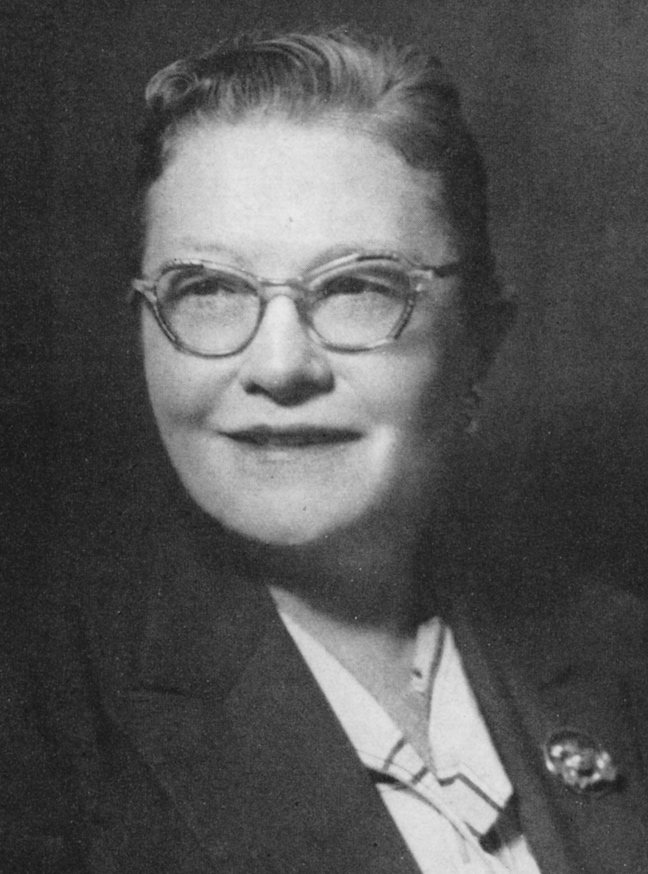
Blanche Rahr was not the first woman to take ownership of an Oshkosh brewery. But she was definitely the woman most identified with the beer business here. Blanche was part-owner and secretary-treasurer of Rahr Brewing from 1917 until 1956. She was the public face of Oshkosh’s longest-lived, family-owned brewery.

Blanche Rahr

The Rahr brewery at the foot of Rahr Avenue was established in 1865 by Charles Rahr, Blanche’s grandfather. Blanche was born in 1892 and was four when her father, Charles Rahr Jr., became head of the brewery. The business of making and selling beer was a constant presence throughout her life.

Rahr Brewing, late 1890s.

Blanche grew up doing the simple brewhouse chores that every child named Rahr had been performing since the brewery’s founding. It turned out she was good with numbers, and by the age of 14 worked her way into managing the brewery’s accounts. Blanche was 17 and still in school when her name went on the brewery’s ledger as its bookkeeper.
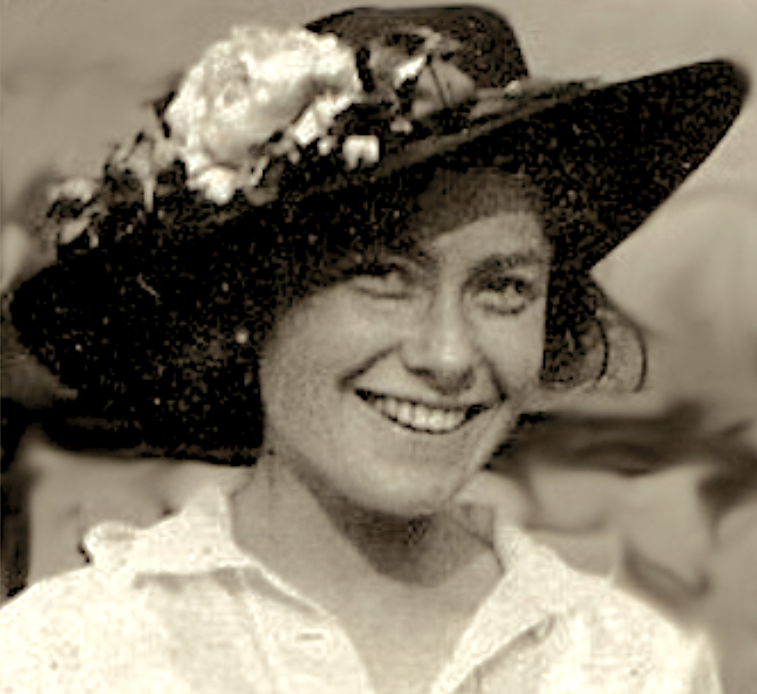
An undated photo of Blanche Rahr.

She was outspoken and determined. She had to be. Part of her job was to bring to account delinquent saloon keepers, men twice her age who were unaccustomed to receiving ultimatums from a woman. But Blanche often held the trump card. Her family owned many of the saloons that sold Rahr’s beer. The young lady could put you out of business if she cared to.
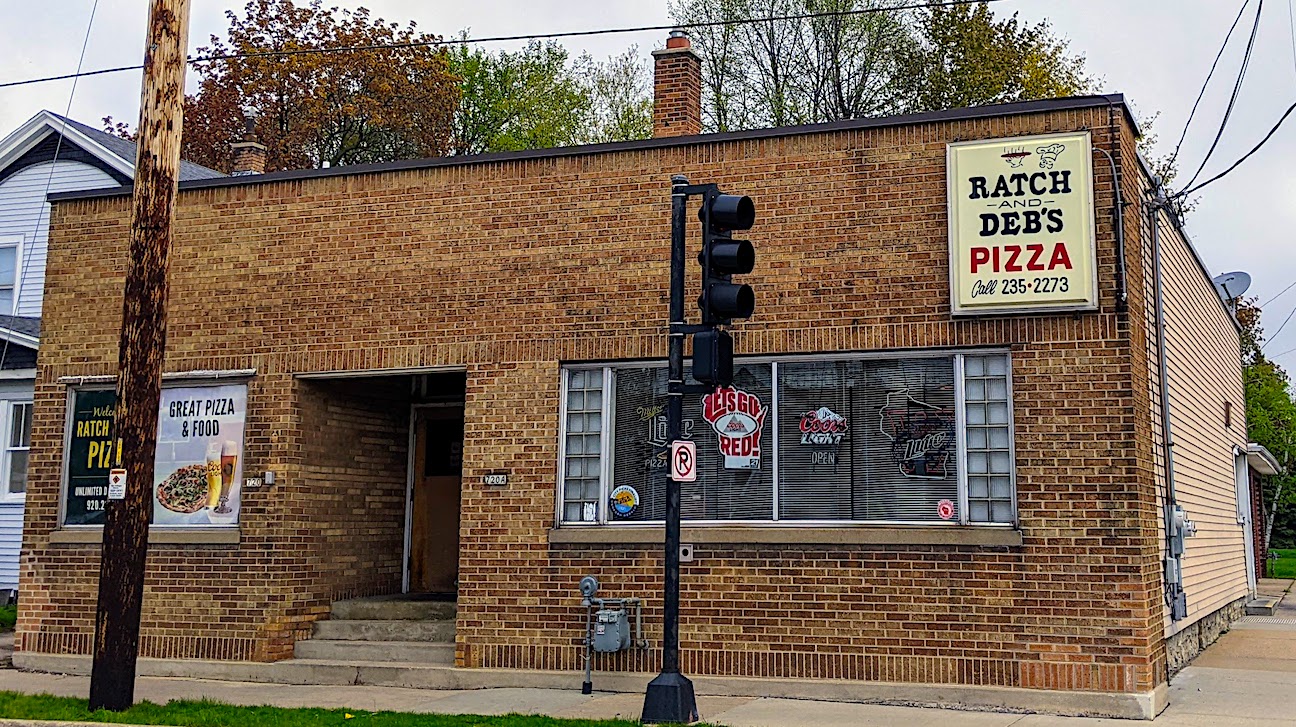
What is now Ratch and Deb's Pizza at the corner of Merritt and Bowen was once a saloon owned by the Rahr family.

Her influence increased in 1917 when her father retired from the brewery. He transferred ownership of the business to Blanche and her two younger siblings; her brother, Charles, and her 17-year-old sister Lucille. Charles, three years younger than Blanche and fresh off his service in World War I, became the brewmaster at Rahrs. Blanche, all of 24-years-old, managed the brewery’s day-to-day business affairs.

Blanche's brother and sister, Carl and Lucille.

Blanche's plucky reputation preceded her. She was a fitting choice for a role in a 1921 promotional film that called for a woman to take an unusual drive with an Oshkosh Motor Truck Company vehicle.

Miss Blanche Rahr of this city at the wheel, piloted the big machine up the steps of the Oshkosh High School in a fashion that won the approval of the spectators who had gathered to witness the stunt. That a young woman could handle so heavy a machine under such trying circumstances was considered a real feat.
     – Oshkosh Daily Northwestern; March 26, 1921.

Blanche behind the wheel.

To prove it wasn’t a fluke, she let the truck roll back down the steps, shifted into gear, and then drove it up again. Four months later, she was crowned Queen of the Mardi Gras by the American Legion at their 1921 summer frolic.

But back at the brewery, there wasn’t much to celebrate. Blanche and her siblings were stripped of their livelihood when Prohibition arrived in 1920. They scrambled to keep the business afloat and began producing and bottling fruit juices, soda, and malted milk.


The Rahrs also made non-alcoholic beer. The other Oshkosh breweries – Peoples and the Oshkosh Brewing Company – followed a similar path. But to a unique degree, the Rahr brewery became the subject of persistent rumors that some of its production bypassed the dealcoholization process. According to the gossip, that beer got funneled to bootleggers.

Blanche heard those rumors for the rest of her life. She consistently denied them. In any case, Rahr Brewing of Oshkosh was among just a handful of breweries of its size to survive the dry years.
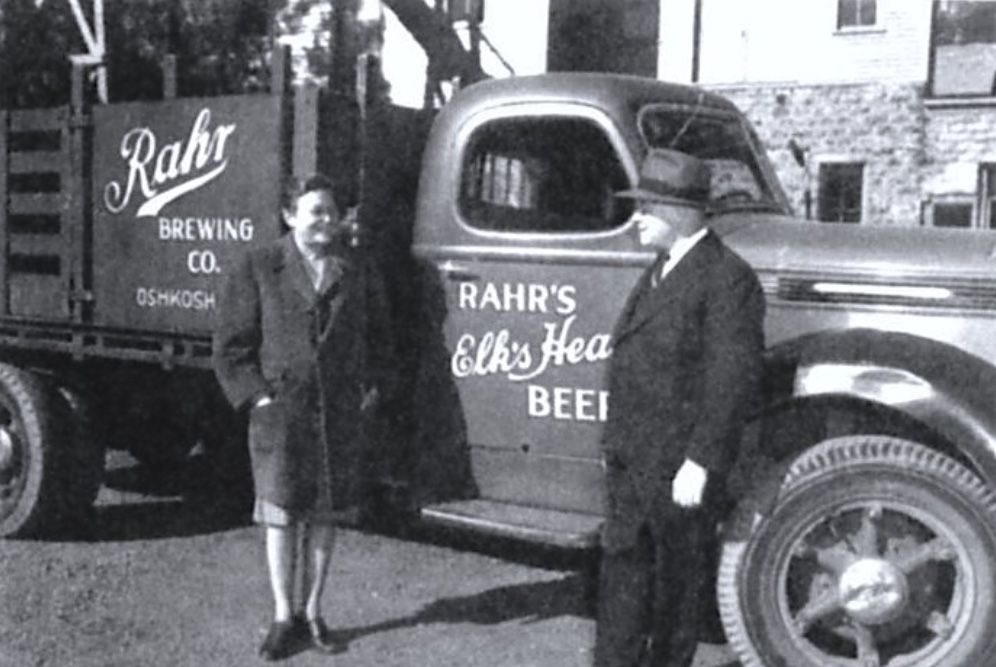
Blanche and her brother Carl outside the brewery.

Beer became legal again in 1933. But things didn’t get a lot easier. Rahr was Oshkosh’s smallest brewery, producing up to 20,000 barrels of beer annually – about half as much beer as their cross-town competitors made.

Especially troubling was a new set of laws that forbid the Rahrs from operating their brewery in conjunction with the saloons they owned. Before Prohibition, the Rahr family had used their tied-house saloons to insulate themselves from their larger competitors. But that arrangement was made illegal in the aftermath of repeal. The struggle to survive became a never-ending ordeal.

You wouldn’t have known that if you were following Blanche. When she wasn’t at the brewery, she led a social life that was a regular feature of the Daily Northwestern’s “Women’s World” page. She participated in civic groups, became an excellent bowler, and was fanatic about the local baseball scene.

A headline from the Oshkosh Daily Northwestern, May 3, 1952.

Blanche had far-flung friends and she traveled to be with them. Among her better-known confidants were Hollywood actress Edna Bennett and Broadway stage actress Beth Merrill.

Actress Beth Merrill, a longtime friend of Blanche.

Blanche was also the person reporters went to when they were looking for news about the brewery. But her typical bluntness began to wane as the fortunes of her brewery declined. She was evasive when asked for a summary of Rahr’s 1953 business. “About the same as 1952,” She said and then went on to complain about the tax on beer.

In fact, the brewery was coming undone. Annual production had fallen well below the 10,000 barrel mark. 1954 was worse. By 1955, production had dropped to just 3,660 barrels. And in the summer of 1956, the Rahrs closed their brewery. Again, it was Blanche who shared the news. She said that, if nothing else, they could be proud that even through the leanest of years there was never a layoff.

The Rahr's Beer sign coming down at Jerry's Bar on Ceape Avenue.

Blanche was 63 when the brewery shut down. She had lived all her life in a home two doors west of the brewhouse. And there she remained.

Blanche's former home on Rahr Avenue.

Her life seems to have narrowed after the brewery went under. She became somewhat infamous for her severity when driving off wandering children attracted by the prospect of sneaking into a dormant brewery. Other explorers remembered her gruff demeanor giving way to a smile and a piece of candy.

The abandoned Rahr Brewery office.

Demolition of the brewery began in 1964. Blanche was 72 then and still living in the house two doors down. She stayed there until the summer of 1979 when she fell ill and was moved to Evergreen Manor. Miss Blanche Rahr, aged 86, died there on the Monday morning of August 13, 1979.
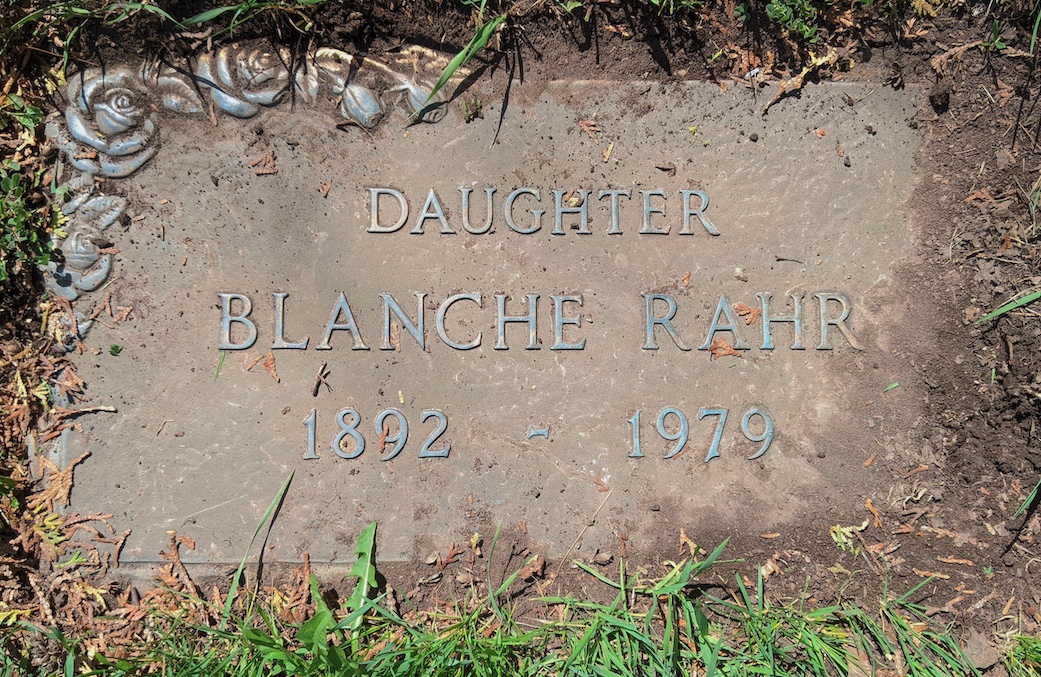
Riverside Cemetery.

If you'd like to know more about the story of Rahr Brewing, here's a short video I made that gives an overview of that history.


Friday, July 1, 2022

A Public Service Announcement from Rahr Brewing of Oshkosh

AVOID THE TYPHOID!
This holiday weekend, stay on the safe side and drink Rahr’s Special Brew…

From the summer of 1916.

Tuesday, September 28, 2021

The Heritage Series: Rahr's Centennial Brew

In 1953, the Rahr Brewing Company of Oshkosh made a beer that was rare for its time. Oshkosh was celebrating its Centennial that year. To mark the event, the Rahr family produced a beer that was a nod to the Oshkosh beers of 1853. Rahr's Oshkosh Centennial Brew was an all-malt lager beer. Released in June of 1953, Centennial Brew was one of the few American beers of the period made without cereal adjuncts such as corn or rice. That special beer is about to make a brief comeback.


On Saturday, October 2, Bare Bones Brewery will release a one-barrel batch of Rahr's Oshkosh Centennial Brew as part of the brewery's Heritage Series of historic Oshkosh beers. Centennial Brew is a 4.7% ABV golden lager. The Rahr's labelled it a Pilsner. The beer recalled the original iteration of the style. The color was deeper and the flavor more rounded and full than is found in most American Pilsners brewed today.

The recipe and process used at Bare Bones were provided by the original brewer. His name was Charles "Chuck" Rahr. Chuck was the fourth generation of Rahr-family brewmasters at the Rahr Brewing Company of Oshkosh.

Chuck Rahr

Chuck was born in 1928. He grew up in and around the family brewery. "From a very young age I helped out around the brewery," he said. "Even as a little kid I used to watch my dad brew the beer. It was our life.” Chuck would be the last brewmaster at Rahr. Unable to compete with Oshkosh's larger breweries, the Rahr brewery closed in 1956.

The Rahr Brewing Company of Oshkosh.

The Bare Bones version of Rahr's Centennial Brew was made on August 6, 2021. It underwent a cold fermentation followed by six weeks of lagering (cold maturation). The Rahr's were always sticklers about those extended periods of lagering for their beer. As they noted in their advertising, "artificial aging never had a look-in at Rahr's. Old Father Time always did the aging at this brewery."

In the brewhouse on August 6 were Bare Bones head brewer Jody Cleveland, Gary Fenrich, and myself. Gary is an Oshkosh homebrewer. Gary had gotten to know Chuck Rahr and at one point explored the idea with him of relaunching the Rahr brand.

Jody Cleveland (left) and Gary Fenrich.

There was another reason it was fitting that Gary was there for the brew day. In 1953 his mother, Carol (Genal) Fenrich, was named Oshkosh's Centennial Queen. We're hoping she'll be able to join us at Bare Bones on Saturday.

From 1953, Oshkosh Centennial Queen Carol Genal.

Unfortunately, Chuck Rahr isn't around to see his beer revived. Chuck passed away in 2016. I once asked him if he had been much of a beer drinker back when he was still brewing. "I loved beer," Chuck said. I'll bet he would have liked this one.

The Bare Bones Brewery version of Rahr's Centennial Brew.

Rahr's Oshkosh Centennial Brew will begin pouring at noon on Saturday, October 2. The beer will be available only on draft. If you can make it to Bare Bones on Saturday for a pint, you'll also receive a commemorative postcard like those shown at the top of the post. Hope to see you there.

Notes
I've written a couple of pieces about Chuck Rahr for the blog. You can find those here and here.

A few years back I made a short video covering the history of Rahr Brewing of Oshkosh. You can see that here.

The recipe for the beer that was brewed at Bare Bones is very similar to the recipe for Rahr's Elk's Head. The basic difference being the exclusion of corn and a slight reduction of black malt to keep the color from drifting into the amber range. You can find that recipe here.

Monday, November 2, 2020

There's a Beer Named Rahr Pouring Again in Oshkosh

1972... Until a couple of weeks ago, that was the last time you could buy a beer with the name Rahr on it in Oshkosh. But now there's this...
The name on that can is going to be familiar to a lot of people around here. It should be. Rahr beer in Wisconsin predates the state joining the Union. The story is a winding tale of an immigrant family that came here in the mid-19th Century. It all began with a man named Wilhelm.

Wilhelm Peter Mathias Rahr, circa 1849.

In 1847, Wilhelm Peter Mathias Rahr arrived in Manitowoc Wisconsin. He had immigrated from Wesel, a city now part of North Rhine-Westphalia, in northeast Germany. The Rahr's had been brewing beer and vinegar there for as far back as the family could recall. In Manitowoc, Wilhelm Rahr established what would come to be known as the Eagle Brewery and later William Rahr and Sons. It was among the first lager-beer breweries in northeast Wisconsin.

A pre-Prohibition Meyercord sign for the William Rahr and Sons Brewery of Manitowoc.

Wilhelm's nephews August, Charles, and Henry followed in his wake. All three of them would spend time working at their uncle's Manitowoc brewery. Henry was the first to set out on his own. In 1858, he launched the Shantytown Brewery in what is now the Village of Bellevue; just southeast of Green Bay. Six years later, he established the East River Brewery on Main Street in Green Bay. That brewery would come to be known as the Rahr Green Bay Brewing Company.

Rahr Green Bay Brewing Company, 1895.

In 1865, the third Rahr family brewery was launched by brothers August and Charles Rahr in Oshkosh. Their brewery – originally named the City Brewery – would later become the Rahr Brewing Company of Oshkosh.
  
Rahr Brewing Co. of Oshkosh, 1930s.

The three Rahr breweries in Wisconsin continued their operations until 1920 when Prohibition arrived. At that point, the Manitowoc Rahrs abandoned brewing to concentrate on their already well-established malting business. Rahr Malting would grow into one of the world's largest producers of malted barley. The business remains in operation with its headquarters in Shakopee, Minnesota.

Both the Green Bay and Oshkosh Rahr breweries survived Prohibition and returned to making beer in 1933.

The 1936 Green Bay Packers featured on a post-Prohibtion beer label
from the Rahr Green Bay Brewing Company.

A Tavern sign for the Rahr Brewing Company of Oshkosh.

The Rahr Brewing Company of Oshkosh closed in 1956. But this wasn't the last time a beer named Rahr was brewed in Oshkosh. And even after the brewery closed you could still buy beer here with a Rahr label on it. Here's where the story gets convoluted.

The Rahr Brewery in Green Bay began distributing its beer in Oshkosh shortly before the Rahr's of Oshkosh closed their brewery. Though the Green Bay brewery was no longer controlled by the Rahr family, their name was still attached to the brewery's beer.

The Rahr Green Bay Brewing Company closed in 1966. Immediately after, the Oshkosh Brewing Company purchased the brewery's brands. OBC then began producing Rahr Beer in Oshkosh at its brewery on Doty Street.

A can of Rahr’s Beer brewed in Oshkosh by the Oshkosh Brewing Co.

When OBC closed in 1971, the Rahr brand was sold to the Peoples Brewing Company of Oshkosh, which continued making Rahr Beer until it closed in 1972. And that was the last time you could buy a beer in Oshkosh that had the Rahr name on it. That is, until a couple of weeks ago when a keg of Rahr's Original Beer went on tap at Bare Bones Brewery.


This Rahr wasn't brewed in Wisconsin. It comes to us from Forth Worth, Texas where Frederick “Fritz” Rahr – the great-great-grandson of Manitowoc’s Wilhelm Rahr – established Rahr & Sons Brewing in 2004. The Texas Rahr brewery recently began distributing its beer in Wisconsin. When it showed up at the liquor store in Gardina's last week, I felt duty-bound to pick up a sixer of it.


It's not bad. It's light and fairly dry with a clean, firm bitterness in the finish. I doubt that it tastes much like the Rahr beers that were once made here in Oshkosh. And that's not necessarily a bad thing.

The Rahr-branded beer made by OBC in Oshkosh after 1966 was a mess. I’ve seen that recipe and how they made it. It was concocted from, among other things, corn syrup, soy flakes, and hop extracts. They used to sell it for $2.50 a case and they'd sometimes give you a free 6-pack to boot. It was one of those beers.

On the other hand, Rahr's Elk's Head beer from the Oshkosh Rahr Brewery was considered by some to be the best post-Prohibition/pre-Craft beer produced in this city. I have the recipe for that beer and have home-brewed it several times. The Texas Rahr beer is fine, but it doesn't stand up to Elk's Head.

That said, I'm sure I'll be buying more of this Texas Rahr Beer. It makes me feel good to have a beer on the table with the Rahr name on it.

Notes


Monday, April 17, 2017

Rahr's All-Malt Beer

In 1953, The Rahr Brewing Company of Oshkosh produced something rare. The brewery made an all-malt beer. In the 1950s, few American breweries made beer this way. At that time, nearly all American beers were brewed with a significant addition of corn or rice. Here's a bottle of the Rahr's 1953 beer.


It was brewed to commemorate the 1953 Oshkosh Centennial. The beer was an homage to the history of brewing in Oshkosh. The Rahr's new that history well. The family had been making beer here since 1865. At that time, every brewery in Oshkosh produced all-malt beers. Corn didn't find its way into Oshkosh's breweries until the 1870s (there's more on that here).

But aside from the grain bill, the centennial beer was quite different from beers made in Oshkosh 100 years earlier. Those beers would have been dark. This one, as the label says, was pale. It was the Rahr's version of a Pilsner. Here's the ad introducing Rahr's all-malt Centennial Brew. This is clipped from the Oshkosh Daily Northwestern of June 8, 1953.


It's wonderful that an obscure brewery in Oshkosh would be one of the few in America to produce an all-malt beer in the 1950s. I suspect the Rahrs saw this as a kind of last hurrah. By 1953, the brewery was sinking fast. The end was coming. It was only a matter of time.

In 1956, Rahr Brewing closed. There wouldn't be another all-malt beer brewed commercially in this city until 1995 when Fox River Brewing Company opened.

One last thing. That bottle of Rahr's Beer at the top of this post belongs to a friend of mine. His name is Grant Peterson. Grant used to be a delivery driver for Peoples Brewing Company.  He showed me that bottle the other day at Oblio's. When I was admiring his bottle, it struck me that here we have a former driver for Peoples with an old bottle of Rahr's in a tavern that was a tied to Schlitz. This city is wrapped in a web of beer.

Monday, March 7, 2016

An Afternoon with Chuck Rahr

Charles Rahr died last week Monday, February 29. He was 87 years old.

He preferred to be called Chuck.

Chuck Rahr was the last brewmaster at the Oshkosh brewery owned by his family. His great-grandfather Charles Rahr launched Rahr Brewing Company in 1865.

Chuck Rahr was born 63 years later on October 3, 1928. At that time, no beer was flowing from his family's brewery. Prohibition was on. The Rahr's were getting by making soda water.

Chuck was six years old when the ban on beer was lifted in 1933. He told me most of his early memories involved the brewery where his father, Carl – the third generation of Rahr brewers – made beer.

In February 2011, I was fortunate to get to know Chuck Rahr. I was put in touch with him by Oshkosh beer historian and breweriana collector Ron Akin.

The first couple of times Chuck and I spoke were over the phone. The conversations were awkward. I came away with the impression he didn't want to be bothered. I persisted, explaining that I wanted to write a story about his career at the brewery. That story had never been told. I said to him that I thought it was important and that people would be interested. He didn't seem to share my enthusiasm. We were getting nowhere. I asked if I could come see him. He agreed and we set the date.

February 7, 2011, I drove to his home in Appleton. It was a dreary, Monday afternoon. When he let me inside, I remember thinking of my late uncle's house. Like Chuck, he had been a lifelong bachelor and his home had the slightly disheveled look of a place tailored to the eccentricities of an elderly, single man. You could tell he was comfortable there.

We started talking. At first, it was mostly just me talking. He didn't seem the least bit interested. For no reason I could discern, he showed me one of his numerous trap-shooting trophies. Chuck had been a champion marksman, winning his first state title for trapshooting in 1970. That's what he wanted to talk about. Not me. I was there to talk about beer.

I pulled a sheet of paper from a folder I had brought full of newspaper clippings, pictures and other items pertaining to the Rahr brewery. The sheet in my hand contained the recipe for Rahr's Elk's Head Beer.

I handed the paper to him and asked if we could sit down and go over it. We sat at his dining-room table and he looked over what I had given him. He wasn't at all happy when he realized it was the recipe for the beer he used to make.

He wanted to know where I had gotten it. I didn't like his indignation and didn't want to tell him. Now I was getting angry, too. This was going to hell before it even started. I asked him why my having the recipe was a problem. He told me he didn't want people making bad beer from that recipe and then calling it Rahr's beer. He told me about homebrew he had tasted and that it was terrible.

I told him I hadn't come there to talk about homebrew, but that I was a homebrewer and could make good beer. I offered to make a batch of Elk's Head for him to prove it. That offer seemed to mellow him. He explained that he couldn't drink beer anymore because of health issues he was having. I asked if he had been much of a beer drinker back when he was a brewer. Still looking at the recipe for Elk's Head, he said, "I loved beer."

From that point on, we got along wonderfully. It turned into one of the most memorable afternoons of my life. Once we started talking deeply about beer he was nothing like the distracted, detached man I had first encountered. His mind was sharp and he was generous in sharing his knowledge. He had vivid memories of the brewery and his days making beer there.

He didn't seem to care anymore about me having that recipe. We went through the entire thing, step by step. Before long, I wasn't even asking questions. I didn't have to. He went off on one interesting tangent after another about making that beer. The only downside was me trying and failing miserably to scribble every word he said into a notebook. I wish now that instead of sitting there with my head in that notebook I had spent more time watching him as he explained things to me.

We talked for several hours. By the end, Chuck's voice had grown raspy. I asked him what it felt like when the brewery closed. His answer was oblique, but said everything. "Even as a little kid I used to watch my dad brew the beer," he said. "It was our life.” To hear him say it was a heartbreaking thing.

We went down to his basement so he could show me some of the memorabilia he still had from the brewery. I took pictures of him holding several of the pieces. I was happy to see that the picture of him accompanying his obituary in last week's Northwestern was from one of the pictures I took that day.


A couple weeks after that meeting, I posted the story I wrote about Chuck Rahr and his brewing career. I printed a copy of it and mailed it to him. Chuck never told me whether he liked it or not. And I never asked. I think if he had disliked it, I would have heard about it. He wasn't shy about telling you when he thought he’d been wronged.

Chuck Rahr lived a somewhat solitary existence in his latter years. After we met, I often wondered if others ever saw the side of him I was lucky enough to get to know when we talked about beer. I didn't have to wonder about that too long.

A few months after meeting Chuck, I was talking to a friend of mine, a fellow member of the Society of Oshkosh Brewers named Gary Fenrich. We were at an SOB meeting and Gary mentioned off hand that he had met Chuck Rahr, a year or so earlier. I was floored.

At the time, Gary was exploring the idea of starting a contract brewery and perhaps reviving one or more of the regional beer brands that once flourished in Wisconsin. His pursuit of that idea led him to Chuck Rahr and an experience much like my own.

After Chuck's death last week, Gary sent me a text asking if I'd heard the news. I had. We wound up talking on the phone sharing our memories of Chuck with one another.

"He was just a nice guy," Gary said. "When he started talking to me about the brewery, it was almost like he was living back at that time. He was so proud of what they had done. He walked me through the years of the brewery and all the camaraderie he had with all these other small brewers. It was incredible."

I told Gary again about the afternoon I spent at Chuck’s house. Gary remarked about the similarity to his meeting with Chuck. "That's almost exactly what it was like for me when I met him," he said. "It’s almost like we were together when we were talking to him. It’s not like it was scripted, but it was almost like he was waiting for us to get there."

I’d like to think he was. I'm glad we made it.

Monday, October 26, 2015

Schussler Craps on Corn

Joseph Schussler
Last Monday's post about Oshkosh brewers using corn in their beer deserves a rebuttal. Not everyone was so sanguine about the American brewer's embrace of the adjunct. Those who were around prior to corn becoming a staple ingredient in American beer were often the most critical. Take for example, Joseph Schussler.

When Schussler began brewing in Oshkosh in 1850, he made all-malt. But by the time Schussler ended his brewing career in Fond du Lac in 1892, chances are he was doing like everyone else: brewing an adjunct beer using corn. Whatever the case, Schussler looked down upon the practice.

In 1898, Schussler gave a long, rambling interview to a Milwaukee reporter where he made his feelings clear. Here's what he had to say about how beer had been made before the introduction of corn to American brewing.

Fifty-two years ago beer was made ... in a far different manner than beer is made today. No machinery was used and the output never exceeded forty barrels a week, but the grade was pronounced far superior to any that is now on the market. “It was pure barley and hops and not corn and other adulterations as are used today,” said the old brewery man. (1)

Of course, Schussler was out of the game at this point. He had nothing to loose by bad mouthing adjunct beer. But even brewers still plying the trade, were less than enthusiastic about brewing with corn. Ads from the period rarely mention that corn was part of their recipes. While brewers would go to great lengths to explain how exquisite their malt and expensive the hops they used were, the use of corn was something that remained better left unsaid.

Here's an example of just that. This is an ad for The Rahr Brewing Company that showed up in the Oshkosh Daily Northwestern on July 31, 1913. It's a clumsy thing all the way though. First, they make an unfortunate comparison between making sausage and beer. Then comes this line about ingredients: "... high priced selected barley malt, hops, etc."


You can guess what they mean by "etc." That would be corn. At this point it was a mainstay in the Rahr recipe. But like other brewers, they'd just rather not mention it.

Note
(1) This excerpt is from a Milwaukee newspaper clipping that does not include the masthead or publication date. Other articles in the clipping make it possible to date the piece as being published in either January or February 1898.

Monday, October 12, 2015

Rahr’s 1953 All-Malt Beer

By the close of 1952 the Rahrs had to suspect that the end was drawing near. Their brewery's south-side competition – Peoples Brewing and the Oshkosh Brewing Company – were making beer in record quantities. OBC was now producing more than 50,000 barrels of beer annually. Peoples had passed the 30,000 barrel mark. At the same time, output at Rahr Brewing was shrinking with annual production falling to fewer than 8,000 barrels.

Then came 1953. On May 14, workers went on strike at Milwaukee's big-six breweries (Blatz, Gettelman, Independent Milwaukee, Miller, Pabst, and Schlitz). Small breweries across the state seized the opportunity. In Oshkosh, the effect was dramatic. At OBC, production spiked by 40%. Peoples output grew by 15%. But at Rahr the impact was truly phenomenal. Production increased by 100%. The last family owned brewery in Oshkosh was showing new signs of life.

The Oshkosh Centennial Parade, June 27, 1953.
The float for Repps bar was loaded down with a beer kegs and cases of Rahr’s Pale Beer.

1953 was an important year for Oshkosh. The city celebrated its Centennial with a series of special events and observances. The Rahrs, perhaps feeling the flush of their recent success, joined the celebration. The brewery produced a special beer to commemorate the Oshkosh Centennial. It was a beer that recalled the earliest days of the brewery.

When Charles Rahr launched his City Brewery in 1865, his initial brews were dark, all-malt lagers. There was no chance the Rahr's were going to resurrect the "dark" part of their forefather's original recipe. In 1953 that would have been commercial suicide. But the all-malt piece was certainly doable.

In June 1953, the Rahrs announced the release of the first all-malt beer produced commercially in Oshkosh since the turn of the century. It was named Rahr's Oshkosh Centennial Brew. The brewery described it as an "All Malt Pilsner Beer." Pale in color, but no corn.

Neck label from a 1953 bottle of Rahr's beer.

It was a bold move for a small brewery where every penny mattered. The Rahrs were raising production costs by dropping the corn that had been a staple in their beer since the late 1800s. For a brief time, Rahr's Pale Beer became one of the few all-malt beers produced in America.


It couldn't last, of course. A few weeks later on July 28, 1953, the Milwaukee brewery worker's strike ended. And the abnormally warm summer, which had also helped to increase beer consumption in Oshkosh, gradually cooled.

As fall settled in, the nagging sense of decline that had been present at the close of 1952 resurfaced. Despite the burst of promise that came with spring, the Rahr's final numbers for the year were down again. Production fell from 7,657 barrels in 1952 to 7,100 barrels in 1953. Things would only grow worse.

In 1954 sales of Rahr's beer plummeted to 5,563 barrels. In 1955 they tumbled further to just 3,660 barrels. It was over. On June 7, 1956, the Rahr's announced that their brewery would close. The family issued a statement saying they were unable to, "compete with larger breweries with bigger budgets for advertising and promotion." For the first time in 91 years, there would no longer be an active brewery at the end of Rahr Ave. in Oshkosh.

From the Oshkosh Daily Northwestern, July 3, 1956.

Monday, October 5, 2015

The Story of Rahr's Elk's Head Beer and How to Brew Your Own

Elk's Head Beer was considered by many in Oshkosh the finest beer made in the city. Some of that fondness may have been born of nostalgia. In 1956, The Rahr Brewing Company became the first of the Oshkosh breweries to close after Prohibition. People here mourned the loss of Oshkosh's last family owned brewery. When it was gone, Elk's Head beer was missed.

But the reputation of Elk's Head didn't hang on nostalgia alone. This beer was different from others brewed here. When Prohibition ended in 1933, the beers of both the Oshkosh Brewing Company and Peoples Brewing Company, became lighter in body and color as the years wore on. The Rahr's resisted that change by brewing the same beer after Prohibition as they had before it. Elk's Head was the old timers favorite.


The Birth of Elk's Head Beer
The Rahr's began releasing their beer under the Elk's Head label in the summer of 1916. Previously, the beer had been known as Rahr's Special Brew. The change followed a tumultuous period for the brewery. In 1914, the Rahr's had begun construction of a new bottling plant on the brewery's grounds. At the time, Rahr beer was being bottled at a facility owned and operated by brothers Fred and Ludwig Neumueller across the street from the brewery. But brewery owner Charlie Rahr had grown dissatisfied with the arrangement and the packaged beer coming out of the Neumueller's plant.

By 1915, the Rahr's had taken their bottling in house. The following year they renamed their beer Elk's Head. It doesn't appear that the beer itself had actually changed. Advertising from the period doesn't indicate that the recipe was reformulated or that brewing methods had been altered to produce a new type of beer. Instead, it seems that the new name was used to further distinguish the beer now bottled on premise from that bottled by the  Neumueller's.

After Prohibition began in 1920, the Rahr's continued to use the Elk's Head brand. But now it was being applied to the various sodas the brewery produced during the dry years. That ended with Prohibition's end in 1933. Rahr's beer was once again packaged under the Elk's Head label.

Though the Rahr brewery closed in 1956, the Elk's Head brand perished earlier. By 1952, the Elk's Head label was being phased out in favor of new branding. It was now being labeled as Rahr's Pale Beer, an attempt to update the perception of the beer. Again, it appears the beer inside the bottle went unchanged. Charles Rahr III, the last brewmaster at Rahr Brewing told me that Rahr beer continued to be brewed using the same recipe that had been used prior to Prohibition.

The Rahr Recipe
This recipe for Elk's Head Beer was given to me by a collector of Oshkosh memorabilia who would prefer not to be named. In 2011, I met with Charles Rahr III and showed him the recipe. He confirmed that this was the one used at the brewery to make Elk's Head Beer. Though detailed in many respects, there are still a couple of missing pieces here. I'll get to those, but first here's what is contained in the recipe. The percentages are my own.

Grain Bill
Malt (6-row): 3850 Lbs. (76.47 %)
Flakes (Corn): 1040 Lbs. (20.65 %)
Caramel Malt: 10  Lbs. (0.0019 %)
Black Malt: 9  Lbs. (0.0017 %)
Maltodextrin: 125 Lbs. (0.024 %)
Total: 5034 Lbs.

Hops
53 Lbs.

Other Materials
NaCl (Sodium chloride) 10 Lbs.
Irish Moss 4 Lbs.

Equipment
During much of the time that this beer was being produced, Rahr Brewing used a 135 barrel mash tun with a copper boil kettle corresponding in size.

Mashing
The recipe shows a two-hour mash schedule with four rests. The temperatures are written in degrees Réaumur, a scale often favored by German brewers. I've converted the temperatures to fahrenheit.

1) 108.5 °F for 60 minutes
followed by a ten minute ramp to
2) 149 °F for 10 minutes
followed by a five minute ramp to
3) 158 °F for 25 minutes
followed by a five minute ramp to
4) 169.25 °F for 15 minutes
Recirculate and run into kettle.

Boiling
The boil lasted an incredible 4 hours. It began while the wort was being collected. Runoff was completed 2.5 hours into the boil. The full-kettle boil lasted 1.5 hours.
The maltodexrin was added to the kettle as the wort was being collected, at a point when the kettle was nearly full.
The first hops were added 55 minutes before the end of the boil.
Ten minutes before the end of the boil, a second addition of hops were added along with the NaCl and Irish Moss.

What's missing here are the type of hops used and the basic brewing parameters, including wort gravities, final gravity and alcohol percentage. The The International Bittering Units scale had yet to be developed when the Rahr's were brewing this beer, so that of course is not available. None of these missing pieces though are insurmountable. There's enough information concerning the brewery and its practices to fill in these blanks with a reasonable degree of surety.

Hops: I have not seen a single instance where the Rahr's mention the use of a specific type of hop in their advertising. That's telling. The Rahr's advertised their beer fairly heavily. Their use of traditional methods and ingredients were often featured in these ads. Most breweries using European hops – including Peoples Brewing and the Oshkosh Brewing Company – made a point of advertising their use of the more expensive ingredient. The fact that the Rahrs didn't make such claims leads me to believe the brewery used American grown hops exclusively. And that effectively narrows the choice to cluster, the hop ubiquitous in American lagers when Elk's Head Beer was being produced.

As for IBUs, most pre-Prohibition lagers are estimated to have been in the 25-40 IBU range. The Rahr's use of approximately 1/2 pound of hops per barrel of beer puts them within the lower end of that spectrum. That makes sense. The use of salt to promote malt flavor along with the addition of maltodextrin indicates that Elk's Head was intended to be a malt-forward beer. That aspect of the beer is supported in much of the brewery's advertising for Elk's Head.

Gravities
The typical batch size at Rahr Brewing was just over 100 bbls. If you plug the numbers listed above into a brewing calculator using that batch size, you arrive at gravities, attenuation and alcohol levels that are commensurate with other lagers of this type made prior to Prohibition. With that in mind, here are estimates of the missing brewing parameters.

Original Gravity: 1.051
Final Gravity: 1.014
ABV: 4.82%

The Rahr Brewery

Brewing Your Own Elk's Head Beer
Of course, I wanted to brew this beer myself, so I scaled the recipe to match my home brewery. Here's what a homebrewed batch of this beer looks like. I'll list the ingredients using percentages to make it easier to tailor the recipe to individual brewing systems.

Homebrewed Elk''s Head
Specs
Original Gravity: 1.052
Final Gravity: 1.014
ABV: 4.82%
SRM: 5

Grain Bill
American - Pale 6-Row: 74.8%
Flaked Corn: 20.2%
American - Caramel / Crystal 20L:  0.2%
American - Black Malt: 0.2%
Melanoidan Malt: 2.3%
Maltodextrin: 2.3%

The tweak I've made to the malt bill (adding melanoidan malt) was done to approximate the effect of that long boil. There's just no way I'm doing a four-hour boil. I'm also not going to do a two-hour step mash. I've brewed this beer once using a more standard step mashing regimen and three times using a simple infusion mash (at 154ºF for 1 hour) followed by a batch sparge. The step mash made little, if any, impact.

Hops
Cluster Hops 6.5% AA: 55 minutes before the end of boil for 24.54 IBUs.
Cluster Hops 6.5% AA: 10 minutes before the end of boil for 9.10 IBUs.
Total IBUs: 33.64, which is maybe just a tad high, but that's how I like it! A more appropriate target would be closer to 25 IBUs.

Brewing Salts
1/2 teaspoon NaCl (per 5-gallon batch) added to wort 10 minutes before the end of boil.

Yeast
Wyeast 2035 | American Lager
This yeast supposedly originates from August Schell Brewing of New Ulm, Minnesota. It's fairly complex for a lager yeast. I like the way it works with this recipe.
At Rahr, they often used yeast sourced from the A. Gettelman Brewing Co. in Milwaukee.
I'm assuming the two yeasts would have been at least somewhat similar.

Fermentation
I use a very basic protocol when fermenting lagers. I crash to just below fermentation temperature and then pitch the yeast. Primary fermentation at 50ºf lasts approximately two weeks followed by a two day diacetyl rest at around 65ºf. This is followed by a three to four week lagering phase at 50ºf.

I've brewed this beer four times now. I love it. It's a medium-bodied, balanced beer that's full of flavor. To me it tastes "bigger" than it is. It's one of those beers that keeps me coming back to the glass.

If anybody else out there decides to give this beer a brew, I'd love to hear about it. Happy brewing!

Monday, July 6, 2015

Rahr 150

This Wednesday marks the 150th anniversary of the founding of the Rahr Brewing Company of Oshkosh.

On July 10, 1865, Charles Rahr and his brother August purchased five acres of land on the shore of Lake Winnebago at the end of what is now Rahr Ave. There, the German-born brothers built their  brewery. The Rahr’s brewery would continue to pump out beer for the next 91 years.

I thought now would be a good time to take a look back at the history of Rahr Brewing in Oshkosh. Here’s a four minute video I made last year that sketches that history. And just below the video, I’ll place a link that leads to more stories about the Rahrs and their brewery.


Monday, June 1, 2015

The Talk of the Town

Here’s a beautiful piece of breweriana owned by Charles Rahr III, the last brewmaster for the Rahr Brewing Company of Oshkosh. The sign shows an appliqué over a wooden board with dark stain. When you see it in person the thing seems to practically glow. Click the image and you’ll get a better impression of its radiance.

In all likelihood, this was produced by the Meyercord Company of Chicago. Before prohibition, Meyercord did a brisk business producing these types of signs for breweries big and small. But I suspect this one may have been made after Prohibition ended in 1933.

The earliest example I’ve seen of the Rahr’s using the phrase “The Talk of the Town” is from 1934. From that point until the brewery closed in 1956, the tag line was used in most Rahr’s advertising.

The sign was certainly meant to suggest an earlier era. The 17th Century clothing, wooden clogs, and wooden pails are there to evoke the sense of tradition that was always the Rahr’s stock in trade. I can tell you, there wasn’t anybody walking around in this kind of garb on Rahr Ave. when this sign was hanging around.

For more on Charles Rahr III along with a couple of the other prized signs in his collection, click THIS.

Monday, May 25, 2015

Charles Rahr in the Civil War

Charles Rahr
When Charles Rahr left his native Wesel, Prussia in 1856 he probably thought he was leaving the atmosphere of militarism behind him. After the Napoleonic Wars of the early 1800s, Wesel became a garrison town occupied by infantry and stockpiled with artillery. The fortification of the city, kept it isolated. While the industrial revolution swept across Central Europe, Wesel stagnated. Home wasn’t the sort of place where Charles Rahr wanted to live. At 20 years old, He left Wesel to seek opportunity in America.

Rahr spent his first years in America in Wisconsin working at breweries in Manitowoc and Green Bay. But five years after his arrival, Rahr found himself surrounded again by the drums of war.  On October 21, 1861, six months after the start of the Civil War, Rahr joined the 9th Wisconsin Volunteer Infantry, a regiment primarily composed of German immigrants to Wisconsin.

The 9th was sent into battle in Kansas and Oklahoma as part of what was called the Indian Expedition. The campaign saw Union forces fighting to reclaim the territory of pro-Union Indian refugees who had been driven from their lands by the Confederate Army.

Rahr served under an especially ruthless leader. Colonel William Weer kept his soldiers on half-rations and showed little regard for their safety. Nearly a quarter of those serving under Weer were casualties of war. The situation grew intolerable. Weer’s troops and officers mutinied. The habitually drunken colonel was arrested by his own men.

Flag of the 9th Wisconsin Volunteer Infantry
Rahr was injured during the war. Details on this are scant, but it’s known that he was lacerated on the right side of his back. For the remainder of his life, Rahr received a $4 monthly pension for being wounded while in service.

Sergeant Rahr mustered out of the Union Army in Milwaukee on December 3, 1864. From Milwaukee he travelled to Green Bay. There, Rahr married Caroline Hochgreve, the sister of a Green Bay brewer he had once worked for.

In the summer of 1865, Rahr came to Oshkosh. He purchased five acres of land on the shore of Lake Winnebago and went to work with his brother August building a brewery. A brewery that survived here for 91 years.

Charles Rahr died on November 30, 1913. He was buried in Oshkosh’s Riverside Cemetery. Next to his headstone is a small, tarnished marker commemorating his service in the Grand Army of the Republic.


Here’s a brief overview of the history of Oshkosh’s Rahr Brewing Company.