Tuesday, February 22, 2022

John Harry and the Ongoing Story of Peoples Beer

America was home to more than 400 breweries in 1950. By 1980, three-quarters of them had closed. Those that went under were soon forgotten by almost everyone, save for breweriana collectors and local history enthusiasts. Recently, though, there’s been a stir of national interest in one of those lost breweries. That brewery was located in Oshkosh.

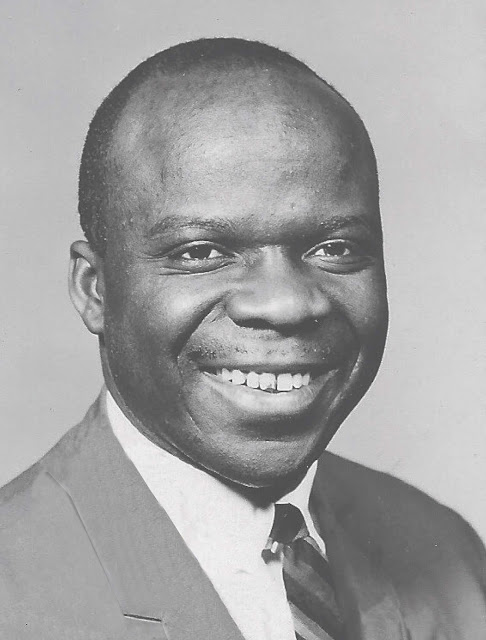
Peoples Brewing Company had been producing beer on South Main Street for 59 years when it closed in 1972. The closure had been preceded by two, tumultuous years that began with the sale of the brewery to a Milwaukee-based group led by Theodore Mack. With that, Peoples became the first black-owned brewery in Wisconsin.

Theodore Mack

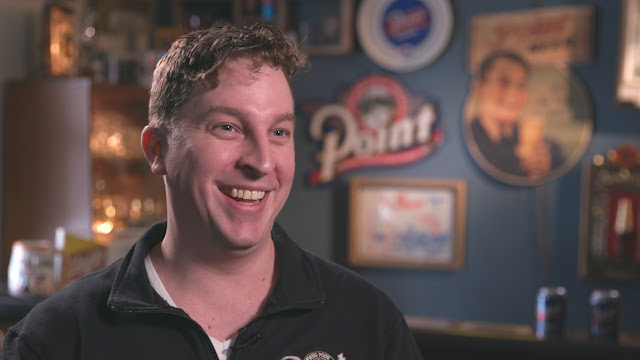
It’s those two years that have ignited interest in a brewery few outside of Wisconsin had heard of until recently. John Harry is one of the people responsible for raising that awareness. On Thursday, February 24, the Oshkosh Public Museum will host Harry via Zoom for a public discussion titled “Peoples Beer: The Story of Wisconsin's First African American Owned Brewery.”

John Harry

Harry was recently named Executive Director of the Portage County Historical Society, but before taking that job he had immersed himself in the 1970s incarnation of Peoples Brewing when Theodore Mack was its president. Harry had come upon that story while preparing for a transition of his own. "I was a radio DJ for 10 years and decided I was going to change careers," he says. "I've always loved history and I was at a point in my life where I was like, let's just go for it."

He moved to Milwaukee where last year he earned a master's degree in public history at the University of Wisconsin-Milwaukee. There, he focused on black capitalism as it pertained to the Theodore Mack era at Peoples. "Nobody was writing about it on an academic sphere," Harry says. "I found my niche there as a historian."

Harry began gathering oral histories from people who had been connected to the brewery in the early 1970s. Though Theodore Mack had passed away in 2019, Harry traveled to Georgia to interview his widow, Pearl, who had been the corporate secretary at Peoples. “It was one of those things where you ask yourself, is this really going to happen?” he says. “I sat down and had about a half hour conversation with her. You're talking to this woman who was married to Ted Mack; nobody knows this guy better. It was really intense.”

In July of 2020, Harry shared much of what he had gathered in a piece for the Good Beer Hunting website titled “Beer for the People — How Wisconsin’s First Black-Owned Brewery Took on the Entire Beer Industry.” The article placed what had occurred at Peoples in the 1970s within the context of minority entrepreneurship and documented Theodore Mack's struggle for success and ultimate failure in Oshkosh.

The timing was fortuitous. Against the backdrop of 2020's Black Lives Matter protests, the lack of diversity in American craft beer was being called out in a more forceful manner. For those concerned, Harry's article provided a historical frame of reference that had been missing. Peoples Brewing, which had closed almost 50 years earlier, was suddenly receiving more widespread attention than it had during its peak years in the 1950s.

Shortly after Harry's article appeared, a brewery in Sacramento, California announced that it was claiming the legacy of Peoples Brewing for its own. With the blessing of Theodore Mack's son Ted Mack II, Oak Park Brewing co-opted the Peoples Beer brand and began releasing their product under a label lifted directly from the defunct Oshkosh brewery. 


Harry published a follow-up article for Good Beer Hunting that addressed some of the more troubling aspects of the Oak Park situation.

"Anytime you give more exposure to an untold story about an underserved population, I think that that's a good thing," Harry says. "I think it's interesting, though, that there's no inclusion of the community of Oshkosh. As a question of ownership or memory of something like Peoples Beer, the people who remember it best are going to be in Oshkosh. The community didn't have their chance to weigh in. It became less a beer of the community and more a beer of black history. I think you have to tell that part of the story, but you can't also ignore the 60 years of history that led up to that."

It's a story that continues to unfold and one that Harry will explore fully in his talk for the Oshkosh Public Museum on Thursday, February 24. To attend, go to oshkoshmuseum.org and click the Programs/Events tab at the top of the page (here is a direct link to the event page). 

This article also appears in the February 23 edition of the Oshkosh Herald.

Sunday, February 20, 2022

The Phoenix House

The Phoenix House hotel opened in 1872 on the east side of what is now the 500 block of N. Main Street. It was destroyed by the great Oshkosh fire of July 1874 and then immediately rebuilt. The proprietor was Joseph Schneider, a German immigrant who came to Oshkosh in 1857. In 1905, Schneider was arrested for running a Blind Pig (an unlicensed saloon) out of the Phoenix House. After that, he went legal and over the next 95 years the location was home to numerous taverns. It’s now the Sideyard at Peabody's Ale House.

A Main Street mash-up: circa 1890 & 2022.


Friday, February 18, 2022

Beer of the Moment: Bare Bones’ Buster

Beer and community are inseparable in Oshkosh. It's been this way since our first breweries were launched in 1849. There's a beer named Buster that just went on tap at Bare Bone Brewery that typifies the sense of community that tends to form around beer here.

Buster

Buster is a rustic ale taken in a modern direction. It starts as a blonde ale with a creamy, malt base built from a foundation of oats. The soft texture gives way to sweet and tart flavors from an especially generous dose of Door County cherries. The simple construction produces a complexity worth lingering upon. At 6.5% ABV, this is not a small beer, yet it still travels lightly.

The idea for Buster arose three years ago when the Oshkosh chapter of Girls Pint Out decided it was time to go beyond the taprooms they’d been touring and get into the brewhouse. The group partnered with Bare Bones in developing the recipe for Buster and took part in its inaugural brew. Buster met with such success that Bare Bones has brewed it annually every year since.

You don’t need to know the story behind a beer like this to enjoy it. But when you do, it makes for a more memorable experience. Just about every beer has a story to tell. In Oshkosh, that story usually comes back around to community.

Beer of the Moment is an ongoing series I’m writing about local beer for the Visit Oshkosh website. These are not intended as critical reviews or endorsements. Their purpose is to provide a glimpse into the local beer culture for people considering a visit to Oshkosh. I also post them here in hopes of building a representative overview of the sort of beer that is being made here now. Most of the beers featured in this series have been selected by the brewers.

Tuesday, February 15, 2022

OBC Bull

The Oshkosh Brewing Company had a history of telling ridiculous stories about its connection to Chief Oshkosh and the native people who had lived here. Here's a whopper 1953: “Our own 515 foot well produces water so delicious that the Indians used to trek for miles for a taste of it.”
Oshkosh Daily Northwestern; November 25, 1953

Total nonsense. The brewery’s 515-foot well was drilled in 1949. Nobody was trekking to Oshkosh for a taste of that well's water.

Sunday, February 13, 2022

Cheater Mugs

 Here's a rough-looking headline from the Oshkosh Daily Northwestern of October 9, 1907.

The lousy barley crop of 1907 led to shortages that hiked the price of beer in Oshkosh. Looks like history is getting ready to repeat. Last year's barley production was the worst since 1939. It's one of the factors causing beer prices here to rise. 

Back in 1907, some saloons and taprooms in Oshkosh dealt with the issue by using "cheater" mugs. They were normal-sized but had thick, punted bottoms so they held less beer. A mug of beer cost a nickel then. Lately, I’ve been seeing more $6 and higher pints, and places not listing prices on their beer menus. But no cheater mugs… yet.


Friday, February 11, 2022

Beer of the Moment: Fifth Ward’s Pibber Jibber

This is the first in what will be an ongoing series of posts I’m writing about local beer for the Visit Oshkosh website. These are not intended as critical reviews or endorsements. Their purpose is to provide a glimpse into the local beer culture for people considering a visit to Oshkosh. I’m also posting them here with the aim of building an overview of the sort of beers that are being made in Oshkosh now. I’ve attempted to do something like this in the past, but with little success; due largely to my lack of enthusiasm for certain types of beer. That won’t be a problem this time. Most of the beers I’ll write about in this series are going to be selected by the brewer who made it. And with that, I give you this...


We’re serious about our beer in Oshkosh, but that doesn't mean the brewers here are above having some fun with it. Case in point: Pibber Jibber, which was just released by Fifth Ward Brewing Company at 1009 S. Main Street in Oshkosh.

Pibber Jibber is a 6% ABV ale brewed with peanuts, graham crackers, and concord grape juice. It drinks like the distillation of a toasted peanut butter and jelly sandwich. So much for serious. Yet, this isn’t just a liquid wisecrack. It’s part of an ongoing pursuit of flavor.

Ian Wenger and Zach Clark, who launched Fifth Ward in 2017, came to brewing from the culinary world. Ever since, they've been drawing from an expansive range of ingredients more common to the kitchen than the brewhouse.

"As usual, we are trying to find new and different flavors, which is pretty difficult in this craft beer flavor dystopia we find ourselves in now," Wenger says. "But honestly, I think it's one of the best peanut butter beers we've made and easily the best PB&J beer I've had."

There’s a dab of local tradition in there, too. The base beer at the foundation of Pibber Jibber was produced using a method long-ago favored by Southside Oshkosh brewers who made tangy "White Beer” here beginning in the 1860s. Those old-timers, though, would never have dreamed of a peanut-butter beer. It’s not that they lacked imagination. Peanut butter didn’t reach America until the 1890s. Given the opportunity, they might have made their own Pibber Jibber.

Sunday, February 6, 2022

Armin Reinke

Armin Reinke was a commercial artist from Oshkosh. He worked here for more than 60 years beginning in the 1920s.

Armin Reinke in 1978.

Reinke provided artwork for dozens of American businesses, including breweries. There's going to be more on that coming in the not-too-distant future. For now, here's a piece of his work from the early 1930s. This package was once seen in nearly every Oshkosh grocery store.


Lee-Precour was a coffee importing and roasting company run by Harry Lee and William Precour. Their roastery was just east of where the Oshkosh Convention Center now stands.

After Prohibition ended, Lee & Precour quit coffee and got into beer. That business eventually became Lee Beverage of Wisconsin. It’s now one of the largest beer distributorships in the state.

January 14, 1936.

Lee Beverage would play a major role in Oshkosh beer history. I've touched on that a couple of times on the blog. The story of the early years of Lee Beverage is here. The role the company played in the undoing of the Oshkosh Brewing Company is here.

Sunday, January 30, 2022

Thielen's Oshkosh Whiskey

Once upon a time, there was a whiskey distillery at the northern edge of Oshkosh in an area called Keenville.


Keenville came about as a locale in the late 1800s. The name was a corruption of Kien, the surname of the family that had settled there in the early 1850s. John Kien had brought his family to Winnebago County after failing to strike it rich in the California Gold Rush of 1849. He bought 40 acres of land that stretched along the shore of Lake Winnebago south of Asylum Bay. The Kien family established a farm there. And on that farm, John Thielen established a distillery.

The location of Thielen's distillery indicated by the red star east of County Road A and north of Driftwood Lane.

John Thielen was born in Germany in 1849. He was 15 when he sailed across the Atlantic with his parents and siblings. They landed in New York and went straight to Oshkosh. Thielen's father, Peter, opened a saloon on the east side of Main Street just north of Washington. John Thielen and his brothers Frank and Paul came of age working in that saloon. The Thielen boys would be a force in the Oshkosh business trade for the next 50 years.

John Thielen

At 25, Thielen went out on his own. Over the next two decades, he was involved in five separate Downton Oshkosh saloons. He also became a wholesaler. Thielen imported whiskey, brandy, gin, porter, and wine into Oshkosh and distributed it to saloons throughout the area. He made a small fortune. To the friends of Temperance, Thielen was evil incarnate. To the saloon keepers, he was the hub around which the booze scene spun.

The John Thielen family home built in 1889 still stands at what is now 319 E. Irving.

In 1891, Thielen moved his base of operations into a new building at the southwest corner of Washington and State. The construction had been initiated by August Uihlein, president of Schlitz Brewing Company. Local prohibitionists had been protesting it ever since discovering that Schlitz had purchased the land and had hired William Waters to design what would come to be known as the Uihlein Block.

Uihlein responded with a lavish beer hall that he put in the corner unit of the building. Then came Thielen. He announced he would fill the two most westerly storefronts wall-to-wall with booze. The Daily Northwestern reported that "Mr. Thielen intends to enlarge his business and to fit up the finest wholesale liquor store in the west."
The Uihlein Block at the southwest corner of Washington and State as drawn by Richard Nebel. Thielen’s portion of the building was addressed as 26 and 28 Washington Ave. Courtesy of the William Water Oshkosh Architect Blog.

Silver Spring Whiskey
And then came the distillery. The plan for it was formalized in the winter and spring of 1892. Thielen had brought the idea to John Kien, the son of the namesake of Keenville. Thielen wanted to build a distillery on the Kien family farm. By the end of May, the deal was sealed. The Silver Spring Distillery was born.

At least that's what it was called in the articles of incorporation. Thielen, president of the company, and Kien, vice-president, were casual about the name. Early on, it was referred to as the Silver Spring Distillery, the Oshkosh Distilling Company, and the Thielen and Kien Distillery. They later changed it to the John Thielen Distilling Company. No matter the moniker, by June of 1892 They were making whiskey in Keenville.

A, circa 1900, drawing of the distillery.

This was not a boutique distillery. It was a farm-based whiskey factory said to be able to pump out 700 gallons of hot liquor a day. The grain used to make that alcohol was grown by area farmers and malted at the Horn and Schwalm Brewery on Doty Street. The distillery's production resulted in so much spent mash that 50 head of cattle were kept on-premise to devour it. When the calves grew fat enough, they were sold off for meat and replaced with a new herd.

Thielen and Kien had whiskey on the market in a matter of months (not uncommon for the period). The flagship brand was Silver Spring Pure Rye Malt Whisky. It sold well. The first of several expansions to the distillery was initiated just a year after the operation had gotten underway. A malting facility was also added. At the close of 1892, Thielen told the Daily Northwestern that the distillery would begin running day and night to meet demand.

A late 1800s farm distillery typical of its period.

The early success caught the attention of a predator.

For some weeks past, a New York whisky trust has been trying to buy up all the distilleries in this section, and a report has been current that the Oshkosh Distilling company would join the trust. John Thielen, one of the officers of the company, said the trust had made a great attempt to gain control of the local distillery, but that the company would not sell under any circumstance.
     - Oshkosh Daily Northwestern; December 13, 1892.

Thielen said he had turned down "a large amount of money" for the distillery and that he planned to take the New Yorkers head on. There would be days to come when he must have regretted that set of decisions.

Still Life
For all its apparent success, Thielen's distillery was beset with problems almost from the start. In the late summer of 1893, the still collapsed halting production for a time. Thielen blamed the accident on the plant's distiller, Herman Wraas. Thielen fired him. Wraas sued. Thielen was vindicated, but now he had neither a functioning still nor anyone capable of running his distillery.

A more serious issue followed. The Panic of 1893 triggered an economic depression that pummeled Oshkosh. Thielen, caught short in the midst of it, was unable to pay the federal taxes he owed on the liquor he was making. By year’s end, the US Government had placed a series of liens on the distillery that brought the battered business to its knees. It would take Thielen and Kien years to work through their tax issues. In the meantime, the distillery went dry.

There are conflicting reports as to when production at the distillery ceased. One source puts the date at 1896. Another indicates the distillery was producing at least some liquor as late as 1897. In any case, the distillery was completely idle for no less than two years.

Thielen’s notoriety continued to grow while the distillery lay in wait. He was the sole U.S. agent of a popular (and probably alcohol-based) tonic named Dr. Mampes Herb Stomach Bitters. Each bottle came with Thielen’s name embossed on the back. Bottle photos courtesy of Peachridge Glass.

The distillery's tax issues were finally resolved in 1899. And in December that year, the business was formally reorganized under the name John Thielen Distilling Company. Thielen was still the president. John Kien stayed on as vice-president. And In January of 1900 they got back to making whiskey.

Badger Club
Thielen’s distillery seemed to have been forgotten. Upon its reopening the Daily Northwestern remarked that "Few persons are cognizant of the fact that a few miles north of Oshkosh is located the most extensive distillery outside of the two in Milwaukee."

Those who did remember would have been surprised by the reincarnation. The entire plant had been made over. A new, continuous-run column still replaced the old pot still. A steel-roller mill took the place of the burr grinder that was used for crushing malt. Thielen hired an experienced distiller from Peoria, Illinois named William Miller to run the plant, which was now feeding two iron-clad, bonded warehouses. The Thielen distillery had grown into the third largest of the five then in Wisconsin. The larger facilities were in Milwaukee. The others were in Sheboygan and Waupaca counties.

Sanborn Map, 1903 (click to enlarge).

The reopening came with a new label. The Silver Spring brand was ditched. The new flagship whiskey was called Badger Club.


Badger Club was a rye whiskey. It was accompanied by another rye whiskey, a lower-shelf brand named Bell of Wisconsin. And then there was Thielen's Malt Whiskey. This one was aimed at a different crowd. Thielen's Malt Whiskey was advertised as if it were a medicine. It was sold in drug stores for $1 a bottle (or about $32 in today's money). It cured nothing but the sobriety of those too genteel for social drinking.

It cost Thielen about 25 cents to produce a gallon of whiskey. The tax on that gallon was $1.10. That same gallon sold, on average, for more than $4. In addition, Thielen had his own distribution using the wholesale network he had built through his dealership on Washington Avenue. He was now selling alcohol well outside of the Oshkosh area. Everything was in place. But for some reason, it never panned out.

By mid-decade, Thielen's distillery had fallen on hard times again. The issues that led to this decline were never aired publicly. But by 1905, Thielen was clearly pulling back from the operation. His withdrawal coincided with the building of a saloon on the distillery property. The saloon was run by Jess Gokey, an infamous Oshkosh bar keeper and cathouse curator. Gokey had recently moved to the outskirts after a couple of sordid episodes in Oshkosh had raised his profile in the city to a degree that was at odds with his appetite for debauchery.

1906 Directory.

Incredibly, Jess Gokey came to be in charge of the distillery that bore John Thielen's name. Thielen was out. In early 1906, he even stopped selling the whiskey that still carried his name on the label. The distillery closed soon after. Perhaps there remained some hope for another revival. The business wasn’t officially dissolved until 1909.

It Burns Going Down
John Thielen carried on much like he had before the establishment of his Keenville distillery.

His liquor trade on Washington Avenue was still brisk. Thielen also busied himself with several other ventures around town. None of them had anything to do with alcohol. Those days were at an end.

On January 16, 1919, the Eighteenth Amendment to the United States Constitution was ratified. It prohibited the manufacture, transportation, and sale of intoxicating liquors. The new law would take effect a year later. Thielen didn't wait for it. In the summer of 1919, he closed his liquor store and quit the business.

The old distillery burned to the ground two months later.

With the start of Prohibition just weeks away, the report of the destruction read like a mournful allegory.

Fire completely destroyed the old distillery and the old warehouse of John Thielen on the lake shore near the Oshkosh-Neenah road late Thursday afternoon... The distillery was a mere skeleton, the lumber having been largely removed by petty thievery and only the towering skeleton remained. The old frame structure burned like so much tinder.

In former years the distillery, operated by John Thielen, was a busy place and many thousands of gallons of whisky were made there, but for years past it has been abandoned and vacant. The locality is known as Keenville.

     - Oshkosh Daily Northwestern; October 18, 1919.

Keenville, as it is today.

A year after the fire, John Thielen left town. He moved with his family to Los Angeles. Thielen died there in 1934.


End Notes
Just a couple of notes for people looking to dig into some of the stories behind this one....

I mentioned that the Thielen family was a force in the Oshkosh liquor business for more than 50 years. For example, John Thielen's brother Frank was a major player when it came to beer in Oshkosh. There's more on that here.

The controversial construction of the Uihlein Block was part of a push by Schlitz to put its stamp on Oshkosh. And there's more on that here.
Sunday, January 23, 2022

Royal Aster

Here's a sad page from Oshkosh brewery history. It's a drab ad from the 1928 Winnebago County Directory for a brewery that couldn’t make beer during the awful era of Prohibition.


Well, at least the label was pretty…


Wednesday, January 19, 2022

A Record Year for Beer Production in Oshkosh

This article also appears in today's Oshkosh Herald.

Beer production at Oshkosh's three breweries rose sharply in 2021. Bare Bones Brewery, Fifth Ward Brewing, and Fox River Brewing bounced back in record-setting fashion last year after experiencing a downturn triggered by the pandemic of 2020.

The three breweries combined to produce 2,757 barrels of beer last year, a 47-percent increase over their total output for 2020. It was the most beer made in Oshkosh since 1972 when Peoples Brewing Company was still in operation. Each of the breweries broke their previous record for annual production.


Fox River Brewing continues to be the largest brewery in the city accounting for almost half of all the beer made here. In 2021, Fox River's Oshkosh facility produced 1,313 barrels of beer, a 42 percent increase. Fifth Ward saw the largest percentage increase – 57 percent – with its total production rising to 790 barrels. Bare Bones production rose 46 percent on 653 barrels brewed. The amount of beer in a barrel is the equivalent of 31 gallons or 248 pints.

The production increases have come with each brewery riding a separate wave. Fifth Ward's best-seller was its Frootenany series of fruited sours. The individual beers in that set employ different combinations of fruits. Fox River's BLÜ Bobber, a blueberry-flavored ale, remained its leading beer. It's also the most widely distributed beer produced in Oshkosh and is sold throughout much of the state. Oshkosh Lager, a classic American-style lager, was the top beer last year at Bare Bones where co-owner Dan Dringoli watched the momentum build as the year progressed.

"We really didn’t hit full stride until late spring, after the vaccine was available to most adults," Dringoli says. "It was a great rebound year for us. The pendulum towards traditional beers is swinging back and we were ready for it."

Dan Dringoli

But the rapid growth created a new challenge. By mid-year, all three breweries were operating at or near capacity. Fifth Ward felt the impact acutely and had to cut back on distribution to ensure there would be enough beer to meet the demands of its own taproom. Each brewery is taking a different approach to resolving its limitations.

In November, Bare Bones purchased a two-barrel fermenter for small-batch beers and to free up the availability of its larger tanks. The first beer from the new unit, a Double New England IPA, came out in early January. "This is going to give us much more flexibility," says Bare Bones head brewer Jody Cleveland. "It's going to allow us to do things we just haven't been able to do in the past."

Fox River, which has a second brewery in Appleton, has had to refashion its operations at both facilities to meet demand. Jay Supple, CEO of the Supple Group which operates Fox River, credits his head brewer, Andrew Roth, for puzzling together a solution. "With Andrew and his team utilizing new ingredients and modern brewing processes, we still have room to continue to grow," says Supple "We’re excited for 2022."

Fox River Brewing Company, Oshkosh.

At Fifth Ward, they’re betting big on the future. This year, the brewery plans to undertake the largest expansion seen by an Oshkosh brewery in 60 years. In addition to automating part of its production, Fifth Ward is in the process of acquiring three 35-barrel fermenters. The immediate goal is to approximately triple the brewery’s capacity.

"With the new expansion we should be able to produce between 3,000 and 3,500 barrels a year," says Zach Clark, co-owner and co-brewer at Fifth Ward. "We also have enough room in our production area to put more tanks in. We could ultimately produce 10,000 barrels out of this facility."

Clark's optimistic view of the future is shared by Dan Dringoli at Bare Bones. "We have always had a very loyal customer following,” Dringoli says. “I believe the best years are ahead of us now that things are starting to resolve."