Tuesday, November 1, 2022

An Inflated Union Brewery

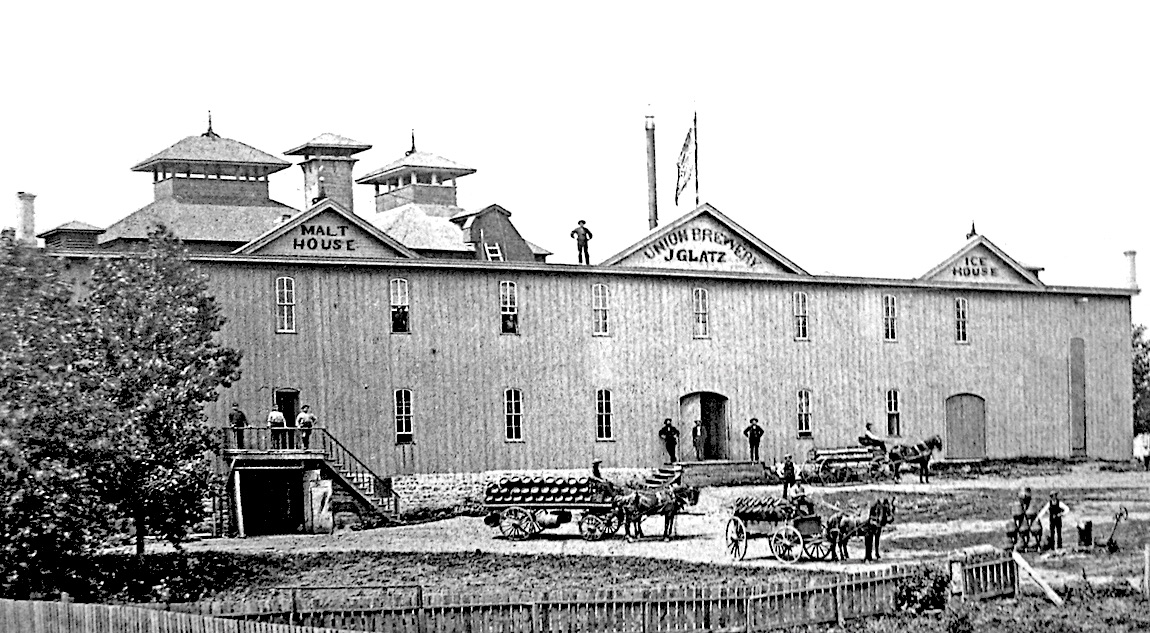
Here’s another exaggerated illustration of an Oshkosh brewery. This 1891 drawing of the Union Brewery inflated the reality of what actually stood down there at the end of Doty Street.


Here's the real thing.


Sunday, October 30, 2022

As it Never Was

Here's an impressive rendering of the Oshkosh Brewing Company. This was produced by the Tuchfarber Company in Cincinnati in the late 1890s.


But there was never anything in Oshkosh that looked like this. The artist took the liberty of combining OBC’s three separate facilities into one big, beautiful brewery. 

In the image below is the key to unlocking this amalgamation. The building highlighted in red was at 16th and Doty. The building in blue was further down the road near 24th and Doty. The one in yellow was way over on the other side of town on Harney Avenue. This sort of overstated representation was common at the turn of the century when it came to breweries.


Sunday, October 23, 2022

Open Season on Ostertag

There was a time when Sebastian Ostertag was plagued by bullets. More on that in a moment. First, let's meet this guy.

Johann Sebastian Ostertag

He was born in Württemberg, Germany in 1839. He was eight when he migrated with his family to a farm in the Town of Nekimi. Ostertag left the farm in 1861 and joined the Oshkosh Rifles. He was off to fight in the Civil War.

Three months later, Ostertag took a bullet to his right thigh at the First Battle of Bull Run. He got hit again at the Second Battle of Bull Run in 1862. This time, Johnny Reb clipped his right hip.

The Union Army in retreat after the disastrous Second Battle of Bull Run.

The mutilated Ostertag was sent home to heal up. Back in Oshkosh, he got well and got married. Then he returned to his unit. Ostertag now belonged to the Iron Brigade.

The Iron Brigade at the Battle of Gettysburg in 1863.

At Gettysburg Ostertag was perforated again. He got shot in the face. The bullet entered his left cheek and drove deep into his head, coming to rest behind his right eye. The battlefield doctors wrote him off for dead. But he was still squirming a week later. They finally sent Ostertag to Satterlee Hospital in West Philadelphia where the bullet was extracted. He survived that ordeal, too. The fateful bullet now resides at the Oshkosh Public Museum.

Ostertag convalescing in his "Union Blues" and his head wrapped in bandages.

He got back on his feet and came home to Oshkosh. After a short stint with the railroad, he opened a lager beer saloon and grocery on the west side of what is now South Main Street.

An 1867 drawing with an arrow pointing the way to the front door of what would become Ostertag's saloon and grocery. The view shows the west side of what is now South Main Street (Kansas Street then) between 7th and 8th Avenues. Ostertag's grocery was on the ground floor. His lager beer saloon was above it.

There isn't a trace of that place left.

The empty 700 block on the west side of South Main Street.

Ostertag involved himself with all sorts of endeavors in Oshkosh. Aside from the saloon and grocery, he ran a hardware store, and a farm, and was a Southside alderman. His pugnacity never left him. In 1885, the five-foot-eight-inch Ostertag was charged with assault and battery after he attacked an Oshkosh blacksmith for reasons unknown.


Ostertag retired in 1904 and built a home for himself and his wife at what is now 515 Pleasant Street. His old home is still there.

515 Pleasant Street.

Ostertag died in that house in 1930. He was 90 years old. Johann Sebastian Ostertag is buried in Riverside Cemetery. His grave lies in the shadow of a monument to the Grand Army of the Republic.


Tuesday, October 18, 2022

The SOBs Move to Fifth Ward

Fifth Ward Brewing is the new home of the Society of Oshkosh Brewers. The club will begin having its monthly meeting at Fifth Ward starting tomorrow night at 7 pm. If you’re a homebrewer, homebrew curious, or just into good beer, stop in and check it out (wine, cider, and mead folks are also welcome). The SOBs move to Fifth Ward has been a long time coming. When the club formed in 1991, Oshkosh was without a brewery and finding good beer here could be a challenge. Part of the original SOB mission was to agitate and educate with the goal of improving the beer scene in Oshkosh. Now we have three breweries, each of them with ties to the SOBs. Fifth Ward was launched in 2017 by SOB alumni Ian Wenger and Zach Clark. It's fitting that this place would become the club’s home base.


Monday, October 17, 2022

This Week in 1972...

Peoples Brewing Company stopped making beer 50 years ago this week, in October of 1972. When that happened, it marked the first time since 1849 that Oshkosh was without a functioning brewery. And for the next 23 years, the only beer made here was homebrew. Commercial brewing did not return to Oshkosh until 1995 when Fox River Brewing Company opened. We’ve had a brewery or breweries ever since.

The abandoned Peoples Brewing Company in the 1500 block of South Main St. in Oshkosh, circa 1973.


Monday, October 3, 2022

Bable On

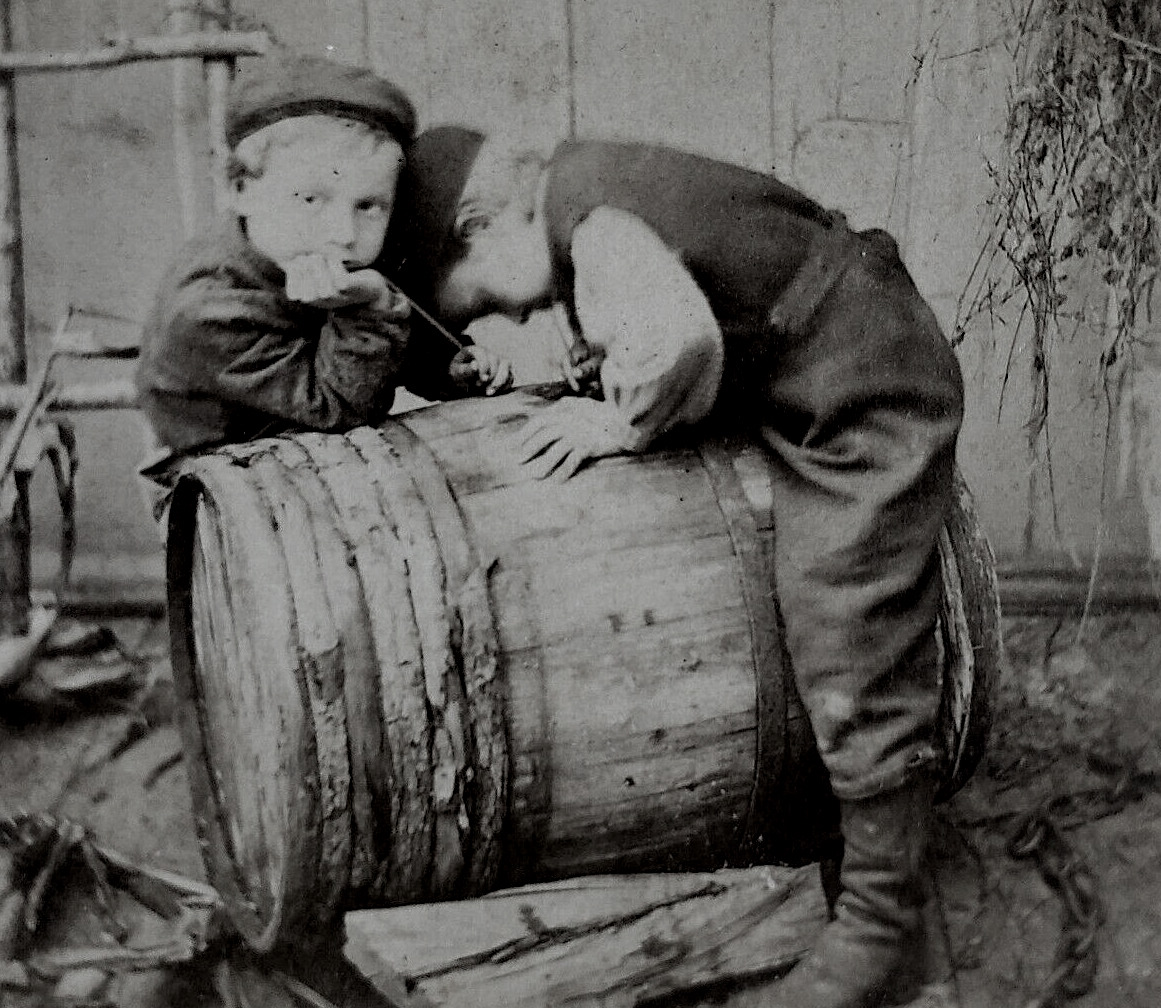
Bad things happen when south side boys are refused service.
This little nugget is from the Oshkosh Daily Northwestern of August 17, 1897….

Charles Bable and Frank Bable were in court this morning charged with having thrown a stone through the window of a south side saloon. Charles pleaded guilty and paid a fine of $2… Charles said that the trouble started over the saloonkeeper refusing to sell him beer because he was not of age.


Thursday, September 29, 2022

A Librarian Learns about the Society of Oshkosh Brewers

I’ve been beer-drinking my way across Europe for the last couple of week and while I was away Michael McArthur at the Oshkosh Public Library posted a couple of great videos about the history of homebrewing in Oshkosh and the Society of Oshkosh Brewers. Enjoy!


Tuesday, September 13, 2022

B'Gosh It's Good Again

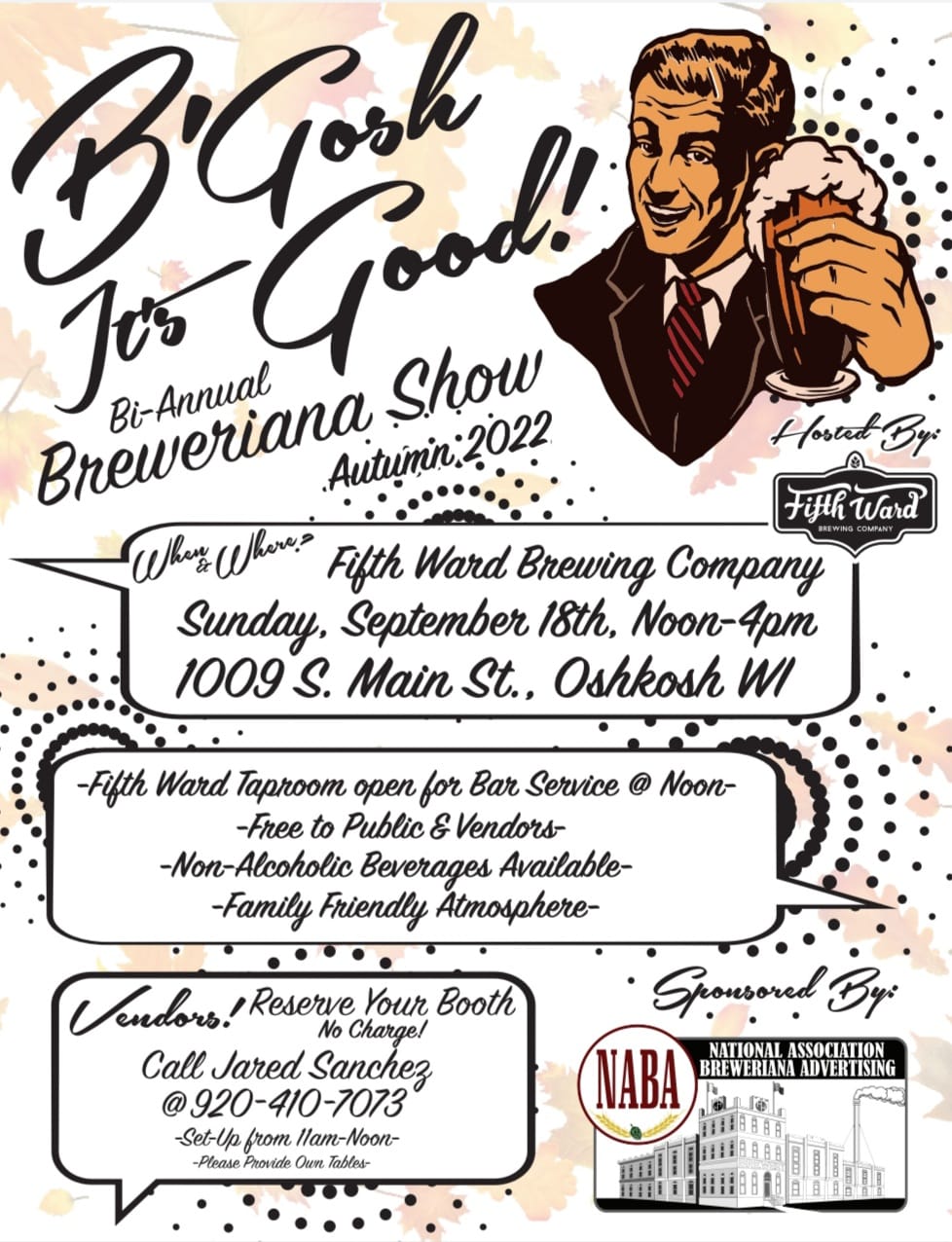
The bi-annual B'Gosh It's Good breweriana show returns this Sunday to Fifth Ward Brewing Company in Oshkosh. More than 30 collectors will be on hand showing off, selling, and trading their vintage brewery memorabilia. This show is free and open to the public. And it’s always a blast with plenty of beer-based eye candy for your perusal. The show runs from noon until 4 pm.

If you’re a collector who would like to have a table at the show, click here for details on how to get involved.


Sunday, September 11, 2022

Oblio’s Lounge and a Taste of 1937

Here’s what was cooking in Oshkosh in 1937…

A menu from Angel’s Coffee Shop, circa 1937. Click the image to enlarge it.

Angel’s Coffee Shop was located in the south half of the building now occupied by Oblio's Lounge at 434-436 N. Main Street. The menu was found hidden behind a wall in that same part of the building earlier this year.


Angel’s was run by a Greek immigrant named Angel Litras. He came to Oshkosh in 1925 after marrying a southside woman named Eva Sweet. He opened his coffee shop in April of 1937.

Oshkosh Daily Northwestern, April 16, 1937.

Litras' restaurant inhabited the space that had previously been occupied by the Schlitz Beer Hall. Here's what that area looks like now...


The north side of the property had been home to a restaurant called the English Kitchen. The restaurant and the beer hall were connected by a doorway. The image below shows the view looking east into the English Kitchen in 1902. The door leading south into the Schlitz Beer Hall is seen on the right.


Here's a more recent view of that same space.


The bar in the photo above was built by Robert Brand and Sons of Oshkosh in1936. It was installed that fall when another Greek immigrant named John Kuchubas launched his tavern there. Kuchubas called his place John Brown's Bar.

John Kuchubas behind his bar.

John Kuchubas and Angel Litras worked in cahoots with one another. The aforementioned door was left open, allowing customers to pass freely between Kuchubas’ tavern and Litras’ restaurant. Here's a portion of an ad from 1939 that spells out what they were up to.

Oshkosh Daily Northwestern, April 15, 1939.

The bar thrived. The coffee shop didn't. Angel Litras closed his restaurant sometime around 1942. The space then sat vacant for a couple of years before it became an auto supply store. On the south side of Oblio's, you may have noticed the garage door leading out onto the patio. The garage door opened onto an alley behind the auto store.


The last, stand-alone business on the south side of the property was Rudy's Shoe Rebuilders. Rudy's opened in 1992.


After Rudy's closed in the summer of 2005, the door between the two spaces was opened again. In fact, it was taken out altogether. The two spaces have been joined ever since. The former home of the Schlitz Beer Hall is back in the beer business; incorporated into Oblio's Lounge. One of the most historically significant public spaces in Oshkosh has come full circle.

The return of Schlitz to the Schlitz Beer Hall. Co-owners of Oblio’s Todd Cummings, on the left, and Mark Schultz, second from the right wearing a hat.

Notes
The story of Oblio’s and the other saloons and taverns that have occupied this building is far deeper than what I’ve posted here. To begin exploring that history, Click Here and then Here.
For a photo tour and a general chronology, Click Here.
For a story from the 1920s when this place was raided for being a speakeasy, Click Here.


Sunday, September 4, 2022

The Nearly Lost Labels of Peoples Brewing

Sneaking into Oshkosh's abandoned breweries became a hobby for some kids in the early 1970s (you can read about that here). Many of them were collectors of beer cans and other brewery memorabilia. The thrill of going into the untended breweries was heightened by the possibility of coming out with something worth saving. Those kids walked away with bottles, cans, beer labels, signs, log books... Anything bearing a trademark was fair game.

The scavenging led to the recovery of countless pieces of Oshkosh breweriana that otherwise would have been lost. The haul included some incredibly obscure items. This for example:

A prototype beer label, 1958.

The Hunt for a New Label
Peoples Brewing Company was aiming to update its image in 1958. The brewery had been using the same label for Peoples Beer since 1952. But the atomic age had given way to the space age. The old label was looking dated.

The Peoples label from 1952 until 1958.

That label was replaced by one that would become an iconic Wisconsin beer label. We’ll see that in a moment. First, let's have a look at a few of the labels that didn't make the cut.

The images below are scans of prototypes that were in the running to become the new label for Peoples Beer. These were rescued by one of those young brewery raiders. They were discovered in the deserted office at Peoples Brewing in 1973. Peoples had closed the previous year.


No correspondence or other information accompanied the artwork. They were tucked into a cardboard folio stamped by Norway Gravure and dated September 9, 1958. The Norway, Michigan printer was then one of the largest suppliers of American beer labels. Norway Gravure made labels for Blatz, Budweiser, Miller, Pabst, and Schlitz, among many others.


One of the rescued prototypes appears to have been in strong contention for final selection.
The label below was fully realized and pasted onto an artboard with an accompanying bottle-neck label. This is about as rare as a beer label gets.


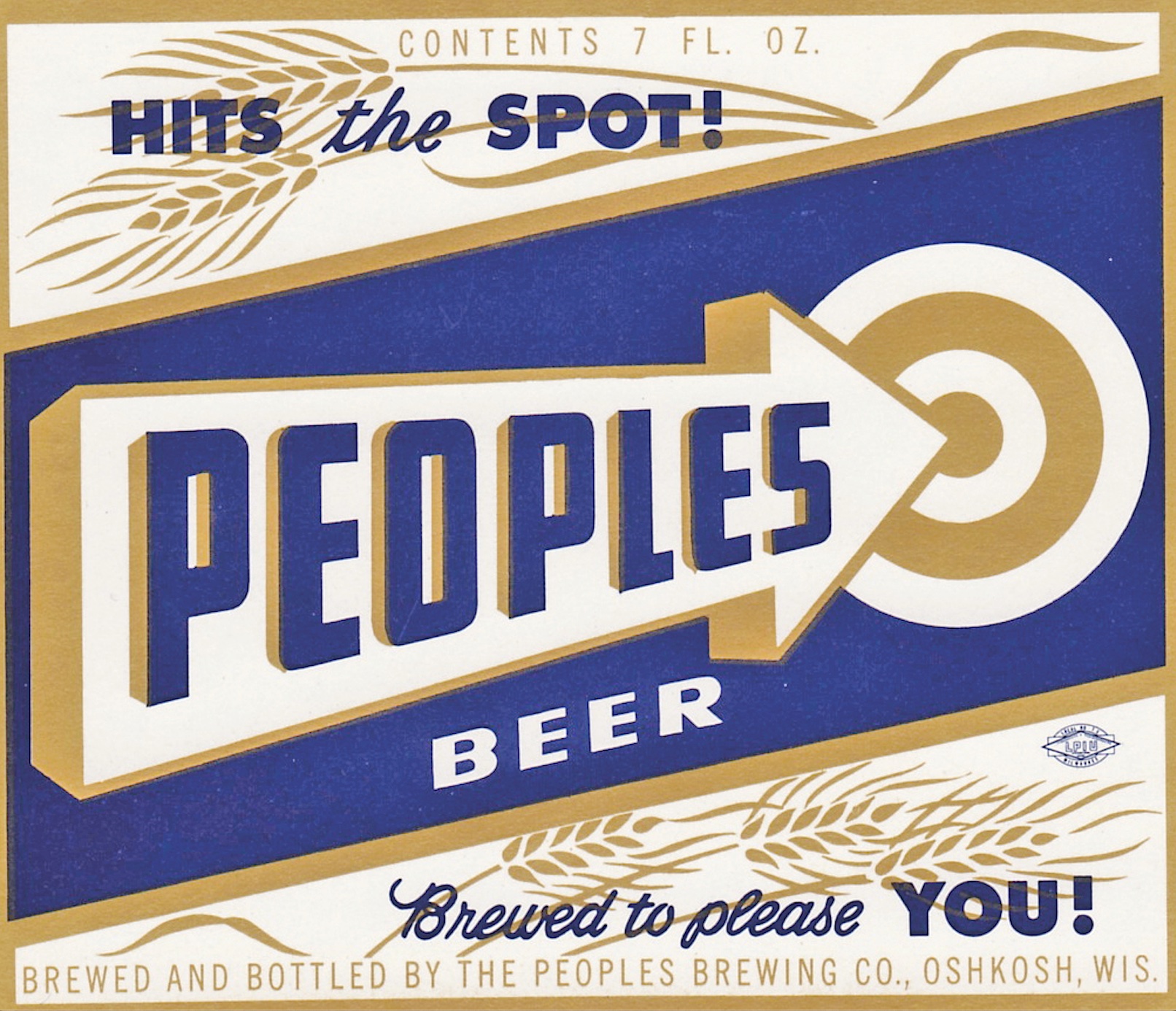
The eventual winner was more dynamic than any of the other labels on the table for consideration. By mid-November of 1958, the new label for Peoples Beer was in circulation. More than 60 years later, it still looks like the right choice.

The 1958 design, here used for a 7-ounce bottle.