Sunday, July 31, 2022

An 1840s Beer Blast

The history of beer drinking in Oshkosh begins in a mist. By the 1840s, beer was flowing like a river into this place. But there’s next to nothing from that period about Oshkoshers getting down to the actual business of drinking beer. There's one notable exception to that silence.


The oldest story I’ve found about beer drinking here takes place in the late 1840s. The author of the tale is William Wallace Wright. He was born in New York in 1819 and came to Oshkosh when he was 18 years old.
William Wright

Wright told his 1840s beer story from the vantage point of 1899 when he was 80 years old. Here it is…

In the spring of 1845, P.V. Wright erected a business house on what is 91 Main street, where he carried a stock of general merchandise and among the stock was some Milwaukee beer. The writer (William Wright) was at one time left in the store while the proprietor was out. Mr. Chauncey King, an old settler that many will remember, was also in the store and asked for a glass of beer, but found the keg empty. A fresh keg must be tapped. That was a business I did not understand, but thought I could do it all right. The faucet and the hammer were procured and the cork was being driven into the keg, when the beer blew out the stopple and shot the writer squarely in the face and eyes. Mr. King clapped his thumb into the vent and stopped the flow of beer, or he would not have had his glass.

We’re a long way from the gas-charged aluminum kegs and stainless-steel beer faucets used today. What Wright and King were engaged with would have looked similar to this…

There’s not much in the way of context in Wright’s tale, so let’s flesh it out some. First, what about this place on Main Street where they were draining those kegs of Milwaukee beer? The store in question was owned by P.V. Wright, William Wright’s brother.
P.V. (Philip Van Renselaer) Wright

P.V. Wright described his place as a shanty where he offered a mix of random goods. He stocked everything from gunpowder to fish, and greased the wheels of commerce with plenty of Milwaukee beer.

From the Oshkosh True Democrat of February 23, 1849.


The store was located at what is now 217 N. Main Street. It was destroyed in May of 1859 by the great fire that wiped out the south end of what was then called Ferry Street. There was a recent gusher there that didn’t end as happily as the beer blast William Wright set off 170 years ago.

The former site of P.V. Wright’s store at 217 N. Main Street. The current building’s sprinkler system burst in February leading to catastrophic water damage. The future of the property remains in limbo.

So, when was that fateful glass of beer poured for Chauncey King?

William Wright sandwiches his beer story between events that occurred in 1844 and 1848. It appears, though, that Chauncey King - a boat builder with a shop on Main Street - didn't reach Oshkosh until 1849. That year may be the better bet.

The beer story Wright told was just one of many tales he passed on about the early days of Oshkosh. He knew this place as intimately as anyone ever would. Wright was there to see Oshkosh develop from a frontier outpost into a thriving city. His father, George Wright, was the third white settler here. William was on hand at his father's home near Algoma and Main when in 1839 Oshkosh was given its name following an alcohol-fueled debate.

Wright later made a name for himself as a real estate developer. He came to own and then subdivide most of the land south of Irving Avenue between Jackson and Main streets. His standing was such that Wright was referred to as the "Father of Oshkosh" in some early accounts of the city.

William Wright died in 1903. It's fitting that he would be the source of our first beer story.

William Wright as depicted in the Oshkosh Daily Northwestern of July 7, 1899.

William Wright's beer story, along with many of his other tales of early Oshkosh, can be found in History of Winnebago County published in 1908.

Sunday, July 24, 2022

Leroy Youngwirth on the Southside

Leroy's Bar at the corner of 7th and Knapp is a Southside institution. The first saloon there opened in the summer of 1914. Leroy's gets its name from Leroy Youngwirth, the proprietor of the bar from 1949 until 1991.

Leroy's Bar at 701 Knapp Street.

I recently met a longtime Oshkosher who said he spent a lot of time at Leroy's in the 1960s. He said he got to know Leroy Youngwirth pretty well. I asked the guy if he had any Leroy stories. Here’s what he told me...

Leroy, him and his buddies. There were four or five of them who were on the road every afternoon going around to the bars and they'd just drink. And all of them had stuff wrong with them like diabetes and everything. And they weren't drinking beer. They would just drink alcohol, almost straight alcohol. Yeah, Leroy was a different guy…

When he was tending bar, and there were like three guys drinking and two of them were drinking fast and one of them was drinking slow and had like half a bottle of beer left, Leroy would put another bottle in front of the slow guy. The guy would say, 'I don't need one yet.' Leroy would tell him, 'You catch up or you go out and sit on the stoop.' He was so impatient. He'd do that to everybody.

There was a lot of gambling there and cash raffles and whatnot. Sunday mornings they'd have these big raffles. Leroy got caught all the time. He'd get fined and then the next Sunday he'd have another raffle all over again. Leroy, he was just... I don't know. They could have made a movie about Leroy.

Leroy Youngwirth behind his bar in 1991.

Leroy Youngwirth was born in Oshkosh in 1919. Prohibition began the following year. Leroy’s father, Butch Youngwirth, was a bootlegger who ran several wildcat breweries in and around Oshkosh during the so-called dry years (Butch's story can be found here). Leroy Youngwirth died on March 27, 2000. He was 80 years old.

Leroy's grave marker in Lake View Memorial Park.

Sunday, July 17, 2022

The Beers of 1946

1946 was a watershed year for Oshkosh. The previous 26 years had been riddled with hardships: Prohibition, the Great Depression, World War II. But now the war was over and the men who had been away were returning home. Tavern life in the city came roaring back.

Nigl's “Chieftin” Tavern at 9th and Ohio in the 1940s.

It wasn’t all back to normal. The federal government had yet to drop the price controls it began enacting in 1942 to curb inflation triggered by the war. Beer sold in taverns was one of the commodities subject to price-fixing.

Oshkosh tavern owners took their marching orders from the federal Office of Price Administration (OPA). The OPA dictated the prices tavern keepers were allowed to charge for bottled beer.


Not surprisingly, Oshkosh tavern owners hated being told what to do by the OPA. The bar keepers resisted (a story for another day) and for good reason. Most of the beer sold in Oshkosh was made at the city's three breweries: The Oshkosh Brewing Company, Peoples Brewing, and Rahr Brewing. The OPA's pricing structure placed the beer from these breweries at the extreme low end. And that meant less revenue for Oshkosh taverns.

Without going too deep into the morass of the OPA, it's clear that the price lists dreamed up by these bureaucrats served the interests of large "shipping" breweries with wide distribution networks. Meanwhile, smaller breweries - like those in Oshkosh - had their beer consigned to low-price ghettos.

For us, there's a silver lining in this mess. The OPA's pricing sheets present a nearly comprehensive list of the beers available in Oshkosh 75 years ago.

The following is from a price list issued by the Green Bay office of the OPA on March 1, 1946. The prices are for a 12-ounce bottled beer sold in taverns for off-premise consumption. In parenthesis are prices adjusted for inflation; an approximation of what it would cost today. OK, let's get to the beer...

Tier 1
15¢ ($1.99) per bottle / 90¢ ($11.94) for a six pack.

Ballantine Ale
Newark, NJ


Just one beer in this bracket and one of just three ales in a list dominated by lager beer. Six-packs weren’t yet common in 1946, but P. Ballantine and Sons was instrumental in changing that. The Newark brewery was the third largest in America at this point and Ballantine Ale was then the most expensive bottled beer sold in Oshkosh.


Tier 2
14¢ ($1.85) per bottle / 85¢ ($11.10) for a six pack.

Budweiser Beer
St. Louis

Miller High Life
Milwaukee

Schlitz Beer
Milwaukee


Here you have those large shipping breweries being allowed to charge top-dollar for their product. Anheuser-Busch (Budweiser) and Schlitz produced over three million barrels of beer in 1946. Miller was closing in on a million barrels. Of course, all three of these brands are now much cheaper. Can you imagine paying $11.10 for a six-pack of High Life?


Tier 3
13.5¢ ($1.79) per bottle / 81¢ ($10.74) for a six pack.
The fraction of a cent was applied when multiple bottles were included in the sale.

Heileman’s Old Style Lager
La Crosse

Pabst Blue Ribbon Beer
Milwaukee

Pabst Blue Ribbon Ale
Milwaukee


Pabst was the largest brewery in America in 1946. In 1947, Pabst lost that title to Schlitz, never to regain it. Today, Pabst is basically a shell company and owns the Heileman’s Old Style brand. Old style has been kicking around Oshkosh since the early 1900s. The brand took off here after Prohibition when Lee Beverage began distributing it. And to this day Lee Beverage distributes Old Style. It wasn't until the 1980s that Old Style lost its "Premium Beer" status around here. You can now get a 30-pack of Old Style in Oshkosh for less than $20.


Tier 4
13¢ ($1.72) per bottle / 78¢ ($10.32) for a six pack.

Hamm’s Beer
St. Paul

Kingsbury Ale
Manitowoc and Sheboygan

Rhinelander Export Beer
Rhinelander


Modern Oshkosh beer drinkers might find it hard to believe that Hamm's, Kingsbury, and Rhinelander were once considered premium beers. Today, Hamm's is often the cheapest beer available in Oshkosh with 30 packs going for just a few bucks more than the (adjusted) cost of a 1946 six-pack. I'm sure Kingsbury and Rhinelander were better beers back in the 1940s. By the time I got to them in the 1980s both were dreadful. That didn't keep me from drinking them.


Tier 5
12.5¢ ($1.66) per bottle / 75¢ ($9.96) for a six pack.

Blatz Pilsner
Milwaukee

Braumeister Pilsner Beer
Milwaukee

Gettelman's Rathskeller
Milwaukee

Kingsbury Pale Beer
Manitowoc and Sheboygan

Silver Fox de Luxe Beer
Chicago

Schoen’s Lager Beer
Wausau


Now we're into the thick of it. Aside from Blatz, which appears to be on life support, all of these brands have died. If I could revive one of them it would be Gettelman. After Prohibition, Gettelman beer grew to be quite popular in Oshkosh. The brand began fading in the 1960s after Miller aquired it. There remain a few lingering traces of Gettelman around town, though. The last time I checked, the sign below was still tacked to the front door at Andy's Pub & Grub on 9th Ave.


Tier 6
12¢ ($1.59) per bottle / 72¢ ($9.54) for a six pack.

Fauerbach Beer
Madison

North Star Lager Beer
Wausau


Here we go into the bottom half of the list where small, Wisconsin breweries were fighting an uphill battle against industry consolidation and stagnating prices. Then along comes the OPA to enforce that stagnation. North Star Lager was made at Mathie-Ruder Brewing, which closed in 1955. The Fauerbach brewery went out in 1966.


Tier 7
11.5¢ (1.53) per bottle / 69¢ ($9.18) for a six pack.

Meister Brau Beer
Chicago


Just one beer in this tier, the lowly Meister Brau. In 1946, MB was being made by Peter Hand Brewing of Chicago. It was already cutting a path to the budget bin. Miller bought the brand in 1972 and made it into a true cellar dweller. By 1973, Meister Brau was selling for $2.50 a case in Oshkosh. Only the loathsome Buckhorn and Bohemian Club were priced lower.


Tier 8
11¢ (1.46) per bottle / 66¢ ($8.76) for a six pack.

Berlin Export Beer
Berlin, Wis.

Knapstein Beer
New London, Wis.


Lager beer from a couple of small-town, Wisconsin breweries. These weren't cheeky, little boutique breweries squeezing out a few hundred barrels of gimmick-laden "craft" beer per annum. These were production breweries making thousands of barrels of down-home lager each year. Throughout the 1940s you could find breweries like these servicing communities across Wisconsin. Now those towns are flooded with Busch Light. How sad.


Tier 9
10.5¢ ($1.39) per bottle / 63¢ ($8.34) for a six pack.

Fox de Luxe Beer
Chicago

Haas Extra Pale Pilsner
Houghton, Michigan

Hochgreve’s Beer
Green Bay

Jung Pilsner Beer
Random Lake


The stinker in this group is Fox de Luxe. This iteration of de Puxe came out of the Peter Hand Brewery in Chicago. It was an early example of a large brewery dumping cheap beer into smaller markets. Schlitz would later perfect this strategy with Old Milwaukee. The beer that looks the most interesting to me in this set is the Jung beer brewed in Random Lake. The brewery described it as an amber, fully-aged "Old Country Lager." Most breweries at this time were boasting about how pale their beer was. Not Jung! None of that watery, feeble bullshit for them.

Photo courtesy of Tom Traxler.

Tier 10
10¢ ($1.32) per bottle / 60¢ ($7.92) for a six pack.

Adler Brau Beer
Appleton

Chief Oshkosh Beer
Oshkosh

Oconto Pilsener Beer
Oconto

Peoples Beer
Oshkosh

Rahr’s Old Imperial Beer
Green Bay

Red Ribbon Beer
Wausau


Here come the Oshkosh beers bringing up the rear. You may have noticed that Rahr Brewing of Oshkosh is missing. That may have something to do with Rahr's limited distribution during this time. This list applied to nearly all of Northeast Wisconsin. Rahr’s beer was, for the most part, confined to Oshkosh. Perhaps Rahr didn't rise to the level of OPA scrutiny. The 10¢ limit set on bottles of Chief Oshkosh and Peoples was pathetic. The price had been at that level for nearly a decade. Then comes the federal government mandating that price limit while the cost of making that beer had risen substantially. It's a wonder these breweries survived.

Tier 11
9.5¢ ($1.26) per bottle / 57¢ ($7.56) for a six pack.

Mellow Brew Beer
Kaukauna

Point Special Beer
Stevens Point


The bottom of the barrel, so to speak. Point Special is the perfect example of just how thick headed these pricing schemes tended to be. Point was almost certainly a superior beer to Schlitz even as far back as 1946. Yet the value of Point was capped at 47 percent below that of Schlitz. What a sick making application of policy. Point is the only small, Wisconsin brewery on this list that’s still with us. The Electric City Brewing Company of Kaukauna, maker of Mellow Brew Beer, closed in 1947. That same year, the highly controversial OPA was abolished.

The rest of the small breweries in this list were driven out by the 1970s. The large breweries then turned to cannibalizing one another. By the 1980s, the American brewing industry had become an oligopoly with the six largest breweries producing 92 percent of the beer made in America. That market domination is no better today despite the emergence of craft beer and the more recent proliferation of extremely small breweries.

Just about everything else here has been turned on its head. The premium beers of 1946 have been reduced to budget-beer status. While the beer made by Oshkosh's new and smaller breweries is sold at a premium price. But the taverns in Oshkosh no longer favor the locally brewed beer. The city's three breweries (Bare Bones, Fifth Ward, and Fox River) probably make less than 5% of the beer sold in Oshkosh taverns. The connection has been lost. It’s a whole other world.

Bare Bones Brewery, 2017.

The barroom at the Oshkosh Elk’s Club in the 1940s.


Friday, July 1, 2022

A Public Service Announcement from Rahr Brewing of Oshkosh

AVOID THE TYPHOID!
This holiday weekend, stay on the safe side and drink Rahr’s Special Brew…

From the summer of 1916.

Sunday, June 26, 2022

Grant Peterson and the End of Peoples Brewing

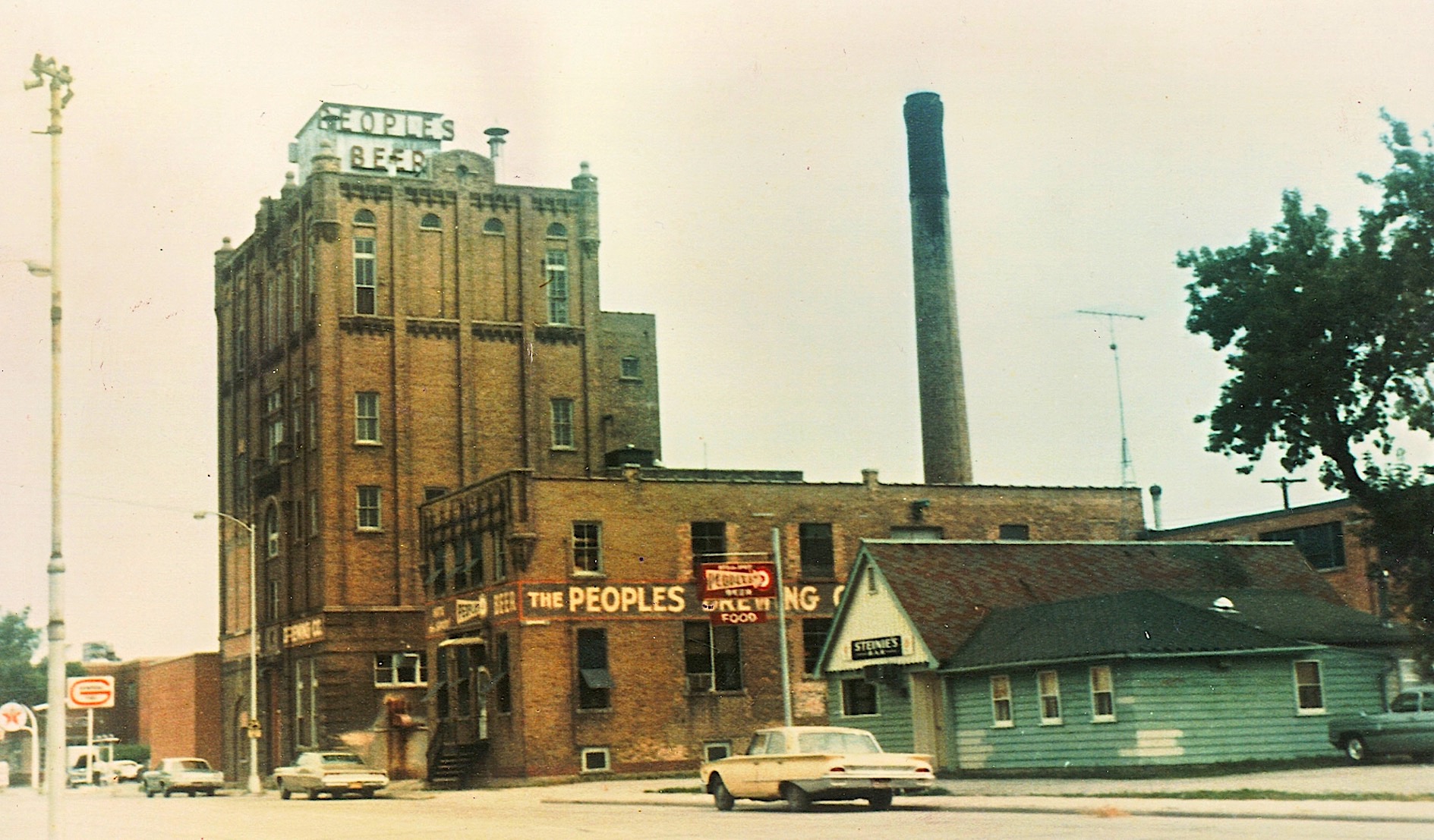
Grant Peterson and I had been talking for more than an hour about Peoples Brewing Company before we got to the photographs I had brought along. The first picture was almost 60 years old. It showed the old brewery when it towered over the 1500 block of South Main street. Peterson examined the photo for a moment. “That's beautiful," he said. It went without saying that he wasn't merely commenting on the architecture.


Grant Peterson invested three years of his life in that brewery. His memories of those days, some 50 years gone, remain strikingly fresh. Peterson was 25 years old when he began working at Peoples. He was there when the brewery closed. He was there tying up the loose ends after everyone else had left.

Grant Peterson

"I started in January of 1970," Peterson says. "I was working at the Universal Foundry and my shift was from nine at night until five in the morning. It was awful. All we did was shovel sand. So I went around looking. I put my name in all over. Then one day I got a call from the brewery."

Peterson was interviewed by Harold "Ziggy" Ziegenhagen, the 53-year-old president of Peoples who had been with the brewery since the early 1940s. Ziegenhagen hired Peterson as a delivery driver. "I was just lucky I guess. I don't know why they picked me."

No more night shifts. Now his work day began at 7 a.m. when Peterson would back his delivery truck up to a dock on the north side of the brewery to load it with kegs of beer. "There was a great old guy that worked there, Johnny Fuller. Everybody loved Johnny. He'd roll those barrels out on a rubber mat and you'd load them in. Then you'd go around to the other dock on the other side of the brewery and load the cases of bottled beer."


Peterson would hit the road with a truck full of Peoples Beer. His winding routes included taverns, beer depots, and grocery stores within 50 miles or so of Oshkosh. "Some of the routes you wouldn't believe," Peterson says. "You had to memorize these county roads. There were taverns way out where you didn't know there was anything there."

Much of his time was spent in Oshkosh. Some of the taverns Peterson serviced had been in business when the brewery opened in 1913. They had been selling Peoples Beer ever since. "All the Oshkosh taverns took Peoples. Most places would take six to eight half-barrels and within a few days they'd sell them."

Maneuvering 175-pound kegs full of beer into a basement cooler at an older tavern was never easy. "We had steel kegs, everybody else had those lighter aluminum kegs by then. Trying to get them into some of those places was terrible. I'd go to Utecht's (413 Ohio) on Mondays, and there and at Charlie's Glass Bar (now Ratch & Debs Pizza at 720 Merritt), they had basement ceilings that were like four and a half feet high so you had to carry those damned kegs around all bent over."

Beer depots were easier. "I'll tell you the best two beer depots were Ray's over on New York, that was incredible, and Beverage Mart on Main Street. They both sold a lot of Peoples. But then Jordy's (W. 9th Avenue) was a good seller also. Then I'd get to the Sacred Heart Church and they'd want 80 cases of beer because they had that dartball league in the basement. That church was my biggest seller." Peterson shakes his head and laughs about it.


He was working at the very end of a 120-year period when Oshkosh-brewed beer was predominant wherever beer was sold in the city. Part of that culture was the tradition of the delivery driver buying a round for the bar when he brought in a fresh batch of beer. "You got so much money a week to buy drinks, but I didn't do it all that often. If there were only two or three guys in there, then you did it. But if the bar was packed you'd end up spending your own money. And it was always like you had to drink with them. I've always been a beer drinker and I was a Peoples drinker, but I didn't like drinking when I was on the job."

The chance to relax came when Peterson returned to the brewery. "Behind the office, there was a big room and they had this cooler and you'd open the door and there'd be about 50 cases of cold Peoples Beer in there. You could sit there all night and drink if you wanted to. Another thing, when they canned beer they'd weigh the cases at the end and if it was down more than three or four ounces they'd put that aside and we could buy those. You'd get eight 6-packs of beer for three bucks. Even if it was down an ounce, you'd never notice that."


Peterson says there wasn't all that much beer drinking inside the brewery. The novelty of having beer on the job had long since worn off for workers who had been with Peoples for decades. "A lot of them were old guys that were working there since the 40s," he says. "Most of them were married and at the end of the day they'd just go home."

Those brewery veterans had been on hand when Peoples was at its peak in the 1950s and early 1960s. The high point was followed by a period of aggressive consolidation in the brewing industry driven by large, nationally distributing breweries such as Pabst and Schlitz. Smaller breweries, like those in Oshkosh, were being driven out. Peoples Brewing was caught in the receding tide.

"One of the old-timers told me that in 1960 they went to Berlin (in Green Lake County) twice a week with two guys on the truck each time because every single tavern there had Peoples on tap. It was a big seller there casewise and everything. But by the time I got there, I had Berlin, I went once every two weeks and I would sell like 20 or 35 cases of beer. There was not one tap account left. It was all bottled beer and hardly any to the taverns. They had like three beer depots and that's where we sold all the Peoples. But not much, not like years ago when every time they went they sold 100 cases."

The slump worsened after the brewery was sold in April of 1970 to a group of black entrepreneurs from Milwaukee led by Theodore Mack. The announcement of the sale was followed by rumors that Ted Mack and company intended to fire all of the white workers at Peoples. There was, in fact, no such plan. But the misinformation spread quickly and led to numerous tavern owners in and around Oshkosh refusing to sell Peoples Beer. Mack moved to Oshkosh and quickly put the rumors to rest. Peterson says that sales at his accounts returned to normal, with one notable exception.

"I'll tell you one though, one was the holy land, Mt. Calvary (in Fond du Lac County). When Mack bought the brewery those people down there never sold another case of Peoples. It was awful. And they were supposed to be religious."

The turmoil surrounding the brewery seemed to have little impact on those working within it. "I thought Ted Mack was a great guy. I always got along with him perfectly. Everybody did, I think. When they were bottling he'd sometimes walk around singing old work songs or spirituals or something. He had a great voice. The only people I've ever heard talk shit about him were people who didn't really know him."

Theodore Mack

But the arrival of Mack hastened the end of the brewery. The purchase had been facilitated by loans from the Small Business Administration. To service the debt, Peoples Brewing needed to sell more beer than it ever had. Mack's plan to achieve that was to greatly expand distribution, focusing on urban areas. The strategy failed. By the close of 1971, Peoples was in deep financial trouble.

"At the very end they started having problems with the machinery, especially the bottle capper. If you got one little piece of air in the bottle and it sat for a week the beer would go bad. Quite a few places would call up and complain. I don't know if that was ever fixed, because they didn't have any money left. That was the problem. They didn't have any money to fix anything."

The curtain fell in November of 1972. "We knew something was going on. We didn't talk about it much. Probably everybody above us knew something before we did. One day they came around and said it's closing. I don't remember too much about that. I remember after that a bunch of tavern owners coming around trying to get as much Peoples Beer as they could before there wasn't any left. It was a good, reasonable beer. They didn't know what else to go to."

His job didn't end there. Peterson continued to drive his old routes, retrieving as much of the brewery's inventory as possible. "The brewery was already closed. Nobody was there. I still wore a Peoples Beer uniform and drove a Peoples truck. I went all over picking up empties and half-barrels and everything. They wanted it all back, they were going to have a federal auction. At the end of the day, I'd go back to the brewery to unload everything. See, I had a whole truckload of empties."

The checks were still being signed by Ted Mack. "He had like an office, it was in the basement of his house. They had papers spread all over the basement. I guess they were getting everything ready to give to the feds. I don't know how that worked. I always cashed the checks. They never bounced."

His work for Peoples extended into 1973. When it was over, Peterson took a job with a beer distributor in Van Dyne delivering Hamm’s and Miller. "But then they were bought out by a big outfit. I liked working with smaller groups. So I quit and luckily I got on with the city. How I got on with the city is that I put Pearl Mack's name as a reference."

Pearl Mack, the wife of Ted Mack, had also worked at Peoples. "Pearl was one of the nicest people you'll ever meet in your life. She was working on the first floor at City Hall then and when the guy saw that I had her as a reference he went right down and talked to her and came back up and hired me on the spot." Peterson remained with the city for more than 30 years, retiring from the Public Works Department.

His interest in the brewery he worked for has never waned. Peterson still collects memorabilia related to Peoples Brewing. "I've always liked antique stores, but I didn't begin collecting things until later, after Peoples closed."


Grant Peterson and I met on a Tuesday afternoon in June to talk about all of these things. It was near dark by the time we got to the last of the photographs. The picture was from 1974. It was taken from the south end of the brewery property looking north toward the dock where he used to fill his truck with cases of bottled beer before heading out each morning on his route. “Here it is at the end,” I said. Peterson looked at the photo without saying anything.

I said, "This was taken just before the brewery was demolished." He said he couldn't remember anything about that. After a moment, he points to a detail in the photo where an old sign for Peoples Beer had been discarded alongside a loading dock. "Look at that," he says with the exuberance returning to his voice. "Boy, I wish I had that. Those were gorgeous."


Sunday, June 12, 2022

Export

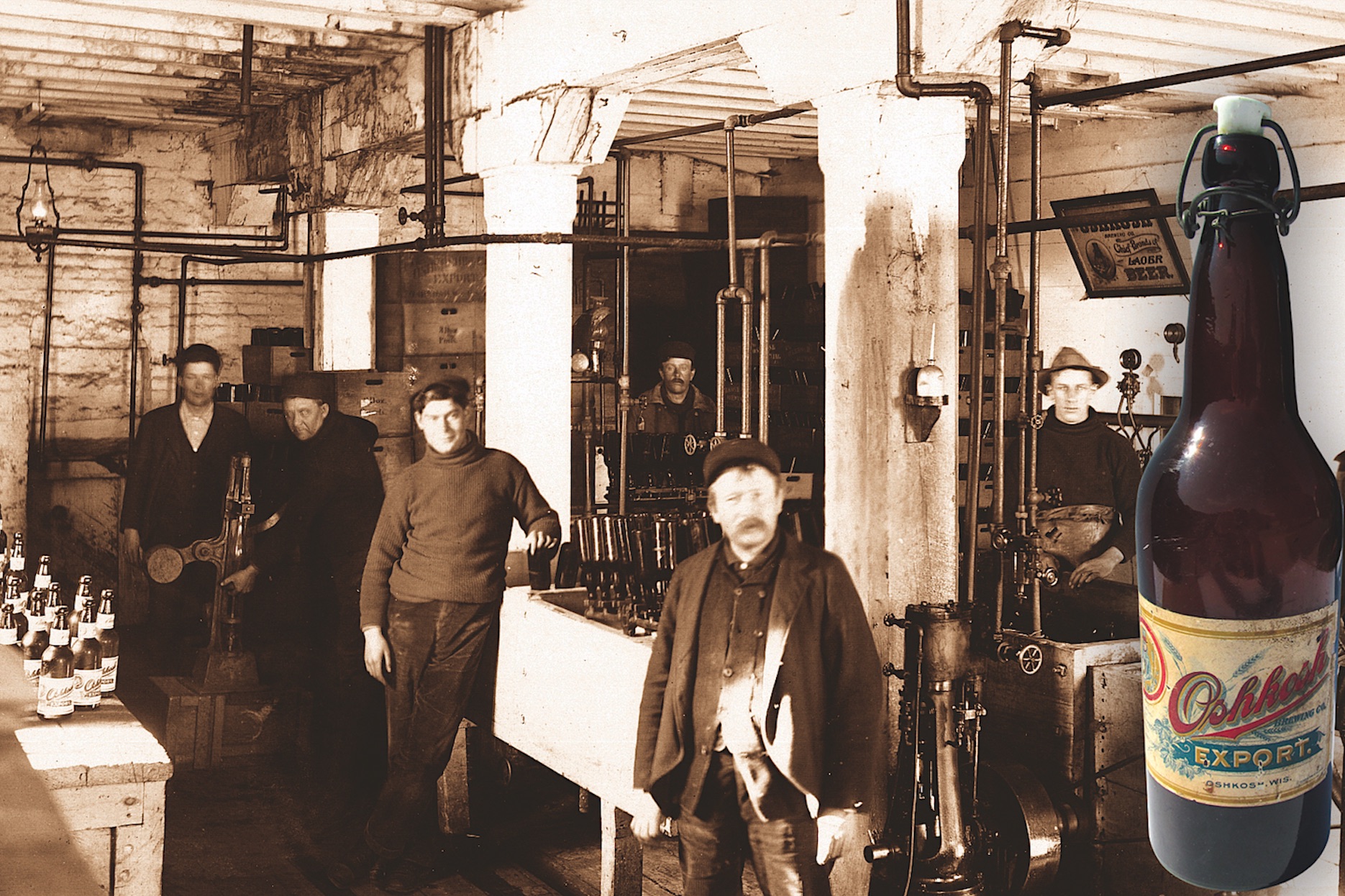
Bottling beer at the Oshkosh Brewing Company, circa 1895. At this point, most of the work of getting beer into bottles was still being done by hand. Here they’re bottling Oshkosh Export, a pale lager that was popular in Oshkosh well into the 1900s.

Sunday, June 5, 2022

Butt's Speakeasy

 One hundred years ago, this place was a speakeasy. 

 The B & E Lounge at 1022 Oregon Street, Oshkosh.

It was raided in 1922, two years after the start of Prohibition. The proprietor, 40-year old August Butt, was arrested and fined for selling moonshine.

August Butt and his wife Bertha.

A couple years later, Butt opened another speakeasy. This one was hidden in the back of a building at the SW corner of 9th and South Main.

The southwest corner of 9th and South Main. Butt's speakeasy here was locared in the back of the building.

Butt got busted for selling booze there in 1925. That arrest earned him a three-month stay in the House of Corrections in Milwaukee. When he got out of jail, Butt returned to Oshkosh and his wife Bertha. And that was the end of his career in the illicit liquor business. He went back to his old woodworking job. August Charles Wilhelm Butt died in Oshkosh in 1957. He was 75 years old.

Sunday, May 29, 2022

Denton Freeman’s Bitter Harvest

Denton Freeman left Michigan in search of another way of living. He found it in Winnebago County. His life here was like nothing he could have ever expected.
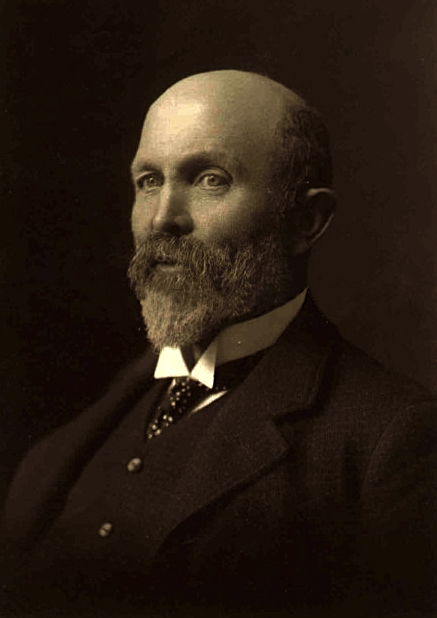
Denton Garrison Freeman

He was born in 1839 on a small farm in Aurelius Township in south-central Michigan. The Freeman family had moved there three years earlier from upstate New York. It was a hardscrabble existence. Freeman's father could neither read nor write. His seven children grew up working the land they carved out of the forest. Denton Freeman got out of there as soon as he could.

Clemansville
Freeman was 17 when he left Michigan heading west. His destination was Clemansville, a small farming community that spanned the border separating the townships of Oshkosh and Vinland in northern Winnebago County.
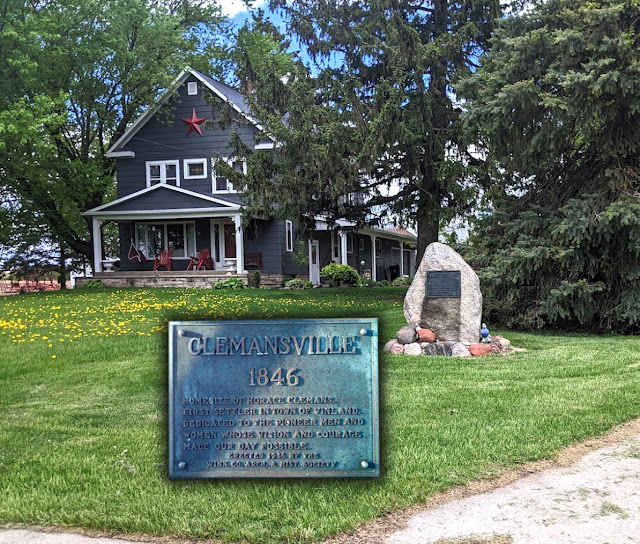
A marker dedicated in 1946 to the memory of Clemansville still stands near the intersection of County Road T and Brooks Road.

Freeman arrived in Clemansville in 1857. He made his home on a farm owned by his older sister Hannah and her husband, a recent New York transplant named Spencer Kellogg. Early on, Freeman’s life in Clemansville was much the same as it had been in Michigan. He worked as a laborer on Kellogg’s farm. And he again found himself surrounded by New York settlers who had come to the Northwest in search of open territory.
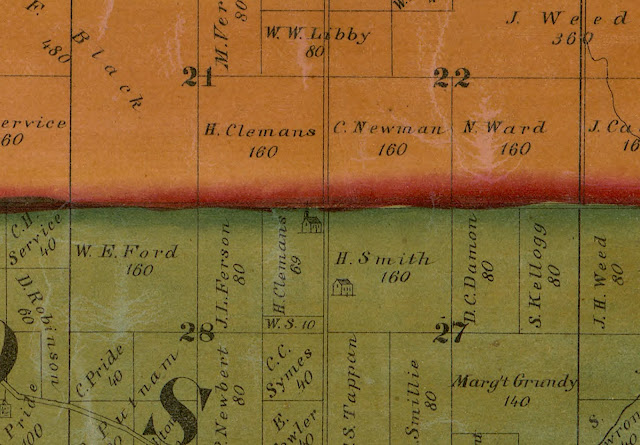
An 1862 map with Spencer Kellogg's Clemansville farm in Section 27 in the Town of Oshkosh. It was located on the south side of Brooks Road about a mile west of County Road T.

Freeman remained intent on changing the course that had been set for him. He enrolled at Lawrence University in Appleton and began taking classes at the college’s preparatory school. Between his studies and his farm work, Freeman found time to find a wife. He was 22 in 1861 when he married Mary "Delia" West. Her family had a farm on the other side of Brooks Road in the Town of Vinland. The couple's first child came 11 months after the wedding. She was named Evelyn.

In 1862, Spencer and Hannah Kellogg moved to Brown County, leaving the farm in Freeman's hands. The land wasn’t his, but now he at least had a say over what would be done with it. Freeman appeared to be on his way. But the restlessness persisted.

On December 12, 1864, Delia gave birth to their second child, a boy named George. Freeman left them a month later. He enlisted in the U.S Army and went to Camp Randall in Madison for training. Freeman was going off to fight in the Civil War as part of Company C of the 46th Wisconsin Volunteer Infantry.
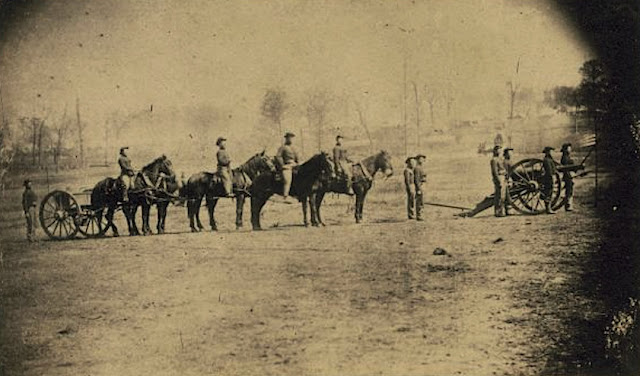
Union Soldiers training at Camp Randall.

On March 5, 1865, Company C left Wisconsin and proceeded south. For the next seven months, Freeman helped guard the Nashville & Decatur Railroad line against attacks by Confederate forces. The rail line was a major supply route for the Union Army running between Nashville and Athens, Alabama.

A fortified railroad bridge across the Cumberland River at Nashville during the Civil War.

On April 9, 1865, Confederate General Robert E. Lee surrendered. The war began winding down. Freeman remained on active duty until September 27. By then he had been made a sergeant. Company C arrived back in Madison on October 2, 1865. Freeman returned to Clemansville and his family. He had a long, cold winter to think about what he would do next.

Hop Fever
When winter ended, Freeman bought the farm from Spencer Kellogg. He paid $500 upfront and borrowed another $2,300 (about $40,000 in today's money), for 80 acres of land in the northeast quarter of Section 27 in the Town of Oshkosh.
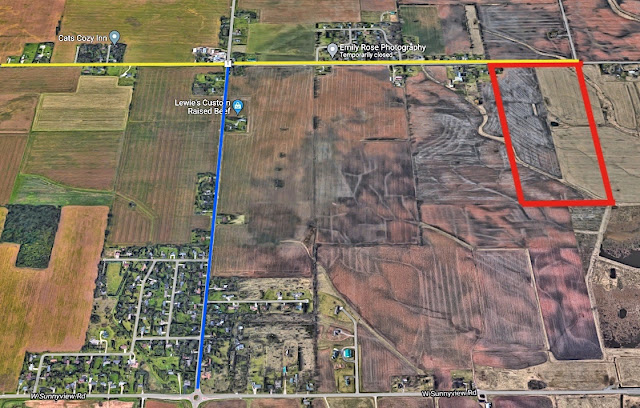
A recent satellite view showing the 80 acres (bounded in red) that Freeman purchased from Kellogg in 1866. The blue line marks County Road T. The yellow line marks Brooks Road.

In the spring of 1866, farms in the Town of Oshkosh and the adjacent Town of Vinland were being transformed. Wheat culture had predominated there since the arrival of the Yankees in the 1840s. But wheat prices had stagnated. Throughout the area, farmers were turning to hops. "Hop Fever" had seized Winnebago County.

For Freeman, the allure of hops proved irresistible. Stories of farmers getting rich on the crop were abundant. Prices were ascendant. A single harvest had the potential to bring in enough revenue to pay off his debt. Freeman went all in.
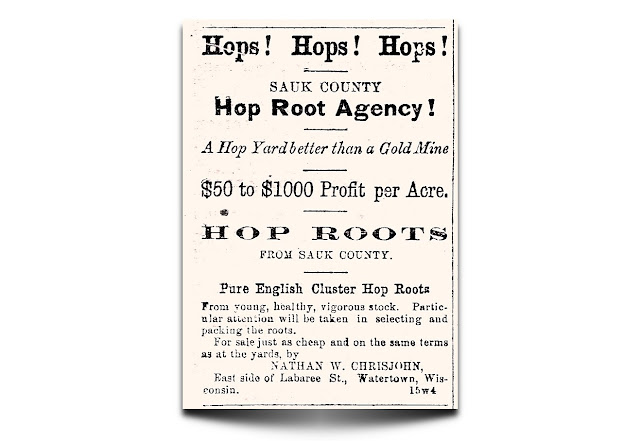
“A Hop Yard better than a Gold Mine.” Farmers throughout Wisconsin were inundated with ads like this one promising riches from hops. Watertown Republican; February 26, 1868.


Establishing a hop yard was laborious and expensive. In addition to preparing the soil for a new crop, Freeman purchased rootstock and hundreds of tall oak poles along with wire and twine to build trellises for the vining plants. He needed equipment for harvesting and a kiln for drying. Freeman appears to have spent much of his remaining savings and much of 1866 getting his hop yard in order.

In the spring of 1867, he began planting. By summer, any doubts Freeman may have had were surely being put to rest. Hop prices continued to soar and at the end of the season had reached a record in Wisconsin of well over 50 cents a pound. But Freeman had nothing to sell. The first year of growing was given over to establishing the roots. If all went well his first harvest would come the following year.
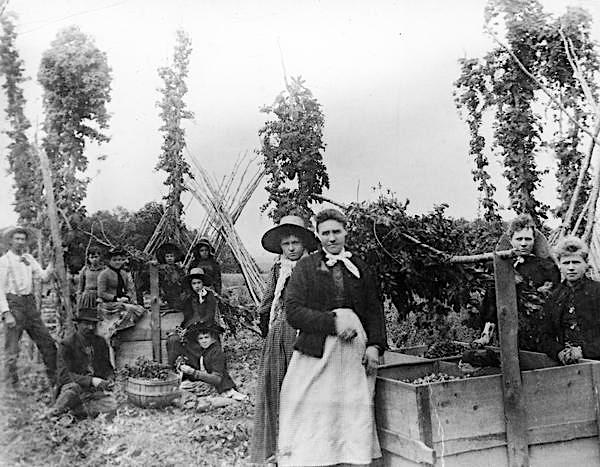
High-climbing hops being harvested in a typical Wisconsin hop yard of the 1800s.

The 1868 season got off to a promising start. By this time, though, Freeman was nearly broke. In early June, he borrowed another $1,600 (about $27,000 in today's money) at 10 percent interest. Freeman had reason to be bullish on his prospects, but he was creating a predicament that could only be rectified by the continuing inflation of hop prices and a banner harvest. Freeman soon faced the stark realization that 1868 was not going to be the year for either.

The first signs of trouble came early that summer. Growers saw their yards infested with a hop-louse that quickly ravaged portions of their crop. More devastating was the drop in prices. The record crop of 1867 led to a surplus that was about to be compounded by a glut of hops from growers new to the market. Prices spiraled down to as little as 10 cents a pound by August.

Freeman knew he was in trouble. On August 18, he sold the eastern half of his property, most of it given over to pasture, to a local farmer named Thomas Rice. The income from the sale wasn't a solution, but it allowed Freeman to stay afloat through the harvest season.
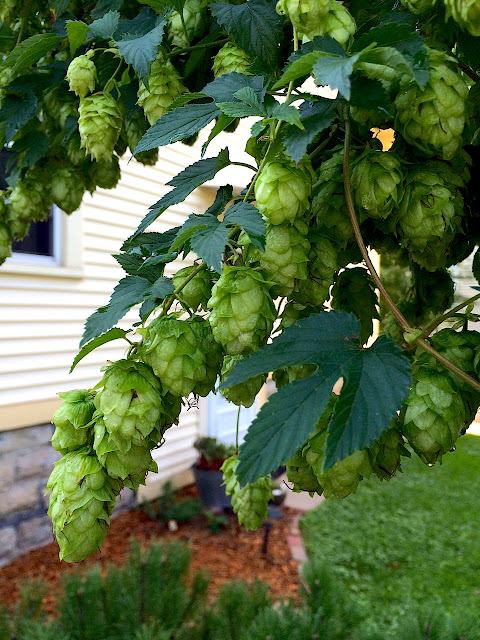
Mature hop cones. Freeman almost certainly grew Cluster Hops, the varietal seen here.

Freeman brought in his first harvest in early September 1868. The yield was acceptable. The quality was not. He took his hops to market and was offered about 4 cents a pound. Freeman went home with $300 in hand. It was nowhere near enough. Denton Freeman was ruined.

He began preparing for the inevitable. Freeman used the meager $300 and bought an acre of empty land from his neighbor, Henry Smith. Then he returned to the trough, borrowing more money so he could build a house there. The loss of his farm was inevitable. He would need someplace for them to go.

Digging Out
Freeman had another long, Wisconsin winter to stew over what a reckless pursuit it had been. He wasn’t the only victim of hop fever. As one report on the calamity of 1868 noted, "It seems strange that such a large number of intelligent men should be led astray financially, when the facts could be definitely known which pointed to disaster." The clearest path out was bankruptcy. Freeman couldn't accept that.

In the spring of 1869, he began making arrangements with his creditors for dealing with the overwhelming debt he had accumulated. He owed more than $2,000 (about $35,000 in today's money) than he and his farm were worth. Freeman put his remaining 40 acres up for sale. Then he hit the road again.

The southeast corner of County Road T and Brooks Road. After the failure of their farm, the Freeman family moved into a home that was located here on a one-acre lot.

Freeman's next idea for making money appeared to be every bit as dicey as his gamble on hops. He was going to be a traveling shoe salesman for Niles Stickney & Company of Oshkosh. It was a peculiar career choice for a person who had never earned a living from anything other than the land. He had, however, just stumbled into what would become his life's work.

It was a rambling sort of existence and it seemed to suit him. While Delia and the two kids were bunked at the Clemansville home, Freeman was on the road traveling by rail from town to town in the upper midwest. Armed with a catalog and samples of Stickney-ware Freeman haunted shoe and clothing stores trying to entice new buyers. He was wildly successful. Soon, Freeman was recruited by a larger shoe and boot wholesaler in Milwaukee. All the while he continued to pay down the accumulated debt on his dormant hop yard.

In the spring of 1871, Freeman sold the remaining 40 acres of his Clemensville land. The buyer, Charles Hoffman, also agreed to assume a portion of Freeman’s debt. Freeman was that much closer to being free of the financial failure that dogged him. He was still paying for it six years later when he hatched a scheme designed to take him out of the hole.

Freeman's Gift Concert
Private lotteries were somewhat common and somewhat legal in the 1870s. There was enough gray area around the law that it allowed room for interpretation. Freeman was going to stake a claim in the gray area.

In November of 1877, he announced that he would hold a "Gift Concert" wherein he would sell lottery tickets for a drawing that promised scores of cash prizes and his home in Clemansville as the grand prize.
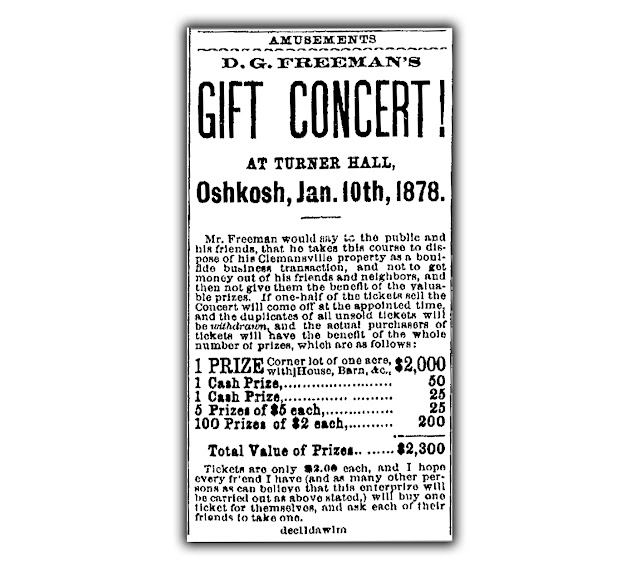
“Mr. Freeman would say to the public and his friends, that he takes this course to dispose of his Clemansville property as a bonafide business transaction, and not to get money out of his friends and neighbors…” Oshkosh Daily Northwestern; December 24, 1877.

These games of chance were notoriously corrupt. Freeman, in his promotional material for the Gift Concert, made it clear that his lottery would be free of fraud. He referenced his own "integrity" and "uprightness" promising ticket buyers that "He is a fair and honorable gentleman as all who know him will testify." Perhaps, but Freeman's habit of referring to himself in the third person was less than reassuring.

The prizes were to be awarded on January 10, 1878. A common ploy among these lotteries was to schedule the drawing for a date in the near future and then quietly reschedule it for a later date. The tactic led people to believe their ticket had not been drawn and was therefore useless, leaving a share of the prizes unclaimed. That's exactly what happened with Freeman's lottery.

The final drawing wasn't held until July 2, 1878. A sparse crowd gathered for the event that evening at the Turner Hall on the corner of Jefferson and Merrit. Most went away disappointed. The drawing for the grand prize, the home in Clemansville, was a fiasco. Freeman said he was unable to determine who held the winning ticket. Two weeks later he announced that it had been sold to A.W Straw, a Milwaukee hat maker.

No individual named Straw was ever awarded the grand prize. Freeman retained ownership of the home in Clemansville until he sold it in February of 1879 to a man named David Kronnenberg. Every aspect of the lottery had a crooked look to it. But it appears to have had the desired effect. Freeman was out of Clemansville and out from under the debt that had pinned him there.

The Captain
Denton and Delia Freeman moved to Oshkosh with their two children who were now in their teens. In Oshkosh, Delia gave birth to a girl they named Lulu Belle. The Freeman family lived in a home that once stood on the north side of High Avenue between Division and Jackson streets.
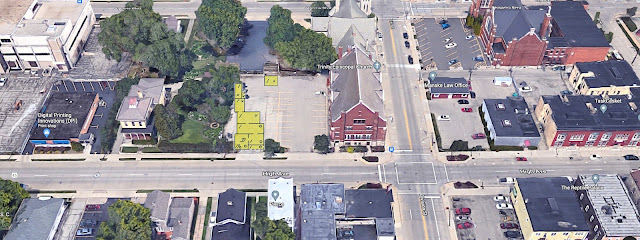
The layout of Freeman’s home from a 1903 map superimposed over a recent view of High Avenue.

Denton Freeman didn't spend a lot of time around the house. He was often on the road selling shoes. He kept a separate apartment for himself in Milwaukee, which had become his base of operations. In December 1887, Freeman was called back home when both Delia and Lulu Belle contracted diphtheria. Both were dead by the end of the month. He buried them and went back to work. 

Freeman remarried in 1903, but still spent most of his time traveling the state selling shoes. He was 72 when he finally ended his commercial travels. After that, Freeman sold shoes from his home.
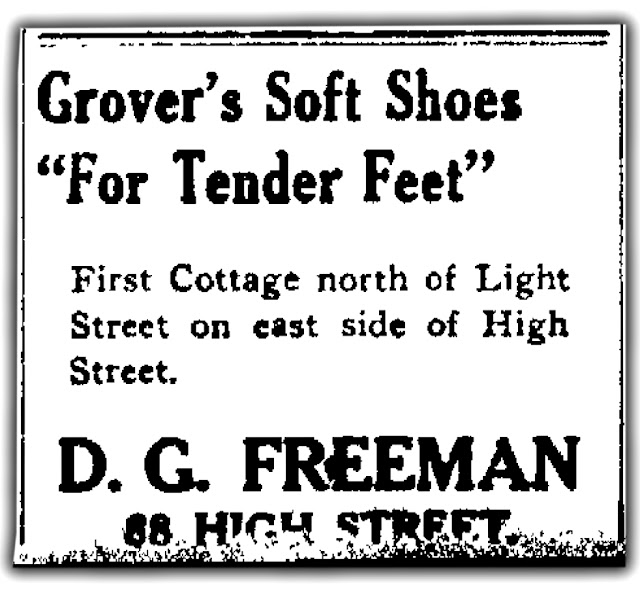
Oshkosh Daily Northwestern; October 13, 1911.

In 1913, Freeman turned 74 and took a new job as the Quartermaster of the Grand Army Veterans Home at King in Waupaca County. He remained there for the next decade. The folks at the Veterans Home took to calling him The Captain.
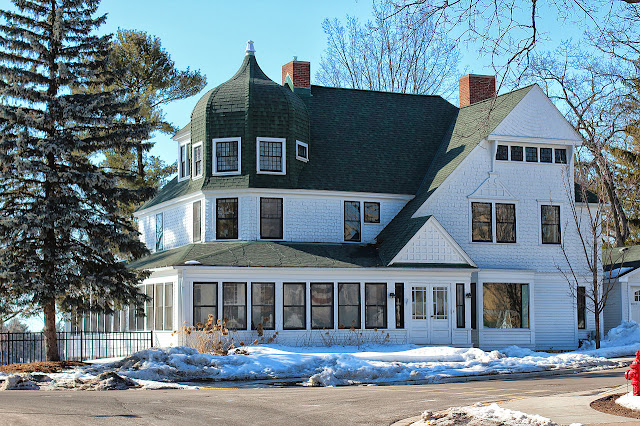
The Commandant's House at the Veterans Home in King. Built in 1890, the house was designed by Oshkosh architect William Waters.

As Freeman aged, his identity seemed to coalesce around his nine-month association with the Union Army during the Civil War. After he came back to Oshkosh in 1923, The Captain – as everyone now called him – often spoke about his impressions of the war to local organizations and at functions memorializing Union soldiers. At 90 years of age, Freeman had become the torchbearer in Oshkosh for what remained here of the Grand Army of the Republic.
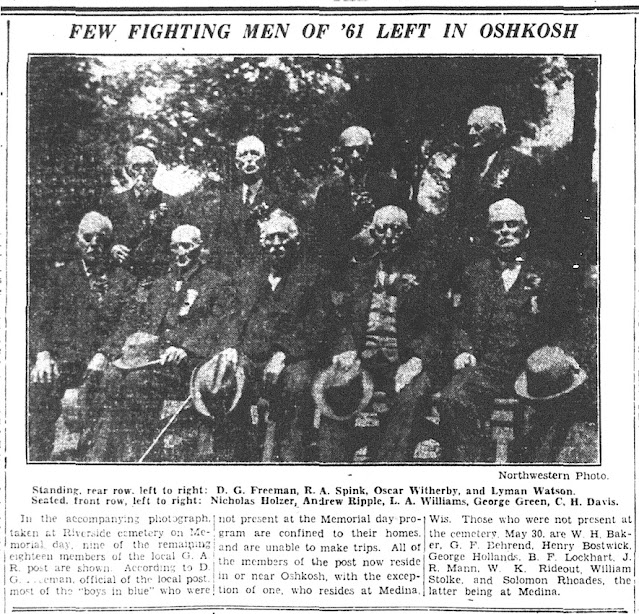
Denton Freeman appears on the left in the back row. Click the image to enlarge it. Oshkosh Daily Northwestern; June 7, 1930.

Denton Garrison Freeman died on June 22, 1933 at his home on High Avenue. He was 93 years old. At the time of his death, Freeman was one of just seven surviving Civil War Veterans living in Oshkosh. His grave is in Riverside Cemetery.