Sunday, April 24, 2022

A Brewery Tour of Oshkosh’s Brooklyn

In the early 1850s, a community began forming on the south side of the Fox River in Oshkosh. Yankee settlers living on the north side of the Fox said the emplacement of the new settlement called to mind the river-sliced arrangement of Manhattan and Brooklyn. The Southsiders liked the sound of that. Brooklyn became their pet name for the neighborhood they were building.


Oshkosh's Brooklyn grew up south of the Fox River and east of Minnesota Street in the old Third Ward. By the 1860s it had developed into a thriving community with its own distinct identity.

Oshkosh’s Brooklyn, 1867.

Many of Brooklyn's early settlers had migrated from German-speaking lands in Central Europe. They were beer-loving people who retained their native tongue and their old-world culture of pleasure. Lager-beer saloons became commonplace along their main thoroughfare, Kansas Street, now called South Main Street.

The Beglinger Brothers’ Grocery and Lager Beer Saloon at the corner of 8th and Kansas, circa 1865.

But the Brooklyn saloons didn't serve Brooklyn-brewed beer. By the end of 1865, there had been seven breweries established in Oshkosh. All of them were on the north side of the river. Having to rely on the Northsiders for their beer irritated the independent-minded Southsiders. Brooklyn needed her own breweries. The name given to the first of them was practically pre-ordained.
The Brooklyn Brewery: 1865-1894
On October 4, 1865, a Saxon-born brewer named Leonhardt Schwalm purchased four adjoining lots on the east side of Doty Street below 16th. Schwalm enlisted the help of his Bavarian-born brother-in-law, August Horn. In early 1866 their brewery was up and running.

The Brooklyn Brewery, circa 1870. The vernacular architecture was typical of Oshkosh’s early breweries.

The Brooklyn Brewery was an immediate success, but not without its share of troubles. In 1872, a worker at the brewery fell into a vat of boiling beer and was scalded to death. A year later, the brewery's founder, Leonhardt Schwalm, died unexpectedly. And in 1879, the original Brooklyn Brewery burned to the ground.

The Horn and Schwalm families persisted. They built a new “fire-proof” brewery made of brick. It was considered the most technically advanced Wisconsin brewery outside of Milwaukee.

The rebuilt Brooklyn Brewery in the 1880s.

The Franz Wahle / John Glatz Union Brewery: 1867–1894
Franz Wahle was a German-born brewer who had helped launch the Stevens Point Brewery in 1857. Ten years later, Wahle left Stevens Point and bought a farm at the south end of Brooklyn. Naturally, he built a brewery there.

The Franz Wahle farm and brewery highlighted in red.

In 1869, Wahle leased his brewery to John Glatz and Christian Elser. Both were German-born brewers who had been making beer in Milwaukee before coming to Oshkosh. In 1872, Glatz and Elser purchased the property from Wahle after they had accidentally burned down his brewery. They built a new brewery in its place. It was called the Union Brewery.
The Union Brewery, circa 1886.

Elser left the Union Brewery in 1879 to establish the first independent beer bottling plant in Brooklyn on 17th Avenue near Doty. Glatz kept on making beer. By the early 1880s, Glatz's brewery was making more beer than any other brewery in Oshkosh.


The Ale Breweries of Brooklyn
The 1870s saw a trio of new breweries established in Brooklyn that offered an alternative to the flood of lager beer being issued by the two southside heavyweights. The new breweries made ale.

The most popular ale in Brooklyn was White Beer, an American interpretation of the Berliner Weisse style. White Beer was exceptionally pale and effervescent, low in alcohol, and refreshingly tart. It became a Brooklyn specialty.

Leonard Schiffmann’s White Beer Brewery: Circa, 1875-1882
A Prussian immigrant named Leonard Schiffmann was the first brewer of White Beer in Oshkosh. In 1875, Schiffmann purchased land at what is now 1864 Doty Street, where he built his brewery.

The former location of Schiffmann’s White Beer Brewery at 1864 Doty.

Brooklyn's ale breweries remain an obscure lot. But in Schiffmann's case, a couple of intriguing details have been unearthed. He made his beer using a "large iron boiling kettle" that was fired by either wood or coal. The kettle was surrounded by brick in an otherwise wood-frame building.

Not surprisingly, Schiffmann was plagued by fire. In 1878, his brewery was nearly destroyed after a fire broke out near his kettle. The building was severely damaged, but Schiffmann managed to save most of the beer on hand. Here's one of Schiffmann's rescued bottles.
Schiffmann packaged his beer in stoneware bottles. The thick-walled vessels were favored by brewers of the highly-carbonated white beer. At least three of Schiffmann’s bottles have survived. The bottle shown above was found near the corner of Ceape and Main in 1962 when construction work was being done there.

Leonard Arnold Brewery: 1875–78
On the heels of Leonard Schiffmann came Leonard Arnold, who established Brooklyn's most eccentric brewery in late 1875. Arnold's brewhouse was planted at what is now 1600 South Main Street.

The former location of Leonard Arnold’s brewery, 1600 South Main.

Arnold was the first American-born brewer in Brooklyn. His beer was a reflection of that. Among his specialties were spruce beer, lemon beer, and ginger beer. He also produced vinegar, yeast, and ink. The advertisement below has Arnold hawking his various wares in the Wisconsin Telegraph, a German-language newspaper published in Oshkosh.

Wisconsin Telegraph, October 22, 1875.

Here's my rough translation...

L.G. Arnold
Manufacturer of
Vinegar, Ink and Beer
Building located at 16 Kansas Street
Post Office Box 176 - Oshkosh, WI
Orders can be left at 7 Main Street

Arnold's old brewery remained standing long after the memories of his arcane ales had faded. Vinegar was still being made there in the 1930s. This next picture is circa 1940 and shows the former Arnold Brewery. It was torn down in the 1950s.


Frederick Voelkel Brewery, late 1870s
The last of Brooklyn's ale breweries was established sometime around 1878. The brewer was Frederick Voelkel, an immigrant from Saxony. Voelkel's brewery was at the northwest corner of Doty and 17th; just across the street from the Brooklyn Brewery.

The northwest corner of Doty and 17th where Frederick Voelkel had his brewery in the 1870s.

Voelkel's brewery produced white beer. In conjunction with his brewery, Voelkel also ran a taproom where he appears to have been pouring Brooklyn-brewed lagers in addition to his ale.

Brooklyn's ale-brewery sites.

Brooklyn's ale breweries were short-lived. Voelkel's brewery survived less than three years. Arnold's brewery had closed by 1879. The Schiffmann Brewery, the most prominent of the three, had gone out of business by 1883.

It was lager beer that put Brooklyn on the brewing map. By the late 1870s, Brooklyn’s two lager breweries had eclipsed their northside competitors.


Brooklyn’s dominance would continue to grow. It culminated in 1894 with a merger that made the name Oshkosh practically synonymous with beer.

The Oshkosh Brewing Company: 1894-1971
The Oshkosh Brewing Company was created on March 21, 1894 from the merger of Horn & Schwalm's Brooklyn Brewery, Glatz's Union Brewery, and Lorenz Kuenzl's Gambrinus Brewery. Kuenzl's brewery, located north of the Fox River on Harney Avenue, was converted into a bottling plant. The Brooklyn and Union breweries continued pumping out beer.

The Brooklyn Brewery, with its 40,000 barrel capacity, became the hub of the OBC operation and the primary brewhouse for its beer. It was where OBC's premium beers were produced, including a new high-end bottled beer named Gilt Edge.


Glatz’s Union Brewery was used as the production facility for "Standard," OBC's amber-hued lager that was on tap in almost every Oshkosh saloon.

The Glatz brewery rebranded as the Oshkosh Brewing Company.

By the turn of the century, 75 percent of the beer sold in Oshkosh was coming out of the two OBC breweries in Brooklyn. The explosive growth necessitated the construction of a new brewery that would consolidate production. OBC's new facility was completed in 1912. The imposing, six-story brewery loomed over the 1600 block of Doty Street.


OBC's presence was felt well beyond Doty Street. The brewery grew into such a force that it was able to dictate the price of beer sold in Oshkosh. But OBC’s bullish ways didn’t sit well with local saloon keepers. They banded together and in 1913 launched their own brewery in Brooklyn.

Peoples Brewing Company: 1913-1972
Peoples Brewing Company was a cooperative brewery financed by Oshkosh saloon owners and other local investors. They built a modern brewery on the east side of the 1500 block of South Main, just a stone’s throw away from OBC’s new plant.


Beer from Peoples Brewery began flowing on June 21, 1913 and quickly gained a loyal following. It sold especially well in Oshkosh saloons where bar keepers who owned stock in Peoples had a vested interest in pouring their brewery’s beer.

November 24, 1913.

For the first time since 1894, Brooklyn had competing breweries. Year by year they grew larger. In 1956, the last of the northside breweries closed when the Rahr Brewing Company failed. Brooklyn was now the sole source of Oshkosh-brewed beer.

By the late 1950s, more than 90,000 barrels of beer was being brewed annually in Oshkosh’s Brooklyn. That beer was sold in every tavern in town and throughout much of the state.
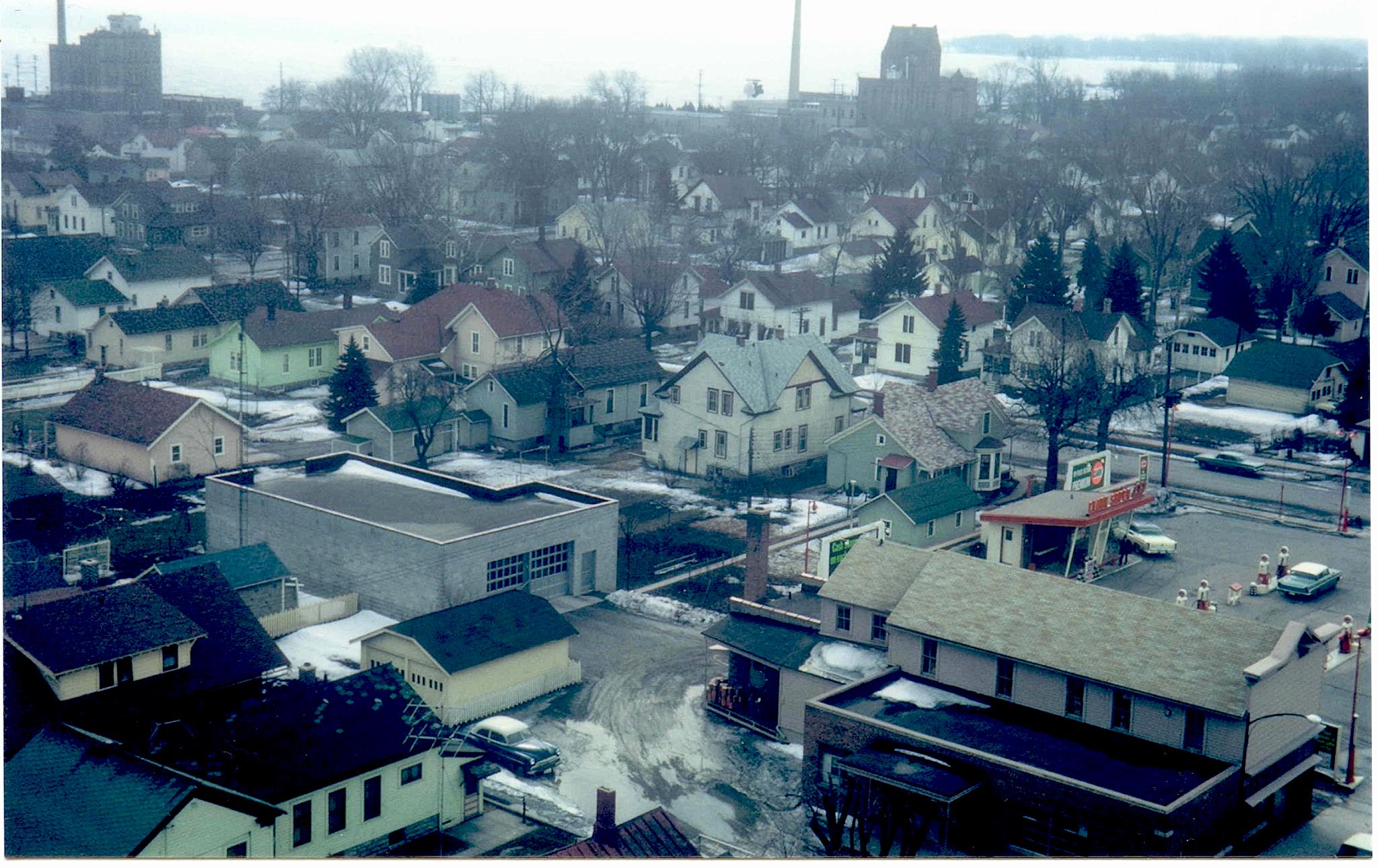
Brooklyn with her two big breweries in the background. Peoples is on the left. The Oshkosh Brewing company is towards the right side of the frame.

The Fall of the Brooklyn Breweries
The downfall of brewing in Brooklyn began after each of its breweries was acquired by outside investors who had little appreciation for local beer culture. In both cases, the new owners averted their focus from the home market in hopes of reaching a larger customer base.

The Oshkosh Brewing Company was sold in 1961 to David Uihlein, a member of the family that held controlling interest in Schlitz Brewing. In 1970, Peoples was sold to a group of Milwaukee investors led by Theodore Mack, a former employee of Pabst Brewing.

David Uihlein (left) and Theodore Mack.

Both men made critical blunders at a time when there was no room for error. Regional breweries, like those in Brooklyn, were caught in a pricing war that led to an unprecedented rash of brewery failures. Meanwhile, much larger “shipping” breweries such as Pabst and Schlitz were engaged in high-dollar marketing campaigns fostering the impression that locally brewed beer was inferior.

Neither Mack nor Uihlein were prepared to face those challenges. Neither man had run a brewery before. Their miscalculations precipitated the downfall of their respective breweries. Oshkosh Brewing Company closed in 1971. Peoples closed in 1972. For the first time since 1866, Brooklyn was without a brewery.

The abandoned Peoples brewery seen from the vantage point of the abandoned brewery of the Oshkosh Brewing Company, 1974. Photo courtesy of Dale Hunt.

The Return of Brewing to Brooklyn
Peoples closed and 23 years passed before Oshkosh had a brewery again. It began on the northside with a brewery on the river: Fox River Brewing Company opened on Arboretum Drive in 1995. It was another 22 years before Brooklyn got back in the game.

On November 9, 2017, Fifth Ward Brewing Company opened its doors in the heart of the old Brooklyn at 10th and South Main.

Fifth Ward Brewing at 1009 South Main.

Ironically, the new brewery adopted its name from one of the old northside breweries. The original Fifth Ward Brewery had been in operation on Algoma Boulevard from 1858 until 1880 when the deluge of beer coming out of Brooklyn sank it.

In 2018, a second brewery opened in Brooklyn. HighHolder Brewing Company operated from a suite behind O'Marro's Public House at 2211 Oregon Street. This one got its name from the old sixth-ward “High Holder” neighborhood adjacent to Brooklyn. Unfortunately, the brewery didn't last. HighHolder ceased production in 2020.


Pieces of the Past
Oshkosh’s old, northside breweries have been thoroughly erased. There's nothing left of them. But in Brooklyn, remnants of the early breweries remain.

The rebuilt Brooklyn Brewery, constructed in 1879, still stands in the 1600 block of Doty Street.

Then and now: the Brooklyn Brewery on Doty.

A couple of doors down is the former mansion of August Horn, who ran the Brooklyn Brewery and was the first president of the Oshkosh Brewing Company. Built in 1879, it was a home befitting Brooklyn's first beer baron.

The former home of August Horn, 1602 Doty.

At the south end of Doty is Glatz Park, named for the family that once ran a brewery on that land. There, you can still see some of the old stonework that formed part of the Union Brewery's lagering cellars.

On the eastern side of Glatz Park.

Adjacent to Glatz Park, at the southwest corner of 24th and Doty, stands a magnificent home built in the early 1890s for John Glatz and his family.

The Glatz home at 24th and Doty.

Further north in the 1500 block of South Main, is the old bottling house of Peoples Brewing. The brick building is surrounded by newer structures that make up the Blended Waxes Company complex.
The former bottle house of Peoples Brewing.

At the north end of Blended Waxes complex, loading docks that had been attached to Peoples Brewery are still intact. But the rest of the brewery is gone. It was demolished in 1974. The Oshkosh Brewing Company's towering brewery was demolished in 1986.

July 1974, at the start of the Peoples demolition.

Demolition of the Oshkosh Brewing Company in the fall of 1986.

References to the "Brooklyn" section of Oshkosh began falling out of use in the early 1920s. But the nickname has never been entirely abandoned. The Brooklyn Grill, which closed in 2019 after 37 years at 6th and South Main, was perhaps the best known of the more recent adopters of the moniker.

You still see the old Brooklyn when you head south over the Main Street Bridge onto what used to be Kansas Street. To your right stands the Brooklyn No. 4 Fire House, built in 1868 from a design by William Waters. It remains a striking reminder that you’ve entered Oshkosh's Brooklyn.


Sunday, April 10, 2022

A Pricey Crowntainer

The Oshkosh Brewing Company rolled out its first beer in cans on June 15, 1949. Just in time for the summer. For the next year, OBC used the crowntainer-style can seen below. These were sold in 12-packs for $1.65 (almost $20 in today’s money). At an auction last October, one of these cans sold for $9,360.


Thursday, April 7, 2022

Beer Bash, 1933

Friday, April 7, 1933: At midnight, the breweries let their whistles scream. It was a wail of relief. They'd been waiting for this moment for almost 14 years. Beer was finally legal again.

The Oshkosh Brewing Company.

As the whistles blared, people came out of their homes and gathered outside the brewhouses at Oshkosh Brewing, Peoples, and Rahr. A spontaneous celebration ensued. At one of the breweries, a German band appeared and began playing for the crowd. The early morning was awash with beer.

The headline from March 22, 1933.

They had known for two weeks that beer would become legal at midnight on April 7th. City officials feared a repeat of June 30, 1919; the last day of legal drinking in Oshkosh. On that date, the bars were filled to overflowing. When they closed at midnight the drunken throngs collected in the middle of Main Street where they continued boozing until the last bottle had been emptied and smashed. “It was more or less a wild night about town,” The Daily Northwestern reported the following afternoon.

In advance of April 7th, the City of Oshkosh announced plans for an official celebration that would take place 10 days later, on April 17th. The delay was supposedly made in deference to those observing the Lenten season. More likely, it was a ploy to tamp down the excitement. It didn't work. Oshkoshers had waited long enough. The concern proved unwarranted.

The early morning beer binge of April 7th went off without incident. When the sun came up it was back to business as usual. At the breweries, there had been no such thing as business as usual since the start of the Wartime Prohibition Act in 1919.

Peoples Brewing Company.

As the crowds dispersed, the folks at the breweries went to work. In the previous two weeks, hundreds of orders for beer had come in from soda parlors (soon to be taverns again), hotels, restaurants, and private homes. People had been anticipating this day since late 1932 when President-Elect Franklin D. Roosevelt had promised to bring back legal beer.

All three Oshkosh breweries – under the pretense of producing non-alcoholic beer – had filled their tanks to capacity with real beer in preparation for this moment. By dawn, the brewery trucks were on the road delivering beer to every part of the city.

In advance of April 7, Oshkosh breweries encouraged people to send in their orders for beer. This set of ads, all from March 22, promise the delivery of beer on April 7. Click the image to enlarge it.

This wasn't the beer Oshkosh had grown accustomed to drinking. For the past decade, the city had been home to a score of wildcat breweries producing bootleg ale that made the pre-Prohibition beer seem downright meek. This new beer was weaker yet. The bill Roosevelt signed legalized beer that was 4% ABV or less. It would be another eight months before full-strength beer became legal again.

In the meantime, the milder brew would have to do. The new beer from the Oshkosh Brewing Company was named Chief Oshkosh. The brand had been introduced as a non-alcoholic beer in 1928. Peoples Brewing issued an altogether new brand called Würtzer; a name that played to the brewery's German roots. Only Rahr Brewing revived its pre-Prohibition brand. Rahr's Elk's Head had been introduced in 1916.

The post-Prohibiton label for Rahr’s Elk’s Head Beer.

There's an old story that beautifully captures the excitement surrounding April 7, 1933. It occurred at Sitter Beverage, a beer distributorship that was located on Harney Avenue.
The Sitter family had been involved in the beer business in Oshkosh since 1883. In 1933, Sitter Beverage was being run by Matt Sitter. His grand-nephew Tom Sitter tells the story of that first load of legal beer delivered to Harney Ave in 1933...

"I was at work and a customer stopped by. He asked if I was related to Matt. He was the driver of the first load of beer to come to Oshkosh for Matt. I wish I could remember his name and what brand.

He said everything was going fine with his trip back from Milwaukee. He approached the Main Street bridge from the south and as he crossed the river he almost crapped his pants. Both sides of the street were lined with people waiting for the first loads of beer to arrive (I can only think of the song “Happy Days are Here Again!”). It scared him so much that he was happy that his first turn was to go down Ceape Street.

He got to Harney Avenue and was instructed to back the truck up the narrow driveway to unload. As he was backing up someone yelled out to him “stop, stop, you are going to snap the wire.” It was a wire for the telephone. At that point Matt Sitter yelled out, 'That beer is worth more than any God Damn wire, get that truck back here to unload!'"


Happy Days indeed. Raise a mug today to 1933.

End Notes
The chronology of Prohibition’s arrival and demise is fairly muddled. I thought it might be better to address that here instead of in the body of the story. Here’s a basic rundown of what happened…

January 16, 1919
The Eighteenth Amendment to the United States Constitution is ratified, prohibiting the manufacture, sale, and distribution of intoxicating liquors. It will go into effect one year later.

June 30, 1919
The Wartime Prohibition Act (aimed at conserving grain for the war effort) goes into effect. This is the "unofficial" beginning of Prohibition.

January 17, 1920
The Eighteenth Amendment goes into effect, enforced by the Volstead Act. National Prohibition has arrived.

April 7, 1933
The Beer Revenue Act modifies the Volstead Act. This legalizes beer and wine with an alcohol content of up to 4% alcohol by volume.

December 5, 1933
The eighteenth article of amendment to the Constitution of the United States is repealed." Nationwide prohibition has ended.

About those wildcat breweries in Oshkosh… I love researching and writing about them and I’ve done a lot of that. Here’s a link that acts as a sort of catch-all page to the history of Wildcat beer and brewing in Oshkosh. That page includes an interactive map that will lead you to the story of each of the known wildcat breweries that called Oshkosh home. And here's the full list of all the wildcat stories that have appeared on this blog.

Speaking of wildcats… at Sitter Beverage, they weren’t just sitting on their hands waiting for Prohibition to end. They were making bootleg beer. Here’s the story of Sitter’s Wildcat Brewery on Harney Avenue.


Saturday, April 2, 2022

Oshkosh Saloons 1880-1919

Here’s where Oshkosh’s love affair with the saloon begins...

Click the graph for a better view.

Between 1880 and 1910 the population of Oshkosh almost doubled. But the number of saloons during that same period more than quadrupled. 

In 1880, there was one saloon for every 583 Oshkoshers. By 1910 the ratio was one saloon for every 273 Oshkosh residents. Not surprisingly, the numbers dipped in 1919, the year before Prohibition began.

Today, things are more like they were in 1890. We now have about one tavern for every 530 people living in Oshkosh.


Tuesday, March 29, 2022

The Return of Oshkosh Bock

On Saturday, April 2, Bare Bones Brewery will release the seventh beer in the Oshkosh Heritage Series. It's the return of the Oshkosh Brewing Company's Bock Beer. This is a brew with deep roots in our community.


The Oshkosh Brewing Company released its first Bock beer on March 23, 1894. OBC had been created just two days earlier from the merger of the Glatz, Horn & Schwalm, and Kuenzl breweries. The new bock should have made a splash as OBC's first release. But that didn’t happen.

For reasons never revealed, the Oshkosh Brewing Company attempted to keep a lid on the merger that had led to the brewery's creation. So instead of releasing its first beer under the OBC banner, the new bock was sent out as a Glatz Brewery beer.
The Glatz Brewery, where the first Oshkosh Brewing Company Bock Beer was brewed. The brewery was located on the west side of Doty Street, south of 24th Avenue.

"We feel inclined to say a word or two about our beer, especially our Bock beer, which will be on draught at all our customer’s places Friday and Saturday… We unhesitatingly place it alongside of any beer no matter by whom manufactured for its purity, strength and quality…. 
Respectfully, J. Glatz & Son."
     – Oshkosh Daily Northwestern, March 22, 1894.

Six days later, word leaked out that J. Glatz & Son had been subsumed into the Oshkosh Brewing Company. And two days after that, OBC released its second beer. It was another bock. This one was brewed at what had been the Kuenzl Brewery on Harney Ave.

It's fitting that the largest brewery ever to do business in Oshkosh would get its start by releasing a flood of bock beer. This darker, stronger style of lager beer had been popular in Oshkosh since the 1850s. It was treated as a local delicacy and eagerly anticipated.

February 15, 1917.

Breweries in Oshkosh would release their annual bock beer just as winter was giving way to spring. The release dates fluctuated. Sometimes the bock would begin flowing as early as February. Other times you had to wait until May. A placard illustrated with a goat's head would go up on the doors of saloons where the beer was being served. Bock is German for goat. The symbol was the sign that this year's bock beer had begun flowing.


The Oshkosh Brewing Company's Bock Beer was renamed Chief Oshkosh Bock in 1934. The bottle labels featured the traditional symbol.

The original, 1934 label for Chief Oshkosh Bock.


Variations on this label were used from the 1940s well into the 1960s.


Oshkosh Bock at Bar Bones
The bock beer going on tap at Bare Bones was brewed on February 9th and has been lagering for the past six weeks. It was made from the 1950s recipe used for Chief Oshkosh Bock. The recipe comes directly from the Oshkosh Brewing Company’s logbooks of that period. This is an American-style bock, with a ruby hue and a pronounced malt flavor. At 5.5% ABV, it's light enough to be sessionable but strong enough to ease the chill lingering in the spring air.

Oshkosh Bock goes on tap at noon on Saturday at Bare Bones in the brewery's taproom. This is a draft-only release. You'll know it's pouring when you arrive at Bare Bones and see the sign of the goat greeting you at the door. See you there. Prost!


A couple of extra notes...
If you’re looking for more on the history of bock beer in Oshkosh, check this out.

I mentioned that the Oshkosh Brewing Company attempted to keep the 1894 merger a secret. Here’s more on that.

Thursday, March 24, 2022

Remembering Ron Akin

Dr. Ronald Akin of Oshkosh passed away on Monday, March 21st. Ron was a leading figure in the field of Wisconsin breweriana and the preeminent collector of breweriana related to Oshkosh.

Ron Akin

He was born and raised in Hortonville. Ron came to Oshkosh in 1955 to attend UW-Oshkosh where he excelled as an athlete. Ron would later become a full professor at UW-Oshkosh while also coaching several sports.

His interest in breweriana was instigated by his sons Dan and David after they began collecting beer cans in the early 1970s.

"So, I became a collector too, collecting anything related to any of the closed Oshkosh breweries," Ron once explained to me. "Back then, there was so little information available on those breweries. I wanted to know more. Collecting breweriana became part of that and as I learned more, I discovered how important the breweries were to the history of Oshkosh.”

Ron with his sons, David (in the middle) and Dan.

The collection Ron built was unrivaled. His fellow collectors came to know him for his tenacity. But Ron was equally generous in sharing his discoveries. He often invited inquisitive strangers into his home to acquaint them with the incredible pieces he was dedicated to preserving.

As his knowledge and collection grew, Ron began publishing articles in breweriana journals. People started asking him to give talks about Oshkosh brewing history. He was always happy to oblige.

Ron and Kenlynn Akin.


I met Ron for the first time in December of 2010. We were at the Oshkosh Public Library to hear a lecture about Frank J. Hess & Sons, a Madison cooperage that made wooden beer barrels in the early 1900s. After the talk, Ron's wife, Kenlynn, introduced us. She had somehow diagnosed that I shared her husband's affliction: a consuming interest in anything related to old breweries.

They invited me to their home and Ron led me through his immense collection. I was stunned. I didn't realize it then, but our destination was already being set. Not long after that visit, Ron suggested that we collaborate on a book about the history of Oshkosh’s breweries. We went straight to work. The Breweries of Oshkosh was published in September of 2012.

Ron with a proof of the Breweries of Oshkosh cover. To his left is his brother George and son David.

I wasn't the only person to be swept into Ron's orbit. As breweriana collector Dale Applebee recently told me, "Ron definitely inspired a lot of people into collecting Oshkosh memorabilia." He seemed to have a knack for spotting those who shared his passion. He kept that fire burning even in his last years, becoming a mentor to younger collectors like Jared Sanchez.

Ron with Jared Sanchez and Jared’s daughter Emmalynn.

"I had bought a Tonka Truck off of eBay and I had no idea that the seller was Ron Akin," Jared says. "When I arrived to pick up my purchase we talked for a few minutes and he asked if I collected anything else. I told him I collected Chief Oshkosh Beer items and his face lit up. He asked me if I wanted to see his collection. The moment I saw his basement, my life was never the same."

Jared has gone on to establish the B'Gosh It's Good Breweriana Show held bi-annually at Fifth Ward Brewing in Oshkosh. It’s a prime example of Ron's abiding influence.

Ron Akin will be sorely missed. But his presence will be felt for years to come. He will continue to inspire.


A few additional notes…
Ron had a remarkable career at UW-Oshkosh. Here are a few more notes about his athletic and coaching accomplishments there.

In 2003, Ron gave a talk about the Oshkosh Brewing Company at the Grand Opera House. His presentation was filmed by Oshkosh Community Access Television. The Oshkosh Public Library has a copy of it on DVD. You can check that out here.

There are numerous stories about Ron inviting folks into his home to see his collection of Oshkosh breweriana up-close. My friend Frankie wrote about her visit. You can see that here. 

The next edition of Jared Sanchez’s B'Gosh It's Good Breweriana Show will take place on May 1, 2022. There’s more information on that here.

Tuesday, March 15, 2022

Two Roads Diverged

When I began this blog 12 years ago, there was no fixed plan for the direction it would take. But its course quickly became apparent. About half of the posts have focused on the current beer scene in Oshkosh. The rest have been about the incredible history this city has with beer. I'm at a point now where I don't have enough free time to continue pursuing both paths.

I'm going to stop writing about the current beer scene. From now on, this blog will be about the beer history and saloons of Oshkosh, and the influence the beer culture here has had on our city as a whole. It's a deep well. I have hundreds of story ideas waiting to be explored. And that list grows each time I get into the research phase of one of these stories. 

The current scene speaks for itself and certainly doesn't need me as an intermediary. My time is better spent trying to discover the aspects of Oshkosh's beer culture that have been forgotten. It's something I love doing and look forward to doing for as long as I can. Prost!

Sunday, March 13, 2022

Holes of Iniquity: The Stall Saloons of Oshkosh


Thursday morning, December 6, 1894...
Rudolph Weisbrod knew he had to do something about these saloon keepers and their whores on Main Street. Last night's episode caused a sensation. Now the eyes were on him. Weisbrod summoned a reporter from the Daily Northwestern to his office at City Hall. And so it began...

The Dirty Old Town: looking south down the 400 block of North Main Street at the turn of the century.

“Are these fellows running the city or is it the people?” the police chief bellowed as he paced the room. The journalist began taking notes. “These holes of iniquity would place a Hurley or Ironwood den in the shade when it comes to a matter of comparison. If a citizen's league would start a crusade against these black holes, it would be of untold benefit to the moral atmosphere of the city."

Weisbrod sounded as if he were reciting a prepared speech. His "holes of iniquity" were Main Street saloons offering chasers of flesh in companion to their liquid goods. They were called stall saloons. City officials, including the Chief of Police, had looked the other way. Until they couldn't.

Weisbrod was driven to act by what the Daily Northwestern called an "outrageous hubbub." The trouble began after police arrested a woman in one of the stall saloons. She was "in a beastly state of intoxication." The cops dragged her into the winter night wearing nothing but a low-cut wrapper. She went howling all the way to the jail on Court Street. The lurid spectacle inspired an equally lurid account of it on Thursday’s front page.

Her "screams, curses, and malediction" continued well into the morning, the Daily Northwestern reported. "The noise that resulted was terrific. The woman seemed to be possessed of a fiend incarnate."

The stall saloons had become too loud to ignore.

Kicking in the Stalls
Weisbrod had laid it on thick for the Daily Northwestern reporter. How much of his moralizing he actually believed is questionable. Weisbrod was an old-school sort of cop. He was a Civil-War vet who had been appointed chief of police for the first time in 1887. Weisbrod's views on prostitution were hardly consistent with the Progressive attitudes of the 1890s. That is, he wasn't altogether opposed to commodified sex.

Oshkosh Police Chief Rudolph Weisbrod in his Civil War suit.

Prostitution in Oshkosh flourished during Weisbrod's tenure as chief of police. Most of the sex trade was sequestered in an area on the north side; along what is now Ashland Street south of Murdock. A sense of decorum and discretion prevailed there. Downtown, it was a different story. Sex in the stall saloons was a grubbier affair.

That they were called "stalls" says it all. The term captured the barnyard spirit of the matter. In fact, “stall” may have been too charitable. In some places, the stall amounted to nothing more than a curtain. Others were glorified closets. An extravagant stall might even have a door.

A catalog illustration of an ornate bar screen made by R. Brand & Sons of Oshkosh. Oshkosh wasn't the only Wisconsin city with a stall-saloon problem. Brand's screens were used for stalls in saloons throughout the Midwest.

The stalls were tucked at the back of the barroom, usually near a rear entrance to an alley. This allowed prostitutes to slip in and out without drawing the attention of gawkers on Main Street. Yet it was no secret what was going on. There were at least a dozen stall saloons in Oshkosh. Eight of them were on Main Street.

The view north on Main Street from Washington Avenue; the heart of the stall saloon district. There were at least four stall saloons on Main Street between Washington and Merritt.

Weisbrod's rant in the Daily Northwestern caused the stir he intended. A week later, the chief issued an order to remove the stalls from the saloons. He had the support of the mayor and the city attorney, but the legality of the order was in doubt. Weisbrod realized he was pushing the limits of his authority. When asked what he would do if the saloon keepers disregarded his demand, Weisbrod bluffed saying he wasn’t at liberty to discuss it. That challenge was put off for the time being.

Most of the stalls were removed even before Weisbrod's order was made official. Harry Maxwell, who had an elaborate set of stalls in his saloon, said he was happy to remove them. "The change will be better for the moral atmosphere of the city," he told a Daily Northwestern reporter. Maxwell even managed to maintain a straight face when he said it.

The barroom of Harry Maxwell's stall saloon at what is now 416 N. Main. Maxwell was a notorious saloon man and gambler. In the back bar mirror is the reflection of a painting inside of a draped frame. It shows a nude sprawled across a bed.

The saloon keepers bent to Weisbrod's will so willingly that it immediately aroused suspicion. Their rationale was explained by an anonymous Oshkosh resident who seems to have had inside knowledge.

"Mark my words well, the stall feature of the saloons has not been stamped out of existence. Let me tell you that the partitions have not been taken apart, and that the parts of the stalls have only been stored away for future use."
     – Oshkosh Daily Northwestern; December 18, 1894.

The Long Debauch
It took little more than a year, but as predicted the stalls returned. By 1897, the selling of sex on Main Street was as brisk as ever. Chief Weisbrod threw away his order. He insisted that the common council needed to take up the matter.

In early 1898, a city ordinance was introduced that would ban stall saloons. But there wasn’t enough support for it to bring it to a vote. Then, as if on cue, there occurred another sensational episode that set Oshkosh on edge.

It would later be referred to as a “Long Debauch” and it involved a series of men and three young women ranging in ages from 17 to 21. The women had come to Oshkosh from Neenah on the Thursday afternoon of March 17, 1898. That evening, they attended a dance at the North Side Turner Hall. It was there that the "handsome maiden only seventeen years of age" took her first drink. There was no turning back.

Ground zero for the Long Debauch: the northside Turner Hall at the northeast corner of Merritt and Jefferson.

The three young women met two Oshkosh men at the Turner Hall dance. On Friday, their new friends took them on a tour of the southside saloons. Later, they went to Main Street and into a stall saloon where they spent the remainder of the evening. Whatever took place there was clearly transformative.

By Saturday, the women were "in the charge" of a middle-aged man. He brought them back to Main Street for another go. They spent time in at least two stall saloons. Near midnight, the women were picked up by police on Merritt Street. One of the women was injured; she said a man had kicked her. Another was too drunk to walk. All three were carted to the police station. The city physician was called in to tend to them. They were held over until Sunday evening.

The story was front-page news in both the Daily Northwestern and the Oshkosh Times. A member of the common council told the Northwestern he was witness to at least some of what had taken place over the weekend. "I wish every other of the twenty-six aldermen could have seen what I saw," he said. "It was a pitiable thing."

The unattributed quote was likely given by second-ward alderman Charles D. Heath.

Charles D. Heath

Heath was the longest-serving member of the Oshkosh Common Council, having won his seat in 1882. He'd been a saloon owner even longer than that. Heath hadn’t chosen his profession. He was born into it.

His father had launched a saloon on the south side of Washington Avenue near Main in the mid-1860s. Heath, born in 1853, had grown up working in that saloon. When he was 25, his father died. Heath took over the bar and named it the Senate Sample Room. His life was wrapped up in that saloon.

It wasn't always a good fit. Heath was notoriously kindhearted and charitable. Sometimes to a fault. Somehow, after almost 30 years in a business known for creating misanthropes, Heath had managed not to have the empathy beaten out of him. His compassion would cost him dearly in the days to come.

Heath's Senate Sample Room no longer stands. The parking lot behind the Exclusive Company now occupies that space. The Senate is seen here in the background with its protruding sign highlighted in yellow above the awning.

Charles Heath and the Evil Temptation
Heath was one of six saloon owners on the Oshkosh Common Council in 1898. As a group, they managed to sidetrack a number of saloon reform measures. Among them was the languishing proposal that would ban stall saloons in Oshkosh. But Heath parted ways with his fellow saloonists after conducting his own examination of the stall saloons.

"Never before in any city of the country has such prostitution existed," Heath railed at his fellow aldermen. He told of "the disgraceful scenes being enacted in the stalls" and how they were far worse than he could have imagined. Heath said that during his investigations he had encountered "five or six little girls" in stall saloons.

He described an episode where two 15-year-old girls had recently been lured into a stall saloon with an offer of ginger ale. "They took the ginger ale, which was 'doped' with the most evil of purposes and most evil results," Heath said. The fathers of the girls went to the district attorney demanding that charges be pressed, only to recant at the pleading of their daughters who feared the "disgrace of such a proceeding."

Heath collected other stories that were equally disturbing. His dive into the stall saloons seemed to unhinge him. He told his fellow alderman that eliminating the stalls wasn't good enough. He demanded that women be altogether banned from saloons. 

436 North Main was once the home of a bustling stall saloon run by Charles Lemon. It's now home to Eroding Winds Record Shop.

The anti-stall folks were glad to have Heath on board. But even they were taken aback by his extremism. They questioned if a ban on women would even be legal. Heath responded darkly, "I don't consider this matter as a question of personal liberty in any sense. It is a question of protecting the girls and boys of this city from ruin."

The Daily Northwestern steered clear of Heath's more strident proposals, calling them "anti-female." But the paper helped lend credence to his horror stories about "the evil doings in those stalls."

“In a conversation with a Northwestern reporter recently, a commercial traveler said that the stall saloon district of this city was rapidly becoming notorious throughout the state. “It has often been spoken of as one of the worst spots in the state”
   – Oshkosh Daily Northwestern; March 23, 1898.

 The "Finest Saloon in the State" in "one of the worst spots in the state." Nic Stein's Place was a stall saloon in the 400 block of North Main Street (the building no longer stands). Smiling Nic Stein is seen on the right strolling down Main Street.

There was now no doubt that the common council would pass the anti-stall ordinance. Before it came to a vote, Heath attempted to introduce his more radical measures “to prevent the practice of prostitution in saloons and to prevent the corruption of young women and girls in the city of Oshkosh.” The aldermen rejected it.

On April 12, 1898, the common council passed an ordinance outlawing stalls, compartments, and private rooms in Oshkosh saloons. The only dissenting vote came from Charles Heath. He said he couldn't support it because it didn't go far enough. It didn't prohibit "the evil temptation" of women in saloons.

A Ward in Heaven
With the new law in place, Chief Weisbrod sent his men out to tell the bar keepers they had three days to tear out their stalls. Once again, they complied. Once again, the moral panic dissipated. Once again, it reemerged (a story for another day).

Charles Heath was never the same. After the passage of the anti-stall ordinance, Heath renounced his profession and sold his saloon. Yet he remained haunted. In 1905, Heath ran for mayor on what the Daily Northwestern described as an "ultra-radical" platform of moral reform.

Heath promised to run all of the prostitutes out of town. He vowed to destroy every nickel slot machine in Oshkosh. He said he would move the saloons into a segregated area away from Main Street and force them to close on Sundays. That was just the warm-up. Heath's 12-point plan was a puritan’s wish list that included an "Absolute prohibition of the demimonde element parading our streets for the purpose of showing themselves."

His crusading zeal made Heath an object of ridicule. The La Crosse Chronicle ran an article mocking his plans for the city: "If Oshkosh elects Charles D. Heath and he keeps his promise, the famous city will indeed become a suitable spot for a ward in heaven."

Heath was soundly defeated. A year later, he moved away.

Heath went to Marinette, Wisconsin where he became the proprietor of a fashionable hotel. He remained there until his death at the age of 68. Still, his dissolute hometown retained a hold on his heart. Heath left instructions that he wanted to be buried here. His body was brought back to Oshkosh in a rail car. Charles D. Heath was laid to rest in Riverside Cemetery on April 25, 1921.

Charles Heath's return to the dirt of Oshkosh.

End Notes
I've previously written about Rudolph Weisbrod's approach to regulating prostitution in Oshkosh. You can find that story here.

If you're interested in the Oshkosh saloons of this period, there's a starting point here that leads to a tour through some of the old, downtown saloons.

Friday, March 4, 2022

Beer of the Moment: Driving Miss Hazy

It’s hard to believe that four years have passed since Oshkosh’s Fox River Brewing Company released its first Hazy IPA. At the time, the style was just starting to make headway in Wisconsin. What was novel then is ubiquitous now. There’s been a lot of Hazy brewed by Fox River since 2018, but their latest may be their best. This is the sort of beer that comes only with experience.

Driving Miss Hazy

Driving Miss Hazy just went on tap at the Fox River taproom in Oshkosh and it delivers everything a HAZY IPA lover could want: an intense, fruity aroma; a full and soft mouthfeel, and a slightly sweet finish that invites you back to the glass. It’s a beer with volumes of hop flavor ranging from peach to guava to passionfruit.

Drew Roth, the head brewer at Fox River, takes an innovative approach to making his hazies. Among the hopping techniques he employs is a method called "dip hopping," which helps to minimize bitterness while preserving more delicate hop flavors. He’s also developed a proprietary yeast blend that accentuates hop aromatics. “This one was hopped with Galaxy, Sabro, and Citra and has really strong tropical fruit notes,” Roth says.

Some 20 years ago, Fox River became the first Oshkosh brewery to brew an IPA. They’ve been making a wide variety of IPAs ever since and have produced every iteration of the modern style. Few other Wisconsin breweries are able to pull from such a deep well of experience where beers like this are concerned. That methodical honing of craft is evident in a pint of Driving Miss Hazy.

Beer of the Moment is an ongoing series I’m writing for the Visit Oshkosh website. Its purpose is to provide a glimpse into the local beer culture for people considering a visit to Oshkosh. I also post them here in hopes of building a representative overview of the sort of beer that is being made here now. Most beers featured in this series have been selected by the brewers.

Tuesday, March 1, 2022

Oshkosh Underground

In the late 1860s, there were at least six sets of subterranean beer caves in Oshkosh. Here's the only set of those caves that hasn't been filled in. This picture was taken in 2012.


That's beneath the old Horn and Schwalm Brewery on the east side of Doty Street just south of 16th. If you could go back 150 years, you would have seen that cave packed with barrels full of lager beer in various stages of maturation and blocks of ice cut from Lake Winnebago to keep it cold.

Construction of the Horn and Schwalm caves began in 1865. Here's how it looks down there today.


The Horn and Schwalm Brewery.
The top photo is from the 1880s.
The bottom photo was taken last summer.

Just down the street there once was another set of elaborate caves beneath the Glatz Brewery. They've been filled in, but you can get a look at them here.