Tuesday, June 20, 2023

Sin City Beer Gardens

The first Brews on the Bay of the 2023 season is tonight in Menominee Park. A beer garden hosted in a city park is hardly unusual these days. But it wasn’t always this way. There was a time when the mere idea of it inspired fits of fear and trembling.


The sale of beer in Oshkosh city parks was illegal from 1889 until 1940. When the law changed, some folks lost their shit. Among them was William Beck, a fun-starved cynic with an overactive imagination. Beck protested long and loud about the Oshkosh parks being “desecrated” with beer. I thought today would be a good time to share a taste of his ranting.

Here are a few passages from a lengthy and delusional letter Beck wrote to the Oshkosh Daily Northwestern in the summer of 1941. You won't see this sort of “fun” at Menominee Park tonight.

OPPOSES BEER IN PARKS
Can the parks commissioners remember back to the days before we had city parks, when Sunday picnics and holiday celebrations were held in private parks and groves and were commercialized from the sale of beer and liquor?

Can they recall the disgusting sights of men and boys staggering about in all stages of intoxication? The frequent drunken brawls? The bloody fights with fists, clubs, and rocks, when knives and guns were drawn and used with serious and sometimes fatal effect? When women and children were terrorized, knocked down, trampled, and stampeded in all directions, and many families who had planned a pleasant outing for the day fled in panic for their homes in fear of being injured by drink-crazed men and rowdies?

It was to prevent such occurrences that the people wanted a city park where no intoxicating beverages would be sold. They demand a stop to such frightful, shocking, and disgraceful conditions for once and for good.
     – William R. Beck, June 21, 1940.

Beck's vision of Oshkosh's private beer gardens is almost entirely divorced from reality. He didn't know a damned thing about them. Beck was born in 1878 and was a lifelong bachelor who spent most of his adult life raising chickens in the Town of Oshkosh. During Beck's time there, the township was under the thumb of anti-alcohol zealots. Beck and his ilk voted the Town of Oshkosh dry in 1911.

Beck moved to sin city after he retired from his chicken farm. He planted himself in an apartment on Merritt Avenue, where he had to suffer the spectacle of fun seekers going to and from Menominee Park. Maybe that's what did him in. Beck died two years after penning his beer-garden letter.

Poor William. If you get to the beer garden tonight, raise a glass to our nervous, gloomy friend. Prost!

... such frightful, shocking, and disgraceful conditions.


Sunday, June 11, 2023

Fred Zielke Was a Bad Man

Fred Zielke was 17 when he got on a ship leaving Germany for America. What kind of young man was this? Fred would soon become known as a notorious grifter, a panderer, and a wellspring for violence. Was all that rancid ambition already boiling in him when he walked on that boat? Or was it something about Oshkosh that ignited the worst in him? Fred Zielke was on his way to prove just how bad he could be.


Fred was born in 1844 in Danzig, a Prussian city on the Baltic Sea. In 1861 he left for America with his father and older brothers, Rudolph and Herman. The Zielkes first went to Milwaukee, where Fred’s father appears to have run a liquor store. But by 1865, the Zielke clan had left Milwaukee for Winnebago County. They settled on a farm in the Town of Nekimi. Fred’s brothers were there for the rest of their lives. But not Fred. Oshkosh was calling him.

Fred borrowed money from his father, and on April 8, 1870, he purchased Joseph Mayer’s grocery store on the east side of Kansas Street (today it’s South Main Street) just above 8th. By the end of summer, the groceries were gone, and Fred had his saloon going there. He was 26 now.

A detail from an 1867 drawing. The red arrow points to the back of Fred’s saloon on what is now South Main Street north of 8th Avenue.

It took Fred a few years to fully establish his infamy. Unfortunately, there isn’t a complete list of his early-period mischief. There were the usual brawls and drunkenness, but that was hardly uncommon for an Oshkosh saloon in the 1870s. The devil was in the details that weren’t shared.

As one newspaper article stated, the facts surrounding Fred’s exploits “would not look well in print.” At the same time, journalists never tired of hurling insults his way. In print, Fred was called disgusting, amoral, dishonorable, a brute… a bad egg even.

He must have become all of that. In 1875, Fred was stripped of his liquor license; a rare occurrence in a city famous for scandalous saloons. Fred left town without a fight. He sold the property on Kansas Street and headed for Ripon.

Blood and Beer
The move was both bold and foolhardy. Ripon was not the sort of place that was going to open its arms to a guy like Fred. The Ripon of 1875 was a socially conservative town inhabited by 3,500 gentle souls.

"Its inhabitants are largely composed of men retired from various occupations, and the place has therefore a clean, quiet, comfortable air, quite in contrast to the usual hustle and bustle of Western cities."
     – History of Fond du Lac County, 1880.

Fred came in like a buzzsaw cutting straight to the heart. He planted his saloon on Ripon’s town square. There were brawls on a near daily basis and a constant series of calls to have his “dishonorable” dive closed by the city council. Fred came to be such an object of derision that after being attacked during a fight at his saloon, the Ripon Free Press reported that “Zielke got his head badly bruised, but not as badly as he deserved.”

Ripon’s Town Square, Fred’s stomping grounds.

It wasn’t just the fighting that upset the natives. Fred seems to have brought some Oshkosh “talent” with him to Ripon. Again, the newspapers were less than explicit, but the Ripon Free Press made it known that Fred was engaged in practices “which are licensed in St. Louis, but not in Ripon.” It was an obtuse way of saying that Fred was a flesh merchant.

In the 1870s, St. Louis experimented with something akin to legalized prostitution. Brothels and prostitutes were licensed and regulated by the city. That was more hustle and bustle than Ripon was ready for.

In February 1876, Ripon’s council voted to rescind Fred’s liquor license. Fred was irate. He said the revocation was unconstitutional. He said that Ripon had betrayed him. He said that a corrupt council member promised to reinstate his license in return for a payoff. Fred said his attorney told him to ignore the revocation. And that’s just what he did.

The blood and the beer never stopped flowing. Six months after losing his liquor license, the Free Press reported that Fred was still running wide open and hosting more brawls than ever. “He can get up a row with his lager (beer) in the shortest possible time.”

It went on this way for more than a year. Until Fred pulled the plug in May 1877. Ripon was happy to be rid of him.

“It will be glad tidings to all to know that Zielke, the saloon man, has sold and that the newcomer is tearing down the bar. Zielke was a bad egg and kept a bad house. His departure will please every lover of decency in this place.”
     – Ripon Free Press; May 10, 1877.

The Oshkosh Encore
Ripon’s embarrassment might have gone on indefinitely if Fred hadn’t spotted an opportunity to return to the scene of his previous crimes on the Brooklyn side of Oshkosh. Before leaving Ripon, Fred struck a deal with Hypolite “Hyp” Dauben, an old, Kansas Street comrade. Hyp had launched a confectionery and restaurant just north of 8th Avenue in 1868. He’d been Fred’s neighbor during the turbulence of the early 1870s when Fred’s first Oshkosh saloon was going full tilt.

Hyp was now looking to move his business north of the river. On May 2, 1877, he sold his South Main Street property to Fred. The bad man was back.

Both of Fred’s Oshkosh saloons were demolished long ago. They were located on lots that later became home to Recreation Lanes. His first saloon (1870) occupied the northern portion of the property, the second saloon (1877) was on the southern half.

Fred didn't get much of a welcome upon his return to Oshkosh. The Northwestern ran a story that rehashed his exploits in Ripon and described his new bar as “the toughest hole on the south side.” The trouble at the new place percolated for a year before boiling over in the summer of 1878.

On the Friday afternoon of August 23, Fred’s saloon was visited by a trusting rube from Shawano named Post. After having a couple drinks, Post wished to close his tab and handed Fred a $20 bill (worth about $500 in today’s money). Post waited for his change. He didn’t get it. Fred pocketed the $20 and told Post to go to hell. The Shawano man went to the police.

Oshkosh Police in the 1880s.

The desk sergeant dispatched a knuckle dragger named John “Jack” Merton to collect Fred and bring him to the station. Officer Merton was an unredeemed thug, the presiding skull cracker on the Oshkosh police force. Fred went along willingly. At the station, Fred told his side of the story. The cops didn’t buy it. Fred was arrested and charged with larceny. When Merton went to put Fred in handcuffs, the fighting began.

It wasn’t much of a fight. A Northwestern reporter said that “Policeman Merton choked him and pounded him fearfully.” Fred retaliated by biting the cop. When Merton finally got the cuffs on him, he pulled out his revolver and hammered Fred’s skull with the butt of it. Merton got in a few more licks on the way to the holding cell. He punched and pistol whipped Fred until his head was mapped with welts.

There would have been an indictment for police brutality if anyone other than Fred had been on the receiving end of that assault. But the best Fred could do was file a civil suit against the deputized sadist. The Northwestern’s coverage of the case mentioned the strong public sentiment against Merton, “not however from any sympathy with Zielke, who is much disliked and who stands in very bad repute on the South Side.”

In the courtroom the defense turned the tables on Fred, bringing in a fleet of witnesses “as to the character of Zielke and the place he keeps, the testimony of whom was not at all flattering.” In the end, Fred lost his civil suit and was convicted of resisting arrest.

The wave of bad publicity helped tank his bar business. Struggling to stay afloat, Fred opened a clothing store in the saloon. Fred said he intended to close his saloon and concentrate on this new venture. But he never followed through. And by 1879, Fred was running a hybrid business that had never been seen in Oshkosh and hasn’t been replicated since. Fred created Oshkosh’s one and only clothing store/saloon.

It was a total failure. But even Fred’s failures had panache. In October 1878, he managed to secure a loan for $2,000 (about $43,000 in today's money) from Max Landauer, Wisconsin’s leading clothing wholesaler. As part of the deal, Fred would carry Landauer’s line of goods. This Landauer was famous for his business savvy. How Fred, with all his squalid notoriety, managed to hoodwink Landauer into backing him is a mystery that passeth all understanding.

The ever dapper Max Landauer.

If Fred ever intended to repay Landauer, he soon nixed that idea. Fred stiffed him. Landauer could at least console himself in the knowledge that he wasn’t the only one taken in. Fred spent a good part of 1879 in courtrooms facing his creditors. Judgements were rendered, and he still never paid up. His family, though, knew better than to seek satisfaction from Fred in a courtroom.

On the Tuesday afternoon of May 25, 1880, Fred’s father and brothers rode in from Nekimi on their horses to visit with their wayward kin. The Zielkes weren’t there to talk with Fred. According to the police report, they went straight to “violently assaulting and beating him and doing him serious personal injury.” One of the witnesses remarked that “Fred got pretty badly pounded.” He got beat, but he was not broke.

The east side of South Main Street north of 8th Ave. where there’s not a trace left of Fred’s Oshkosh saloons.

Omro Infested
Fred had tucked away enough cash to finance his flight from the debt bomb he dropped in Oshkosh. In March of 1880, he used part of that money to purchase a small store in Omro under his wife’s name. By the close of 1880 he had converted the property into a saloon. Fred's occupancy of Omro was as lively as his residency in Ripon.

Omro in 1880 was a village at war with itself. The conflict was over alcohol and pit Omro’s temperance fanatics against anyone who liked to take a drink now and then. The temperance brigade was agitating to make Omro dry and force the village board to stop issuing liquor licenses. The dries would eventually win their battle in Omro. Fred's antics helped fuel their fire.

Looking west down what is now E. Main St. in Omro. Zielke’s saloon stood one lot west of where the bell tower was later constructed. The saloon was on the eastern portion of the lot that is now addressed as 136 E. Main Street, in Omro.

It didn’t take long for Fred to make an impression. In June of 1881, he was called into court to testify on behalf of a troublesome Omro saloon operator named Henry Jassen. Jassen had recently been beaten up by Oshkosh brewery owner Charles Rahr. Jassen sued. Now the two men were battling one another in front of a judge.

Fred delivered his testimony on behalf of Jassen, and was then cross-examined by attorney Menzo Eaton. The Oshkosh lawyer knew all about Fred. Eaton grilled Fred about his lack of character, his vile reputation, and his penchant for lying. Fred grew enraged. When the court adjourned, “Zielke followed Eaton into the street and made a rush for him; Eaton’s friends grabbed Zielke and quite a contest ensued.” Once again it wasn’t much of a fight. Fred took yet another drubbing.
Menzo Eaton

Fred seems to have made at least one concession to his neighbors in Omro. There were no intimations of his involvement with prostitution during his time there. But Fred’s lust for mayhem remained unquenched. As in all his saloons, brawling was a feature of his Omro dive. And as usual, Fred took his share of the blows. During a melee in January 1884, a patron went at Fred with a club beating him to the floor and breaking his arm.

Then there were the arrests. First, for selling liquor to minors and then for selling booze to “posted” men – helpless alcoholics forbidden by law to purchase liquor in Omro. When the village refused to grant Fred a continuation on his liquor license, he took a page from his Ripon days and refused to close. Like the officials in Ripon, the folks overseeing the Omro saloons couldn’t seem to stop him.

A newspaper screed published in the fall of 1884, summed up Fred’s position in the village. His saloon was called a “low den” and Fred was condemned as one “of the worst nuisances that ever infested Omro.”

Maybe all that hate finally got to him. In February of 1885, Fred sold his Omro saloon and then moved away. He went to a place where there were no saloons. A place unstained by the urban debaucheries that had been his stock in trade for the past 15 years. Fred moved to rural Fentress County, Tennessee.

The simple life in Fentress County, Tennessee was still intact more than 50 years after Fred moved there. This photo is from 1942.

Fentress County was nothing like Oshkosh, Ripon, or Omro. Fred went there seeking something else. And this time, his neighbors welcomed him.

"Mr. Zielke, one of our farmers, has his new barn finished. It is 28x50 feet, and is the best barn on the mountain, at least around here. He has the foundation of his new house laid, which, when completed, will be a splendid building. He also has twenty acres cleared up, grubbed and ready to plow.”
   – Rugby Gazette and East Tennessee News; October 23, 1886.

Fred was 42 then. He had another 33 years ahead of him. Fred was a gentleman and a farmer for the rest of his days.


Friday, June 9, 2023

Oshkosh Beer Mail

If you’d like to receive an email notification when I release a new blog post, just drop me an email at OshkoshBeer@gmail.com and put Subscribe, or something similar, in the subject box. When I see your email, I’ll send a notification letting you know that you’ve been added.

As some readers already know, I used to have an email client setup on the blog, but unfortunately, that widget bit the dust. I’ve been trying to replace it, but I’ve been unhappy with the options that are out there. Most of them seem too susceptible to third-party interlopers.

So I’ve made my own. This way I can assure you that your email will never be shared and that only I will see your email address. And I promise not to fill your inbox with junk. Prost!

Wednesday, May 31, 2023

There's a Kellerbier Coming

Last summer, I was lucky to win the Society of Oshkosh Brewers club competition with a Kellerbier I brewed. Jody at Bare Bones is brewing that recipe today. I’ll send a shout out when the beer gets released…

Kellerbier recipe prep at Bare Bones.


Monday, May 29, 2023

The 1943 Beer Roll

In 1943, the Oshkosh Brewing Company’s “beer roll” returned to deliver kegged beer to taverns in the city. The move was made out of necessity. Almost two years earlier, America had entered World War II. The extensive rationing that followed made it difficult for OBC to source gasoline and tires for the brewery’s fleet of delivery vehicles. The old-fangled beer roll was reintroduced to help stretch those limited resources. 

1944

The wagon wasn’t the only part of this picture brought out of retirement. John Pahlow is the man holding the reins. He had been a teamster for OBC during the early 1900s. That occupation was lost to a truck. Pahlow was 61 when he got his old job back. For the next couple of years, it wasn’t unusual to see him driving his team through the city streets with a wagon full of kegged beer.

Sunday, May 21, 2023

The Legend of Tin Horn Bill

William Carlson made a lot of noise. He would sing at people through a tin megaphone. He seemed not to care whether or not his audience wanted to hear him. And he liked to drink too much. He was enamored with Oshkosh, but came to be known across the state. William Carlson. People knew him as Tin Horn Bill.


Tin Horn Bill emerged in the summer of 1905 when a new, semi-pro baseball association called the Wisconsin State League latched onto him. The WSL hired Bill to be something like a carnival barker. He was to travel around the state as a lead man promoting the league’s games. Bill would take to the street with his megaphone and begin inflicting his music. Between numbers, he’d publicize the upcoming game. Like an ear infection, Bill was impossible to ignore.

Bill grew infatuated with the Oshkosh Indians of the WSL. There was something about the city and its baseball team that he found irresistible.

The 1905 Oshkosh Indians

Tin Horn Bill became a familiar site on Main Street. Before home games, he’d head downtown and break into song. What was initially amusing had turned absolutely annoying by the close of the 1905 season.

Perhaps as a twisted joke, Bill was invited to the Oshkosh Yacht Club’s year-end “stag” party in September 1905. Bill brought his tin horn. He bellered one of his numbers and then began telling a story too repulsive for even a stag party. The yachtsmen didn’t allow their guest to finish his anecdote. Bill was led away.

Built in 1903, the clubhouse of the Oshkosh Yacht Club. William Waters, architect.

Bill needed a new gig now that the baseball season had ended. His insatiable need for attention led him to the circus. Bill joined Carl Hagenbeck’s Wild Animal Circus. He co-starred in a feeding stunt with a massive lion named Nero.


Bill was part of the Hagenbeck Circus when it came to Oshkosh on June 22, 1906.

It did not go well. Shortly after the Oshkosh show, Bill was mauled by Nero. He lost part of a thumb and was left with webs of ragged scars across his arms, shoulders, and back.

Bill returned to Oshkosh. He found work trying to drum up crowds for the White City Amusement Park at the south end of town. His beloved Indians were also playing there now. Bill was back on his horn singing and barking.

A postcard showing the White City midway.

The Oshkosh Indians on the White City Diamond.

Bill’s routine had not improved during his time away. He added a couple of new tunes, but the gimmick was played out. Even the newspapers were taking shots at him. The journos mocked Bill’s “fog-horn voice” and joked about his misadventure with Nero.

Bill’s undoing began in the fall of 1906. He was arrested on Main Street on the Monday morning of October 1. He was very drunk. Bill tended to get increasingly “strenuous” at such times. Oshkosh Patrolman Henry Frohib, pinned to his Main Street beat, couldn’t take it anymore. Frohib dragged Bill to the station and locked him up.

By noon, Bill had sobered to a state of semi-coherency. Chief of Police Henry Dowling came to visit Bill in his cell. Dowling told him that he’d let him go if Bill would leave town immediately. Bill agreed. He was escorted to the station and put on a train to Fond du Lac.

Chief of Police Henry Dowling (left) and Patrolman Henry Frohib.

Bill couldn’t find another town he liked as much as Oshkosh. He tried Fond du Lac, Green Bay, Menasha, La Crosse. The reaction was always the same. In 1907, the La Crosse police ordered Bill to leave town. He went back to Oshkosh.

Bill had been in Oshkosh just a few hours before he was arrested again. He was very drunk. He'd been kicked out of several Main Street saloons prior to stepping into Frank Thielen’s place. Bill got loud and got ejected. As he left, Bill kicked a panel out of Thielen’s front door. He was arrested minutes later. The following morning, Tin Horn Bill was sentenced to twenty days in the county workhouse.

Formerly Frank Thielen's saloon, 420 N. Main is now home to Frugal Fashion.

Bill was arrested again about a month after the incident at Thielen’s place. This time he was charged with vagrancy. Bill finally gave up. When he went before the judge, he promised that he’d leave town forever if they’d just let him go. The judge released him. Tin Horn Bill Carlson was never seen here again.

Bill went south. The last known sighting of Tin Horn Bill occurred near the end of the baseball season in 1908. He was heading to Freeport, Illinois.

Wm. Carlson, better known as “Tin Horn Bill” will be here next week to sing for the baseball teams, which will play in this city.
      – Freeport Daily Bulletin; September 8, 1908.

Bill was never heard from again.


Sunday, May 14, 2023

Blanche Rahr’s Beer Life

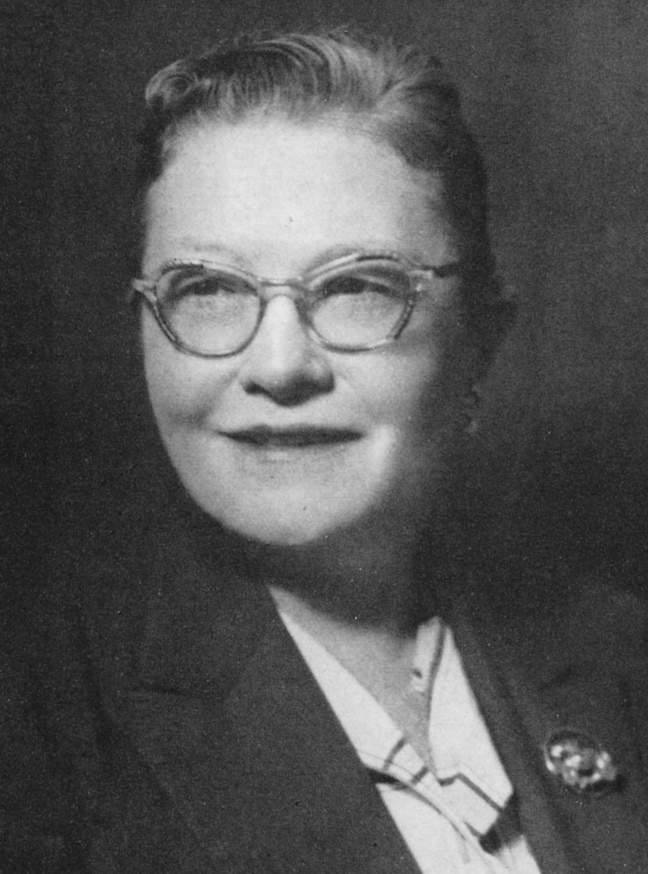
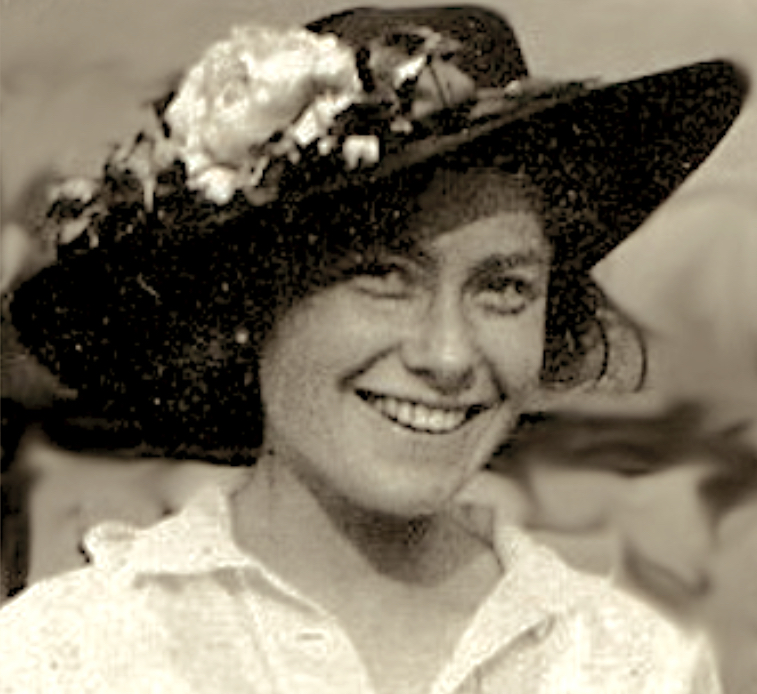
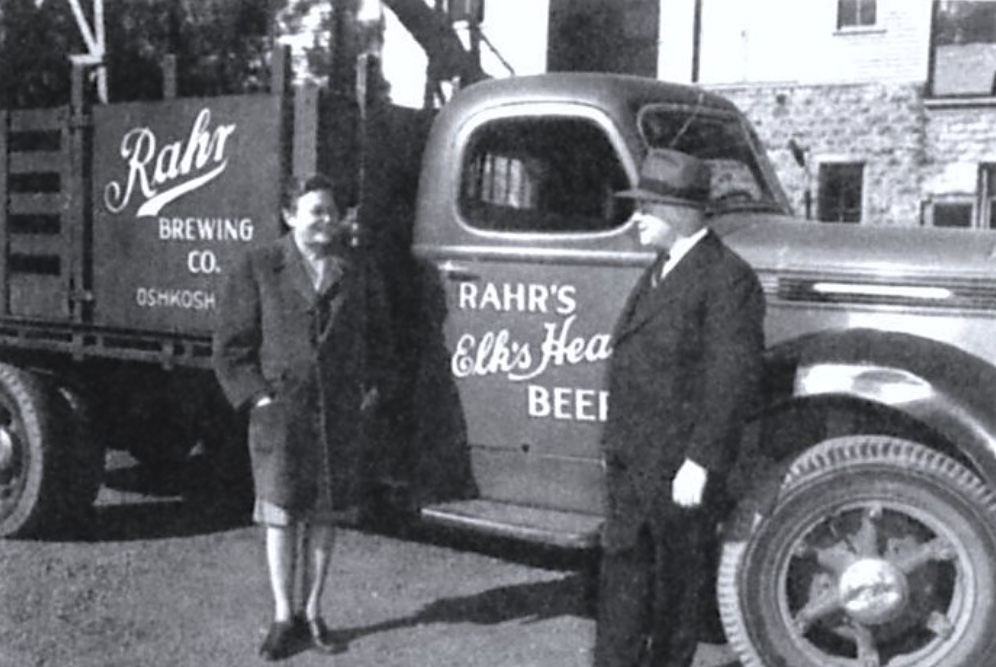
Blanche Rahr was not the first woman to take ownership of an Oshkosh brewery. But she was definitely the woman most identified with the beer business here. Blanche was part-owner and secretary-treasurer of Rahr Brewing from 1917 until 1956. She was the public face of Oshkosh’s longest-lived, family-owned brewery.

Blanche Rahr

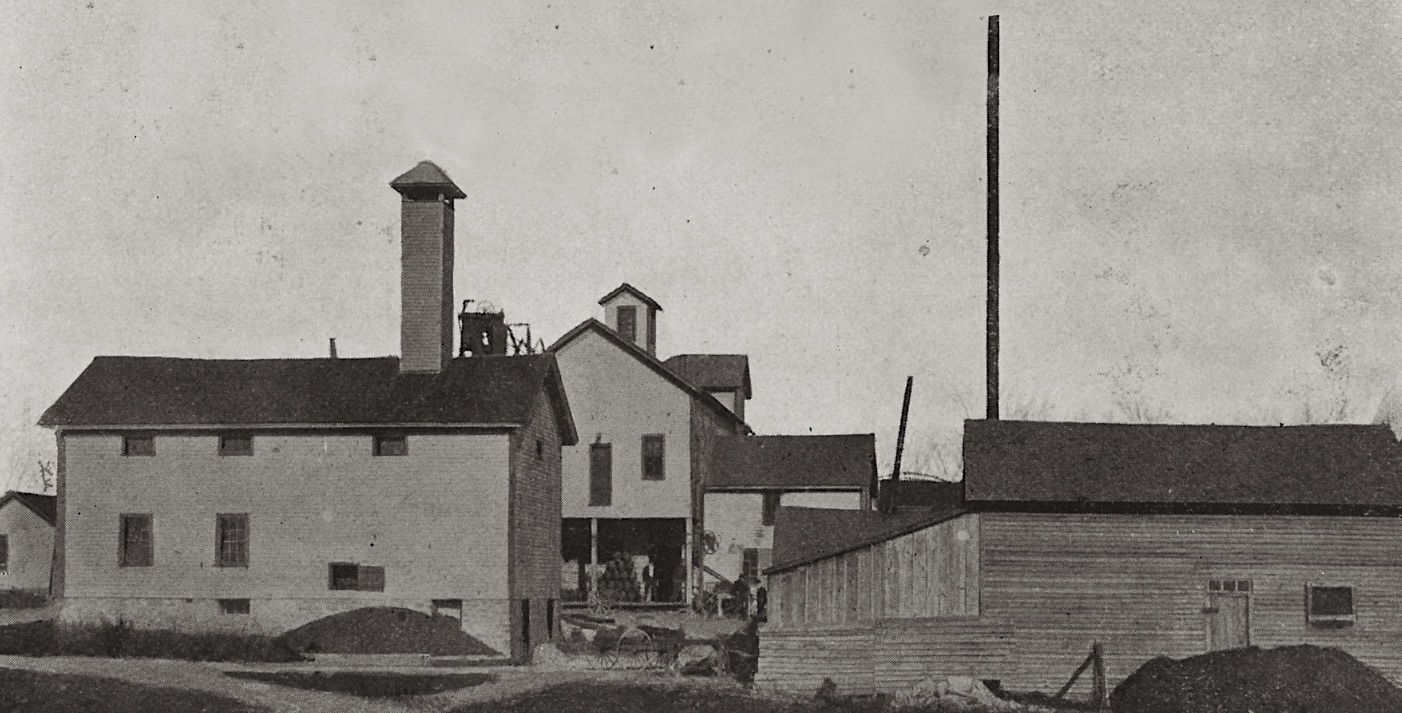
The Rahr brewery at the foot of Rahr Avenue was established in 1865 by Charles Rahr, Blanche’s grandfather. Blanche was born in 1892 and was four when her father, Charles Rahr Jr., became head of the brewery. The business of making and selling beer was a constant presence throughout her life.

Rahr Brewing, late 1890s.

Blanche grew up doing the simple brewhouse chores that every child named Rahr had been performing since the brewery’s founding. It turned out she was good with numbers, and by the age of 14 worked her way into managing the brewery’s accounts. Blanche was 17 and still in school when her name went on the brewery’s ledger as its bookkeeper.

An undated photo of Blanche Rahr.

She was outspoken and determined. She had to be. Part of her job was to bring to account delinquent saloon keepers, men twice her age who were unaccustomed to receiving ultimatums from a woman. But Blanche often held the trump card. Her family owned many of the saloons that sold Rahr’s beer. The young lady could put you out of business if she cared to.

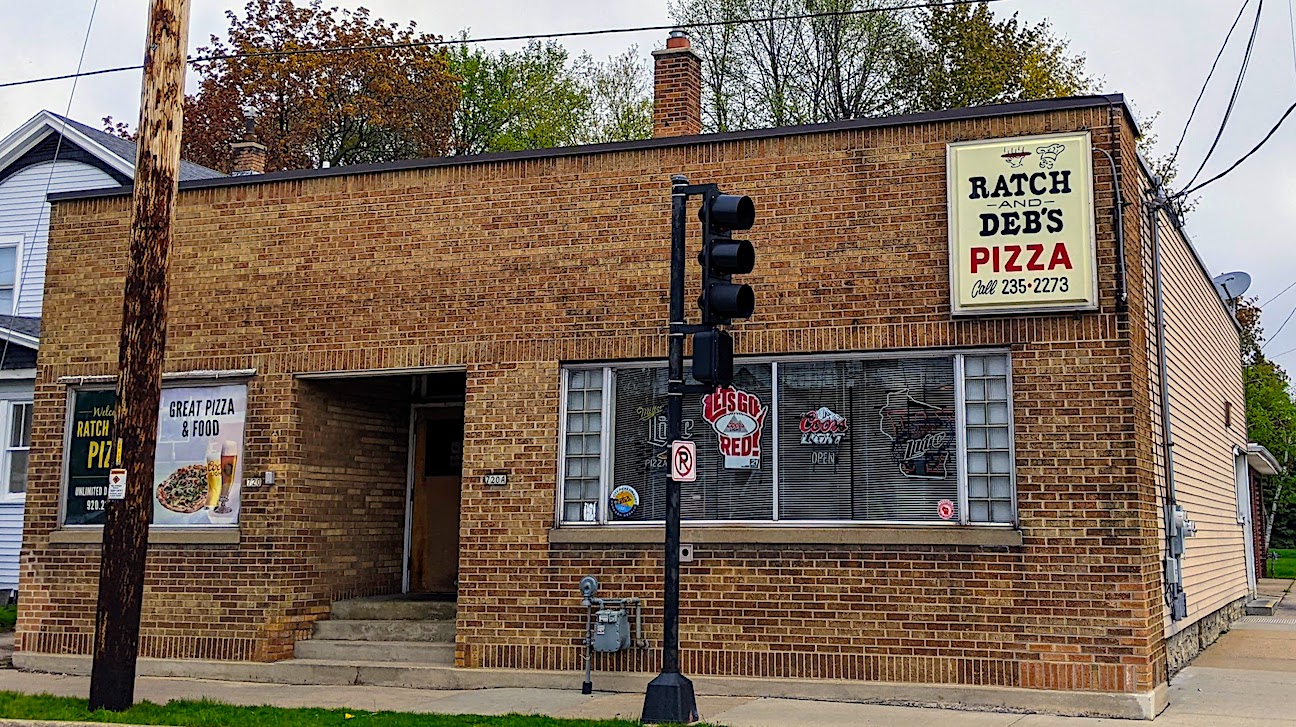
What is now Ratch and Deb's Pizza at the corner of Merritt and Bowen was once a saloon owned by the Rahr family.

Her influence increased in 1917 when her father retired from the brewery. He transferred ownership of the business to Blanche and her two younger siblings; her brother, Charles, and her 17-year-old sister Lucille. Charles, three years younger than Blanche and fresh off his service in World War I, became the brewmaster at Rahrs. Blanche, all of 24-years-old, managed the brewery’s day-to-day business affairs.

Blanche's brother and sister, Carl and Lucille.

Blanche's plucky reputation preceded her. She was a fitting choice for a role in a 1921 promotional film that called for a woman to take an unusual drive with an Oshkosh Motor Truck Company vehicle.

Miss Blanche Rahr of this city at the wheel, piloted the big machine up the steps of the Oshkosh High School in a fashion that won the approval of the spectators who had gathered to witness the stunt. That a young woman could handle so heavy a machine under such trying circumstances was considered a real feat.
     – Oshkosh Daily Northwestern; March 26, 1921.

Blanche behind the wheel.

To prove it wasn’t a fluke, she let the truck roll back down the steps, shifted into gear, and then drove it up again. Four months later, she was crowned Queen of the Mardi Gras by the American Legion at their 1921 summer frolic.

But back at the brewery, there wasn’t much to celebrate. Blanche and her siblings were stripped of their livelihood when Prohibition arrived in 1920. They scrambled to keep the business afloat and began producing and bottling fruit juices, soda, and malted milk.


The Rahrs also made non-alcoholic beer. The other Oshkosh breweries – Peoples and the Oshkosh Brewing Company – followed a similar path. But to a unique degree, the Rahr brewery became the subject of persistent rumors that some of its production bypassed the dealcoholization process. According to the gossip, that beer got funneled to bootleggers.

Blanche heard those rumors for the rest of her life. She consistently denied them. In any case, Rahr Brewing of Oshkosh was among just a handful of breweries of its size to survive the dry years.

Blanche and her brother Carl outside the brewery.

Beer became legal again in 1933. But things didn’t get a lot easier. Rahr was Oshkosh’s smallest brewery, producing up to 20,000 barrels of beer annually – about half as much beer as their cross-town competitors made.

Especially troubling was a new set of laws that forbid the Rahrs from operating their brewery in conjunction with the saloons they owned. Before Prohibition, the Rahr family had used their tied-house saloons to insulate themselves from their larger competitors. But that arrangement was made illegal in the aftermath of repeal. The struggle to survive became a never-ending ordeal.

You wouldn’t have known that if you were following Blanche. When she wasn’t at the brewery, she led a social life that was a regular feature of the Daily Northwestern’s “Women’s World” page. She participated in civic groups, became an excellent bowler, and was fanatic about the local baseball scene.

A headline from the Oshkosh Daily Northwestern, May 3, 1952.

Blanche had far-flung friends and she traveled to be with them. Among her better-known confidants were Hollywood actress Edna Bennett and Broadway stage actress Beth Merrill.

Actress Beth Merrill, a longtime friend of Blanche.

Blanche was also the person reporters went to when they were looking for news about the brewery. But her typical bluntness began to wane as the fortunes of her brewery declined. She was evasive when asked for a summary of Rahr’s 1953 business. “About the same as 1952,” She said and then went on to complain about the tax on beer.

In fact, the brewery was coming undone. Annual production had fallen well below the 10,000 barrel mark. 1954 was worse. By 1955, production had dropped to just 3,660 barrels. And in the summer of 1956, the Rahrs closed their brewery. Again, it was Blanche who shared the news. She said that, if nothing else, they could be proud that even through the leanest of years there was never a layoff.

The Rahr's Beer sign coming down at Jerry's Bar on Ceape Avenue.

Blanche was 63 when the brewery shut down. She had lived all her life in a home two doors west of the brewhouse. And there she remained.

Blanche's former home on Rahr Avenue.

Her life seems to have narrowed after the brewery went under. She became somewhat infamous for her severity when driving off wandering children attracted by the prospect of sneaking into a dormant brewery. Other explorers remembered her gruff demeanor giving way to a smile and a piece of candy.

The abandoned Rahr Brewery office.

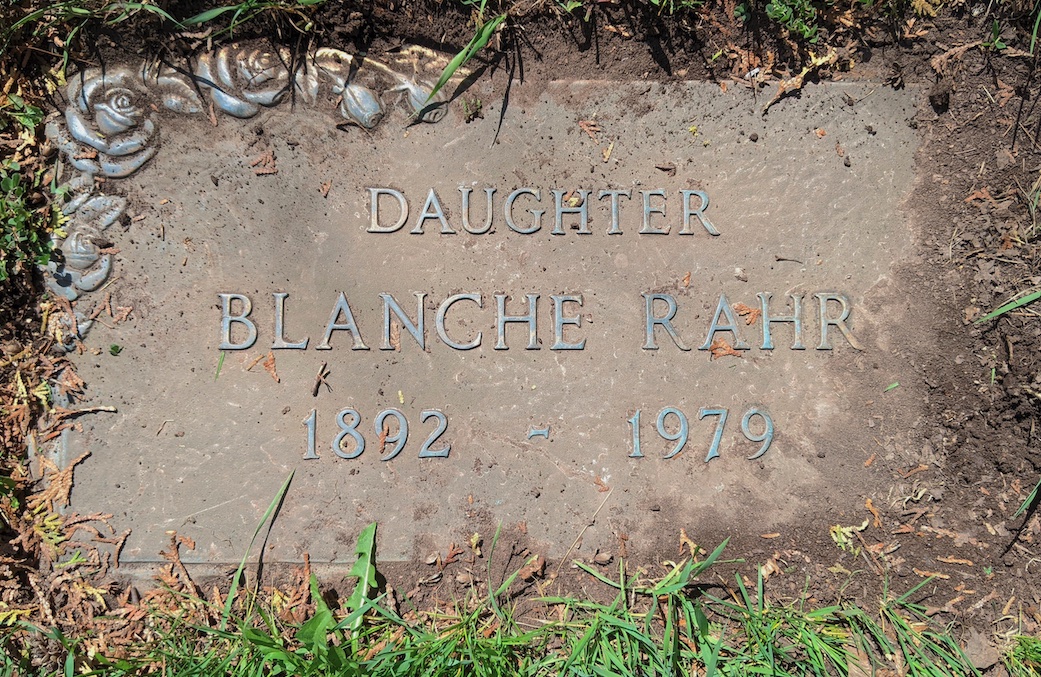
Demolition of the brewery began in 1964. Blanche was 72 then and still living in the house two doors down. She stayed there until the summer of 1979 when she fell ill and was moved to Evergreen Manor. Miss Blanche Rahr, aged 86, died there on the Monday morning of August 13, 1979.

Riverside Cemetery.

If you'd like to know more about the story of Rahr Brewing, here's a short video I made that gives an overview of that history.


Wednesday, May 3, 2023

Oshkosh Breweriana with Jared Sanchez

Jared Sanchez, who launched the bi-annual B’gosh It’s Good Breweriana show in Oshkosh back in 2020, was recently featured on the Beer Collector YouTube channel. It’s a nice spot and gives a good look at the collection of Oshkosh breweriana Jared is building. Here is the video…


Tuesday, May 2, 2023

Oblio's Has Been Sold

On April 27, Oblio’s Lounge was sold. Mark Schultz and Todd Cummings, who have operated Oblio’s for the past 44 years, sold their tavern at 434 N. Main Street to Cory Krolczyk and Blake Kieler (I hope to have more about the new owners in the near future).

Todd Cummings (left) and Mark Schultz.

On April 25, Cummings and Schultz announced the sale and that they would be departing the business. Here’s the farewell message they posted on Facebook.

In 1979, the two of us made a somewhat rash decision. We stepped into a role that neither of us was totally prepared for. We became the proprietors of Oblio’s, a space that has been central to the social life of Oshkosh since 1885. Our plans for the future of this place were less than clear. But those vague aspirations were given shape by you, the people who came through the door year after year to encourage us, support us, and befriend us. Along the way, we’ve learned that our job wasn’t just about running a bar. You’ve entrusted us with something more; the privilege of taking part in a welcoming tradition that makes all of us closer to one another. The time has come for us to pass that torch. The institution of Oblio’s will endure. This place is not about the two of us. It is about all of us together. And that is more important now than ever. We cannot find the words to express the depth of our gratitude, so these will have to do. Thank you.

Please join us May 6th 3pm-8pm for the passing of that torch.


This marks a new phase for what is perhaps Oshkosh’s most storied bar.
Here are a few links that lead to some of those stories...
The history of what is now Oblio’s from 1884 through the modern era: Part 1 & Part 2.
Oblio’s when it was the Annex, a speakeasy.
And here’s a general link to every post I’ve written tagged as part of the Oblio’s story.

Sunday, April 30, 2023

An Illustrated History of the Oshkosh Brewing Company

The Oshkosh Brewing Company remains the largest brewery this city has ever had. At its peak in the late 1950s, OBC produced over 60,000 barrels of beer annually. To put that in perspective, last year’s combined production of the three breweries currently operating in Oshkosh was less than 3,000 barrels. OBC was one of Wisconsin’s great, regional breweries.


The Formation of a Brewery
In the late 1880s, Oshkosh became a distribution hub for some of America's largest breweries. Pabst, Schlitz, Anheuser-Busch, Miller, and others came here. They established beer-bottling plants, distribution warehouses, and saloons.

Schlitz Hall at the corner of Washington and State was one of several properties owned by Schlitz in Oshkosh.

At the same time, Oshkosh was home to four breweries. The local breweries had controlled the city's beer market for decades. But that control began slipping away after the larger, “shipping” breweries established a presence here.

The smallest of the four Oshkosh breweries was the Rahr Brewing Company at the foot of Rahr Avenue.

Rahr Brewing Company.

Next in size was the Gambrinus Brewery on Harney Avenue.

Kuenzl's Gambrinus Brewery

The John Glatz and Son Union Brewery at the foot of Doty Street was the second largest of the four breweries.
Glatz and Son's Union Brewery.

The largest Oshkosh brewery was Horn & Schwalm’s Brooklyn Brewery on the east side of Doty Street south of 16th Avenue.

Horn & Schwalm’s Brooklyn Brewery.

By 1893, the “foreign” competition had grown so intense that the Oshkosh breweries planned for a merger in hopes of reasserting control over the local market. The Rahr Brewing Company, determined to maintain its independence, bowed out of the discussions. On March 21, 1894, the Gambrinus, Glatz and Son, and Horn & Schwalm breweries merged to form the Oshkosh Brewing Company.

A composite rendering of the three breweries of the Oshkosh Brewing Company. The proximity shown here is an artistic fantasy. The three facilities were in separate locations.

1894-1899: All Together Now
OBC continued to operate the three breweries that had existed prior to the merger. Lager beer production was split between the Horn & Schwalm and Glatz breweries. The Gambrinus Brewery was converted into a bottling plant, and was later used for the production of Berliner Weisse.

The former Glatz and Son Brewery rebranded as the Oshkosh Brewing Company.

An image of Chief Oshkosh was adopted as the brewery’s trademark. The illustration was based upon an 1855 daguerreotype of the Menominee leader. Oshkosh died in 1858.


Through the 1890s, OBC produced a wide-range of beers that reflected the European heritage of its founding breweries. Among the early OBC brews were a Bohemian-style Pilsner, a Vienna-style lager, and a dark, “Culmbacher” type bier. The brewery’s most popular beer was its Stock Lager dispensed from wooden kegs. This was a deep, amber brew sold at most Oshkosh saloons for five cents a mug.
The brewery’s line-up for winter of 1895. Oshkosh Labor Advocate, January 25, 1895.

OBC sourced nearly all of the barley and corn for its beer from local farmers. The barley was converted into brewer’s malt at the malting facilities within the Horn & Schwalm and Glatz breweries. By the close of the 1890s, OBC was producing almost 16,000 barrels of beer annually from locally-grown cereal grains.

1900-1920: Years of Triumph
The Oshkosh Brewing Company succeeded in overcoming its larger competitors. By 1900, OBC was the source for 75 percent of all beer sold in the City of Oshkosh. The brewery’s thundering, horse-drawn beer wagons were a common sight here. OBC employed five teams delivering beer to every part of the city and much of the surrounding area.


In the early 1900s, OBC began acquiring saloon properties and converting them into tied-houses that sold no beer other than that brewed by the Oshkosh Brewing Company. A number of those OBC taverns remain, including Nigl’s and Jeff’s on Rugby. The well known Witzke Tavern at the corner of 17th and Oregon was built by OBC in 1902.

Witzke’s, early 1900s.

By 1910, OBC was producing 30,000 barrels of beer annually. The rising output tested the limits of the brewery's aging facilities. OBC began construction of a new brewery in 1911. When completed in 1912, it was described as "one of the most modern and up-to-date establishments in the entire middle west.” It was built adjacent to the former Horn & Schwalm Brewery on the east side of Doty Street. The facility was six stories at its peak. The red-brick brewery became a southside landmark.

A new brewery and a new mode of delivery. This photo, circa 1915, shows the brewery at a time when it was transitioning from horse-drawn wagons to motorized vehicles.

The variety of beer offered by OBC contracted as the brewery expanded. Pale, light-bodied lager became the norm during the first two decades of the 1900s. The lighter beers appealed to a younger generation of drinkers. Just as Oshkosh's foreign-born population was giving way to their American-born offspring, these pale beers supplanted the traditional, European-styles of lager beer that had been favored in Oshkosh since the 1850s. Gilt Edge was OBC’s premium, pale beer during the early 1900s. Here are a couple of advertising pieces for Gilt Edge that indicate the sort of audience the brewery was pursuing.

Gilt Edge drinkers in the early 1900s.


The most dramatic change in the brewery's beer was yet to come. OBC began preparing for the inevitable as the country blundered its way towards National Prohibition. The brewery’s first non-alcoholic beer, named PEP, was released in 1919. PEP enjoyed a brief phase of popularity after Prohibition arrived in 1920. It was purchased in volume by “beer doctors” who would "needle" the non-intoxicating beer with moonshine, giving it the PEP promised by the advertising.


1920-1932: Curse of the Dry Years
With the dawn of Prohibition in 1920, Oshkosh Brewing was forced to find alternate revenue streams to keep the business afloat. At OBC they were up for just about anything.

Among the more curious ventures was the Oshkosh Colytic Egg and Storage Company. The less than successful enterprise saw part of the brewery converted into a facility for pasteurizing and processing eggs. Another section of the brewery was leased to local farmers for grain storage. And then there was root beer. OBC made rivers of root beer during Prohibition.


But the heart of the brewery remained dedicated to something closer to beer. OBC continued to produce non-alcoholic beer throughout the dry years. The label below was used during the 1920s for the beer-like Oshkosh Beverage. It weighed in at a dispirited one-half of one percent alcohol by volume.


In 1928, OBC introduced its Chief Oshkosh brand. The first iteration of Chief Oshkosh was a non-alcoholic beer.


The “near” beers floundered as Prohibition dragged on. By the early 1920s, the City of Oshkosh was inundated with real beer produced by wildcat breweries and homebrewers. OBC served that market by supplying the black-market brewers with pre-hopped malt syrups that could be used to produce real beer. Malt syrup was key to the brewery's survival and continued being produced by OBC until beer was legalized in 1933.


1933-1940: Beer is Back
At midnight on Friday, April 7th, 1933, the steam whistle atop the Oshkosh Brewing Company let out a long cry of relief. Beer was legal again, though Prohibition had yet to be repealed. But the signing of the Cullen–Harrison Act subverted the intentions of the dry law by declaring that beer containing 4% alcohol by volume or less was too mild to intoxicate and, thereby, not subject to the strictures of the 18th Amendment. OBC was back in business.


The brewery rushed the initial run of 4% ABV Chief Oshkosh Beer onto the market in bottles bearing a hastily designed and printed label. Nothing fancy, just the facts.


Prohibition was fully repealed eight months later on December 6, 1933. At OBC they responded by kicking up the strength of Chief Oshkosh to 4.5% ABV. The stronger Chief was an immediate hit. By 1934, OBC’s annual production had spiked to over 45,000 barrels.
A Chief Oshkosh Beer lighted sign, Circa 1935.

More and more of OBC’s beer was being packaged in bottles. Since the founding of the brewery, the majority of its beer had been sold in wooden kegs at saloons. But Prohibition had changed America’s drinking habits. Increasingly, people were drinking beer served out of their ice boxes and refrigerators at home. Over the next decade, bottled beer sales would surpass the sales of OBC’s keg beer.


Beer was back, but the 1930s remained difficult. Oshkosh was devastated by the Great Depression of the 1930s. The city’s population decreased for the first time. Oshkosh lost 40% of its manufacturing jobs and overall unemployment was estimated to be near 50%. The bleak economy led to stagnating beer sales. By the end of the 1930s, OBC’s production slumped to pre-Prohibition levels.

OBC, circa 1940.

1940s: Wartime Beer
The economy slowly rebounded and a new set of troubles arose. Rationing became a way of life after America entered World War II in December 1941. Shortages of everything from grain to bottle caps forced brewers to get by with less of what they needed to produce and transport beer. The brewery began to rely heavily on quart and half-gallon “picnic-size” bottles to reduce the number of caps needed to package beer.


The war ended in 1945, but the after-effects lingered. OBC was rationing its beer well into 1946.

Oshkosh Daily Northwestern; May 15, 1946.

At the close of the decade, the brewery had regained its footing and was looking to the future. In June of 1949, OBC became the first Oshkosh brewery to package its beer in cans. The 1949 canned version of Chief Oshkosh Beer came in a silver crowntainer.


1950s: A Brewery at its Peak
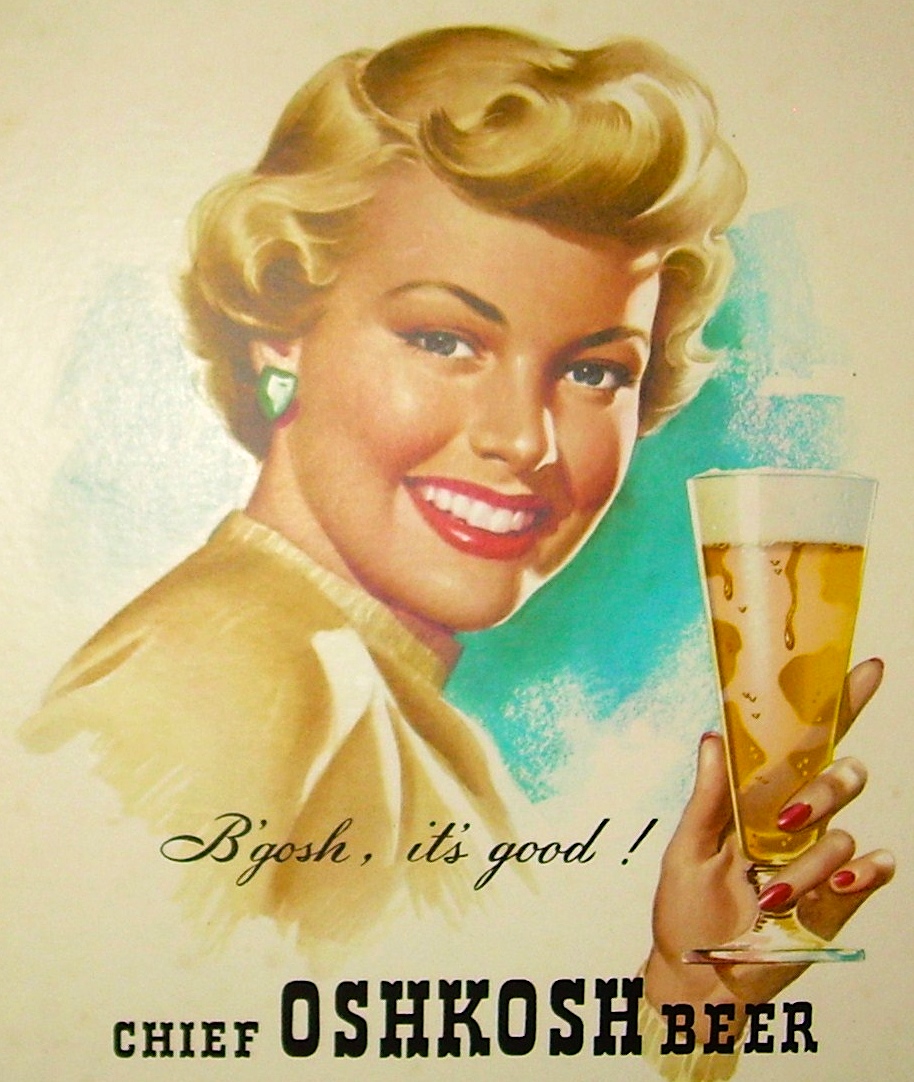
At mid-century, OBC hit its stride. The 1950s began with the reformulation of the Chief Oshkosh Beer recipe. Sales Director Lorenz “Shorty” Kuenzl described it as a “Pilsener beer that would appeal to all kinds of beer tastes in people.”

Lorenz “Shorty” Kuenzl at his office desk drinking a glass of 1950s Chief Oshkosh.

Kuenzl was right. Sales of the new Chief Oshkosh Beer rose rapidly; from less than 40,000 barrels in 1949 to more than 58,000 barrels in 1953. It would become the best selling, most widely distributed beer ever produced by an Oshkosh brewery.


OBC celebrated its 90th anniversary in 1956, despite having been launched just 62 years earlier. Nobody seemed to notice the discrepancy. Afterall, there was plenty of free beer to be had. Beginning on May 22, 1956, the brewery invited the entire city to the brewery for a look around, a bite to eat, and a few beers on the house. Thirsty Oshkoshers turned out in droves.

Party at the brewery, 1956.

In 1957, there were 42 breweries operating in Wisconsin. OBC was the 10th largest, producing 57,541 barrels of beer. The brewery’s peak came in 1959 when its production rose to 63,165 barrels. The regional powerhouse from Oshkosh appeared unstoppable.

During the brewery’s peak years, OBC’s delivery fleet traveled throughout the state.

1960-1986: The Fall of OBC
In the 1960s, the American brewing landscape was remade. A wave of consolidation saw the industry being taken over by massive corporations such as Anheuser-Busch, Schlitz, Miller, and Pabst. Regional breweries like the Oshkosh Brewing Company were being squeezed out. Yet some of the smaller players survived. OBC with its robust growth, appeared uniquely poised to endure the culling. But there was one thing missing: the family-run business had run out of family.

Standing from left to right, OBC treasurer Earl Horn, president Arthur Schwalm, and secretary Lorenz “Shorty” Kuenzl.

OBC was still directed by members of the Horn, Kuenzl, and Schwalm families. Those families had been at the helm since the inception. But the next generation of Horns and Schwalms, who together held the controlling shares of the brewery’s stock, wanted no part of the beer business. In August 1961, the two families sold their stake in the Oshkosh Brewing Company. The buyer was a man from Milwaukee named David Uihlein.

David V. Uihlein

David Uihlein was no ordinary man from Milwaukee. His family owned the controlling interest in Schlitz Brewing. Schlitz was then the second largest brewery in the nation. Uihlein’s vision for OBC had nothing to do with overseeing its continued success. He had purchased the brewery with the intention of selling it to Schlitz; at a handsome profit, presumably. That plan fell apart when Schlitz president Robert Uihlein rejected his cousin’s offer. David Uihlein was left stranded in Oshkosh with a brewery he didn’t want.

OBC Brewmaster Wilbur Strottman (left) and David Uihlein in the OBC brewhouse.

Initially at least, Uihlein seemed interested in making the best of his unenviable situation. He invested in new equipment, initiated an aggressive marketing campaign, and tried to expand the brewery’s distribution. But those efforts were accompanied by crucial errors. The most glaring was his change to the recipe for Chief Oshkosh Beer. Uihlein’s version of Chief Oshkosh was cheaper to brew. But the reformulated beer fell out of favor with long-time drinkers of “Oshkosh.” Sales plummeted.

Reformulated and redesigned. Chief Oshkosh cans from the Uihlein era.

Under Uihlein, OBC expanded its portfolio in an attempt to reverse the slide. In 1966, the brewery purchased the brand rights to three beers that had been left for dead by failed breweries: Badger Brew from Effinger Brewing in Baraboo,  Liebrau of Two Rivers Brewing, and Rahr’s of Green Bay.


The resuscitated beers didn't help. OBC's losses continued piling up. By the end of 1969, annual production had fallen to just 34,000 barrels; a 40% drop since Uihlein had taken ownership. David Uihlein sold his stake in OBC in 1969. He returned to Milwaukee where he took a seat on the board of directors of Schlitz. There he helped guide Schlitz to its ultimate demise.

Harold Kriz, who had been with the brewery since 1952, became president of OBC upon Uihlein’s departure in 1969.

OBC was purchased by a coalition of Oshkosh residents and brewery employees doing business as Hometown Brewery, Inc. But there was little left to redeem. Chief Oshkosh was now a bargain-bin beer. The brewery that produced it had fallen into disrepair. The last batch of Chief Oshkosh was brewed on September 9, 1971. The following month, the Oshkosh Brewing Company announced its closing.


In November 1971, the brands of the Oshkosh Brewing Company were purchased by Peoples Brewing Company of Oshkosh. Chief Oshkosh Beer was brewed at Peoples until that brewery closed in 1972.


In 1986, the Oshkosh Brewing Company’s towering brewhouse was demolished after years of neglect.


The Chief Oshkosh emblem that was attached to the face of the brewery now resides at the Oshkosh Public Museum. The 800-pound, terra cotta piece went on permanent display at the museum in 2009.


Further Reading
And if that wasn’t enough… Here is a selection of links leading to articles that go deeper on aspects of the Oshkosh Brewing Company's history covered in this post.

The Formation of a Brewery

In the late 1880s, Oshkosh became a distribution hub for some of America's largest breweries.

On March 21, 1894, the Gambrinus, Glatz and Son, and Horn & Schwalm breweries merged to form the Oshkosh Brewing Company.

1894-1899: All Together

An image of Chief Oshkosh was adopted as the brewery’s trademark.

Through the 1890s, OBC produced a wide-range of beers that reflected the European heritage of its founding breweries.

1900-1920: Years of Triumph

The Oshkosh Brewing Company succeeded in overcoming its larger competitors.

The brewery’s first non-alcoholic beer, named PEP.

It was purchased in volume by “beer doctors” who would "needle" the non-intoxicating beer with moonshine.

1920-1932: The Curse of the Dry Years

In 1928, OBC introduced its Chief Oshkosh brand. The first iteration of Chief Oshkosh was a non-alcoholic beer.

By the early 1920s, the City of Oshkosh was inundated with real beer produced by wildcat breweries and homebrewers.

1933-1940: Beer is Back!

At midnight Friday, April 7th, 1933, the steam whistle atop the Oshkosh Brewing Company let out a long cry of relief.

The 1940s: Wartime Beer

In June of 1949, OBC became the first Oshkosh brewery to package its beer in cans.

The 1950s: A Brewery at its Peak

The new Chief Oshkosh Beer.

OBC celebrated its 90th anniversary in 1956, despite having been launched just 62 years earlier.

The 1960-1986: The Fall of OBC

In August 1961, the two families sold their stake in the Oshkosh Brewing Company.

Under Uihlein, OBC expanded its portfolio in an attempt to reverse the slide.

OBC was purchased by a coalition of Oshkosh residents and brewery employees doing business as Hometown Brewery, Inc.

In November 1971, the brands of the Oshkosh Brewing Company were purchased by Peoples Brewing Company of Oshkosh.

In 1986, the Oshkosh Brewing Company’s once majestic brewhouse was demolished.

The emblem bearing the image of Chief Oshkosh is now at the Oshkosh Public Museum.